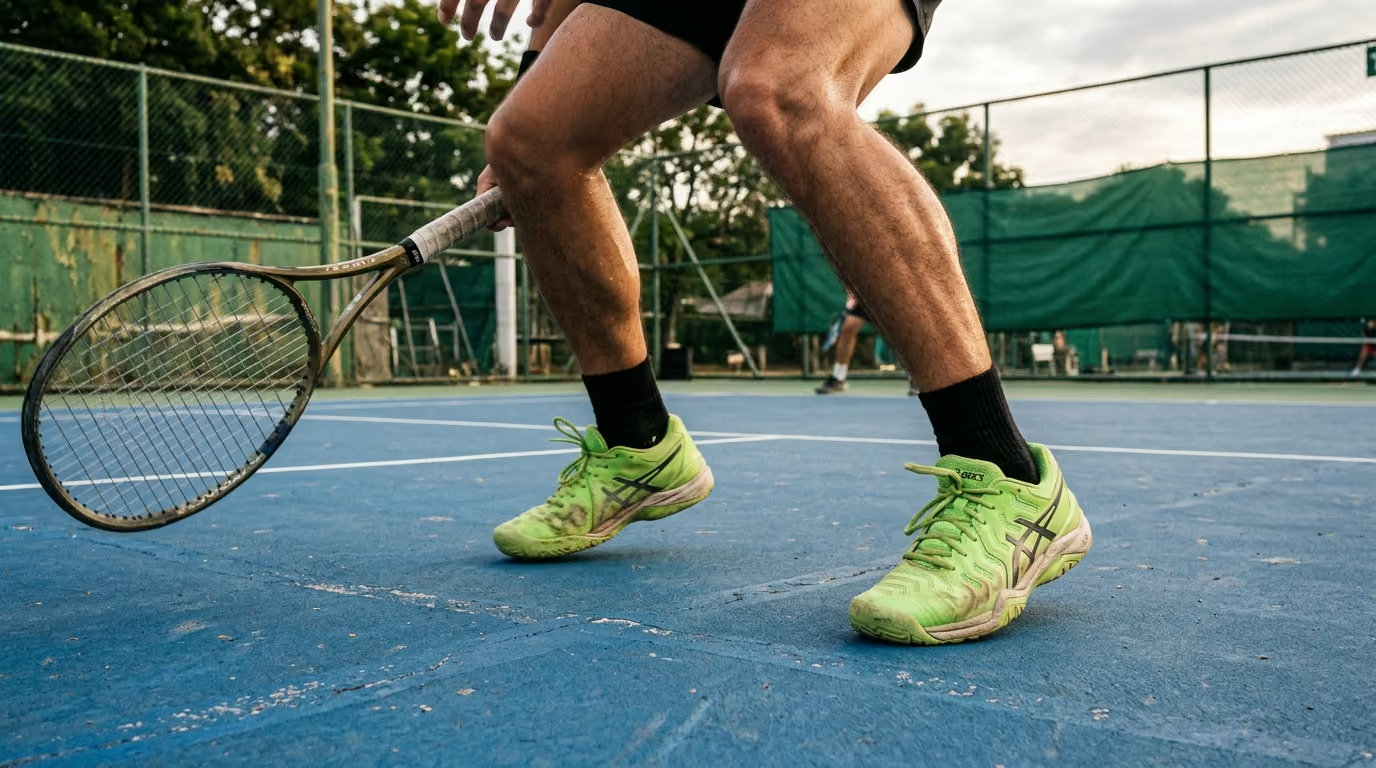
Sleep optimization is a structured performance system that directly affects reaction time, decision-making, and tissue recovery for racquet sports players.




Sleep optimization is a structured performance system that directly affects your reaction time, split-second decision-making, and tissue recovery on the court. For racquet sports players, achieving consistent sleep timing alongside seven to nine hours of nightly rest is essential to sustain high performance and preserve long-term joint health. Stabilizing your sleep-wake schedule and adjusting training when sleep is compromised will help you maintain your competitive edge as you age.
Many athletes view sleep as a simple block of downtime. In reality, it is an active, multi-dimensional biological system that determines how well you perceive a fast-moving ball and how quickly you select your next shot. If you want to maintain your physical capabilities and continue playing for decades, managing your sleep is just as important as upgrading your racquet or refining your technique. This comprehensive guide outlines the science of sleep, its direct impact on racquet sports, and how you can establish a practical routine to protect your athletic longevity.
Racquet sports place unique cognitive and physical demands on the human body. To play effectively, you must track a ball moving at high speeds, anticipate your opponent's court positioning, and execute precise physical strokes. These tasks require rapid visual processing, split-second choice selection, and sustained concentration. Current research indicates that sleep restriction compromises every stage of this performance loop.
When you do not get enough sleep, your brain struggles to process information under physiological stress. A study comparing athletes in racquet and combat sports examined reaction times during progressively increasing physical workloads. The researchers found that tennis players processed information faster as their physical workload increased, demonstrating that racquet-sport performance depends heavily on information processing under active cardiovascular stress. If your brain is starved of sleep, this ability to make fast, accurate decisions under physical fatigue is the first thing to degrade.
The cognitive costs of sleep restriction are well documented. Even a single night of sleep loss can impair your attention, reduce your vigilance, and slow down your motor coordination. A study on sleep restriction showed that athletes experienced slower reaction times on cognitive tests, and these deficits worsened significantly after physical exercise. This means you might feel fine during a light warm-up, but your performance will drop during a tense third set when your brain must work harder to maintain focus.
Conversely, extending your sleep can lead to measurable performance gains. In a well-known study at Stanford University, researchers tracked collegiate basketball players who increased their average total sleep time to more than ten hours per night for several weeks. The athletes demonstrated improved reaction times, reduced daytime sleepiness, and better overall mood.
These findings are not limited to basketball. A separate sleep extension study focused on twelve competitive youth tennis players. After seven days of increasing their sleep opportunity to at least nine hours per night, the players achieved a significant improvement in serving accuracy. This demonstrates that when your nervous system is fully rested, your motor control and spatial precision remain highly accurate.
To understand your sleep needs, you must first understand the terms used by sleep scientists. There is a meaningful difference between the time you spend in bed and the time you spend actually sleeping.
According to the National Sleep Foundation, healthy adults between the ages of 26 and 64 should aim for seven to nine hours of total sleep per night. For adults aged 65 and older, the recommended range is seven to eight hours. The National Institutes of Health also support these ranges, stating that seven hours is the minimum healthy threshold for most adults.
These broad population guidelines are useful starting points, but they do not account for the high physical demands of regular athletic training. If you are playing intensive matches several times a week, your recovery demands will be higher than those of a sedentary individual. A systematic review of athletic sleep interventions found that increasing nocturnal sleep or adding strategic daytime naps was highly effective for improving physical and cognitive performance. The researchers suggested that athletes who habitually sleep seven hours per night may benefit from adding up to two hours of sleep opportunity during periods of heavy training.
To find your own ideal sleep duration, we recommend establishing an individual baseline. You can do this by following a simple three-step protocol:
This process helps you identify the smallest sleep window that allows you to feel fully alert and recovered. You do not need to obsess over reaching ten hours of sleep every night. Instead, focus on finding the specific duration that keeps your mind sharp and your joints comfortable.
Many racquet athletes focus entirely on the number of hours they sleep, neglecting the consistency of their sleep schedule. Sleep regularity refers to keeping your sleep onset and wake times relatively stable from day to day. If you wake up at 6:00 a.m. on weekdays but sleep in until 9:30 a.m. on weekends, you are creating a pattern of sleep variability.
This shift in timing is often referred to as social jet lag. It occurs when your biological clock mismatches your social or professional schedule. Even if you maintain a high weekly average of sleep hours, shifting your bedtime by two or three hours on the weekend forces your circadian system to constantly readjust. This constant shifting can leave you feeling fatigued and sluggish when you return to the court.
A systematic review examining sleep timing and consistency found that greater sleep variability was associated with a range of adverse health outcomes. In contrast, maintaining consistent sleep and wake times was associated with better metabolic health, improved mood, and superior daytime alertness. A 2023 expert consensus statement on sleep regularity concluded that consistency of sleep timing is highly important for daily safety and athletic performance.
While consistency is the goal, you do not need to follow an absolute, unbreakable rule. Tournament schedules, late-night matches, work deadlines, and family commitments will occasionally disrupt your routine. The key is to preserve a stable wake-up time whenever possible. If you have a late match, try to keep your wake-up time close to your normal routine and use a afternoon nap to make up for the lost sleep, rather than sleeping in for several hours and disrupting your circadian rhythm.
For master athletes, maintaining a regular schedule is especially important. As we age, our circadian rhythms tend to shift earlier, and our sleep can become more fragmented. The National Sleep Foundation notes that while the biological need for sleep does not decrease as we age, our ability to obtain consolidated sleep often declines. Keeping consistent bedtimes, getting natural sunlight early in the day, and eating meals at predictable times can help older athletes preserve high-quality sleep.
To learn more about how to structure your daily habits for better health, you can read our athletic longevity resources.
When you play tennis, pickleball, or padel, your body experiences high eccentric loads, rapid lateral changes of direction, and repetitive stress on your joints. To repair this tissue damage, your body relies on deep sleep. During deep sleep, your brain releases growth hormone, which stimulates muscle protein synthesis and supports tissue repair. Without adequate sleep, your body remains in a catabolic state, which can slow down recovery and lead to chronic irritation in your tendons and joints.
I remember finishing a tough two hour padel match on a cold Tuesday night and waking up the next morning feeling like my lower back was locked in concrete. For a long time, I just accepted this as the price of playing hard in my forties. But once I started spending just ten minutes on targeted hip mobility before heading to the club, the stiffness almost completely vanished. It taught me that we do not have to accept pain as a default state of aging. In our experience at Evercourts, we have found that physical physical prep must be paired with restorative sleep to facilitate muscle protein synthesis and nervous system repair.
The scientific consensus on the direct relationship between sleep and injury risk is still developing. Some sports medicine reviews suggest that sleeping fewer than eight hours per night is associated with a 1.7-fold increase in athletic injury risk. These papers argue that sleep loss impairs motor control, slows down reaction times, and leads to poor decision-making, which collectively make an athlete more susceptible to acute injuries like ankle sprains or muscle strains.
However, other researchers advise caution when making these claims. A systematic review of twelve prospective cohort studies concluded that the current evidence is not strong enough to establish poor sleep as an independent, standalone risk factor for injury in adult athletes. The studies reviewed were highly diverse, and many did not control for other major variables like training volume, life stress, or nutrition.
The most balanced interpretation of the science is to view poor sleep as a significant, modifiable risk contributor. When you are sleep-deprived, your attention wanders, your muscles fatigue more quickly, and your coordination suffers. These deficits may not guarantee an injury, but they certainly reduce your margin for error on the court. Treating sleep as an essential part of your recovery plan is a sensible, evidence-backed strategy for staying healthy.
For practical movement protocols to pair with your recovery, explore our mobility and movement resources.
Your bedroom environment plays a critical role in how quickly you fall asleep and how deeply you rest. To maximize your sleep quality, you should focus on making your room dark, quiet, cool, and comfortable. Guidance from the Centers for Disease Control and Prevention and the National Institute for Occupational Safety and Health outlines several practical steps for optimizing your sleeping space.
For older players, a safe sleep environment is also a high priority. Ensure there is a clear, well-lit path from your bed to the bathroom. This is particularly relevant because nighttime bathroom trips are common as we age. Having a clear pathway prevents tripping hazards, reduces the risk of falls, and helps you return to sleep more quickly.
It is helpful to distinguish between basic sleep hygiene and proven sleep interventions. A 2023 systematic review found that while sleep hygiene is a useful foundation, active strategies like sleep extension and planned naps are more effective for improving athletic performance. Improving your bedroom environment is a great starting point, but it cannot make up for a schedule that does not offer enough actual sleep opportunity.
For more guides on optimizing your post-match recovery, check out our recovery science resources.
Strategic daytime naps can be highly valuable when your night sleep is shortened by early matches, late-night travel, or busy family schedules. A systematic review reported that both short naps of 20 to 40 minutes and longer naps of 90 to 120 minutes can improve attention, reaction times, and motor learning.
To get the most benefit from napping, it helps to categorize your options based on your schedule:
A short 20 to 30-minute nap is excellent for restoring alertness and reducing midday fatigue. Because you do not enter deep sleep during a short window, you can wake up quickly without feeling sluggish or groggy.
A longer 90-minute nap allows your brain to complete a full sleep cycle, including deep and rapid eye movement sleep. This is highly useful during a multi-day tournament block or after a night of severe sleep loss.
If you have a late-afternoon or evening match, a brief 20-minute nap can help refresh your mind. Be sure to schedule this nap early in the afternoon, allowing at least two hours to fully wake up and warm up before you step onto the court.
This is a spontaneous nap used after an exceptionally poor night of sleep. While it can help you get through the day, it should not become a daily replacement for a structured night sleep routine.
The main challenge with daytime napping is sleep inertia, which is the temporary grogginess and slow thinking you sometimes experience immediately after waking up. To minimize sleep inertia, keep your short naps under 30 minutes, or commit to a full 90-minute cycle. Avoid taking naps late in the evening, as this can make it harder to fall asleep at your normal bedtime.
Travel fatigue and jet lag are two distinct issues that require different management strategies. Travel fatigue can occur even when you do not cross any time zones. It is caused by the physical stress of travel, including long periods of sitting, dehydration, packing stress, and disrupted routines. Jet lag, on the other hand, is a specific circadian mismatch that occurs when you cross multiple time zones.
When traveling for tournaments, managing these issues systematically can preserve your performance. You can use this practical three-phase protocol to stay fresh:
Using strategic light exposure is highly effective for managing jet lag. If you are traveling westward, you can delay your circadian clock by seeking evening light and avoiding early morning light. If you are traveling eastward, you can advance your clock by seeking morning light and avoiding bright light in the evening.
Some players use melatonin to help adjust to a new time zone. Melatonin is a timing hormone, not a heavy sedative, so the timing of your dose is critical. Because incorrect timing can actually worsen your jet lag, and melatonin can interact with other medications, you should always consult a physician or pharmacist before using it, especially if you are an older athlete taking regular medications.
For additional advice on tournament preparation and conditioning, view our court performance resources.
While all racquet sports share some physical and mental demands, each sport has unique characteristics that influence your sleep and recovery needs. Understanding these nuances can help you tailor your recovery plan.
Tennis matches are often long and unpredictable. A single match can last anywhere from ninety minutes to over three hours, requiring significant aerobic and anaerobic endurance. Tennis players also experience high eccentric loads on their knees and lower back due to the heavy movement required on large courts.
Because of this high physical volume, tennis players need to prioritize total sleep duration to support deep muscle recovery and glycogen replenishment. If you are playing long singles matches, your body will require more deep sleep to repair muscle fibers and reduce systemic inflammation.
Pickleball is played on a smaller court, but it requires exceptionally fast reflexes and rapid hand-eye coordination, especially during quick volleys at the kitchen line. Tournament formats often involve playing multiple matches in a single day, which requires sustained mental focus and repeated bursts of acceleration.
For pickleball players, sleep timing and regularity are paramount. Maintaining a sharp reaction time is critical for handling fast, unexpected shots. Even mild sleep restriction can slow your reaction time enough to make a difference in close kitchen rallies.
Padel is a fast-growing sport characterized by rapid visual tracking, wall rebounds, and explosive overhead movements. Padel matches are frequently scheduled late in the evening under bright artificial lights.
This timing poses a specific challenge for sleep. Playing an intense match at 8:00 p.m. or 9:00 p.m. elevates your core body temperature, raises your heart rate, and floods your system with cortisol. The bright court lights also suppress your natural melatonin production.
Padel players must focus on a structured post-match wind-down routine to transition into sleep. This should include dimming your lights at home, taking a cool shower to help lower your core body temperature, and avoiding late-night television.
To help protect your body from the physical demands of your favorite sport, explore our injury prevention resources.
Many players hold misconceptions about sleep that can hinder their recovery and on-court performance. Identifying these common pitfalls can help you make more informed decisions about your daily routine.
Many athletes believe that seven hours of sleep is always sufficient. While seven hours is the minimum recommendation for general health, it may not be enough to support optimal athletic recovery. If you are training hard, extending your sleep opportunity can lead to noticeable improvements in your mood, energy levels, and motor skills.
It is common for players to sleep less during the busy workweek and try to catch up by sleeping in on weekends. While catch-up sleep can help reduce your overall sleep debt, it does not completely erase the cognitive and physical deficits of chronic sleep restriction. It also shifts your circadian rhythm, making it harder to fall asleep on Sunday night and leading to a sluggish Monday morning.
Many players enjoy a beer or a glass of wine after a tough evening match, believing it helps them relax and fall asleep. While alcohol can act as a sedative, it severely disrupts your sleep quality. It fragments your sleep architecture, reduces your rapid eye movement sleep, and increases your heart rate during the night, leaving you feeling unrefreshed the next day.
Wearable fitness trackers are useful tools for identifying long-term sleep trends and tracking your sleep consistency. However, consumer wearables estimate sleep stages based on movement and heart rate, rather than directly measuring brain activity. Do not let a poor sleep score on your tracker ruin your day if you wake up feeling refreshed and energized. Use the data as a helpful guide, not an absolute diagnosis.
While adjusting your daily habits and bedroom environment can resolve many common sleep issues, behavioral changes are not a cure-all. Persistent sleep problems can be a sign of an underlying medical condition that requires professional evaluation.
You should consider consulting a qualified healthcare provider or a sleep specialist if you experience any of the following warning signs:
These symptoms can point to common conditions like obstructive sleep apnea, chronic insomnia, or restless legs syndrome. Sleep apnea is particularly important to address, as it fragments your sleep and reduces your blood oxygen levels, which can significantly impair your physical recovery and increase your cardiovascular risk. Seeking professional care is an essential step in protecting both your health and your ability to enjoy racquet sports for years to come.
Caffeine has a half-life of about five to six hours, meaning half of the caffeine you consume is still in your system six hours later. If you drink a double espresso before a 4:00 p.m. match, it can still interfere with your ability to fall asleep at 10:00 p.m. Try to limit your caffeine intake to the morning hours, or use a smaller dose before afternoon matches.
Dehydration elevates your resting heart rate and makes it harder for your body to cool down after exercise. This physical stress can make it difficult to fall asleep and can lead to more frequent nighttime awakenings. Be sure to hydrate consistently before, during, and after your matches, rather than trying to drink all your water right before bed.
Yes, a warm bath or shower about ninety minutes before bed can actually help you fall asleep. The warm water dilates the blood vessels in your skin, allowing heat to escape from your body. When you get out of the shower, your core body temperature drops, which is a natural signal to your brain that it is time to sleep.
Follow Evercourts for practical insights on tennis, pickleball and padel performance, movement, recovery and healthy ageing. Stay connected for new articles, research-led guidance and ideas to help you play well and keep playing for years.


Read practical guidance for better movement, smarter preparation and a game that keeps working for you.
explore the Blog