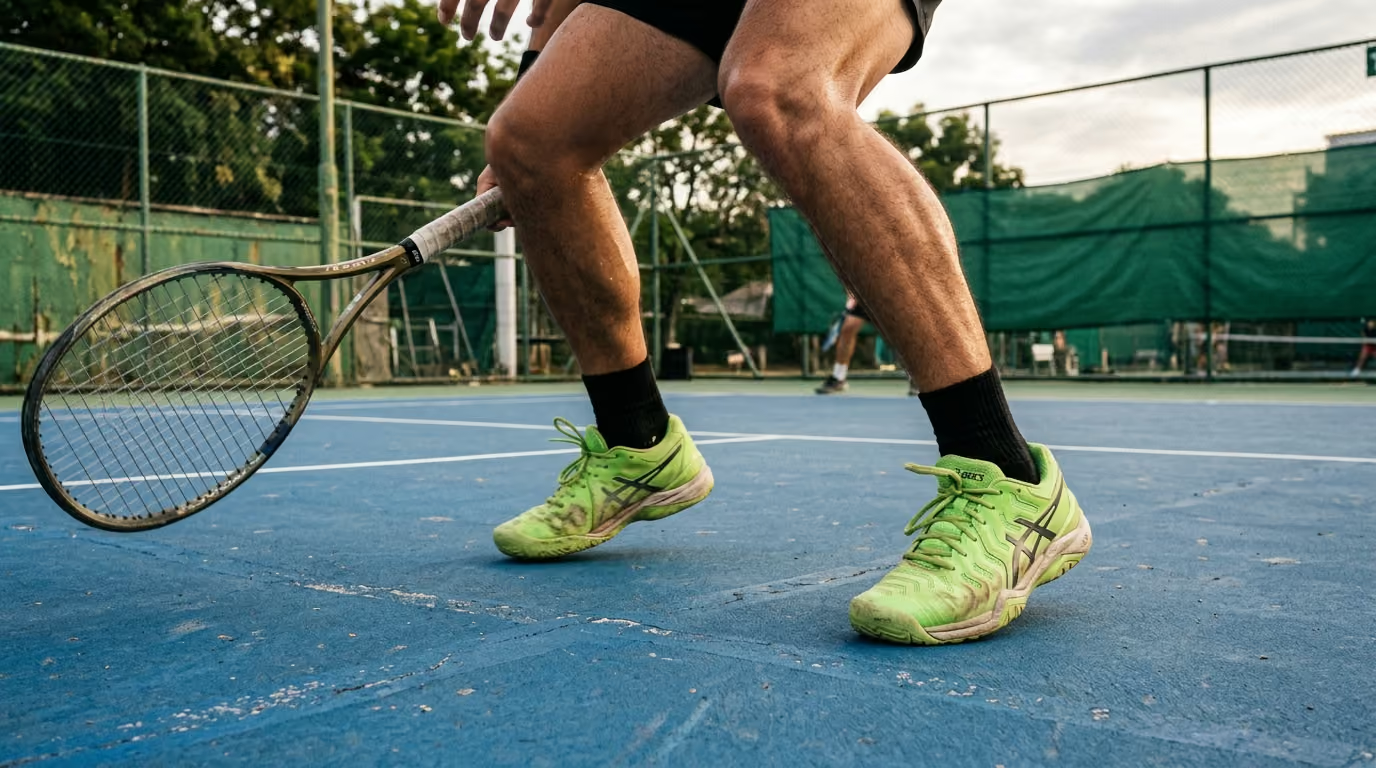
Maintaining peak performance in racquet sports as you age involves a movement system focused on usable ranges of motion, not just static stretching.




Most players believe stretching more is the secret to staying on the court as they age. They spend fifteen minutes bending over their toes, hoping to protect their joints from injury. However, static flexibility does not translate to high-speed movement under pressure.
Sustaining athletic longevity on the court requires maintaining usable, loaded ranges of motion and building physical capacity that exceeds your weekly match exposure. A successful maintenance system relies on consistent strength training, dynamic balance work, and targeted multi-directional movement drills rather than simple passive stretching. By prioritizing active control over extreme flexibility, you can preserve the acceleration, deceleration, and rotational capabilities required for decades of play.
Many players view aging as an inevitable slide toward stiffness and slower movement. They assume they must simply accept a smaller playing radius or prepare to hang up their racquets. This perspective overlooks the body's capacity to adapt when given the correct physical inputs. A sustainable system is not about recapturing the explosive athleticism of your early twenties.
Instead, the goal is to protect your functional independence and on-court capability through structured physical preparation. We define movement maintenance as the systematic preservation of the physical capacities required for safe locomotion, efficient technique, and rapid recovery. Unlike rehabilitation, which repairs a specific clinical injury, maintenance is an ongoing practice designed to stop avoidable physical decline. By committing to a consistent routine, you can build a physical reserve that easily tolerates the physical stress of competitive match play.
To understand this system, we must distinguish between different types of joint range. Passive range is the movement available when gravity or another person stretches your relaxed limb. Active range is the distance you can reach using your own muscle strength. Finally, loaded range is the distance you can control while absorbing or producing force. Racquet sports require loaded range, because you must decelerate your body during a wide lunge or transfer power during an open-stance groundstroke.
We must also separate physical capacity from overall match exposure. Exposure represents what you ask your body to do, including match duration, court surface, sprinting, and serving volume. Capacity represents what your tissues can actually handle, which is built through muscle strength, tendon stiffness, and aerobic fitness. When exposure consistently exceeds capacity, tissue damage and overuse conditions become highly likely. Maintaining a healthy balance between these two forces is the foundation of our healthy aging and athletic longevity strategies.
Human aging brings predictable changes to skeletal muscle, tendon properties, and joint structures. Muscle mass and fast-twitch muscle fibers tend to decrease over time, which can reduce your reaction speed and rate of force development. Research from the National Strength and Conditioning Association shows that structured resistance training can substantially improve muscle size, strength, and physical function in older adults. However, the precise rate of decline varies widely depending on your lifetime training volume and genetics.
Tendons also become less compliant as we age, making them less efficient at storing and releasing elastic energy. This shift explains why sudden, explosive movements can feel more jarring over time. While we cannot completely stop these biological changes, we can influence how our tissues respond. Regular, controlled loading through strength training stimulates collagen synthesis and helps maintain tendon thickness. This tissue adaptation is essential for managing the impact of hard courts and sudden directional changes.
The World Health Organization publishes physical activity guidelines that form a helpful baseline for overall health. They recommend that adults accumulate 150 to 300 minutes of moderate aerobic activity, or 75 to 150 minutes of vigorous activity each week. Additionally, they suggest muscle-strengthening work on at least two days per week, alongside balance training for older adults. While these guidelines are excellent for general wellness, they are not a specialized sports performance program. You cannot assume that playing double matches twice a week satisfies all these physical requirements.
Scientific uncertainty remains regarding the exact minimum dose of training needed to preserve specific joint ranges. Some clinical studies suggest that static stretching can improve passive flexibility, but meta-analyses show it has little effect on overall injury rates. A landmark study published by the British Journal of Sports Medicine revealed that strength and proprioceptive training showed much stronger injury reduction estimates than stretching alone. Therefore, we should view stretching as a minor sensory tool rather than our primary defense against physical limitation. Learn more about these concepts in our comprehensive mobility and movement resources.
To make this system manageable, we organize our training into five distinct, accessible layers. This framework allows you to adjust your weekly volume based on your current health, energy, and scheduling constraints. It prevents the common error of trying to do everything at once, which often leads to burnout or overuse injuries. By dividing your physical preparation into distinct tiers, you can easily maintain a baseline of fitness even during busy weeks.
Layer One focuses on daily movement access to prevent long periods of physical stiffness. This layer requires only five to ten minutes of low-intensity exercises to keep your joints familiar with their full range. Practical examples include gentle thoracic rotations, controlled bodyweight squats, ankle mobility circles, and reaching overhead. You do not need to sweat or change into athletic gear to complete this daily check-in. It is a simple way to remind your nervous system that these movement patterns are still required.
Layer Two consists of two weekly strength sessions designed to preserve force production and muscle mass. As we age, maintaining strength is crucial for braking, joint stability, and posture. Your strength work does not require heavy, dangerous lifts to be highly effective. Research indicates that older adults can achieve significant strength improvements using varied equipment and moderate, manageable loads. A basic full-body routine should target your primary muscle groups with exercises like sit-to-stands, lunges, calf raises, and rowing movements. Refer to our structured strength and conditioning systems for deeper breakdowns.
Layer Three integrates balance and multi-directional coordination into your weekly routine. Balance is not a static quality, as it requires rapid, dynamic adjustments to your center of mass. To train this on-court capacity, you must challenge your stability under controlled conditions. This layer includes single-leg stands, lateral step-and-hold drills, and slow, controlled pivots. As your confidence grows, you can make these drills harder by closing your eyes or standing on unstable surfaces.
Layer Four translates your gym-built capacity into actual on-court performance. This layer involves performing shadow-footwork drills without the stress of hitting an actual ball. By removing the ball, you can focus entirely on your movement mechanics and body positioning. Practical drills include controlled lateral shuffles, crossover recovery steps, and simulated low-ball lunges. These exercises teach your body how to decelerate smoothly and change direction without putting excessive stress on your knees.
Layer Five focuses on maintaining your aerobic baseline to support faster recovery between long rallies. Tennis, pickleball, and padel are intermittent sports that require short, explosive efforts followed by brief rest periods. A strong aerobic system allows your muscles to recover quickly during these short breaks. You can maintain this system through low-impact activities like cycling, swimming, or brisk walking. These activities build cardiovascular fitness without adding extra impact to your joints.
A successful on-court maintenance system must target the specific movement patterns used in racquet sports. These sports are uniquely demanding because they combine rapid locomotion with highly asymmetrical rotational forces. To protect your body, you must address the unique physical requirements of each major joint complex. This targeted approach ensures that your physical training directly supports your performance on the court. Let us look closely at the primary areas that require consistent attention.
First, we must maintain efficient locomotion and lower-limb range of motion. Tennis, pickleball, and padel require constant acceleration, deceleration, and lateral recovery steps. Analysis of competitive play shows that players can perform several hundred rapid changes of direction during a single match. To handle this stress, you need adequate ankle dorsiflexion, calf strength, and single-leg landing control. Without these capacities, your body will transfer the impact forces upward to your knees and lower back.
Second, we must preserve trunk rotation and rib-cage mobility to support your groundstrokes and serves. Dynamic racquet strokes require a coordinated transfer of energy from your feet through your trunk and into the arm. Rather than forcing extreme spinal twisting, you should focus on controlled thoracic rotation and trunk stiffness. Research indicates that lower back strains are common overuse issues in court athletes who lack rotation in their upper backs. By improving upper back mobility, you protect your lumbar spine from excessive rotational stress.
Third, we must maintain shoulder, elbow, and wrist health to tolerate the impact of ball contact. The shoulder joint must repeatedly produce high speeds while stabilizing the arm during the deceleration phase of a swing. To protect this delicate area, you must maintain balanced rotator cuff strength and scapular upward rotation. Additionally, your forearms and wrists require targeted progressive loading to prevent common conditions like lateral epicondylosis. Simply stretching your wrist is rarely enough, so we recommend focused grip and forearm strengthening drills.
While all racquet sports share some physical characteristics, each game places unique demands on your body. Understanding these differences allows you to tailor your movement maintenance system to your preferred sport. A tennis player needs different physical preparation than a pickleball player, and a padel player faces distinct tactical movement patterns. By adjusting your training to these specific nuances, you can avoid unnecessary physical strain and play more efficiently. Let us examine how the movement requirements shift between these three popular court sports.
Tennis features a large court area, requiring longer sprints, slide-and-recover movements, and high-velocity deceleration. This sport places massive stress on the lower limbs, particularly during wide-court lunges on hard surfaces. Additionally, the tennis serve is a highly demanding overhead movement that requires exceptional shoulder mobility and trunk extension. To maintain your tennis capacity, you must prioritize deceleration training, lateral hip strength, and thoracic extension. These elements help you absorb the high-velocity forces generated during long, competitive singles matches.
Pickleball is played on a much smaller court, which reduces the need for long-distance sprinting. However, the game demands rapid reaction times, frequent short steps, and a sustained, low-athletic stance. Players spend significant time at the kitchen line, requiring deep knee flexion and hip mobility to play low kitchen dinks. The fast-paced volley exchanges also place a premium on wrist stability and rapid shoulder acceleration. Therefore, pickleball players should focus on deep lower-body holds, ankle mobility, and hand-eye coordination drills. Check out our focused injury prevention practices for court-specific advice.
Padel represents a unique middle ground, combining rapid lateral play with complex wall rebounds and frequent overhead shots. Because padel is played in a smaller, enclosed cage, you must constantly rotate your hips and trunk to track balls off the glass. The sport is famous for its overhead shots, such as the bandeja and vibora, which require continuous, high-volume shoulder work. Padel players must therefore prioritize rotator cuff endurance, thoracic rotation, and quick, multi-directional footwork. Maintaining your ability to pivot quickly on a synthetic turf surface is essential for enjoying this fast-growing sport.
When building your movement system, how you progress your exercises is just as important as the movements themselves. Many players make the mistake of introducing high-speed, unpredictable drills before they can control basic positions. This rushed approach can lead to joint irritation and set back your playing schedule. To build true physical resilience, you should follow a systematic progression model that prioritizes movement quality. This patient approach ensures your tissues have adequate time to adapt to new physical challenges.
The first principle of progression is to modify only one training variable at a time. If you decide to increase your movement speed during footwork drills, do not simultaneously increase your total weekly playing volume. Similarly, if you add weight to your strength exercises, keep your training sessions slightly shorter to compensate. This careful approach makes it easy to identify which change is causing any joint soreness or physical fatigue. By keeping variables isolated, you can systematically build capacity without overloading your recovery systems.
Next, always master slow, controlled movements before attempting rapid, reactive training. For example, before you practice high-speed lateral braking on the court, you must own a slow, deep bodyweight lunge. This sequence allows your nervous system to build a stable movement map and coordinate the necessary muscle groups. Once you can hold a position with perfect alignment, you can gradually increase the execution speed. Eventually, you can transition to reactive, match-like drills where you do not know which direction you must move.
Finally, use the repeatable tomorrow test as your primary guide for training intensity. A session is properly dosed if you can perform your normal daily activities the next day without increased pain or stiffness. If you wake up with joint discomfort that makes climbing stairs difficult, your training volume was likely too high. This self-monitoring rule helps you distinguish productive physical adaptation from a recurring pattern of physical overload. Your goal is consistent, moderate stimulation rather than exhaustive, debilitating workouts.
Having a structured plan is only helpful if it can adapt to the unpredictable demands of daily life. Some weeks allow for multiple court sessions and dedicated gym visits, while other weeks are consumed by travel or work. To prevent long gaps in your training, you need flexible weekly templates that fit your changing schedule. These templates ensure you always have a plan, regardless of your current time constraints. They help you maintain your physical baseline so you do not lose hard-won athletic progress.
During exceptionally busy weeks, you should drop down to your maintenance floor to prevent physical deconditioning. This floor represents the absolute minimum amount of work required to preserve your current physical capacities. It consists of five to ten minutes of daily joint mobilization, alongside two short, twenty-minute strength sessions. You also include ten minutes of shadow footwork to keep your movement patterns sharp. This minimal volume requires very little time, but it keeps your body prepared for your next full court session.
For a normal, healthy playing week, you should transition to the standard recreational template. This balanced routine includes two full-body strength sessions, two or three court sessions, and two dedicated balance exposures. You also accumulate aerobic conditioning through low-impact activities like cycling or brisk walking to support your recovery. This combination aligns perfectly with international health guidelines while providing sport-specific movement practice. It is the ideal structure for building long-term fitness and enjoying consistent, pain-free play.
When preparing for a competitive tournament, your weekly template must shift to prioritize immediate recovery. During this period, you should reduce your overall strength training volume while keeping some intensity to maintain muscle tone. Avoid introducing any novel exercises that could cause muscle soreness before your matches. Focus your active sessions on short, high-quality footwork rehearsals and plenty of high-quality sleep. By prioritizing recovery over hard training, you arrive at the court feeling fresh, explosive, and mentally sharp.
Even the most dedicated racquet players can fall victim to common training misconceptions that stall their physical progress. These pitfalls often stem from outdated advice or a misunderstanding of how the body adapts to physical stress. By recognizing these errors early, you can save valuable training time and avoid unnecessary physical setbacks. Let us analyze some of the most frequent mistakes players make when managing their movement health. Correcting these habits will immediately improve your movement quality and protect your long-term athletic potential.
The first common pitfall is relying solely on your court time to maintain your physical fitness. While playing singles or doubles provides excellent cardiovascular exercise, it does not offer balanced, progressive resistance. Racquet sports are inherently asymmetrical, placing repetitive stress on your dominant side while neglecting your non-dominant muscles. To prevent muscle imbalances and maintain joint integrity, you must perform structured strength and conditioning off the court. Treating your court sessions as your only workout is a recipe for overuse injuries and physical plateaus.
Another widespread misconception is that extreme passive flexibility is the ultimate defense against athletic injuries. Many players spend hours performing static stretches, believing that looser muscles will protect their joints on the court. However, excess passive flexibility without corresponding muscle strength can actually increase joint instability and reduce your explosive power. The key to healthy movement is active mobility, which is the ability to control and produce force within your available range. Focus on building strength at your end-range positions rather than simply trying to pull your limbs further.
Finally, many players make the mistake of completely stopping all physical activity the moment they experience mild discomfort. While sudden, traumatic injuries require immediate rest, many chronic aches respond better to careful movement modification than to complete immobility. Resting completely often causes your surrounding muscles to weaken, which can make your return to the court even more difficult. Instead, work with a professional to find alternative exercises that do not irritate your symptoms. Maintaining your general fitness through modified training is a critical component of our regularly updated evercourts articles.
Your ability to play racquet sports for decades depends heavily on how well you recover between intense sessions. Physical training provides the stimulus for improvement, but actual physical adaptation occurs during your rest periods. If you fail to prioritize recovery, your body will eventually break down under the repetitive stress of play. Understanding the physiological factors that influence recovery allows you to design a highly effective post-match routine. This proactive approach ensures you return to the court feeling physically restored and ready to compete.
Aerobic fitness plays a crucial role in your recovery capacity by driving the delivery of oxygen and essential nutrients to tired tissues. A well-developed aerobic system helps clear metabolic waste products from your muscles and restores cellular energy after intense rallies. You can build this conditioning baseline through low-impact activities like swimming, cycling, or rowing, which do not add joint stress. By improving your cardiovascular health, you can reduce the physical fatigue that accumulates during long matches. This aerobic foundation also helps you recover quickly between consecutive playing days.
Sleep is the single most powerful recovery tool available to court athletes of all competitive levels. During deep sleep, your body releases growth hormones that stimulate tissue repair, muscle growth, and bone remodeling. Chronic sleep deprivation impairs your motor learning, slows your reaction times, and increases your perception of physical effort. To protect your athletic longevity, aim for seven to nine hours of quality sleep each night. Setting a consistent sleep schedule is a non-negotiable requirement for maintaining high-quality movement across your playing life.
Additionally, tissue adaptation is a gradual process that requires consistent nutritional support and adequate hydration. Water is essential for maintaining the elasticity of your fascia, muscles, and joint-lubricating synovial fluid. Dehydrated tissues are more susceptible to minor micro-tears and acute strains during rapid directional changes. Ensure you drink water consistently throughout the day, rather than trying to hydrate only during your matches. Combining proper hydration with balanced protein intake provides your body with the building blocks needed to rebuild stronger tissues.
A self-managed movement maintenance system is highly effective for general fitness and healthy aging, but it has clear limitations. Knowing when to step back and seek professional guidance is a vital skill for every lifelong court athlete. Trying to push through severe pathological pain can transform a minor, treatable issue into a chronic, career-limiting condition. By learning to distinguish normal training discomfort from serious clinical warning signs, you can protect your physical longevity. Let us review the primary indicators that require a formal assessment from a qualified healthcare provider.
First, you must immediately seek professional evaluation if you experience any acute, traumatic joint injuries on the court. If you hear a sudden pop, feel a sharp tearing sensation, or experience immediate, significant swelling, stop playing immediately. These symptoms often indicate acute ligament sprains, tendon tears, or joint subluxations that require a structured clinical diagnosis. Attempting to walk off a major joint injury can cause further damage to the surrounding structures. Early professional intervention is key to ensuring a safe, complete return to your favorite sport.
Second, pay close attention to any neurological symptoms, such as persistent numbness, tingling, or shooting pain down your limbs. These sensations often point to nerve compression in your spine or peripheral joints, which cannot be resolved by stretching. Similarly, if your joint pain is accompanied by unexplained warmth, redness, or a visible deformity, consult a doctor. These inflammatory or structural changes require specialized medical imaging or diagnostic tests to determine the correct treatment plan. Do not let minor nerve symptoms linger, as they can lead to progressive muscle weakness over time.
Finally, schedule an appointment with a physical therapist if you suffer from persistent, localized pain that does not improve after two weeks of rest. While normal muscle soreness should resolve within forty-eight hours, chronic joint pain indicates an unresolved movement dysfunction. A qualified therapist can assess your biomechanics, identify strength imbalances, and design a customized rehabilitation program. Remember that seeking professional help is not a sign of physical failure, but rather a smart strategy for long-term play. If you want to connect with our team or learn more about our philosophy, visit our evercourts home platform.
By adopting a systematic, capacity-driven approach to your physical preparation, you can enjoy the speed, strategy, and community of racquet sports for decades to come.
Follow Evercourts for practical insights on tennis, pickleball and padel performance, movement, recovery and healthy ageing. Stay connected for new articles, research-led guidance and ideas to help you play well and keep playing for years.


Read practical guidance for better movement, smarter preparation and a game that keeps working for you.
explore the Blog