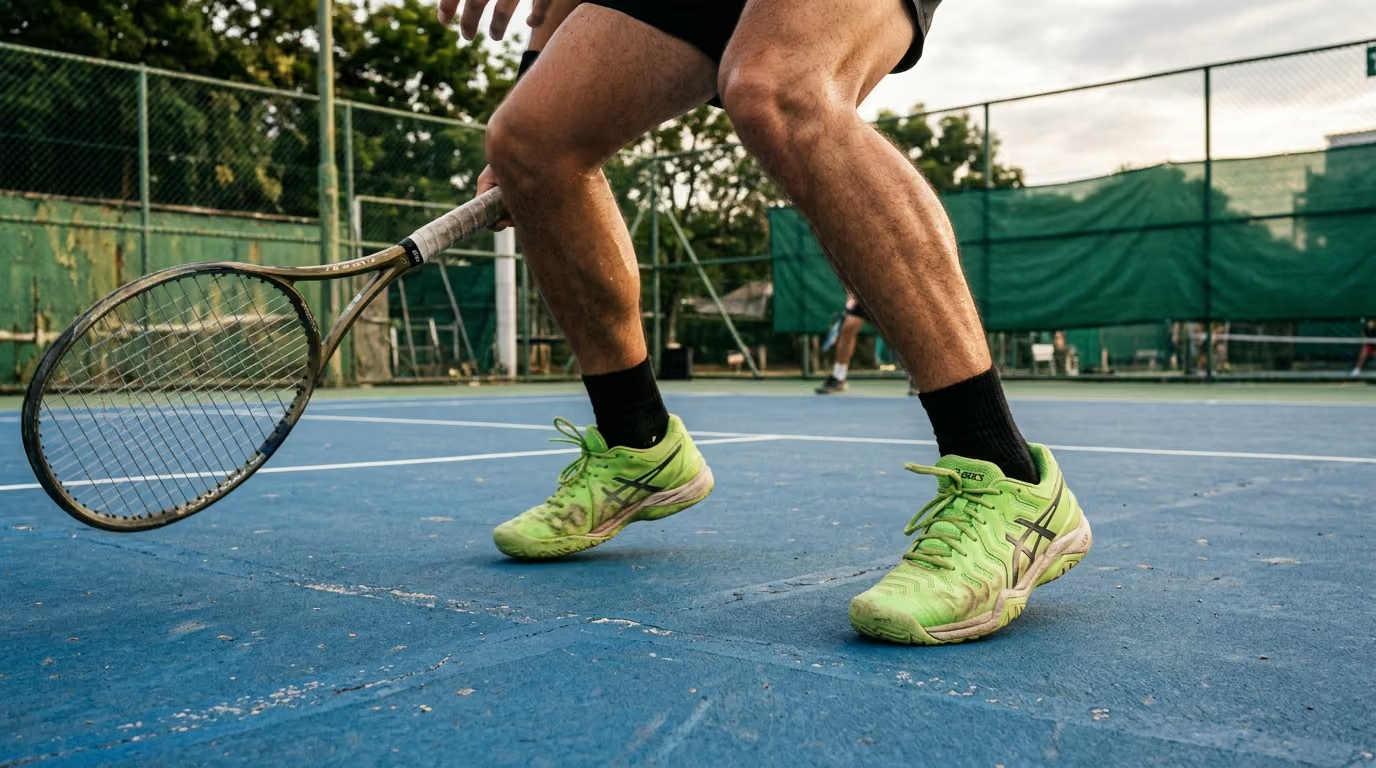
Healthy aging in racquet sports requires a shift from physical output to mental adaptability, tactical intelligence, and emotional regulation for sustained play.




You stand at the baseline, waiting for a serve. Your opponent is younger, faster, and hitting with heavy topspin. You feel a familiar tightness in your shoulder, and a brief moment of doubt creeps into your mind. A decade ago, you would have run down every ball without a second thought. Now, the mental challenge is keeping your confidence steady when your body begins to communicate its physical limits.
Sustaining a high level of play as you age requires shifting your focus from raw physical output to mental adaptability, tactical intelligence, and emotional regulation. True athletic longevity is achieved when you treat psychological skills as a core component of your training rather than an afterthought. This approach allows you to navigate physical changes, maintain motivation, and find deep satisfaction in the sport for years to come.
Many players believe that longevity simply means playing for as long as possible. However, performance longevity is a much broader concept. It involves preserving your participation, enjoyment, function, autonomy, and psychological well-being. This requires you to adapt your goals and training as your circumstances change.
Healthy aging is not a single physical metric. It is a multidimensional process involving physical capacity, psychological well-being, and active social participation. For racquet-sport players, this means success is measured by your ability to play regularly, recover from interruptions, and manage competitive nerves. It also means maintaining social relationships and preserving confidence without denying physical limitations.
To support this physical foundation, the World Health Organization recommends that adults accumulate 150 to 300 minutes of moderate-intensity aerobic activity per week, or 75 to 150 minutes of vigorous activity. They also recommend muscle-strengthening activities involving major muscle groups on at least two days per week. For older adults, the guidelines emphasize multicomponent activities that focus on functional balance and strength on three or more days per week.
These recommendations provide a useful framework, but you do not need to meet them through court play alone. A sustainable program often combines court time with targeted strength training and balance practice. To learn more about structuring your physical preparation, you can read our healthy aging and athletic longevity resources.
Scientific research suggests that the psychological benefits of racquet sports are substantial, though we must look at the evidence with healthy objectivity. Many studies show positive associations between court sports and mental well-being, but they do not always prove direct causation. Active players often possess other advantages, such as better baseline health, financial resources, or social support, which influence these outcomes.
A systematic review published in 2023 examined the relationship between pickleball and mental health. The researchers found that pickleball players frequently reported improvements in life satisfaction, personal well-being, and happiness, alongside lower levels of stress and depression. However, the review concluded that the current evidence does not establish clear causal benefits attributable solely to playing pickleball.
In 2025, another systematic review compared research trends in padel and pickleball. The analysis included 14 studies involving 1,403 participants. The researchers found that pickleball research concentrated heavily on well-being, life satisfaction, and social integration among older adults. In contrast, padel research focused more on performance-related variables, such as self-confidence, competitive anxiety, and mental fatigue.
The 2025 review reported a positive association between pickleball and happiness, with a correlation coefficient of 0.263. It also found a negative association with depression, measured at -0.23. These statistics indicate a real trend, but they should be interpreted as study-level associations rather than a guarantee that playing will change your personal mental health.
Other studies have looked at how racquet sports affect cognitive function. A longitudinal study of community-dwelling older adults compared experienced pickleball players with inactive controls and aerobic exercisers. The experienced pickleball players performed significantly better on tests of divided visual attention, multiple-object tracking, and simple reaction time.
The same study found no difference in balance between the experienced pickleball players and the aerobic exercisers. Both active groups, however, demonstrated better balance than the inactive participants. Interestingly, none of the groups showed significant cognitive or physical changes over the six-month study period. This suggests that while active players have higher baseline performance, racquet sports do not act as an immediate cure for age-related changes.
Similarly, a 2024 study on a badminton intervention for healthy older adults reported improvements in several cognitive parameters after the training program. However, the change in the Mini-Mental State Examination, which is a common measure of cognitive impairment, was not statistically significant. This reinforces the need for realistic expectations regarding cognitive claims.
We often view mental toughness as a fixed personality trait. You either have it, or you do not. In reality, psychological skills are trainable processes that you can develop with consistent practice. These skills help you regulate your attention, thoughts, emotions, and motivation during matches and practice.
Self-determination theory provides an excellent framework for understanding long-term motivation in sport. This theory states that your motivation is most sustainable when three basic psychological needs are satisfied:
A 2024 study reported that competence and autonomy significantly mediated the activation and maintenance of sports-participation behavior. Relatedness was not a significant mediator in that specific sample, which shows that the importance of each need can vary. However, nurturing all three needs generally helps players maintain their motivation as they age.
Self-efficacy is another crucial concept, defined as your belief in your ability to execute a specific action or manage a particular challenge. Self-efficacy is highly task-specific. You might feel highly confident in your volleying skills but feel insecure about your movement after a knee injury.
Research on sport injuries identifies self-efficacy as a major factor in how well senior athletes recover. A systematic review of return-to-sport outcomes examined 15 psychological factors across 11 studies with 983 athletes. The review found that high confidence, strong motivation, and low fear were associated with a faster return to play and a greater likelihood of returning to pre-injury performance levels.
Mindfulness is also a valuable tool for emotional regulation on the court. Studies on injured athletes returning to sport have shown that mindfulness interventions can reduce competitive state anxiety and burnout. It also increases regulatory emotional self-efficacy, helping players observe physical sensations and anxious thoughts without reacting to them in a negative way.
To maintain high motivation and reduce frustration as you age, you should organize your training around a three-layer goal system. This system balances your competitive desires with realistic, controllable objectives.
Outcome goals focus on the ultimate result, such as winning a club tournament, reaching a specific ranking, or defeating a long-time rival. While these goals are highly motivating, they are only partially under your control. They depend heavily on the performance of your opponents, tournament draws, and luck. If you rely solely on outcome goals, your motivation can suffer when your physical speed or power begins to change.
Performance goals focus on personal standards of achievement that are independent of your opponents. Examples include increasing your first-serve percentage, reducing unforced errors, or maintaining a specific court position during rallies. These goals are much more controllable than outcome goals. They allow you to feel a sense of accomplishment even if you lose a closely contested match.
Process and adaptation goals are the most valuable tools for athletic longevity. These goals focus entirely on the execution of specific behaviors, movements, or mental strategies during play. Examples include taking a deep breath before every return of serve, using a consistent pre-performance routine, or shortening your backswing under pressure.
Process goals also include tactical adjustments, such as using ball height and placement instead of raw power. These goals remain fully within your control, regardless of your physical condition or the skill level of your opponent. They provide a direct path to satisfying your need for competence and mastery.
To ensure your sporting environment supports your mental health, you can perform a simple quarterly audit of your participation. Ask yourself these three questions:
If you find that your sense of autonomy or competence is low, you can adjust your schedule. This might mean playing more recreational doubles, attending skills clinics, or choosing partners who support your development.
Competitive anxiety is a common experience for players of all ages and skill levels. It can cause muscle tension, a elevated heart rate, rapid breathing, and intrusive thoughts of failure.
A prominent meta-analysis of competitive sport found a small negative relationship between cognitive state anxiety and athletic performance. Conversely, self-confidence showed a clear positive relationship with performance. Another study reported that high self-confidence and sport self-efficacy moderate the relationship between anxiety and performance, helping athletes play well even when they feel nervous.
To manage competitive anxiety in real-time, you can use the pressure-response sequence between points:
To illustrate this sequence, let us examine the match-point spiral. A player reaches match point, notices their heart racing, and interprets this arousal as a loss of control. They rush their serve, double-fault, and become increasingly anxious, leading to a complete collapse in performance.
By applying the pressure-response sequence, the player recognizes their elevated heart rate as natural excitement. They step back, take one slow breath, complete their standard pre-serve routine, and focus on a high-percentage target with a safe margin over the net. They evaluate the quality of their serve execution, regardless of whether the opponent returns it.
You can also build a personal "Confidence Bank" to counter negative thoughts. The Confidence Bank is a written record of credible evidence of your capability. Write down completed training sessions, matches where you managed your nerves effectively, technical improvements, and responsible decisions to rest.
This bank serves as concrete proof that you can handle difficult situations. It shifts your confidence from vague optimism to a realistic assessment of your past preparation and resilience.
Returning to play after an injury is one of the greatest psychological challenges for an aging athlete. Many players receive medical clearance to return to the court, but they still feel a deep fear of re-injury. This fear can cause them to protect the injured area, move hesitantly, and avoid necessary movements like lateral lunges or sudden stops.
This situation is well-documented in sports science. The systematic review of return-to-sport outcomes reported that fear remains a prominent emotional response at the time of return, even when physical rehabilitation has been highly successful. If you return to competition with high fear, you may create a post-injury avoidance loop. You avoid moving dynamically, which reduces your confidence, increases your anxiety, and limits your performance.
To break this loop, you must treat your return to play as a gradual, psychological process. Work with your healthcare team to design a progressive exposure protocol:
If you struggle with the transition back to the court, you can find helpful advice in our player health insights.
Another common pitfall is the overconfident return. This occurs when an experienced player assumes their high technical skill will make up for a lack of physical conditioning. They return to full competition too quickly, ignore early warning signs of fatigue, and suffer a secondary injury.
To avoid this, you must separate technical confidence from physical readiness. Use objective physical milestones, such as pain-free agility work or a specific number of successful training sessions, before you enter a competitive match. Treat your willingness to modify your schedule as a sign of athletic maturity rather than weakness.
While tennis, pickleball, and padel share many similarities, they place distinct psychological demands on older players. Understanding these differences can help you tailor your mental preparation to your sport of choice.
Tennis is characterized by a large court, longer matches, and significant physical distance between players. If you play singles, you must cope with intense isolation, as there is no teammate to support you during a difficult stretch. This environment requires high levels of sustained concentration, self-reliance, and emotional independence.
As you age, the primary psychological challenge in tennis is managing your expectations regarding court coverage. Slower movement can make the court feel vast and expose defensive weaknesses.
To adapt, you must shift your mental focus toward early anticipation, precise ball placement, and high-margin shot selection. Playing doubles can also satisfy your need for relatedness while reducing the physical demands of the game.
Pickleball is played on a much smaller court, which places a premium on fast reaction times, rapid hand-eye coordination, and strategic patience at the kitchen line. The close physical proximity of opponents and partners makes pickleball a highly social sport. As the 2025 systematic review noted, pickleball research is strongly associated with social integration, happiness, and life satisfaction among older adults.
The psychological challenge in pickleball often involves managing frustration during fast, reflexive exchanges. Rushing your shots or over-reacting to mistakes can lead to unforced errors in the non-volley zone.
To excel, you must train your attention control, remaining patient during long dink rallies and waiting for the right ball to attack. Additionally, the highly social nature of the sport means you must manage the potential distraction of social comparisons and focus on your personal process goals.
Padel combines the fast-paced reflexes of pickleball with the complex tactical geometry of glass walls and fence rebounds. It is almost exclusively played as a doubles game, which highlights the importance of partner communication and shared court coverage. The 2025 systematic review showed that padel research frequently focuses on self-confidence, anxiety, and mental fatigue.
In padel, the mental game is centered on tactical problem-solving and spatial awareness. You must remain calm when the ball passes you, using your knowledge of the glass walls to play comfortable rebounds.
The sport requires high levels of emotional regulation and verbal communication with your partner. Because padel involves frequent changes of direction, you must also maintain high confidence in your balance and footwork to play without hesitation.
Many recreational and competitive players make predictable mistakes in their mental approach. These errors can limit their enjoyment and increase their risk of physical injury.
One of the most dangerous misconceptions is that mental toughness means ignoring physical pain. This attitude often leads to severe tissue damage and long interruptions in play. True resilience involves adapting your behavior in response to your body's feedback, not suppressing warning signals.
You should listen to your body without allowing every sensation to become a catastrophe. If you experience unusual pain or joint instability, the strong, resilient response is to stop playing, assess the situation, and seek professional guidance.
Another common mistake is assuming that confidence requires you to feel completely fearless. As we have seen, competitive anxiety is a natural response to a meaningful challenge.
A successful mental game does not eliminate nervousness. Instead, it teaches you to accept your arousal, use a structured routine, and return your attention to your tactical goals.
Finally, many players rely on unrealistic positive affirmations that conflict with their actual experience on the court. Telling yourself "I cannot miss a shot" is not credible, and it can actually increase your performance pressure.
More effective self-talk is specific, action-oriented, and focused on your technique. Use simple phrases like "high margin," "watch the ball," or "recover early" to guide your attention. To improve your physical preparation and support your mental focus, consider integrating targeted movement and mobility practices into your weekly routine.
Your mental state has a direct, physical influence on how well your body recovers between matches. High psychological stress, anxiety, and frustration trigger the sympathetic nervous system, increasing your heart rate, elevating muscle tension, and disrupting your sleep patterns. This state of constant physiological arousal can delay tissue healing and make you more vulnerable to chronic fatigue.
The relationship between your mind and body can be represented as a sustainable-performance loop:
Conversely, a negative cycle can quickly take over:
To break the negative cycle and support your physical recovery, you should practice active downregulation after matches. Spend five to ten minutes completing light mobility work and focused breathing exercises. This simple practice helps transition your nervous system from a stressed state into a relaxed, recovery-focused state.
I remember finishing a tough two hour padel match on a cold Tuesday night and waking up the next morning feeling like my lower back was locked in concrete. For a long time, I just accepted this as the price of playing hard in my forties. But once I started spending just ten minutes on targeted hip mobility before heading to the club, the stiffness almost completely vanished. It taught me that we do not have to accept pain as a default state of aging.
By dedicating a few minutes to physical preparation and post-match downregulation, you protect your body from excessive strain. For more detailed strategies on managing post-match fatigue and supporting tissue health, check out our recovery science guides.
While mental training is highly effective for improving your performance and enjoyment, it is not a substitute for professional healthcare. You should be able to distinguish between normal competitive anxiety and issues that require clinical attention.
You should consult a qualified healthcare provider or licensed mental health professional if you experience any of the following signs:
If you are looking for more information about our approach to player health and longevity, you can learn more about Evercourts and our mission to support lifelong racquet sports players.
To put these mental strategies into practice, you can follow a simple, six-phase mental-training curriculum over the next few months:
Keep a simple journal after every match or practice session. Note your motivation levels, competitive anxiety, confidence in specific shots, and any physical discomfort. The goal is to identify patterns, such as rushing your shots when you fall behind in a score.
Design a brief pre-match physical and mental warm-up, a five-second between-point reset, and a post-error routine. Practice these routines in low-stakes recreational matches until they feel natural and automatic.
Select one specific process cue for every practice session. Focus entirely on executing that cue, such as "early preparation" or "high net clearance," regardless of the match score or your opponent's play.
Introduce mild, controllable pressure into your practice sessions. Play tie-break simulations, set point-handicaps, or practice serving with targets on the court to test your emotional regulation.
Align your mental routines with your physical conditioning. Ensure you are meeting your weekly targets for strength and balance training, as physical readiness is the foundation of mental confidence.
Every month, review your progress and adjust your goals. Ensure your playing schedule continues to satisfy your basic psychological needs for autonomy, competence, and connection.
The mental game of healthy aging is your ability to keep adapting. By training your mind alongside your body, you can continue to enjoy the competition, movement, and community of racquet sports for many years to come.
When to revisit this resource: Re-read this guide at the start of a new competitive season, during your rehabilitation from an injury, or whenever you find your motivation starting to wane. Focus on your process goals, protect your recovery time, and celebrate the opportunity to play.
Follow Evercourts for practical insights on tennis, pickleball and padel performance, movement, recovery and healthy ageing. Stay connected for new articles, research-led guidance and ideas to help you play well and keep playing for years.


Read practical guidance for better movement, smarter preparation and a game that keeps working for you.
explore the Blog