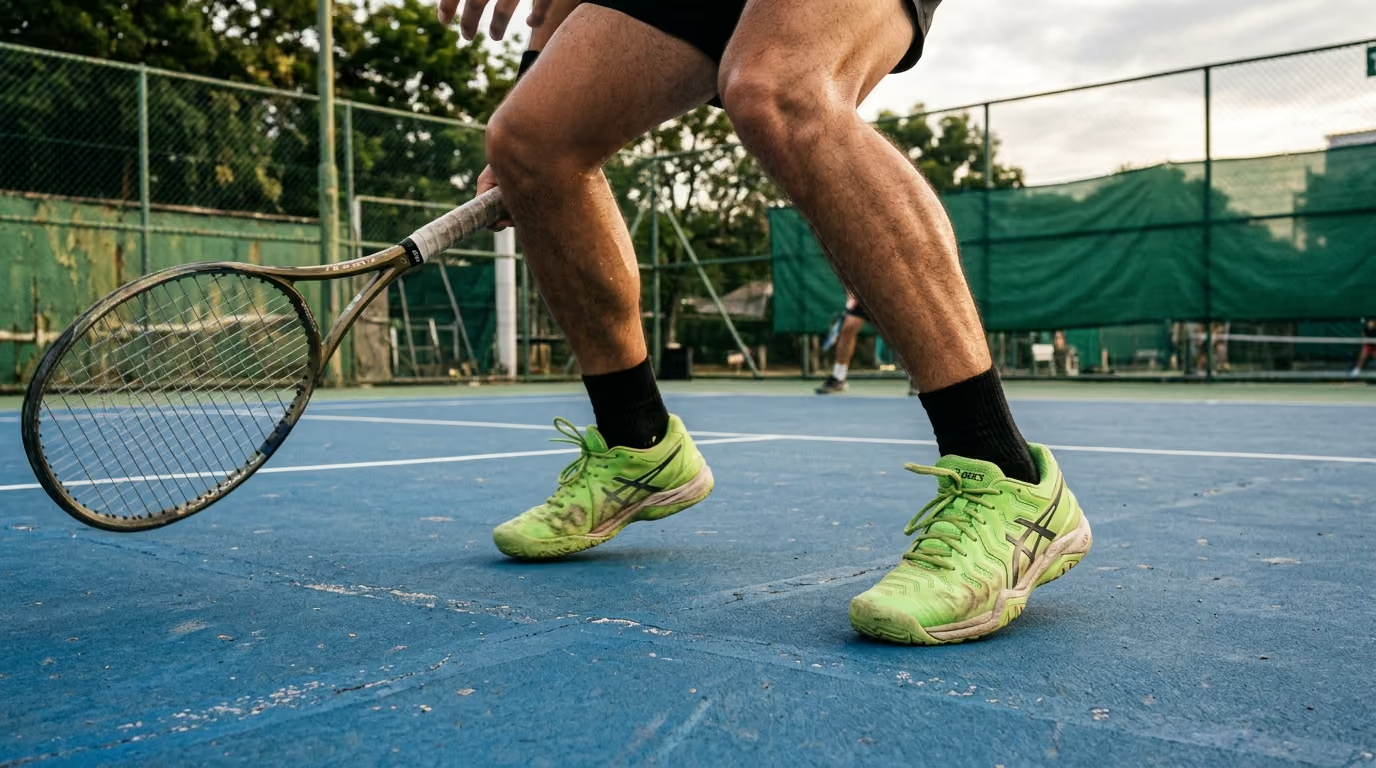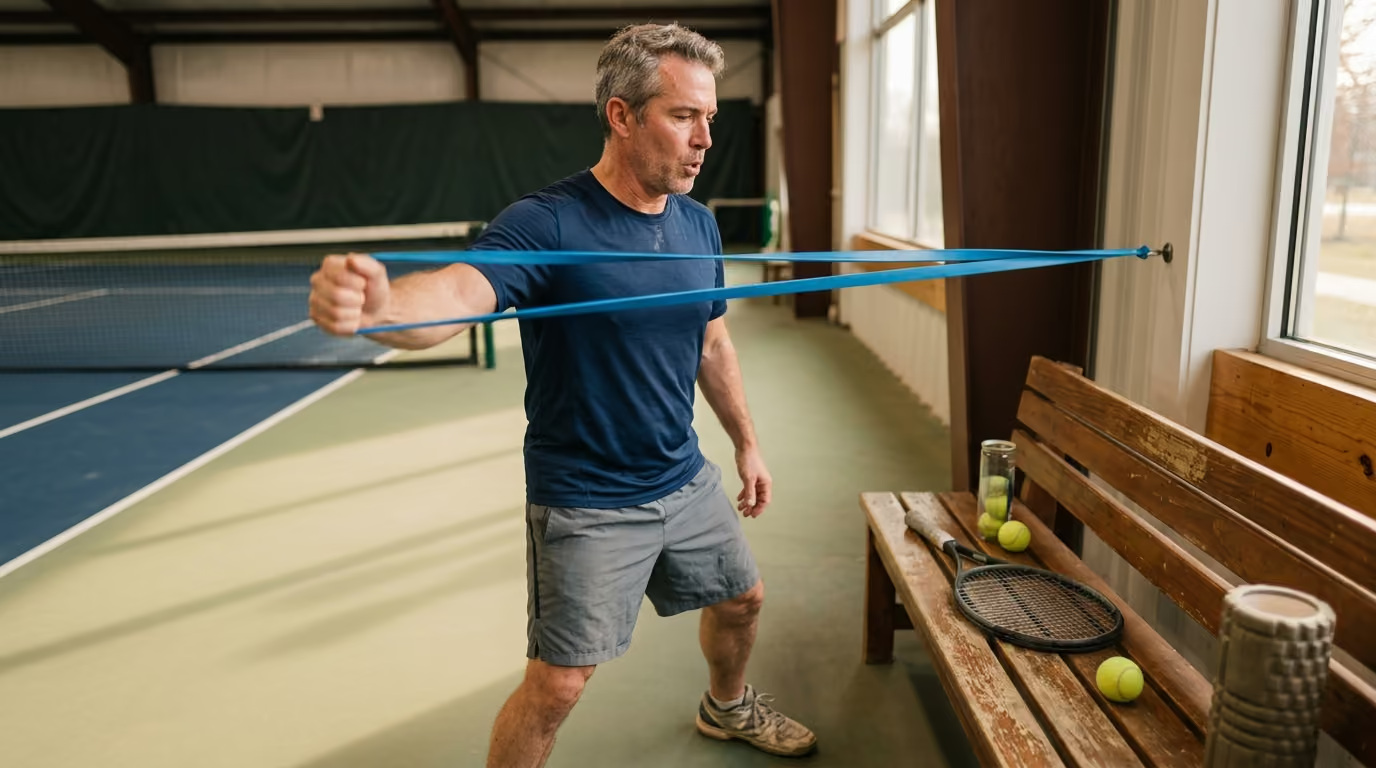

A multi-year athletic longevity plan helps racquet sports players maintain physical capability, movement quality, and recovery capacity for decades.




Many court athletes search for ways to play racquet sports without constant physical setbacks. They want to know how to maintain speed, avoid knee pain, and protect their shoulders over decades. This article provides a comprehensive long-term strategy to sustain your performance.
A structured multi-year plan preserves your physical capability, movement quality, and recovery capacity so you can play for decades. By focusing on performance continuity rather than permanent peaks, players can systematically manage age-related changes. This structured approach balances sport-specific play with targeted strength training and sensible load monitoring.
This framework prioritizes staying on the court. It avoids the cycle of overtraining followed by forced rest. By treating your athletic journey as a multi-year project, you can make smarter decisions each week.
Research consistently highlights the health benefits of regular racquet sport participation. Studies show that sports like tennis are associated with better cardiovascular fitness and lower risks of chronic diseases. For example, long-term tennis players often show better body composition and metabolic health. Much of this research is observational, so we cannot claim direct causation. However, the correlation between court sports and overall health remains strong.
As players age, they face natural changes in muscle mass and bone density. These changes do not mean you must accept a rapid decline in performance. Research indicates that older adults retain a high capacity for physical adaptation. Older adults can increase muscle mass and power through resistance training. This means targeted exercise can offset age-related loss of strength and power.
The World Health Organization provides clear guidelines for physical activity. Adults should aim for 150 to 300 minutes of moderate-intensity aerobic work each week. Alternatively, they can perform 75 to 150 minutes of vigorous-intensity aerobic exercise. The guidelines also recommend muscle-strengthening activities on at least two days per week. For older adults, the World Health Organization recommends adding balance and strength exercises on three or more days.
For court athletes, these numbers are useful baselines. You can find more information about these principles in our athletic longevity resources. A competitive player will likely exceed these minimums during preparation blocks. An injured player must work up to them slowly under professional guidance. The key is to match your training volume to your current physical capacity.
Athletic longevity requires looking beyond the next weekend match. A successful strategy organizes your training into nested levels. This structured approach prevents sudden spikes in workload. It also ensures you build physical qualities in a logical order.
This is your three to five year direction. It defines the type of player you want to remain. It outlines how many days you want to play each week. It also identifies which physical qualities you must preserve. For example, a player might focus on maintaining singles movement while managing historical knee issues. This horizon keeps your weekly decisions aligned with long-term enjoyment.
The annual plan organizes your year into logical phases. It prevents you from trying to maintain peak performance twelve months a year. Instead, it schedules periods of hard training, tournament play, and deliberate rest. This structure ensures your tissues have time to recover and adapt. The exact timing depends on your competition calendar and local climate.
Training blocks usually last four to six weeks. Each block focuses on one or two specific physical qualities. For example, a winter block might prioritize lower-body strength and aerobic capacity. A spring block might shift toward lateral quickness and serve volume. This focus allows your body to make meaningful adaptations.
The weekly plan is your day-to-day schedule. It balances court sessions, strength training, mobility work, and rest. A good weekly schedule is flexible. It allows you to adjust your training based on sleep, fatigue, or minor aches. You can find practical scheduling ideas in our strength and conditioning resources.
A successful year follows a systematic flow. Each phase builds the foundation for the next. This progression reduces injury risks and ensures you are ready for competition.
This phase follows your most demanding competitive season. It is not a period of total inactivity. Instead, you reduce repetitive sport-specific demands. You assess your current strength, joint health, and movement quality. This is the ideal time to address any lingering physical issues.
The goal here is to expand your physical reserve. You focus on general qualities like strength, cardiovascular fitness, and basic mobility. You spend more time in the gym and less time playing competitive matches. This builds the structural resilience needed for harder court sessions.
This phase bridges the gap between gym fitness and court performance. You introduce faster movements, rapid changes of direction, and rotational power work. Your court sessions begin to look more like real match play. You practice playing under moderate fatigue to build stamina.
During this phase, you focus on performing well and recovering fast. Your strength training shifts to a lower volume to preserve energy. You prioritize sleep, hydration, and nutrition. You also categorize your events to manage your mental and physical energy. This prevents every match from feeling like a high-stress final.
This is a short period of active recovery. You engage in low-impact activities like walking, cycling, or swimming. You let your joints rest from court impacts. It is a time to restore your mental energy before starting the next cycle.
To maintain athletic longevity, you must preserve specific physical qualities. These qualities decline with age if they are not trained. However, targeted exercise can maintain them for a long time.
Strength protects your joints from the high forces of court sports. It is the foundation for acceleration and deceleration. Your program should include split squats, hip hinges, and calf raises. It should also include pulling, pushing, and core stability work. The National Strength and Conditioning Association recommends strength sessions two to three times per week.
Power is the ability to move quickly. It is essential for a fast split step, a powerful serve, and sudden recovery runs. Power training can include medicine ball throws and controlled jumps. You can also perform strength exercises with a fast concentric phase. These movements should always prioritize control over maximum effort.
Court sports require repeated short bursts of energy. A strong aerobic system helps you recover between points and matches. You can build this through cycling, swimming, or easy walking. You can also use structured interval training on the court. Cross-training is highly valuable because it reduces joint wear.
Targeted mobility ensures your joints can move through their required ranges. Focus on ankle dorsiflexion, hip rotation, and thoracic mobility. Balance training is also critical for court athletes. It improves single-leg stability during wide shots and helps prevent falls. The World Health Organization emphasizes balance training for older adults to maintain functional independence.
Your muscles and tendons must be conditioned to tolerate repetitive impacts. This capacity is built through progressive loading. You should not go from zero playing time to multi-hour tournaments. Instead, slowly increase your weekly minutes on the court. This gradual progression gives your connective tissues time to adapt.
We offer detailed guides on these movement patterns in our mobility and movement resources.
Load management is the process of balancing work and recovery. It is your most powerful tool for avoiding injury. To apply this practically, you must understand external and internal loads.
External load is the work you perform on the court. This includes minutes played, games completed, and serves hit. Internal load is how your body responds to that work. You can measure internal load using a simple rating of perceived exertion. Rate each session on a scale of one to ten.
To calculate your session load, multiply the duration by your exertion rating. For example, a sixty-minute session at an exertion of six equals three hundred and sixty units. Track this number in a simple journal or spreadsheet. This helps you spot sudden spikes in training volume.
The speed at which you increase your training is your ramp rate. Sudden increases in court time often lead to tendon issues. Try to keep your weekly load increases gradual. If you plan to play more matches, reduce your gym volume temporarily. If you are starting a heavy strength block, reduce your court intensity.
During a match or practice, monitor your movement quality. If you feel your split step slowing down, focus on tactical efficiency. Take full advantage of the changeover rest periods. Stay hydrated and consume small amounts of carbohydrates during long matches.
After a hard session, assess how you feel the next morning. Mild stiffness that resolves during a warm walk is normal. Severe pain or stiffness that makes walking difficult is a warning sign. If you experience this, reduce the intensity of your next session. You can learn more about recovery tracking in our recovery science resources.
While all racquet sports share common elements, they place different demands on the body. Your longevity plan must reflect these specific differences.
Tennis involves a large playing area. This requires significant running volume and high-velocity deceleration. The serve is a complex, high-velocity overhead movement. This stroke places extreme stress on the shoulder, core, and spine.
Tennis players frequently experience ankle sprains, calf strains, and shoulder issues. The systematic review of racquet sport injuries highlights the ankle as a common injury site. Tennis matches can also last several hours. This makes cardiovascular endurance and thermal management critical.
Pickleball is played on a much smaller court. This reduces the total running distance but increases the density of movements. Players must perform rapid reactions and low-to-high lunging patterns near the kitchen line. The paddle is light, but the repetitive wrist and elbow actions can lead to tendon irritation.
Pickleball players face high rates of Achilles tendon strains and lower-back fatigue. The constant bent-over posture puts pressure on the lumbar spine. Balance is especially important because of the quick, lateral adjustments required. To play pickleball safely for years, focus on hip mobility and lower-body power.
Padel is played in an enclosed glass court. It involves constant changes of direction, wall rebounds, and rapid accelerations. The sport requires frequent overhead shots like the bandeja and vibora. These strokes are played with a bent elbow, which stresses the joint differently than a tennis serve.
The systematic review noted high injury prevalence rates in padel studies. Common issues include epicondylitis, calf tears, and lower-back strains. The hard concrete surface under the turf increases joint impact. Padel players must prioritize shoulder rotation, knee stability, and rotational trunk strength.
For a deep dive into court-specific injury reduction, visit our injury prevention resources.
Many court athletes make simple mistakes that hinder their longevity. Recognizing these errors can save you months of frustration and injury.
Many players believe that playing matches is enough to maintain physical capacity. While court sports build cardiovascular fitness, they do not provide a progressive resistance stimulus. Without gym training, you will lose muscle mass and strength over time. This makes your joints more vulnerable to the high forces of play.
Another common error is ignoring next-day stiffness. Some players believe that soreness is just a normal part of aging. While mild discomfort occurs, persistent stiffness is a sign of inadequate recovery. Ignoring this warning sign can lead to chronic tendon issues.
Your recovery practices directly affect how your body adapts to training. Sleep is the most critical recovery variable. During deep sleep, your body releases hormones that repair muscle tissue. A lack of sleep increases your risk of injury and reduces athletic performance.
Nutrition also plays a major role in tissue health. Ensure you consume enough protein to support muscle repair. Stay hydrated before, during, and after your matches. In hot environments, replace lost electrolytes to prevent muscle cramping and excessive fatigue.
While a self-directed plan is valuable, some situations require professional medical input. Knowing when to seek help protects your long-term health and athletic safety.
Before starting or significantly increasing your training, consider a medical screening. This is especially important if you have a history of cardiovascular or metabolic disease. The American College of Sports Medicine recommends screening for inactive individuals with known health conditions.
Pay close attention to any unusual cardiovascular symptoms. Chest pain, fainting, lightheadedness, or extreme breathlessness are serious warning signs. Do not try to push through these symptoms. If you experience them, stop exercising immediately and consult a physician.
You should also consult a healthcare professional for persistent joint pain. Red flags include joint swelling, inability to bear weight, or numbness. If pain does not improve after a week of rest, seek a professional evaluation. An experienced physiotherapist can help you identify the root cause of your pain.
Working with a professional helps you design a safe return-to-play protocol. They can provide targeted exercises to address your specific limitations. This ensures you do not return to the court too quickly and risk reinjury.
Your athletic longevity is built through consistent, small actions. Use this simple checklist to kickstart your plan this week.
By taking these steps, you build a sustainable foundation for your sport. You can continue to compete, improve, and enjoy the court for many years to come.
Follow Evercourts for practical insights on tennis, pickleball and padel performance, movement, recovery and healthy ageing. Stay connected for new articles, research-led guidance and ideas to help you play well and keep playing for years.


Read practical guidance for better movement, smarter preparation and a game that keeps working for you.
explore the Blog