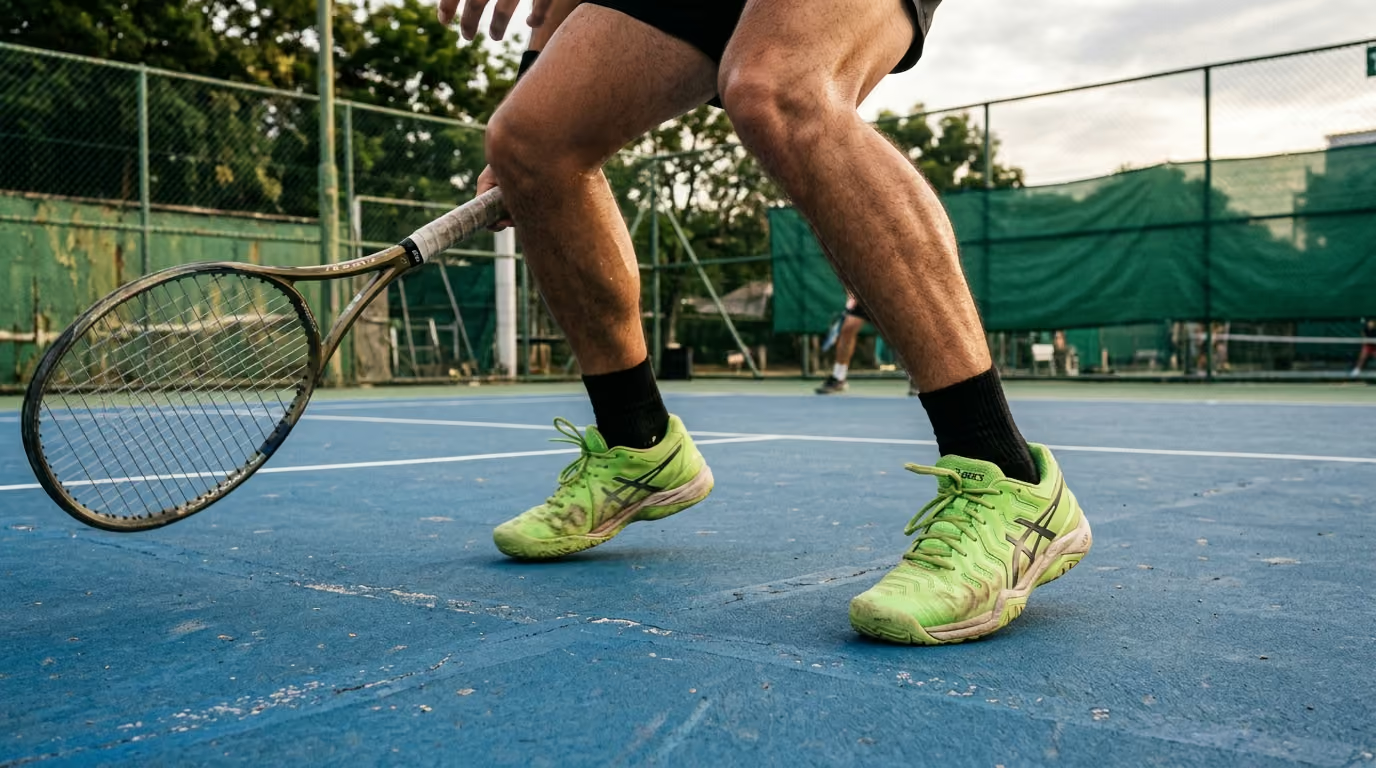
A consistent racquet sports playing schedule is achieved by implementing systems that reduce physical, domestic, and logistical friction in your daily life.




Maintaining a consistent schedule on the court is not a matter of sheer willpower but a result of reducing physical, domestic, and logistical friction. By organizing your home storage, aligning your calendar with your actual energy capacity, and establishing repeatable preparation routines, you can play more frequently without burning out. This comprehensive playbook details how to transform these administrative hurdles into automated habits.
A structured court lifestyle is the actual foundation of athletic longevity. When you establish dependable systems to manage your gear, transport, and nutrition, you protect your energy for the game itself. Let us examine how to construct a practical operating system that supports your passion for tennis, pickleball, or padel.
A court-lifestyle system is a deliberate network of habits, physical organization, scheduling strategies, and preparation routines. It is not an occasional workout plan or a set of training tips. Instead, it is a comprehensive framework designed to make regular play the path of least resistance.
This system consists of six distinct layers. The first is opportunity, which refers to the availability of courts and partners in your area. The second is readiness, ensuring your body and your gear are prepared for action. The third layer is movement, covering the transportation of yourself and your equipment.
The fourth is performance, which includes the physical and mental demands of the session itself. The fifth is recovery, focusing on sleep, nutrition, hydration, and joint care. The sixth and final layer is maintenance, which includes laundry, gear repairs, and restocking expendable items.
If any single layer in this system breaks down, your ability to play consistently is compromised. For example, you might have a free evening and a willing partner. However, if your shoes are still wet from yesterday or your racket is unstrung, you cannot play.
Friction is the primary enemy of consistency. It can be categorized into several distinct types that disrupt your routine. Time friction occurs when you spend too much time preparing before leaving the house. Search friction happens when your balls, socks, or keys are scattered across multiple rooms.
Coordination friction refers to the difficulty of aligning schedules with partners or securing court reservations. Physical friction includes the stiffness, fatigue, or lingering soreness that makes you hesitate to sign up for another match. Domestic friction involves the accumulation of sweaty laundry, damp towels, or late-night kitchen cleanup that upsets the household.
To combat these challenges, you must establish a minimum viable play setup. This is the smallest collection of functional gear and pre-made decisions required to step onto the court. By identifying this baseline, you can bypass the decision fatigue that often leads to canceled sessions.
Additionally, you must distinguish between one-time setup costs and recurring transaction costs. Setting up a dedicated gear station in your garage is a one-time cost. Searching for your favorite wristband before every single match is a recurring transaction cost. Your goal is to pay the one-time cost so you can eliminate the recurring tax on your time and energy.
According to industry reports, recreational racquet sports are experiencing historically high levels of participation. The United States Tennis Association reported that domestic tennis participation reached 27.3 million players in 2025. This figure includes 14.5 million core players, defined as individuals who play at least ten times per year.
At the same time, pickleball has seen explosive growth. The Sports and Fitness Industry Association reported that US pickleball participation reached 24.3 million players in 2025, a massive increase from 4.2 million in 2020. This shift means more players are competing for limited court space, making organized logistics even more critical.
While industry bodies define a core player by a relatively low annual threshold, a sustainable weekly routine demands a higher standard. True physical consistency requires aligning your play with established public health guidelines. The US Department of Health and Human Services recommends that adults accumulate 150 to 300 minutes of moderate-intensity aerobic activity per week.
Alternatively, you can complete 75 to 150 minutes of vigorous-intensity aerobic physical activity weekly. The guidelines also specify that adults should perform muscle-strengthening activities of moderate or greater intensity on two or more days per week. Racquet sports can easily satisfy the aerobic requirements, but matches alone do not provide balanced strength development.
To maintain athletic longevity, you must view the court as a place to use your fitness, not just a place to build it. Overusing the court without supporting your body with strength work can lead to repetitive strain. Therefore, a complete court lifestyle must balance matches with physical preparation.
Furthermore, sleep is a critical biological constraint that directly influences your performance and joint health. The Centers for Disease Control and Prevention recommends that adults aged 18 to 60 obtain at least seven hours of sleep per night. More than one-third of American adults report falling short of this target regularly.
Chronic sleep deprivation increases your perceived exertion and impairs your coordination on the court. It also slows down the tissue repair processes that occur during deep sleep cycles. When building your weekly calendar, sleep should be treated as a non-negotiable window of recovery rather than leftover time.
Current sports science also emphasizes that preparation and recovery are highly individualized processes. A systematic review published in 2026 highlighted that while neuromuscular warm-ups and progressive strength training show strong associations with injury risk reduction, the evidence for passive recovery modalities remains mixed. This means that commercial recovery gadgets are secondary to fundamental habits like sleep, hydration, and structured training progression.
A successful calendar is built from the ground up, starting with your absolute life constraints. Begin by blocking out your working hours, family commitments, sleep windows, and daily travel times. Only when these fixed points are visible should you begin to allocate slots for court play.
To manage your schedule effectively, utilize a two-level calendar system. The first level is your commitment calendar, which contains events that other people depend on. This includes league matches, scheduled lessons, pre-booked court times, and tournament dates. These events are fixed and require your punctual presence.
The second level is your capacity calendar, which tracks your actual physical readiness and scheduling flexibility. This level should display your sleep debt, recent match durations, current soreness levels, and scheduled strength sessions. By comparing your commitment calendar to your capacity calendar, you can determine if you are over-scheduling.
To prevent burnout, establish at least one anchor session each week. An anchor session is a recurring, high-priority court block that takes place at the same time and venue every week. This consistency removes the need to coordinate partners or search for locations on short notice.
In addition to your anchor session, you can add optional social matches or technical practice blocks. However, you should also schedule dedicated time for strength and conditioning programs to support your joints. A balanced week might feature one competitive match, one technical drill session, and two short off-court strength workouts.
To prevent a single scheduling conflict from ruining your week, create a cancellation ladder. If a full league match is canceled, step down to a technical hitting session with a single partner. If no partners are available, pivot to solo wall drills or dynamic footwork exercises.
If you are short on time, reduce the session to a brief mobility routine at home. If you are physically exhausted or ill, take a complete rest day without guilt. This tiered approach keeps you connected to your sport without requiring an all-or-nothing commitment.
Finally, always build realistic transition buffers into your schedule. A 90-minute tennis match is never just a 90-minute time commitment. You must account for packing your bag, driving to the venue, parking, warming up, cooling down, and driving home.
A realistic calendar block for a 90-minute match should span at least two and a half hours. Ignoring these transition periods creates constant lateness and increases your pre-match stress. Planning your week backward from your most important match day ensures you arrive at the court calm and physically prepared.
To minimize preparation time before you leave the house, design your home storage according to a sequence of use. Your gear should move through a logical flow from the moment you return from the court. This sequence progresses from the entry point to the gear station, the clothing station, the laundry, and finally the recovery area.
Set up a dedicated gear station near your primary exit door or in a well-ventilated garage. This station should feature a sturdy rack for your rackets or paddles, keeping them off the floor. Install open hooks for hanging your sports bags, hats, and towels so they can air out immediately.
Keep a visible, clear bin for fresh balls, overgrips, lead tape, and other small accessories. This visual inventory allows you to see exactly what you have at a glance, preventing last-minute searches. Position a small charging dock nearby for your sports watch, portable sensor, or court camera.
Crucially, separate your gear into four distinct physical states. The first state is ready, which means the equipment is clean, functional, and packed in your bag. The second state is used, representing items that need to be washed, cleaned, or inspected.
The third state is wet, which applies to damp towels, wristbands, and shoes that require immediate air drying. The fourth state is repair, consisting of rackets that need restringing, or paddles with worn edge guards. By keeping these states physically separate, you avoid the mistake of pulling a wet shirt or a broken racket out of your bag at the court.
Implementing a two-bag model can further streamline your preparation. Designate one competition bag that remains fully stocked and reserved exclusively for official matches or league play. This bag should contain your best frames, fresh cans of balls, backup grips, and a small first-aid kit.
Your second bag is for daily practice, containing older balls, training aids, and casual clothing. This division ensures that your tournament-ready gear is never accidentally left behind or worn out during light practice. It also saves you from constantly packing and unpacking the same bag.
To make this system work, your storage must be designed for instant visual checks. You should be able to look at your gear station and instantly verify your readiness. If you have to open multiple closed cases or search through dark closets, your storage system is creating friction. Simple, open shelving and clear storage containers are highly effective tools for the active athlete.
Sports laundry should be managed as a continuous loop rather than an occasional weekend chore. The cycle must follow a strict path: remove, ventilate, wash, dry, fold, and repack. The most critical decision in this loop occurs immediately after you step through your front door.
Never leave sweaty garments compressed inside your sports bag overnight. This practice traps moisture, promotes mold growth, and ruins modern technical fabrics. Instead, make it a rule to empty your bag immediately upon returning home.
Hang damp shirts, shorts, and sports bras on a dedicated drying rack before placing them in the laundry hamper. This initial ventilation step prevents permanent odors from setting into the synthetic fibers. It also protects your other household laundry from moisture transfer.
In our experience, having a reliable routine for your gear is just as important as your physical training. I remember finishing a tough two hour padel match on a cold Tuesday night and waking up the next morning feeling like my lower back was locked in concrete. For a long time, I just accepted this as the price of playing hard in my forties. But once I started spending just ten minutes on targeted hip mobility before heading to the club, the stiffness almost completely vanished. It taught me that we do not have to accept pain as a default state of aging. Incorporating a quick physical reset and a structured gear routine into your evening makes a profound difference.
To avoid running out of clean gear during busy playing periods, maintain a calculated clothing reserve. Your reserve should be based on your actual weekly playing frequency. If you play three times a week, you need at least five complete sets of court clothing.
This surplus ensures that you are never forced to run a rushed laundry cycle on a match night. Your clothing reserve must include court-specific socks, moisture-wicking underwear, support garments, and weather-appropriate layers. Treat these items as essential performance equipment rather than casual apparel.
When washing technical fabrics, follow a specialized wet-item protocol. Avoid using liquid fabric softeners, as they leave a chemical coating that clogs the pores of moisture-wicking materials. This coating reduces the fabric's breathability and traps odor-causing bacteria.
Use a sport-specific detergent and air-dry your technical clothing whenever possible. Extreme heat from commercial dryers can degrade the elastic fibers in performance shorts, socks, and compression gear. Once your clothing is fully dry, fold and repack your daily-play bag immediately to maintain constant readiness.
Nutritional planning for racquet sports should focus entirely on your departure and return times. Before you play, your primary goal is to top off your energy stores without upsetting your stomach. Choose easily digestible carbohydrates paired with a small amount of protein, and consume them one to two hours before stepping onto the court.
For post-play nutrition, prepare a substantial recovery meal in advance. When you return home fatigued and hungry, you should not be forced to make complex cooking decisions. Having a pre-made meal waiting in the refrigerator prevents impulsive, low-quality dietary choices.
To simplify your shopping, categorize your sports nutrition into four clear groups. Fast and light foods include bananas, applesauce, and simple energy bars for quick pre-match fuel. Portable foods are items like turkey wraps, trail mix, and electrolyte packets that travel well in your bag.
Substantial foods are your pre-prepared post-match meals, such as lean proteins, whole grains, and roasted vegetables. Emergency foods are highly shelf-stable items, like vacuum-sealed nuts or energy gels, stored in your vehicle for unexpected schedule delays. This categorization ensures you are never caught without appropriate nutrition.
Hydration requires a highly individualized approach because sweat rates vary wildly based on temperature, humidity, and body size. The Centers for Disease Control and Prevention advises individuals exercising in hot conditions to drink plenty of fluids before, during, and after activity. Do not wait until you feel thirsty to start drinking water, as thirst is a delayed indicator of dehydration.
For intense sessions lasting longer than an hour, plain water is often insufficient. You must replenish lost sodium, potassium, and magnesium by adding high-quality electrolyte formulas to your bottles. Carry at least two insulated bottles to the court, one containing pure water and the other containing an electrolyte solution.
On extremely hot days, check the local heat index and air quality before confirming your play. The CDC recommends scheduling outdoor activities during cooler morning or evening hours to reduce the risk of heat illness. If you must play in high temperatures, pace your efforts, take longer rest breaks in the shade, and monitor your body closely.
Establish a strict stop rule: if you experience dizziness, headache, nausea, or sudden weakness, stop playing immediately and move to a cool area. No recreational match is worth the risk of heat exhaustion or heat stroke. Keep a lightweight, insulated cooler in your vehicle stocked with ice, cold water, and damp towels to manage your body temperature.
While all racquet sports share similar lifestyle themes, their specific logistical demands differ significantly. Tennis requires the largest physical and temporal commitment. A standard single or doubles tennis match can easily last two hours, demanding substantial physical endurance.
Tennis courts are also large, making reservations highly competitive in metropolitan areas. Additionally, tennis players must manage string tension loss and rapid ball wear. Playing with dead strings or worn-out balls can alter your technique and increase the stress on your elbow and shoulder.
Pickleball operates on a much more compact physical and logistical scale. The court is roughly one-fourth the size of a tennis court, allowing venues to host more players simultaneously. A single pickleball game is relatively short, usually lasting fifteen to twenty minutes, which allows for rapid rotations and social play.
The gear footprint is smaller, as paddles fit easily into standard backpacks and do not require restringing. However, pickleball players must manage ball durability, as plastic balls can crack or lose their bounce quickly in cold weather. Furthermore, the sport's high density can lead to crowded venues, making a clear arrival and check-in system essential.
Padel presents a unique combination of indoor and outdoor logistical challenges. Padel is played within an enclosed glass and mesh cage, which requires specific spatial awareness and court etiquette. The rackets are thicker, solid foam-core paddles that are highly sensitive to temperature fluctuations.
Leaving a padel racket in a hot car trunk can degrade the internal foam, permanently ruining its playing characteristics. Padel shoes also require a specific tread pattern designed for synthetic turf filled with sand. This sand can easily transfer to your vehicle and home, requiring a dedicated shoe-brushing routine before you leave the club.
To manage these sport-specific differences, build a localized court-radius map. Categorize your local venues into four distinct tiers based on travel time and reservation difficulty. Tier-one venues are courts within ten minutes of your home, ideal for spontaneous practice or quick wall drills.
Tier-two venues are within twenty-five minutes, suitable for your weekly anchor matches. Tier-three venues are major facilities further away, reserved for weekend tournaments or league play. Tier-four venues are high-friction locations with poor parking or complex booking systems, which you should avoid unless absolutely necessary.
The single most common mistake is treating consistent play as a test of personal motivation rather than a systems problem. When players miss sessions, they often blame their lack of discipline. In reality, they were defeated by a series of small, avoidable friction points, such as unwashed socks, unstrung rackets, or heavy traffic.
Instead of trying harder next week, examine your preparation chain to find exactly where the system broke down. Address the physical bottleneck rather than relying on emotional energy to carry you through.
Another frequent error is over-scheduling your calendar when you feel a sudden surge of enthusiasm. Adding multiple competitive matches to your week without building a physical baseline is a recipe for overuse injuries. The physical activity guidelines explicitly advise inactive adults to start with small amounts of movement and progress gradually.
Build a stable baseline of one or two sessions per week before you attempt to increase your playing volume. This conservative approach allows your tendons, muscles, and joints to adapt to the specific forces of racquet sports.
Many players also confuse sheer court volume with smart physical preparation. Playing four matches a week while completely neglecting sleep, nutrition, and strength work is unsustainable. Frequent play without active physical maintenance will eventually lead to chronic fatigue and forced time off the court.
Your on-court performance is a direct reflection of your off-court lifestyle. Balance your match play with targeted off-court physical support to protect your athletic longevity.
Additionally, many court athletes rely on a single, disorganized sports bag for all their needs. This bag quickly becomes a chaotic mix of clean clothing, damp towels, old ball cans, and empty snack wrappers. This lack of organization creates search friction and leads to forgotten gear.
Implement the two-bag model and maintain a strict weekly cleaning routine. Every Sunday, empty your bag completely, wipe down the interior, restock consumables, and inspect your frames or paddles. This simple habit ensures you never arrive at a match with missing or damaged equipment.
Finally, avoid using rigid, unscientific hydration and warm-up routines. Many players drink a standard amount of water regardless of the weather, or perform a static stretching routine that does not prepare them for dynamic movement. Your pre-match preparation should be active, specific, and tailored to the current environmental conditions.
Incorporate dynamic movements like lunges, arm swings, and light jogging to increase your core temperature and joint lubrication. Adjust your fluid intake based on the temperature, humidity, and your personal sweat rate.
A well-designed lifestyle system directly supports your body's natural recovery processes. By organizing your calendar around consistent sleep windows, you ensure your tissues have the time and resources to rebuild. Deep sleep is when your body releases growth hormones and reduces systemic inflammation.
When you protect your sleep, you dramatically reduce your risk of developing chronic fatigue. You also return to the court with sharper reflexes, better spatial awareness, and a lower perception of physical effort.
Furthermore, a structured schedule allows you to plan your recovery phases before you even step onto the court. Instead of finishing a match and immediately rushing back to your daily tasks, you can allocate a 15-minute transition window. Use this time to perform a gentle cool-down, rehydrate with clean electrolytes, and change into dry clothing.
This immediate post-play care kickstarts the recovery process, helping to reduce muscle soreness the following morning. It also prevents the sudden drop in body temperature that can cause muscle stiffness after intense exercise.
Organizing your home storage to include a dedicated recovery space can also encourage helpful daily habits. Keep your foam rollers, massage balls, and stretching bands visible and easy to access in your living room or bedroom. When these tools are highly visible, you are much more likely to use them during your evening downtime.
Regularly spending ten minutes on mobility and movement patterns can help maintain joint health and tissue quality. This consistent, low-intensity care is far more beneficial than occasional, long recovery sessions.
Ultimately, a structured lifestyle reduces your mental and emotional fatigue. When your gear is organized, your meals are prepared, and your transport is planned, you eliminate the background stress of logistics. This mental clarity allows you to fully enjoy your time on the court, which is essential for long-term athletic longevity.
A relaxed mind supports a relaxed body, helping you move more fluidly and efficiently during competition. Reducing your overall stress load is one of the most powerful, under-appreciated ways to support physical recovery.
While minor muscle soreness is a normal part of physical training, you must learn to distinguish temporary discomfort from serious injury. Normal delayed onset muscle soreness typically peaks 24 to 48 hours after an intense session and is characterized by a dull, bilateral ache. This soreness should gradually improve with light movement, hydration, and rest.
In contrast, injury-related pain is often sharp, sudden, localized to one side of the body, or accompanied by visible swelling. If you experience these symptoms, or if your pain worsens during play, you should immediately stop training.
Consult a qualified healthcare professional if you experience joint instability, radiating pain, numbness, or tingling in your limbs. These symptoms can indicate nerve compression or ligament damage that requires professional evaluation. Do not attempt to play through pain by using anti-inflammatory medications to mask your symptoms.
Doing so can turn a minor, acute strain into a chronic, debilitating injury that requires months of rehabilitation. A physical therapist or sports medicine specialist can provide an accurate diagnosis and a structured recovery plan.
Additionally, seek medical guidance if you experience persistent, unexplained fatigue that does not improve after several days of rest. This can be a sign of overtraining syndrome, systemic inflammation, or an underlying medical condition.
A medical professional can order blood work and assess your overall health to ensure it is safe for you to continue training. Working alongside a qualified practitioner is a key component of injury prevention strategies and healthy aging.
Shift workers cannot rely on a traditional weekly anchor session, so they must use a rolling scheduling system. Instead of matching your calendar to a standard seven-day week, plan your court sessions in alignment with your shift rotations. Use your days off to schedule longer, high-quality matches, and protect your sleeping windows above all else.
Keep a highly portable gear bag in your vehicle so you can quickly take advantage of unexpected play opportunities between shifts. Establish a network of flexible hitting partners who also work non-traditional hours, or join clubs that offer 24-hour court access.
In small living spaces, vertical storage and strict odor control are absolutely essential. Install a vertical wall rack in an entryway or hallway to keep your rackets or paddles off the floor and out of valuable closet space. Use a compact, zippered, and ventilated laundry bag specifically designed to trap odors from damp court clothing.
Avoid storing your sports bag in your bedroom or living area where it can collect dust and trap stale air. Instead, store it in a designated utility closet or an entryway cubby, and air-dry your shoes on a balcony or near a window immediately after playing.
Balancing sport with family life requires transparent communication and shared calendar visibility. Use a shared digital calendar so your family can see your court sessions, league matches, and travel buffers well in advance. Whenever possible, align your play times with your family's existing routines, such as scheduling early morning matches before your household wakes up.
Prepare double portions of your post-play meals so your family can enjoy a quick, healthy dinner alongside you when you return. Finally, design a clear backup plan for childcare handoffs, ensuring your spouse or partner is never left with unexpected domestic burdens.
Tournament travel introduces new variables like unfamiliar courts, climate shifts, and limited gear access, requiring a more detailed preparation checklist. Pack at least three rackets or paddles, several fresh cans of balls, and double the amount of clothing you would normally use for local play. Research local restringers or shops near the venue in advance so you are prepared for unexpected gear failures.
Pack a dedicated travel cooler with your preferred hydration mixes, familiar snacks, and active recovery tools to avoid relying on venue concessions. Most importantly, arrive at the tournament location with a generous time buffer to inspect the courts and acclimate to the local playing conditions.
Follow Evercourts for practical insights on tennis, pickleball and padel performance, movement, recovery and healthy ageing. Stay connected for new articles, research-led guidance and ideas to help you play well and keep playing for years.


Read practical guidance for better movement, smarter preparation and a game that keeps working for you.
explore the Blog