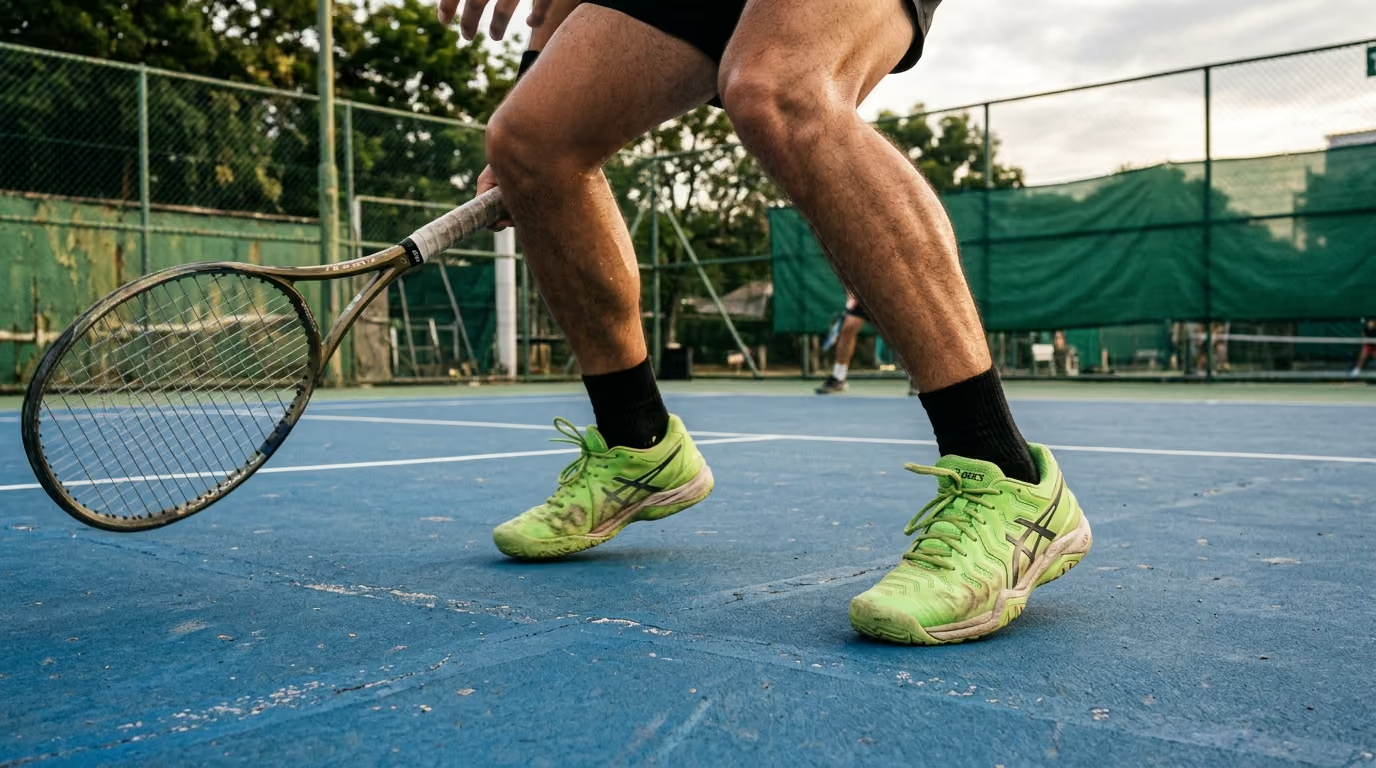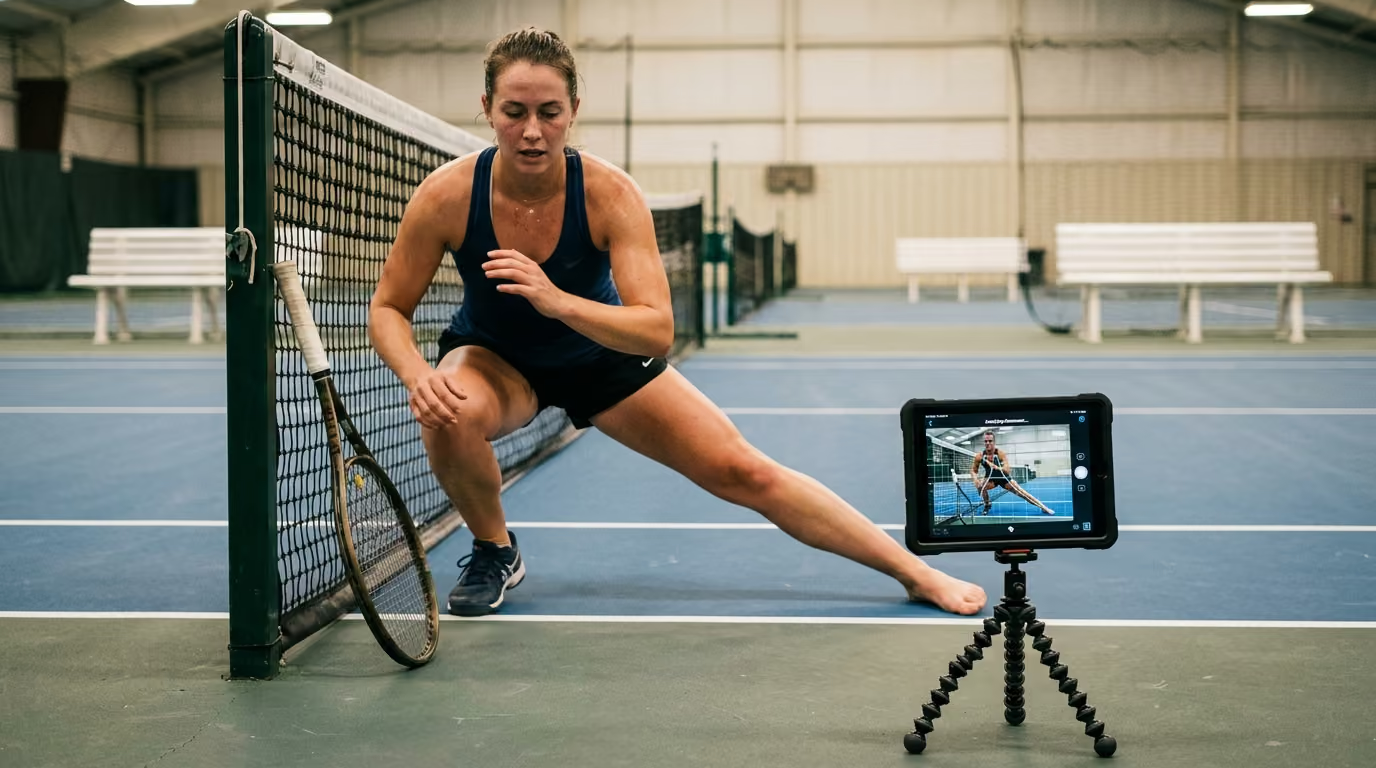

A racquet sports movement screen offers a practical self-assessment system to identify imbalances and improve physical preparation for court play.




Many racquet players look for answers when their hips feel stiff during a wide lunge, or when their shoulder pinches during a serve. They want to know if their movement mechanics are affecting their play, or if they are setting themselves up for forced time off the court. This guide provides a structured, practical system to observe your own movement patterns, identify side-to-side imbalances, and make informed choices about your physical preparation.
A racquet sports movement screen is a structured self-observation process designed to evaluate how your body manages the physical demands of court play. It is not a diagnostic medical examination, and it cannot predict with certainty whether you will experience an injury. Instead, it serves as a practical tool to help you identify limitations in control, mobility, and symmetry so you can play comfortably for years to come.
To understand the value of movement screening, it is necessary to examine what the scientific literature actually says. For many years, sports trainers promoted movement screens as reliable tools to predict future injuries. Modern sports medicine research has challenged this idea, showing that human movement is far too complex for simple predictions.
According to a systematic review published in the Journal of Athletic Training, popular movement screening systems, such as the Functional Movement Screen, show limited predictive validity. Another comprehensive meta-analysis published in PLOS ONE confirmed that while some screening systems show good reliability between observers, they present significant validity concerns when used to predict injuries. The researchers noted that individuals scoring below certain cutoffs had higher statistical odds of injury, but the screens were not sensitive enough to serve as accurate individual diagnostic tests.
A more recent review of movement-screening utility highlighted that commonly used asymmetry cutoffs are not consistently associated with earlier or more frequent injuries in multivariate analyses. This means that having a slight difference between your left and right side is normal. It does not guarantee that you will get hurt on the court.
The value of a movement screen lies in self-awareness rather than injury prediction. A practical screen helps you observe how your body behaves under specific physical challenges. It allows you to notice if a movement produces discomfort, if you can control your balance, and if your movement quality deteriorates when you are tired. By treating the screen as a feedback system rather than a medical diagnosis, you can make smarter decisions about your training.
Racquet sports are intermittent, acyclical activities that combine intense periods of work with short recovery intervals. The physical demands of court play vary significantly based on court dimensions, stroke types, and game duration. Because these demands are so specific, a generic, slow-speed movement test is not enough to understand how you move during a match.
According to a physiological review of racquet sports, tennis matches can last anywhere from one to five hours. However, individual points are brief and explosive. The review noted that average point durations are 5.2 seconds for men and 7.1 seconds for women. Tennis play produces average heart rates between 128 and 154 beats per minute, requiring high levels of cardiovascular and metabolic energy.
The same physiological review highlights that badminton places the highest metabolic demand on the body among all major racquet sports. Badminton players experience rapid changes of direction, frequent jumping, and very fast strokes with minimal preparation time. This intensity is reflected in reported heart rates, which range from 157 to 182 beats per minute.
Padel requires its own set of movement characteristics. Padel play consists of repeated accelerations, sudden braking, and constant lateral and frontal displacements. One match analysis showed that 52.32 percent of strokes in padel involve lateral movement, while 42.29 percent involve moving forward. These frequent changes of direction place high demands on the ankles, knees, and hips.
To move efficiently across these sports, your body relies on a concept called the kinetic chain. In racquet sports, force is not generated solely by the arm. Instead, force begins at the feet and knees, travels up through the hips and core, and is transferred through the shoulder, elbow, wrist, and finally into the racquet. If one link in this chain is restricted, other joints must compensate to maintain power, which can lead to localized fatigue.
Before beginning a self-screen, it is helpful to define what we are actually observing. Using clear terms prevents confusion and keeps the focus on practical court performance.
In a practical screen, mobility does not mean maximum joint flexibility. True mobility is the ability to access and control a range of motion under the specific conditions of a task. It is of little use to have highly flexible hamstrings if you cannot maintain your balance during a deep, wide lunge. To learn more about improving your joint mechanics for court play, you can check out our dedicated mobility and movement resources.
Stability is not a permanent, static quality of a joint. Rather, it is the active control of a position or movement. You might possess excellent passive flexibility when lying on a table, but lack the strength or coordination to stabilize your knee when landing from a jump. Stability is highly task-specific and depends heavily on your nervous system, muscle strength, and confidence.
Movement quality describes how a movement is performed. We look for smoothness, balance, and sequencing. We also observe whether you can maintain your chosen alignment without excessive trunk swaying or loss of foot contact. Evaluating these details is a core part of maintaining racquet sports player health over a long playing career.
Asymmetry is an observable difference between your left and right sides in range, balance, control, or comfort. In racquet sports, some level of asymmetry is normal because we play with a dominant hand and adopt specific stance preferences. A difference between sides should be treated as a prompt for further observation, not as proof of dysfunction or impending injury.
A compensation is an alternative strategy your body uses to complete a task when the preferred movement is difficult. For example, if your hips are tight, you might rotate your lower back excessively to reach a low ball. Compensations are not automatically bad, and they often allow us to keep playing. However, they become important to address when they cause localized discomfort or limit your court coverage.
There is a major difference between what your body can do once in a quiet room and what it can repeat during a third set. Racquet sports require hundreds of explosive efforts with incomplete recovery. A movement pattern that looks perfect during a slow, rested self-screen may completely break down under the physical stress and fatigue of a competitive match.
To perform a safe and informative self-assessment, you should follow a structured five-step framework. This progression moves from low-risk, static observations to dynamic, sport-specific challenges.
Begin by standing in a comfortable stance and walking naturally across a flat surface. Look for obvious guarding, such as favoring one leg or keeping one shoulder elevated. Notice your natural stance width and foot positioning. While static posture alone cannot tell us if you are mobile or injured, it offers a helpful starting point before you begin moving.
Perform each screening task on your right side, then repeat it on your left side. Pay close attention to differences in depth, reach, balance, and comfort. Do not react to a single awkward repetition. Perform several controlled repetitions on each side to see if the difference is consistent.
Focus on slow, low-risk movements before you try anything fast or explosive. The primary question to ask is not how far you can move, but how well you can control the movement. Observe if your knees cave inward, if your lower back arches excessively, or if you struggle to return to the starting position smoothly.
Once you can perform a basic movement comfortably, you can gradually introduce sport-specific challenges. This includes adding a faster tempo, shifting to single-leg loading, incorporating rotation, or using your racquet to shadow a stroke. Introducing these variables helps you understand how your movement quality holds up under match-like conditions.
Classify your findings into three practical categories to guide your next steps:
These categories are meant to help you organize your training priorities, not to label your body as broken.
Perform this self-assessment sequence in a quiet space with flat, non-slip flooring. Wear the footwear you normally use on the court, and make sure you have warmed up lightly before starting.
Before you begin moving, take a moment to record your physical history. Write down any current aches, your recent match volume, and any past joint injuries. Note if you have had any recent falls, ankle twists, or awkward landings. This background is essential because a movement restriction means something very different to a pain-free player than it does to someone recovering from an acute injury.
Stand with your feet shoulder-width apart. Slowly lower your hips as deep as is comfortable, then return to the standing position.
Perform five repetitions while observing your body in a mirror or recording yourself on video. Look at your foot pressure to see if your heels stay flat on the ground. Observe whether your knees track in line with your toes or collapse inward. Watch for any lateral shifting, which occurs when a player leans toward one side to avoid loading the opposite hip or knee.
The squat provides a broad look at how your hips, knees, ankles, and trunk work together. However, because it is a bilateral movement, a good squat does not guarantee that you will move well during single-leg court actions.
Step forward into a lunge, lowering your back knee toward the floor. Push off your front foot to return to the starting position. Repeat this movement in both a diagonal and lateral direction.
Observe your ability to decelerate your body weight smoothly as you step into the lunge. Note if your front foot remains stable, or if your heel lifts off the floor. Compare your balance and leg strength when lunging on your left leg versus your right leg.
Because badminton and padel require constant lunging and sudden braking, this pattern is highly relevant for court players. A study on badminton footwork highlighted that the forward lunge places significant stress on the knee and ankle, making control during this movement highly important.
Stand on one leg near a wall or sturdy chair that you can touch for safety. Once you feel balanced, slowly reach your opposite leg forward, diagonally, and backward, tapping the floor lightly before returning to the center.
Observe whether you can maintain your balance without gripping the floor excessively with your toes. Watch for a pelvic drop, which occurs when the hip of your non-standing leg sinks downward. Compare how long you can hold a stable position on each leg.
Your balance is influenced by many factors, including your footwear, the court surface, and prior ankle sprains. If you find a major difference between sides, it suggests you may want to dedicate more time to single-leg stability exercises. To maintain your movement control as you age, you can read our guide on athletic longevity and movement quality.
Sit tall on a chair or kneel in a half-kneeling position to lock your hips in place. Hold a golf club, broomstick, or your racquet across your collarbones. Slowly rotate your upper body to the right as far as is comfortable, return to the center, and then rotate to the left.
Observe whether you can rotate equally in both directions without shifting your hips or arching your lower back. Notice if you have to hold your breath to reach further.
Trunk rotation is critical for racquet sports because it allows you to transfer energy from your lower body to your arm. If your mid-back is stiff, your body will often compensate by over-rotating your lower back or shoulder, which can lead to early fatigue during long matches.
Stand naturally and raise both arms straight overhead, reaching as high as you can. Next, pick up your racquet and perform several slow, controlled shadow serves or overhead smashes.
Observe if you can fully raise your arms without arching your lower back or flaring your ribs. Watch for any pinching in the front or top of your shoulders. Notice if your shoulder blade moves smoothly, or if it feels restricted.
The overhead serve is widely considered the most physically demanding stroke in tennis. Research on tennis biomechanics shows that the serve generates high muscle activity and substantial loading in the shoulder and elbow. If you cannot reach fully overhead during a slow screen, repeating hundreds of high-speed serves during a match can quickly overload your shoulder joint.
Perform a low-speed lateral shuffle for three to four paces, stop suddenly, and hold your position. Repeat this shuffle in the opposite direction.
Observe your ability to accept the momentum of your body weight when you stop. Notice if your outer foot slides, or if your knee collapses inward during the braking phase. Compare your confidence and control when stopping on your right leg versus your left leg.
This drill is highly relevant for padel and tennis players, who must constantly shuffle sideways and change directions. If you feel unstable during a slow, controlled shuffle, you will likely struggle to decelerate safely during a fast, competitive rally.
Perform ten repetitions of your squat, lunge, and lateral shuffle patterns at a moderate pace. Compare the movement quality of your final repetitions with your first few attempts.
Observe if your hips begin to shift, if your balance becomes shaky, or if you start to experience mild discomfort as you tire. Note if you find yourself shortening your range of motion to make the exercises easier.
Our movement quality often looks excellent when we are fresh, but deteriorates rapidly as fatigue sets in. Understanding how your body behaves when tired can help you manage your playing volume and plan your recovery sessions more effectively.
While the basic movement patterns apply to all athletes, each racquet sport places unique demands on the human body. To get the most out of your screen, you must tailor your observations to your specific sport.
Tennis is characterized by high forces, longer matches, and a high volume of overhead serves. According to an epidemiological review published in the Journal of Science and Medicine in Sport, tennis injuries show distinct patterns. Lower extremity injuries account for 31 to 67 percent of all tennis injuries, while upper extremity injuries make up 20 to 49 percent, and trunk injuries represent 3 to 21 percent.
The review noted that acute injuries, such as ankle sprains and muscle tears, are highly common in the lower extremities. In contrast, chronic overuse injuries are more frequently found in the upper extremities, particularly in the shoulder and elbow. The lower back is also a common area for overuse issues due to the repetitive extension and rotation required during the serve.
For a deeper look at managing these specific physical demands, you can read our specialized technical tennis analysis articles.
A tennis player should pay close attention to:
A systematic review of tennis-serve injury risk factors identified over 100 potential risk factors across the literature. The researchers found that dominant-shoulder rotation strength, internal-rotation range of motion, age, and weekly volume were significantly associated with injury risk. This highlights the importance of screening your shoulder mobility and managing your overall playing hours.
Badminton is played on a smaller court than tennis, but the speed of the game is incredibly high. Because badminton points are fast and require constant lunging and jumping, players must have excellent footwork and lower limb control.
A badminton player should focus on:
Research on badminton injuries shows that the ankle and knee are the most frequently stressed areas in the lower body. If your screen reveals that you land heavily or lose your balance during a simple diagonal lunge, you may need to focus on lower body strength and landing mechanics.
Padel is a fast-growing sport that combines the groundstroke mechanics of tennis with the quick reflexes of badminton. Because padel matches involve a high volume of lateral movements and turning to play balls off the glass walls, hip and ankle mobility are highly important. For more sport-specific movement tips, see our collection of padel movement demands articles.
A padel player should evaluate:
Because lateral displacements account for more than half of all padel movements, any restriction in your lateral lunge can force your lower back to twist excessively to reach low balls.
Squash requires deep, repeated lunging in a semi-enclosed court, placing a massive demand on the gluteal muscles and hamstrings. Because squash was not included in the primary physiological reviews mentioned earlier, we rely on coaching logic and task-based assessments. A squash player must screen their ability to lunge deeply and rotate their trunk simultaneously.
Pickleball is played on a smaller court with a lighter paddle, which reduces some of the high shoulder forces seen in tennis. However, the short reaction times and low bounce of the plastic ball require players to spend a lot of time in a deep, bent-knee ready position near the kitchen line. To learn more about court positioning and joint health, read our resources on pickleball mobility and court positioning.
A pickleball player should screen:
When players begin screening their own movement, they often fall into common traps. Recognizing these misconceptions can save you unnecessary worry and help you focus on what really matters.
This is perhaps the most common misconception. As the scientific literature shows, a low movement screen score is not a medical diagnosis. Many recreational and professional players move with unique styles and compensations, yet they play without pain for years. Your screen is simply an informational tool, not a predictor of injury.
No movement screen can make you immune to injury. Even if you pass every slow-speed test with perfect scores, you can still experience injuries from sudden collisions, falls, or simple overtraining. Playing volume, recovery quality, and match intensity play massive roles in your physical health.
It is tempting to try to make your left and right sides look identical. However, racquet sports are inherently asymmetrical. Your dominant shoulder will naturally have different rotation angles compared to your non-dominant shoulder, and your favorite lunging leg may be slightly stronger. A 2025 review confirmed that typical asymmetry cutoffs are not linked to higher injury rates, so minor differences are nothing to fear.
If you find that you cannot reach a certain depth in a lunge, your first instinct might be to stretch your hamstrings. However, a movement restriction can be caused by many things other than muscle tightness. It could be due to a lack of joint stability, poor coordination, or even a protective response from your nervous system if you are tired or sore.
Some players believe they should strive for extreme flexibility. In racquet sports, having excessive range of motion without the strength to control it can actually increase your risk of joint instability. The goal is to have usable, controlled range of motion in the specific positions you need on the court.
How you move on the court directly affects how quickly your body recovers between matches. When your movement patterns are efficient, your muscles and joints share the workload evenly. This balanced distribution of force reduces the physical toll of a hard match.
If you have a movement restriction, your body must work harder to perform the same actions. For example, if your ankles are stiff, you will have to bend your knees and lower back more to reach a low volley. This compensatory strategy uses more energy and causes specific muscle groups to fatigue much earlier in a match.
This localized fatigue can lead to micro-trauma in your tendons and muscles over time. When you finish a match with highly fatigued tissues, your recovery time increases. You might find that you feel stiff and sore for days after a match, rather than hours. Improving your movement efficiency is one of the most effective ways to support long-term athletic longevity and keep your recovery times short. To learn more about optimizing your post-match physical recovery, you can read our recovery science resources.
While self-screening is a valuable tool for self-awareness, it is not a substitute for professional medical advice. You must know when to stop testing and consult a qualified healthcare provider.
According to National Health Service guidelines, you should seek immediate medical attention if you experience:
The guidelines also state that you should seek professional advice for persistent, exercise-related symptoms that do not improve with rest.
You should schedule a routine assessment with a physical therapist or sports medicine clinician if you notice:
If you are dealing with a minor, pain-free restriction, you can continue to monitor it and adjust your physical preparation. However, if you experience pain or structural instability, always prioritize a professional medical evaluation. If you would like to reach out to our team with questions about movement resources, feel free to visit our contact page.
To help you understand how to apply this screening system, let us look at several common case patterns that racquet players experience.
A 45-year-old tennis player performs the squat screen and notices that their hips shift significantly to the right as they stand up. They do not feel any pain during the movement, and they can perform the single-leg balance test perfectly on both sides.
Interpretation: This player has a clear, repeatable movement asymmetry. Because there is no pain, this is classified as a Yellow finding. The player does not need to panic or stop playing. Instead, they should record this finding, observe if the shift also happens during their lateral lunges, and focus on loading both legs evenly during their warm-up exercises.
A recreational tennis player attempts the overhead reach and feels a sharp pinch in their dominant shoulder as their arm approaches vertical. They try to shadow a serve and experience the same pinching sensation.
Interpretation: This is a Red finding. The player should immediately stop testing their serve and avoid forcing their arm into painful overhead positions. Because serving places high, complex forces on the shoulder, they should consult a physical therapist to address the issue before it worsens.
A competitive badminton player performs the lunge screen. They can lunge comfortably on their right leg, but when they lunge on their left leg, they land heavily, struggle to push back to the center, and lose their balance. They notice that this difference becomes much worse after they run through a short shadow rally.
Interpretation: This is a Yellow finding that is highly relevant to badminton play. The screen reveals a lack of control and endurance on the left leg. The player should focus on single-leg strength and deceleration control in their off-court training, and they may want to reduce their playing volume slightly until their left leg control improves.
An older pickleball player can only squat to a shallow depth and has very limited ankle movement. However, they can move around the court comfortably, recover quickly, and play three times a week without any pain or stiffness.
Interpretation: This is a Green finding. While the player has limited range of motion compared to a younger athlete, their movement is pain-free, controlled, and symmetrical. They have adapted well to their physical structure and do not need to try to force their body into deeper ranges of motion unless they want to work on gradual, controlled mobility.
A padel player passes all of the slow, rested screening tests with perfect control. However, they report that during the third set of long matches, their knee begins to cave inward when they stop quickly, and they feel a dull ache in their kneecap the following day.
Interpretation: This case highlights the difference between capacity and exposure. The player has adequate movement quality when rested, but lacks the physical endurance to maintain that control under fatigue. The next step is to gradually build up their lower body muscular endurance and manage their playing volume to prevent excessive fatigue during matches.
Use this organized checklist to document your movement screen. Perform each task, note your observations, and write down your next steps. Do not worry about achieving a perfect score. Focus on tracking changes over time.
To help you apply this guide this week, here is a simple action checklist:
Follow Evercourts for practical insights on tennis, pickleball and padel performance, movement, recovery and healthy ageing. Stay connected for new articles, research-led guidance and ideas to help you play well and keep playing for years.


Read practical guidance for better movement, smarter preparation and a game that keeps working for you.
explore the Blog