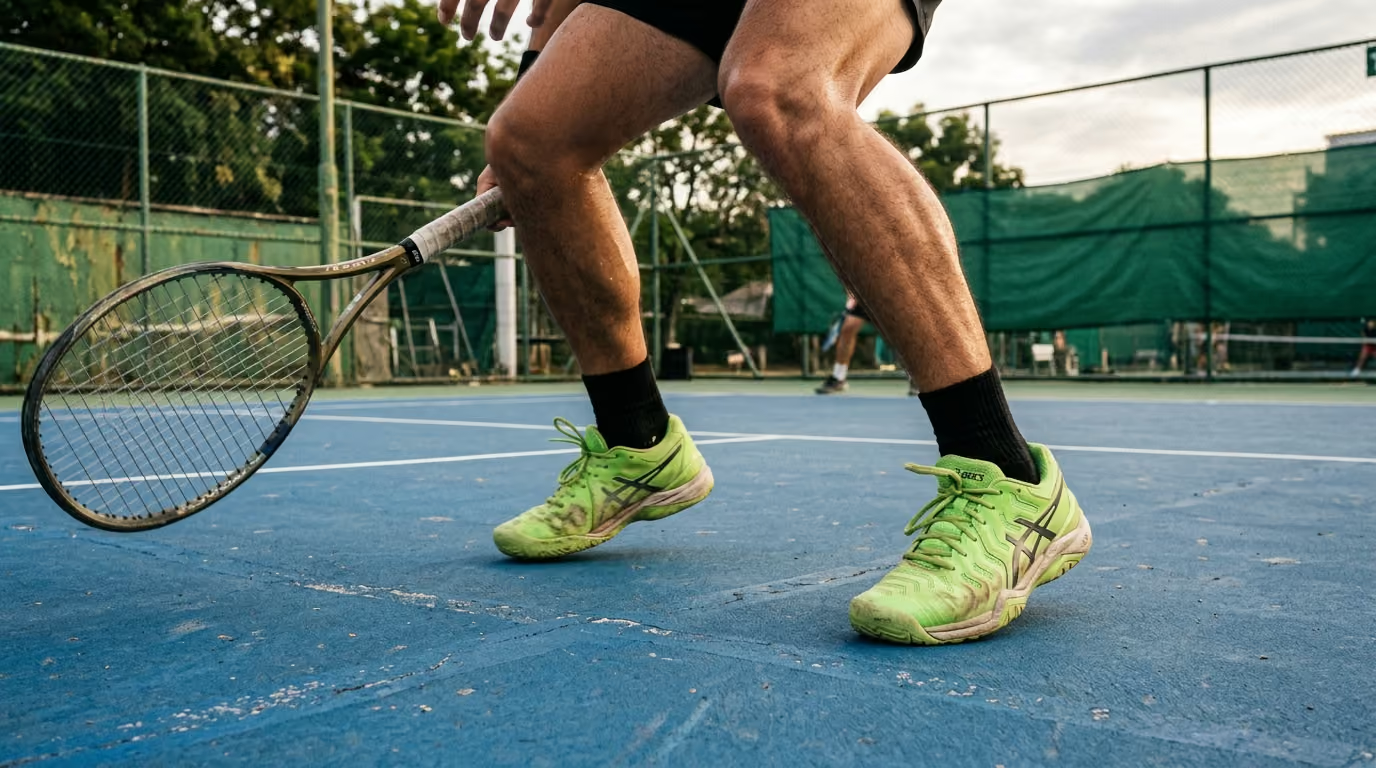
Physical discomfort on the court is not always a sign of structural damage but rather valuable data for guiding training decisions and maintaining athletic longevity.




Physical symptoms on the court should be viewed as data points that guide your training choices rather than automatic signs of structural damage. By evaluating how your symptoms behave during and after play, you can safely modify your court sessions to maintain athletic longevity. This structured approach allows you to keep playing while giving your tissues the specific stimulus they need to adapt and recover.
Many players believe that any physical discomfort is a sign to stop playing immediately. Others take the opposite approach and play through severe pain, risking long-term injury. The key is learning how to read these symptoms as useful information. By understanding what your body is telling you, you can make smarter decisions about when to push, when to modify, and when to rest.
Many racquet sport players view pain as a simple damage meter. When something aches, they assume a fiber has torn or a joint has worn down. However, modern sports science paints a much more complex picture.
According to the international sports physiotherapy pain-assessment consensus, pain is a highly personal, multidimensional experience. It is influenced by your nervous system, sleep quality, stress levels, and even your expectations on the court. It also depends on tissue inputs and previous injury history.
This means that a moderate ache does not always equal severe tissue damage. Two players might both report a similar intensity of shoulder discomfort during a serve. Yet one player might have a stable, normal response to a heavy training week. The other player might have a true functional loss that requires immediate rest and rehabilitation.
Rather than asking only if a movement hurts, we must analyze the behavior of that symptom. We must track how it changes during a warm-up, after a match, and the next morning. This transition from fear to objective tracking is essential for long-term athletic participation. To explore more about managing your body safely, you can read our player health guides.
Stiffness often presents as a perceived reduction in your ease of movement. It can occur after long periods of sitting, after unfamiliar training, or alongside a true joint issue. It is a common sensation that requires careful interpretation.
Start-up stiffness is present when you first begin to move but improves during a gradual warm-up. This is generally a normal response as your joints lubricate and your muscles warm up. Persistent stiffness, however, does not improve with movement and may progressively limit your range of motion.
Next-morning stiffness is another important signal to monitor. If you wake up the morning after training and feel significantly stiffer than usual, your training load may have exceeded your current tissue tolerance. If this stiffness becomes protective, causing you to guard your movements or walk with an asymmetrical stride, your body is sending a clear warning.
Delayed-onset muscle soreness, often called DOMS, is a normal response to unaccustomed eccentric loading. For example, lunging for low balls, stopping quickly, or changing direction rapidly can trigger this soreness. It is a sign that your muscles are adapting to a new physical challenge.
A common myth is that this soreness is caused by lactic acid buildup in your muscles. However, sports science research shows that DOMS is actually multifactorial. It involves complex neural, inflammatory, metabolic, and proprioceptive processes. Lactic acid is cleared from your muscles within hours of finishing exercise, while DOMS does not peak until much later.
According to classic exercise physiology studies, DOMS typically peaks between 24 and 72 hours after unaccustomed exercise. It temporarily reduces your force-producing capacity and may alter your coordination. Fortunately, your body adapts quickly through a biological process called the repeated-bout effect. A single session of unfamiliar exercise builds a protective shield, making your muscles much more resilient during your next court session.
To make smart training decisions, you need a structured way to evaluate your physical symptoms. We recommend using a simple, five-question check before you step onto the court, during your session, and the following morning. This checklist helps you move away from emotional decisions and toward objective planning.
First, ask yourself: what is the exact symptom? Identify whether you are feeling diffuse muscle soreness, localized tendon pain, or general joint stiffness. Note whether the sensation is sharp, dull, burning, or throbbing.
Second, ask: what specific load or movement provokes the discomfort? Determine if it only occurs during high-velocity movements, like serving, or if it happens during low-intensity tasks, like walking. Knowing the threshold of provocation helps you modify your play.
Third, ask: does the symptom alter your movement quality or court performance? Observe if you are limping, shortening your backswing, or avoiding certain movements to guard the area. If your mechanics are compromised, your risk of secondary issues increases.
Fourth, ask: how long does the recovery response last after you stop playing? Does the discomfort settle down within an hour, or does it persist into the evening and disrupt your sleep? A symptom that lingers indicates that the training stimulus was highly provoking.
Fifth, ask: is the week-to-week trend improving, staying stable, or getting progressively worse? Track whether you can tolerate more play over time or if your symptoms are triggered by less and less activity. A worsening trend requires a change in your training plan.
I remember finishing a tough two hour padel match on a cold Tuesday night and waking up the next morning feeling like my lower back was locked in concrete. For a long time, I just accepted this as the price of playing hard in my forties. But once I started spending just ten minutes on targeted hip mobility before heading to the club, the stiffness almost completely vanished. It taught me that we do not have to accept pain as a default state of aging. We can use structured preparation and sensible modifications to keep our bodies moving fluidly.
To make these choices easier during busy playing seasons, we use a simple traffic-light model. This system guides whether you should play, modify, or stop. It provides a practical framework for daily court decisions.
Green light means you are cleared to train as planned. You may have mild, familiar stiffness that disappears during a progressive warm-up. Your movement quality remains excellent, and you can perform all your normal shots without compensation. The symptom does not worsen during the session or the following morning.
Yellow light means you must modify your session and monitor your symptoms closely. You might feel discomfort during specific movements, like deep lunges or overhead smashes. In this state, you should reduce your playing volume, avoid the most provoking shots, or focus on controlled technical drills instead of competitive matches.
Red light means you must stop the activity immediately and seek professional guidance. This applies if you experience sudden, sharp pain accompanied by a pop or tearing sensation. It also applies if you cannot bear weight, have visible joint swelling, or notice numbness and tingling in your limbs. Persistent symptoms that fail to improve with load reduction also require a red-light response.
Every racquet sport places unique physical demands on your body. Understanding these differences helps you identify potential issues before they become chronic problems. It also allows you to tailor your physical preparation to the specific sport you play.
According to systematic reviews of tennis injuries, the lower extremity is the most commonly injured region. This is followed closely by the upper extremity and the trunk. The physical demands of tennis require a combination of speed, endurance, and rotational power.
The explosive nature of tennis requires intense acceleration, deceleration, and rotational force. Common overuse injuries in tennis players include shoulder internal impingement, lateral or medial elbow tendinopathy, and wrist extensor-carpi-ulnaris strain. These issues are often linked to repetitive stroke mechanics.
Tennis players also frequently suffer from abdominal strains and lumbar conditions due to the extreme rotational demands of serving. If you experience localized lower-back discomfort that increases during extension, you may need to modify your serve volume. This is especially true on fast hard courts, which place high impact forces on your joints.
To support your athletic longevity, you should build a strong physical foundation off the court. Developing trunk strength and hip mobility can help absorb the rotational forces of your groundstrokes. If you want to learn more about preparing your body for these demands, review our strength and conditioning resources.
Pickleball is often perceived as a low-impact sport, but it carries its own set of physical challenges. This is particularly true for older players who are returning to active sport after a period of inactivity. The small court size leads to rapid, short-distance movements.
Epidemiological data from emergency departments show that a majority of pickleball injuries affect players aged 60 to 79. In this age group, falls are a major cause of injury, leading to a higher rate of wrist fractures, ankle sprains, and shoulder strains. The quick reaction times required at the kitchen line can challenge your balance.
Research shows that increased weekly playing hours are directly associated with injury risk in pickleball populations. It is easy to accumulate high weekly volumes because the games are shorter and highly social. Players often play multiple matches in a single day, leading to hidden fatigue.
To play safely for years, older adults should focus on a well-rounded physical preparation routine. The World Health Organization recommends that older adults perform at least 150 to 300 minutes of moderate-intensity aerobic physical activity weekly. They should also perform muscle-strengthening activities on two or more days a week, alongside multicomponent physical activity that emphasizes functional balance. For more practical movement strategies, check out our mobility and movement resources.
Padel is played on a smaller court enclosed by glass walls, which creates a fast, continuous game. The sport requires frequent, low-defensive lunges and rapid changes of direction. This constant movement places high demands on your lower body.
Because of the constant rebound play, padel players must rotate their hips and spine repeatedly under load. This can lead to localized stiffness in the lower back and knees if your tissues are not prepared. The synthetic turf surface can also affect your footwork and joint impact.
Padel also involves a very high volume of overhead smashes, which can strain the shoulder and elbow. If you play on outdoor courts in cold weather, the ball becomes heavier, increasing the mechanical stress on your forearm tendons. This requires a strong grip and excellent shoulder stability.
For padel players, maintaining hip and thoracic spine mobility is crucial to prevent compensatory strain on the lower back. Developing lower-body strength can also help you drop into low defensive positions with control. Discover more actionable tips on our padel articles page.
Many racquet athletes make predictable errors when managing pain and stiffness. Recognizing these pitfalls can save you months of frustration and missed playtime. By avoiding these common mistakes, you can protect your tissues and keep playing.
When a joint or tendon hurts, the immediate reaction is often to stop all physical activity. While temporary rest is necessary for acute trauma, prolonged rest is rarely the best solution for overuse injuries. In fact, it can often make the problem worse.
Tendons, muscles, and joints require progressive loading to heal and rebuild their load-bearing capacity. Complete rest causes these tissues to weaken, making them even more vulnerable when you return to the court. This creates a cycle of pain, rest, weakness, and re-injury.
According to tendon rehabilitation research, such as the Silbernagel pain-monitoring model, continuing to load a tendon is safe if the pain remains below a mild threshold. This pain must also settle by the following morning without causing progressive stiffness. This approach keeps the tissue active and resilient.
Instead of resting completely, you should find your entry point of tolerable movement. This might mean swapping competitive matches for slow shadow swings or short, controlled rallies. By maintaining some level of activity, you preserve your fitness and support the healing process.
Many players spend hours using foam rollers, massage guns, and stretching routines to fix their physical issues. While these methods can temporarily reduce muscle soreness and improve your range of motion, they do not address the root cause of your symptoms. They are short-term solutions.
A recent scientific review confirms that passive recovery methods can help manage the symptoms of DOMS, but their effects are highly variable. They do not increase your tissue capacity, correct poor stroke mechanics, or fix a sudden spike in training volume. They provide temporary relief rather than structural change.
If you rely solely on these tools to get through your matches, you are merely masking the symptoms. True recovery and athletic longevity require a balanced combination of progressive strength training, adequate sleep, and smart workload management. Passive tools should support your routine, not replace active conditioning.
Many fitness guides suggest that you should never increase your weekly training volume by more than ten percent. While this rule is a helpful starting point, it is too rigid for the unpredictable nature of racquet sports. It fails to account for the actual demands of match play.
A ten percent increase does not account for a sudden change in court surface, a multi-match tournament weekend, or a period of poor sleep. It also ignores the unique mechanical demands of different strokes, such as serving versus baseline rallying. The quality of your movement matters more than a simple percentage.
Instead of relying on a rigid percentage, you should track your individual internal response. Pay close attention to your next-day stiffness, sleep quality, and movement symmetry to guide your weekly training progression. This approach allows you to adjust your load based on how your body is actually responding.
To make informed training decisions, you must understand the difference between external and internal load. External load is the physical work you perform on the court, while internal load is how your body responds to that work. Both metrics are essential for tracking your overall training stress.
External load in racquet sports includes your total minutes on court, the number of matches played, and the number of serves or overheads performed. It also includes the distance covered and the number of high-intensity accelerations and decelerations. This is the objective work you can easily measure.
Internal load, on the other hand, is the physiological and psychological stress your body experiences. This is measured by your rating of perceived exertion, heart-rate response, perceived fatigue, muscle soreness, and sleep quality. It reflects how well your body is tolerating the external load.
The same two-hour singles match can represent very different internal loads depending on the weather, your opponent, your current stress levels, and your hydration. By tracking both external and internal load, you can identify when your body is starting to struggle before an injury occurs.
Many racquet sports injuries are not caused by a single, traumatic event. Instead, they are often the result of a sudden spike in training volume that exceeds what your tissues are prepared for. This is known as an acute-to-chronic workload mismatch.
An acute spike occurs when you suddenly increase your playing time or intensity compared to your average workload over the past month. For example, returning from a three-week vacation and immediately playing a three-hour tournament match is a classic acute spike. Your tissues are simply not prepared for that sudden demand.
Accumulated exposure, on the other hand, is the total amount of play you build up over several months. If you gradually increase your weekly playing hours, your tissues adapt and become more resilient. This gradual build-up protects you against injuries when you face tougher matches.
To minimize your injury risk, avoid sudden changes in your playing habits. If you want to increase your court time, do so gradually over several weeks. This gives your muscles, tendons, and joints time to adapt to the increased physical stress.
It is important to remember that physical preparation is highly specific to the movements of your sport. Being in good cardiovascular shape from running on a treadmill does not automatically prepare you for the lateral movements, deep lunges, and rapid rotations of racquet sports.
A player may be well-conditioned for slow baseline rallying but poorly prepared for repeated, maximal-effort serves. Another player might have the endurance for long matches but lack the eccentric leg strength needed for hard deceleration on a clay court. Your training must reflect the specific demands of your game.
To build true resilience, your physical preparation should include exercises that mimic court movements. This means performing lateral lunges, rotational core work, and deceleration drills. By preparing your body for these specific demands, you reduce your risk of movement-specific overload.
To move away from guesswork, you should implement a simple daily tracking system. This does not require expensive wearable technology or complex software. You can collect valuable data using a few consistent checks.
You can track your physical state by answering a few consistent questions each morning. This helps you identify patterns before they turn into limiting injuries.
By recording these answers in a notebook, you can easily spot warning signs. If your perceived recovery score drops for several days in a row while your morning stiffness increases, it is a clear sign to reduce your playing volume.
To measure your training load, calculate your Session Rating of Perceived Exertion after every match or practice. Multiply the duration of your session in minutes by your overall rating of difficulty on a scale from zero to ten.
For example, a sixty-minute match that felt like a seven out of ten results in a score of 420 load units. If your weekly total spikes suddenly, your risk of load intolerance increases. This calculation provides a simple, objective way to track your total workload.
This metric captures both the physical and mental stress of your court time. It helps you see when a seemingly easy practice session actually placed a high internal demand on your body. You can use these scores to plan your rest days and ensure you are recovering adequately.
Before you play, perform a few standardized movement checks to assess your physical readiness. These simple tests help you catch hidden compensation patterns. They act as a physical screen before you pick up your racket.
Begin with five controlled, bodyweight sit-to-stands from a bench or chair. Notice if you favor one leg, if your knees cave inward, or if you feel any discomfort in your joints. This movement reflects your basic lower-body control.
Next, perform a single-leg balance test on each side for thirty seconds. Note any differences in ankle stability or hip control between your dominant and non-dominant legs. Balance is essential for injury prevention, especially as we age.
Finally, perform a few slow, submaximal shadow swings for your forehand, backhand, and serve. If you feel any catching or sharp discomfort, it is a clear sign to modify your upcoming session. According to the Bern Consensus Statement on shoulder injuries, regular monitoring of range of motion and pain during these baseline checks is vital for preventing chronic upper-limb issues.
Let us look at how different players apply this decision framework to common court scenarios. These examples illustrate how to balance playing time with tissue protection. They show that symptoms are information, not a reason to panic.
A tennis player performs heavy lunges and deadlifts for the first time in six months. Two days later, both of their thighs and gluteal muscles feel incredibly sore and stiff. They are worried they have damaged their muscles and should skip their weekly match.
However, when they perform their warm-up, their movement remains completely symmetrical. They can squat and lunge without favoring either side, and they have no joint swelling. The discomfort is diffuse across both legs rather than localized in a single tendon.
This is a classic case of delayed-onset muscle soreness from unaccustomed eccentric training. The player should not panic or assume they have injured their muscles. This soreness is temporary and will resolve on its own.
The correct decision is to play at a moderate intensity, avoiding explosive sprints or maximum-effort lunges. They can trust that the repeated-bout effect will protect their muscles during future gym sessions. Complete rest is unnecessary and would only delay their adaptation.
A player decides to improve their serve by practicing one hundred extra serves every week. Within a month, they notice a dull pain on the outside of their dominant elbow. They ignore it and continue their practice.
The pain is mild at first, but it starts to linger into the next morning. Eventually, they notice that their grip strength is weakening, and their backhand stroke feels unstable. They find themselves shortening their swing to avoid the pain.
This is a clear warning sign of lateral elbow tendinopathy, a common overuse injury in racquet sports. The player has introduced a rapid spike in repetitive mechanical load. The tissue is failing to tolerate this sudden demand.
The correct decision is to cut their serving volume by fifty percent immediately. They should also focus on non-provocative conditioning and have their racket grip size and string tension checked by a professional. Continuing the full serve volume will only lead to chronic tissue damage.
A recreational doubles player starts playing singles matches twice a week to improve their fitness. They notice that their knees feel quite stiff during the first ten minutes of play. They are concerned that they are developing joint issues.
The stiffness disappears once they warm up, and they have no swelling or pain the next day. Their movement on the court remains fast and fluid. They are able to run, lunge, and stop without any guarding.
This response suggests that the player's knees are adapting to the increased movement demands of singles play. However, the start-up stiffness indicates they are operating close to their current tissue limit. It is a sign to monitor their workload closely.
The player should continue playing singles but avoid adding any more weekly sessions for now. They should also implement a longer, more gradual dynamic warm-up to prepare their joints. If they want to learn more about managing joint impact, explore our recovery science resources.
A sixty-eight-year-old pickleball player trips while backpedaling for a deep lob. They land on their outstretched hand and feel immediate pain in their wrist. They want to keep playing because they can still hold their paddle with a modified grip.
The wrist begins to swell rapidly, and they feel a throbbing sensation. They assume it is just a minor sprain and that they can push through the discomfort. They plan to use ice and play again the following day.
This is a highly dangerous situation. Emergency department data show that older adults have a significantly higher risk of wrist fractures and severe ligament tears from falls. Tripping while backpedaling is a common cause of serious injury in this age group.
The player must stop playing immediately and seek professional medical evaluation. Preserved finger movement does not rule out a fracture, and continuing to play could cause permanent joint damage. A professional assessment is essential to ensure proper healing.
An active player adds several competitive matches, extra gym sessions, and travel to their schedule. Over two weeks, they notice they are sleeping poorly, feeling highly irritable, and moving slowly. They feel constantly exhausted.
Their serve accuracy drops significantly, and they are making unusual unforced errors. They feel like they need to push through this phase to build their mental toughness. They decide to add an extra cardio session to build their endurance.
This is not a lack of toughness; it is a clear presentation of systemic fatigue and potential non-functional overreaching. According to joint consensus statements from sport science organizations, persistent performance decline and sleep disruption are primary indicators of excessive training stress. Their body is struggling to recover.
The player must immediately reduce their total weekly playing hours and prioritize sleep, hydration, and nutrition. Adding more intensity to "break through" this state will only lead to injury or chronic burnout. They must give their body time to restore its energy systems.
A padel player sprints forward to reach a drop shot. They feel a sudden, sharp pain in the back of their thigh, which feels like a pop or a tear. They are unable to complete the stride and must stop moving.
They immediately start limping and cannot push off their leg to accelerate. They want to walk it off and try a few light hits to see if it settles down. They assume it is just a tight muscle that needs stretching.
This is an acute soft-tissue injury, likely a hamstring strain. It is not ordinary muscle soreness or a mild loading response. The sudden onset and immediate loss of function are clear red-light signals.
The player must stop the session immediately. They should avoid stretching or testing the leg, apply comfortable compression, and arrange a clinical assessment. Trying to play through an acute strain will turn a minor tear into a major, long-term injury.
Your physical readiness on the court is deeply connected to your recovery habits off the court. When you sleep poorly or skip meals, your body's ability to tolerate training loads decreases. Recovery is not a passive process; it requires active management.
According to recovery science research, systemic fatigue affects both your cognitive processing and your tissue repair mechanisms. High psychological stress increases your perception of pain and delays muscle recovery after intense sessions. If you are stressed at work, your body will have less capacity to recover from matches.
To maintain your athletic longevity, you must view recovery as an active part of your training. This means prioritizing seven to nine hours of quality sleep per night and eating enough protein and carbohydrates to fuel your court sessions. Hydration is also key to keeping your joints lubricated and your muscles functioning properly.
If you feel persistently stiff or tired, it is often a sign that your recovery is not keeping pace with your playing volume. Adjusting your schedule to allow for dedicated rest days will actually improve your performance and keep you on the court for years to come. Resting is not a sign of weakness; it is a vital part of building a resilient body.
While many minor aches can be managed with smart training modifications, some symptoms require immediate professional evaluation. Do not try to self-diagnose serious musculoskeletal conditions. Understanding when to seek help is a critical part of your athletic longevity.
You should schedule an appointment with a physical therapist or sports physician if you experience any of the following signs:
A qualified healthcare professional can provide an accurate diagnosis, rule out serious structural damage, and design a personalized rehabilitation plan. Working with a professional helps you return to the court safely and confidently.
By listening to your body's signals and making informed training decisions, you can enjoy the physical and social benefits of racquet sports for many years to come.
Follow Evercourts for practical insights on tennis, pickleball and padel performance, movement, recovery and healthy ageing. Stay connected for new articles, research-led guidance and ideas to help you play well and keep playing for years.


Read practical guidance for better movement, smarter preparation and a game that keeps working for you.
explore the Blog