
Adult racquet sports players can achieve a safe and effective return to court play after injury or absence by following a structured, phased progression.




A structured return-to-play framework is not a single clearance date or a doctor's signature. It is a systematic progression that matches your physical capabilities to the specific demands of court play. To return safely after an injury, illness, or long absence, you must gradually rebuild your movement tolerance, match duration, and mental confidence in clear stages rather than rushing back to full competition. This comprehensive guide outlines the exact steps needed to protect your athletic longevity.
The process of re-entering the court requires a shift in mindset. Many players treat their return as a simple on-and-off switch. They wait until they feel no pain at rest and then immediately play a competitive two-hour match. This approach often leads to re-injury, frustrating setbacks, or chronic discomfort. By using a structured framework, you can navigate your transition safely, preserve your joints, and keep playing for years to come.
A safe return to court sports is a continuum rather than a single moment of clearance. Sports medicine literature divides this journey into three distinct phases. These phases include return to participation, return to sport, and return to performance. Understanding these distinctions helps you avoid the trap of playing too much too soon.
The first phase is return to participation. During this stage, you take part in modified training or rehabilitation below your desired level of play. You may be able to hit stationary groundstrokes but cannot yet run or change directions. This phase is about restoring basic movement patterns and letting tissues adapt to light loads. It is a crucial stepping stone that should not be skipped.
The second phase is return to sport. Here, you return to the court but play below your previous performance level. You might play cooperative rallies or light doubles matches. You are active on the court, but you are not yet exposing your body to maximum intensity or unpredictable movements. Your goal in this phase is to build movement volume and cardiovascular endurance.
The final phase is return to performance. This is the stage where you regain your previous level of unrestricted competition and output. You can tolerate repeated accelerations, deep lunges, overhead strokes, and match pressure. Reaching this phase requires systematic preparation. Treating your recovery as a progression across these three phases is the foundation of healthy aging and athletic longevity resources for court athletes.
To make this framework practical, we can define four separate physical milestones:
A traffic-light screening system helps you decide whether to progress, modify your activity, or stop altogether. It provides clear, practical guidelines based on your daily symptoms and recovery response. This system removes the guesswork from your rehabilitation and helps you listen to your body.
You have a green light to advance to the next stage of training when your symptoms are stable or improving. Your normal daily activities must be completely pain-free. Movement on the court should not produce swelling, neurological symptoms, or unusual breathlessness.
Furthermore, you must recover fully between your sessions. If you tolerate a court session and experience no next-day soreness, you can safely continue. This feedback indicates your tissues are adapting well to the current workload.
A yellow light indicates that you need to proceed with caution. You should modify your training if you feel mild, stable discomfort during or after activity. Substantial deconditioning after a long illness or a busy winter also warrants a yellow light.
Other yellow-light indicators include reduced confidence, minor coordination issues, or lingering next-day fatigue. If you face these signs, you must reduce your session duration, play on a smaller court, or lower your intensity. Monitor your recovery closely before attempting to increase the demands again.
A red light means you must stop all activity immediately and consult a qualified healthcare provider. Do not attempt to play through chest pain, unexplained fainting, or near-fainting. Exercise-related palpitations or severe shortness of breath are also critical red flags.
After a significant heat illness, guidelines from the Centers for Disease Control and Prevention state that medical clearance is necessary before returning to exercise. Your symptoms must be fully resolved, and any required laboratory tests must be normal. Your return after heat exhaustion must be gradual and supervised.
If you are returning after an infectious illness like COVID-19, pay close attention to cardiac warning signs. Chest tightness, new palpitations, or lightheadedness during light exercise require an in-person medical assessment. Stopping early protects your heart and systemic health from serious complications.
The most effective way to manage your return is to balance your physical capacity against court demands. You should only progress when your current capacity can tolerate the next planned demand. Additionally, your body's response must remain acceptable both during the session and over the following 48 hours.
Capacity refers to what your body can currently tolerate. It is a mix of joint range of motion, muscle strength, and cardiovascular fitness. It also includes balance, coordination, and your psychological readiness to move at high speeds.
For older adults, building capacity is a multi-component task. You need to combine aerobic training with muscle strengthening and balance work. Maintaining these physical qualities is essential for preventing falls and supporting joint health on the court.
Demand is the total stress imposed by your playing sessions. It is not just about the number of minutes you spend on the court. It also includes the frequency of your play, your movement intensity, and the court surface.
Other factors that increase demand include deep lunges, repetitive serving, and competitive match pressure. Hot, humid weather also places a massive demand on your cardiovascular system. You must monitor these racquet-specific demands separately from your general physical conditioning.
Response is how your body reacts to the demands of play. It includes how you feel during the session, later that evening, and the next morning. Your response tells you if your current workload matches your physical capacity.
A session might feel comfortable while you are playing, but it can still be too demanding. If you wake up the next morning with joint stiffness, increased swelling, or deep fatigue, your body is sending a clear message. You must respect this response and reduce the workload of your next session.
To build a safe progression, you can use the classic FITT model. This model stands for frequency, intensity, time, and type of exercise. Adjusting these variables one at a time is the safest way to rebuild your tolerance for racquet sports.
The primary rule of load management is to change only one major variable during any training week. If you increase your playing time, you must keep your intensity low. If you decide to practice high-speed movements, you must shorten the session duration.
Modifying multiple variables at once is a common cause of setback. For example, playing for twice as long while also increasing your competitive effort places a double load on your joints. This sudden spike can easily overwhelm healing tissues or deconditioned muscles.
A safe sequencing strategy focuses on simple movements before complex, unpredictable actions. You should start by ensuring you can tolerate easy, cooperative hitting from a stationary position. Once this is comfortable, you can introduce light lateral movement.
Next, you can add forward and backward steps, moderate lunges, and light serving volume. After mastering these movements, you can increase your session duration to build endurance. Finally, you can reintroduce competitive scoring, match pressure, and back-to-back playing days.
This six-stage pathway is designed to take you from a long layoff or injury back to unrestricted competition. It is a step-by-step ladder that ensures your body is fully prepared for each level of demand. Use this structured approach to guide your journey.
Before you touch your racquet, you must evaluate your starting point. Identify the primary cause of your layoff, whether it was an injury, illness, or a busy life period. Determine if you have any remaining medical restrictions or active joint symptoms.
Adults with cardiovascular risk factors should undergo screening before returning to vigorous activity. This screening includes a review of your personal and family medical history. If you have moderate to high risk, a physician may recommend a stress test before you play.
The American Heart Association recommends reviewing specific cardiac history points. These points include exertional chest pain, unexplained fainting, or unusual shortness of breath during daily tasks. If you have a history of elevated blood pressure, ensure it is well managed before starting.
The objective of this stage is to build basic physical tolerance without racquet-specific fatigue. You should focus on walking, cycling, gentle mobility, and low-load strength work. This stage prepares your cardiovascular system and muscles for more intense court demands.
For general health, global guidelines suggest accumulating 150 to 300 minutes of moderate aerobic activity weekly. You should also include strength exercises for your major muscle groups on at least two days per week. These targets are long-term references rather than immediate requirements.
Your initial strength work should focus on the calves, thighs, hips, and core. These muscle groups absorb the impact of court movement. Rebuilding their endurance first reduces the stress placed on your joints when you begin to run.
In this stage, you reintroduce your racquet in a highly controlled environment. Keep your sessions short, aiming for 20 to 30 minutes. Use cooperative, predictable rallies where your hitting partner feeds the ball directly to you.
Avoid competitive scoring, wide running, and high-speed overheads. Focus on your contact point, footwork rhythm, and smooth stroke mechanics. This phase helps your nervous system remember the timing of split steps and ball preparation.
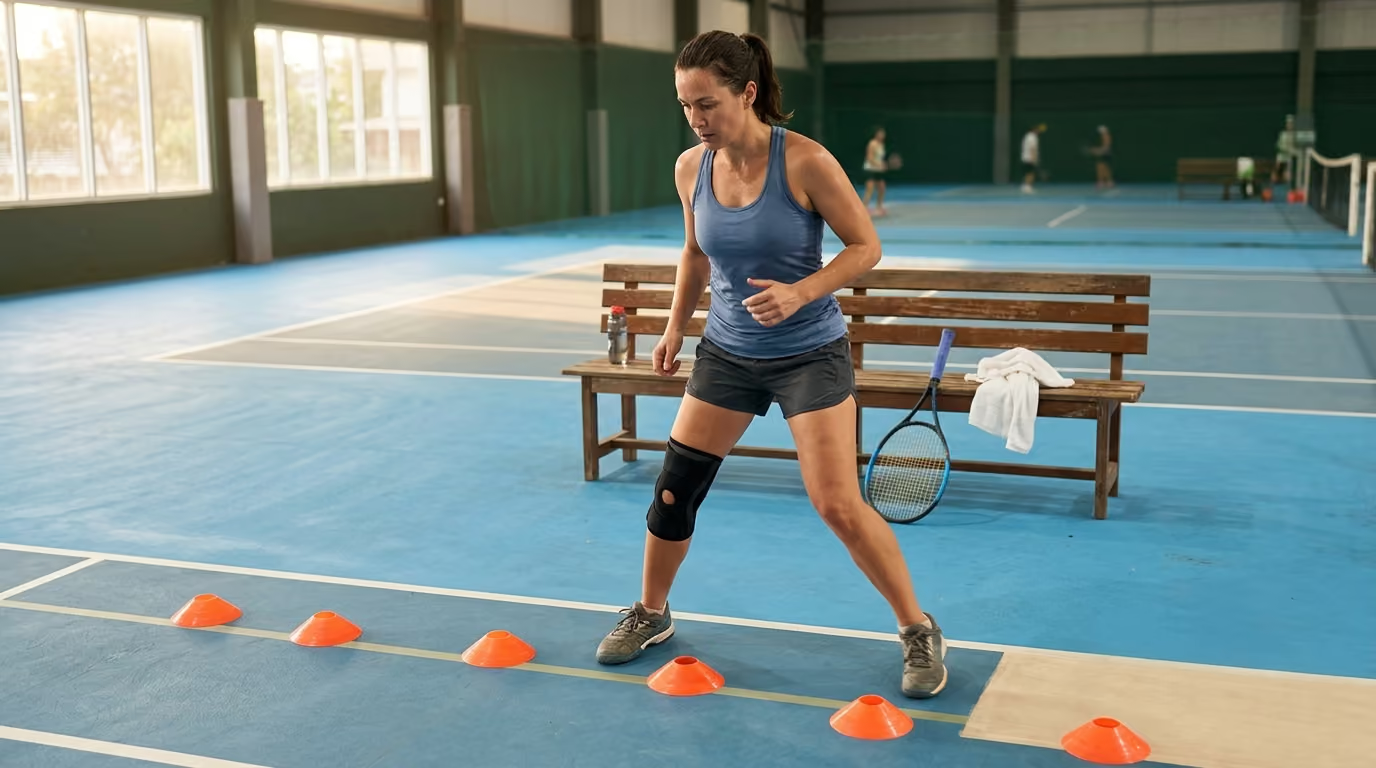
Once stationary hitting is comfortable, you can start moving across the court. Begin with lateral shuffles and controlled forward steps. Keep your movements predictable and avoid sudden, explosive braking.
You can also introduce moderate lunges and a light serving volume during this stage. Your on-court physical assessments should check your ability to move, brake, and recover smoothly. You must maintain good movement mechanics even as you begin to feel mildly fatigued.
In Stage 4, you transition from controlled drills to open, unpredictable play. Introduce longer rallies, open-court movement, and point-play simulations. You can also practice serving under mild physical fatigue.
Ensure you can play these simulated games without guarding your previous injury. Consensus guidelines for muscle strains emphasize that you should be pain-free during high-speed work. You must also feel fully confident in your body's ability to handle sudden changes of direction.
Your first actual competitive match should include built-in restrictions to manage your overall exposure. For example, play a friendly doubles match instead of a demanding singles contest. You can also play a shortened set format to limit your time on court.
Avoid playing consecutive days during this stage, and choose your opponents wisely. This phase is a controlled experiment to see how your body handles emotional pressure and unpredictable movements. Ensure you plan for extra rest and recovery after these initial matches.
To declare a full return, you must meet several key criteria. You should demonstrate normal movement quality and symmetrical lower-body strength. You also need a full joint range of motion and the ability to tolerate consecutive days of play.
Your biological response to matches must be excellent, with no meaningful pain or swelling the next morning. Finally, you must possess complete mental confidence in your physical capabilities. Once these markers are met, you can return to unrestricted competitive play. Refer to our resources for court athletes to help track your progress.
While all racquet sports share common movement patterns, each sport places unique demands on your body. Tailoring your return framework to your specific sport is essential for preventing re-injury. It also helps you train the precise energy systems and muscle groups you will use on the court.
Tennis is played on a large court, which requires longer sprint distances and higher running speeds. This sport places massive demands on your eccentric muscle strength. You must decelerate quickly from high speeds to set up your groundstrokes.
The high bounce and deep balls in tennis also require significant shoulder and back strength. The tennis serve is a complex, high-velocity movement that places repetitive stress on your rotator cuff and spine. When returning to tennis, you must spend ample time rebuilding your serving volume and shoulder endurance.
Pickleball is played on a much smaller court, which reduces sprinting distances but increases reaction demands. The game features rapid, short-distance accelerations and sudden lateral shifts. These quick movements require excellent calf power and ankle stability.
The "kitchen" line play in pickleball requires players to hold deep, sustained lunges for long periods. This dinking posture places high isometric demands on your quadriceps, glutes, and lower back. Literature on pickleball injuries shows that lower-extremity issues are highly common, particularly in older players.
In fact, a national study of older adults found that 91% of pickleball injuries occurred in players aged 50 or older. This population has seen a significant rise in injuries as the sport has grown. Rebuilding your leg strength, balance, and warm-up habits is critical before increasing your weekly pickleball hours.
Padel is played in an enclosed glass court, which creates unique physical challenges. The balls remain in play longer due to wall bounces, leading to highly extended rallies. This long-point format requires exceptional aerobic and muscular endurance.
Padel also involves a massive volume of overhead strokes, such as the bandeja and vibora. These shots are played with a bent arm, which places high rotational stress on your elbow and shoulder. Additionally, the need to turn and chase balls off the back wall requires excellent spinal rotation and hip agility.
Avoiding common pitfalls is just as important as following a structured physical pathway. Many adult players fall into predictable patterns of overexposure. Recognizing these errors helps you protect your joint health and maintain your long-term consistency.
A common mistake is believing that being cardio-fit from cycling or running means you are ready for court sports. While general fitness is helpful, it does not prepare your joints for multi-directional movement. Running on a straight path does not train the lateral braking forces required in racquet sports.
Tennis, pickleball, and padel require rapid, explosive changes of direction that place high lateral stress on your knees and ankles. If you do not rebuild your sport-specific movement tolerance, you may experience tendon pain or muscle strains. Keep your physical conditioning and your court load separate as you return.
Many players rely on static stretching or anti-inflammatory drugs to get through their matches. While stretching can feel pleasant, it does not build the muscle strength needed to absorb court impacts. Relying on pain medications to mask symptoms is a high-risk strategy that can lead to severe tissue damage.
If you must use pain relievers to play, your body is telling you that the court demand exceeds your physical capacity. Instead of masking the pain, you should reduce your playing time and consult a professional. Real recovery is built on progressive tissue loading, not on chemical camouflage.
Gradual loading is the process of slowly exposing your body to physical stress. This controlled exposure allows your muscles, tendons, and joints to adapt and grow stronger. Understanding how your tissues recover helps you plan your training weeks more effectively.
Tendons have a limited blood supply compared to muscles, which means they adapt much more slowly to physical training. When you take a break from racquet sports, your tendons lose some of their stiffness and load-bearing capacity. If you return to high-intensity play too quickly, these tissues can become irritated and painful.
Gradual loading gives your tendons time to synthesize collagen and rebuild their structural integrity. This process requires a balance of mechanical stress and adequate rest. Giving your joints 48 hours of recovery between initial sessions prevents the accumulation of micro-damage. This principle is a key focus of injury prevention resources for active adults.
Your nervous and cardiovascular systems also require time to adapt to court play. Returning after an illness or a long period of inactivity can cause rapid systemic fatigue. This fatigue impairs your reaction time, coordination, and movement mechanics as your matches progress.
When you get tired, your muscles stop absorbing impact efficiently, which transfers more stress to your passive joint structures. By gradually increasing your playing time, you allow your cardiovascular system to adapt safely. This systematic approach ensures you maintain good technique and avoid fatigue-related injuries. For more on managing your post-court recovery, read our recovery science resources.
While self-monitoring is valuable, certain signs require the expertise of a qualified healthcare provider. Do not try to manage severe or unusual symptoms on your own. Seeking early professional help can prevent a minor issue from becoming a chronic, career-ending problem.
You should consult a doctor or physical therapist if you experience any of the following signs:
A physical therapist can perform a comprehensive assessment to identify specific muscle weaknesses or joint restrictions. They can design a customized rehabilitation plan to address your unique needs. Working with a professional ensures you return to the court with confidence and a reduced risk of re-injury. You can also explore our player health articles for more safety tips.
To understand how this framework works, let us examine five common scenarios. These case patterns demonstrate how to adjust your playing load based on your physical capacity and history.
A 58-year-old tennis player has been completely sedentary for six months due to a demanding caregiving period. She has no active injuries but has lost significant strength and cardiovascular fitness. Her goal is to return to her regular singles matches twice a week.
She begins her return in Stage 1, focusing on daily walking, light bodyweight squats, and balance exercises. After two weeks of conditioning, she progresses to Stage 2, playing 20-minute cooperative hitting sessions twice a week. She keeps her movement minimal and avoids serving.
Over the next month, she gradually increases her court coverage and adds light serving practice. By week eight, she is playing friendly doubles matches with extra rest days. This gradual approach allows her calves and Achilles tendons to adapt safely to the demands of the sport.
A 45-year-old padel player notices mild knee soreness when he returns to the court after a three-month winter break. The pain appears during deep lunges and persists the next morning. He wants to resolve the issue without stopping play entirely.
He applies a yellow-light modification. He reduces his playing frequency from three times a week to once a week. He also avoids deep lunges near the front glass, choosing to play more conservative shots.
He adds specific single-leg strength exercises, such as step-ups and wall sits, to his weekly routine. He monitors his knee pain daily, ensuring it does not escalate. Within four weeks, his knee strength improves, his morning soreness disappears, and he gradually returns to his normal padel schedule.
A 62-year-old pickleball player is recovering from rotator cuff irritation. She can perform daily tasks without pain, but her shoulder aches after she plays high-volume overhead smashes. She needs to rebuild her serving and overhead capacity.
Because there is no single test for shoulder readiness, she uses a task-specific progression. She begins by playing matches where she only hits underhand dinks and groundstrokes. She asks her partner to take all deep overhead lobs.
After two weeks of pain-free play, she introduces light overhead hits during warm-ups. She gradually increases her swing speed and volume over the following month. This systematic exposure allows her shoulder tendons to adapt to the high-velocity demands of the sport without re-inflaming.
A 50-year-old tennis player has recently recovered from a moderate case of COVID-19. He was bedridden for a week and still experiences mild fatigue. He wants to start playing matches again but feels slightly breathless during brisk walks.
He identifies this breathlessness as a red-light symptom and schedules a medical evaluation. His physician clears him for light exercise but advises him to keep his heart rate low. He starts with short, daily walks and avoids the tennis court entirely for the first two weeks.
Once his walking is completely comfortable, he begins light, cooperative hitting for 15 minutes. He stops immediately if he feels chest tightness or unusual fatigue. By respecting his cardiovascular limits, he avoids systemic complications and rebuilds his fitness safely.
An active pickleball player collapses during a hot, humid summer tournament. She is treated for heat exhaustion and feels much better the following morning. She wants to play her scheduled match the next day.
She recognizes that heat illness requires a highly conservative return pathway. She decides to skip the match and seeks a medical review to ensure her laboratory tests are normal. She takes a full week off from all physical exertion.
When she returns, she plays during the cooler morning hours and limits her matches to 30 minutes. She focuses on hydration, wear breathable clothing, and takes frequent breaks in the shade. This gradual re-acclimatization protects her cardiovascular system from recurring heat stress.
Doubles play generally reduces your total court coverage, which lowers your overall cardiovascular demand. However, it still requires sudden, explosive movements, sharp lateral turns, and quick reaction volleys. Do not assume doubles is completely safe if you are recovering from an acute lower-limb injury. Ensure you can perform rapid lateral shuffles and quick split steps before playing.
Mild next-day joint stiffness is a common sign that your tissues are adapting to new court demands. If the stiffness resolves within 30 minutes of waking up and does not cause pain, you can maintain your current playing load. However, if the stiffness lasts all morning or is accompanied by swelling, you have received a yellow-light signal. You must reduce the duration or intensity of your next session.
A brace or athletic tape can provide external support and improve your joint awareness during movement. This support can be highly helpful during the early stages of your return to the court. However, a brace should not be used as a permanent replacement for joint strength and balance. You must continue your rehabilitation exercises to rebuild your body's natural capacity to support itself.
Your cardiovascular readiness can be assessed by monitoring your heart rate recovery after light exercise. If your heart rate drops quickly during rest breaks and you can speak in short sentences while playing, your aerobic fitness is improving. If you experience prolonged breathlessness, chest pressure, or lightheadedness, your cardiovascular capacity is not yet ready. You must stop playing and seek a professional medical review.
Follow Evercourts for practical insights on tennis, pickleball and padel performance, movement, recovery and healthy ageing. Stay connected for new articles, research-led guidance and ideas to help you play well and keep playing for years.


Read practical guidance for better movement, smarter preparation and a game that keeps working for you.
explore the Blog