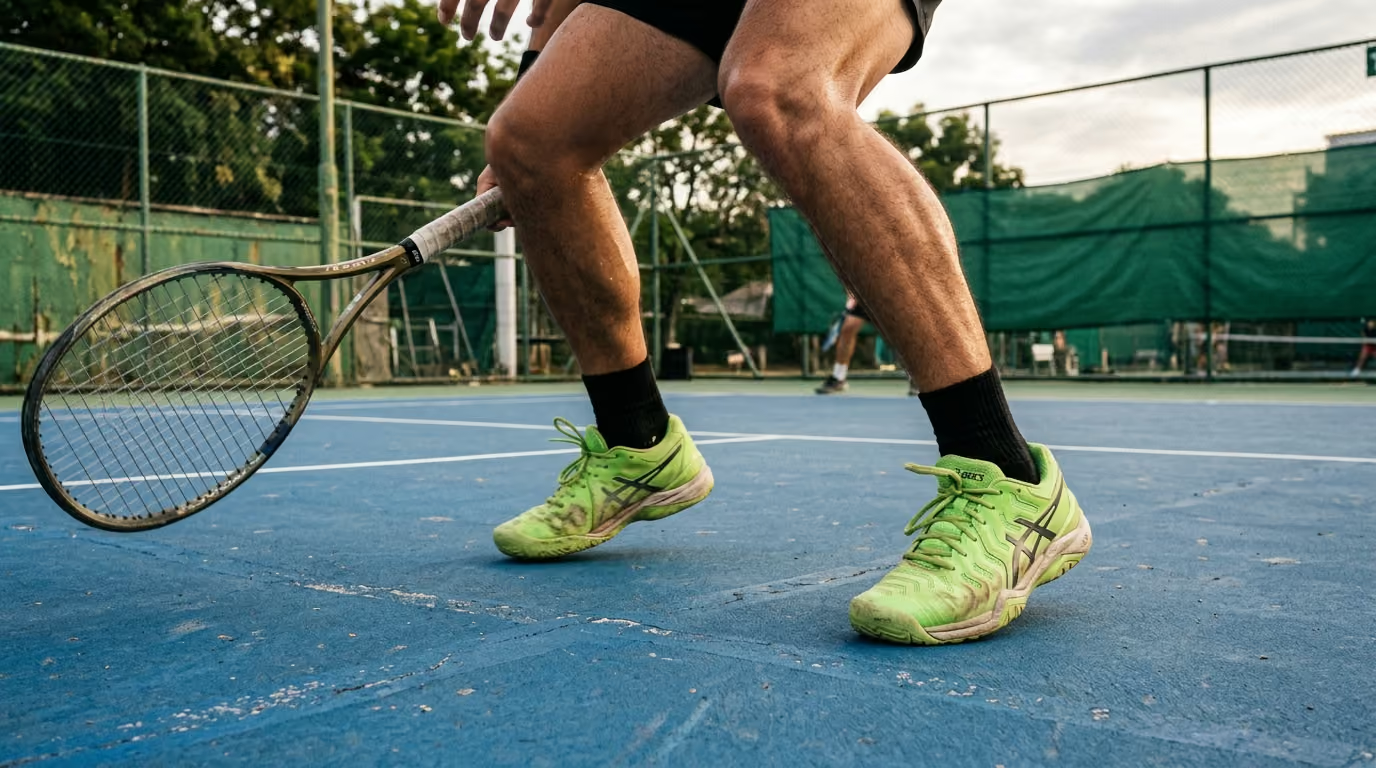
A 2023 systematic review highlights how metabolic and movement profiles vary across court sports, requiring tailored weekly physical schedules for optimal performance.




Many court athletes struggle with chronic tightness, joint fatigue, and sudden injuries that interrupt their playing seasons. An effective movement program balances play, strength, mobility, and rest within a structured weekly routine. By organizing your physical training to match your personal recovery rate, you can maintain joint health and perform better on the court.
To understand how to program your week, you must first understand movement capacity. Movement capacity represents your ability to repeat athletic tasks under fatigue. It is not merely the ability to stretch your muscles on a gym mat. It requires a combination of range of motion, muscle strength, balance, and deceleration control.
Many players confuse passive flexibility with active mobility. Passive range is the distance a joint can move when an outside force assists it. Active mobility is the range of motion you can control using your own muscles. On the court, active mobility is what keeps you upright during a sudden stop or a deep lateral lunge.
According to the International Olympic Committee, physical load consists of both external and internal stressors. External load includes your court hours, matches, and strength training volume. Internal load is how your body responds to that stress, which includes heart rate, perceived exertion, and mental fatigue. Balancing these loads is essential for maintaining athletic longevity and performance.
We also must look at the difference between acute and chronic workload. Acute workload is the stress you accumulate over a few days or a single week. Chronic workload is your long-term training foundation built over several weeks or months. Sudden spikes in acute workload relative to your chronic base are a major risk factor for physical overuse.
Different racquet sports impose distinct physical demands on your body. Understanding these differences allows you to tailor your weekly physical schedule. A systematic review published in 2023 highlighted how metabolic and movement profiles vary across court sports.
Tennis is characterized as a prolonged, moderate-intensity activity with anaerobic bursts. The research indicates that average heart rates during tennis matches range from 128 to 154 beats per minute. Most best-of-three matches last between 60 and 90 minutes, though some can go much longer. This duration requires excellent cardiovascular endurance and sustained rotational hip capacity.
Badminton exhibits some of the highest metabolic demands of all court sports. The systematic review reported mean heart rates reaching up to 182.6 beats per minute, with lactate levels up to 10.1 mmol/L. Badminton players must perform rapid jumps, deep lunges, and high-speed directional changes with minimal recovery. A separate review of badminton injuries found that lower-extremity issues make up between 41 and 92 percent of all reported injuries. Lunging was identified as the movement most closely associated with these lower-body issues.
Padel displays a mixed profile that is predominantly aerobic with frequent, brief, high-intensity actions. The data shows that 52.32 percent of padel displacements are lateral, while 42.29 percent are frontal. This high volume of lateral movement requires robust adductor strength and lateral hip control. If you want to improve your movement in this sport, check out our Padel Articles for targeted advice.
Table tennis involves high-speed, explosive reactions over a very compact playing surface. While heart rate and lactate values are lower than in badminton, table tennis requires high oxygen consumption and rapid stance changes. Squash, while lacking recent standardized tracking data in the systematic review, is known for brief recovery intervals and intense lower-body lunging. Each of these sports demands a weekly plan that prepares the joints for these specific patterns.
Building a weekly schedule requires a structured method. We recommend using a five-layer framework to organize your training and recovery. This method helps you avoid the common mistake of making every day a hard day.
The first layer is to identify your priority sessions. For most amateur and competitive players, tournament matches and team practices are the highest priority. These sessions demand the highest concentration, physical effort, and movement quality. Write these days down on your calendar first.
The second layer is to classify each day of the week. Label every day as a high, moderate, low, or rest day. High days include competitive singles matches, intense drills, or heavy weightlifting sessions. Moderate days focus on technical practice or lighter strength training. Low days are reserved for gentle mobility and active recovery.
The third layer is to separate high neuromuscular stress. Activities like explosive footwork, jumping, and sprinting put immense strain on your nervous system and tendons. Avoid placing these sessions on consecutive days. If you play a tough match on Wednesday, make Thursday a low-intensity day to let your tissues recover.
The fourth layer is the strategic placement of strength training. You should position your heavy lifting sessions so they do not cause deep fatigue before important matches. Some players prefer lifting on the same day as an easy court session, while others prefer separate strength days. For structured ideas on how to build physical capacity, you can refer to our strength and conditioning guidelines.
The fifth layer is to monitor your body and make adjustments. The International Olympic Committee suggests tracking simple metrics like sleep quality, muscle soreness, and motivation. You do not need expensive tracking devices or complicated software. A simple paper journal is enough to identify physical decline before it leads to forced rest.
An effective weekly plan is only as good as your daily habits before and after play. Your daily preparation should follow a progressive path that transitions from general movement to sport-specific actions. This warm-up process prepares your nervous system and increases joint lubrication.
Start your warm-up by raising your core body temperature. Five minutes of light jogging, skipping, or riding a stationary bicycle is sufficient. Once you feel warm, transition to moving your major joints through their full range of motion. Focus on hip circles, arm swings, and gentle trunk rotations.
Next, activate the primary muscles you will use on the court. Perform bodyweight glute bridges, lateral band walks, and scapular wall slides to wake up your hips and shoulders. After activation, rehearse your sport-specific movement patterns at a controlled speed. Practice your split-step, run through some shadow swings, and perform light lateral shuffling.
Finish your preparation by adding explosive movements. If you play tennis, do a few short accelerations and diagonal runs. For badminton, perform dynamic lunges and light practice overhead swings. This complete routine transitions your body from a resting state to court-ready performance.
After your session, transition into post-play recovery. This phase should be low-threat and relaxing to help calm your nervous system. Spend five to ten minutes on comfortable range-of-motion work. Focus on stretching the calves, hips, upper back, and shoulders.
We also recommend scheduling dedicated mobility sessions during the week. These sessions are different from quick post-game stretching. They focus on improving your controlled joint range. Spend twenty minutes on exercises like ankle dorsiflexion stretches, active hip rotation, and thoracic spine extensions. To design a custom program, you can read our specialized mobility and movement training resources.
To move well on the court, you need more than flexibility. You must build specific strength qualities to support your joints during high-speed actions. A balanced program targets the lower body, trunk, shoulder girdle, and ankles.
For the lower body, prioritize movements that build single-leg stability. Exercises like split squats, step-ups, and single-leg hinges are highly relevant for racquet sports. These movements replicate the staggered stances you use during lunges and lateral recoveries. Additionally, place a strong emphasis on calf raises and hamstring curls to support your knees and Achilles tendons.
The trunk acts as a bridge to transfer force between your lower and upper body. Rather than performing hundreds of sit-ups, focus on stability and control. Exercises like planks, side planks, and Pallof presses teach your trunk to resist unwanted rotation. Once you establish a stable foundation, you can introduce controlled rotational exercises like medicine ball tosses.
The shoulder and upper body require specialized attention to handle high-velocity swings. Focus on horizontal pulling movements like rows to balance the forward forces of hitting. Incorporate rotator cuff exercises to build muscular endurance in your shoulder joint. Forearm and grip exercises are also valuable for managing wrist stress during long rallies.
The foot and ankle are your only points of contact with the court surface. Weak ankles can lead to poor balance and increased stress on your knees. Incorporate single-leg balance drills on flat ground, progressing to uneven surfaces when you are ready. Strengthen your ankles with controlled calf raises using both straight and bent knees to target different calf muscles.
The following templates are practical examples of how to organize your weekly schedule. They are based on load-management principles and recommendations from major health organizations. You should adapt these templates to your current physical capacity and schedule.
This schedule is designed for players who want to balance court play with general physical health. It provides two days of strength training, which matches the World Health Organization guidelines for physical activity. It also includes dedicated recovery days to keep your joints feeling fresh.
This template is for athletes who play multiple times per week and compete in leagues or tournaments. The primary focus of this schedule is managing total physical load. It separates high-intensity days with structured recovery to prevent overuse issues.
The World Health Organization recommends that older adults incorporate varied multicomponent exercise into their routine. This exercise should emphasize functional balance and moderate strength training on three or more days per week. This structure supports healthy aging and helps reduce the risk of balance-related issues.
I remember finishing a tough two hour padel match on a cold Tuesday night and waking up the next morning feeling like my lower back was locked in concrete. For a long time, I just accepted this as the price of playing hard in my forties. But once I started spending just ten minutes on targeted hip mobility before heading to the club, the stiffness almost completely vanished. It taught me that we do not have to accept pain as a default state of aging.
Many players make predictable mistakes when trying to improve their court movement. Recognizing these pitfalls can help you save time and avoid unnecessary joint strain.
The first pitfall is the belief that more mobility is always better. Some players spend hours stretching in search of extreme flexibility. However, if you cannot control a range of motion with your muscles, that range is not useful on the court. In fact, excessive laxity without matching muscle strength can increase joint irritation.
The second common mistake is believing that rest must mean complete inactivity. While some days require total rest, active recovery is often more beneficial. Light movement like walking or gentle mobility increases blood flow to your muscles. This blood flow delivers nutrients that help repair tissues and reduce lingering soreness.
Another misconception is that a warm-up can prevent every possible injury. A good warm-up is essential for physical preparation, but it cannot override the effects of chronic fatigue. If your weekly schedule does not include enough sleep, nutrition, and rest, you will eventually experience overuse issues regardless of your warm-up quality.
Additionally, avoid treating the popular ten-percent rule as a universal law. This rule suggests that you should never increase your weekly training volume by more than ten percent. While gradual progression is important, the human body is more complex than a simple mathematical formula. Factors like sleep quality, stress, and past injuries play a major role in how much load you can tolerate.
Finally, do not assume that elite training data applies directly to recreational players. Most published sports science research involves professional or highly competitive athletes. These individuals have years of training history and hours of dedicated recovery time each day. Recreational players must balance their play with work stress, less sleep, and more varied physical baselines.
To appreciate why a structured week works, we must look at how tissues adapt to physical stress. When you play a hard match, you create microscopic tears in your muscles and connective tissues. This is a normal part of training, but these tissues require time to rebuild.
Tendons, which connect your muscles to your bones, have a much lower blood supply than muscle tissue. This means they adapt and recover much more slowly than muscles do. If you play high-intensity racquet sports on consecutive days, your tendons may not have enough time to recover. This can lead to chronic issues like Achilles or patellar tendinopathy.
By scheduling low-intensity mobility and recovery days between hard matches, you allow these tissues to repair. During recovery days, the mechanical stress on your joints is low, but the increased circulation supports tissue health. This balance ensures that your muscles and tendons become stronger over time, rather than slowly breaking down.
Managing your internal load also supports your immune system and sleep quality. High physical stress without recovery raises your cortisol levels, which can disrupt your sleep patterns. Poor sleep then impairs your body's ability to produce growth hormone, which is essential for tissue repair. A balanced weekly schedule breaks this cycle and supports your overall health.
No generic template can perfectly match your personal physical needs. You must learn to listen to your body and modify your weekly schedule when necessary. Adjusting your plan is a sign of a smart, mature athlete who values longevity.
If you are recovering from a long layoff, you must rebuild your capacity slowly. Do not immediately return to your normal playing schedule. Start with one short court session and one strength session in your first week. Gradually increase your playing time and intensity over several weeks to let your tissues adapt. If you need help structuring your return, our injury prevention resources provide detailed guidelines.
There are times when self-management is not enough. You should consult a qualified healthcare provider if you experience any clear red flags. These include sharp pain that does not go away, joint swelling, a feeling of instability, or pain that causes you to limp. Neurological symptoms like numbness, tingling, or radiating pain also require immediate professional assessment.
A physical therapist or sports physician can help identify the root cause of your discomfort. They can provide a personalized rehabilitation plan that addresses your specific movement limitations. Remember that seeking professional help early can prevent a minor irritation from turning into a chronic issue that keeps you off the court for months.
To help you apply these principles, here is a practical checklist you can use this week. Focus on making small, consistent changes to your routine rather than rewriting your entire schedule at once.
Follow Evercourts for practical insights on tennis, pickleball and padel performance, movement, recovery and healthy ageing. Stay connected for new articles, research-led guidance and ideas to help you play well and keep playing for years.


Read practical guidance for better movement, smarter preparation and a game that keeps working for you.
explore the Blog