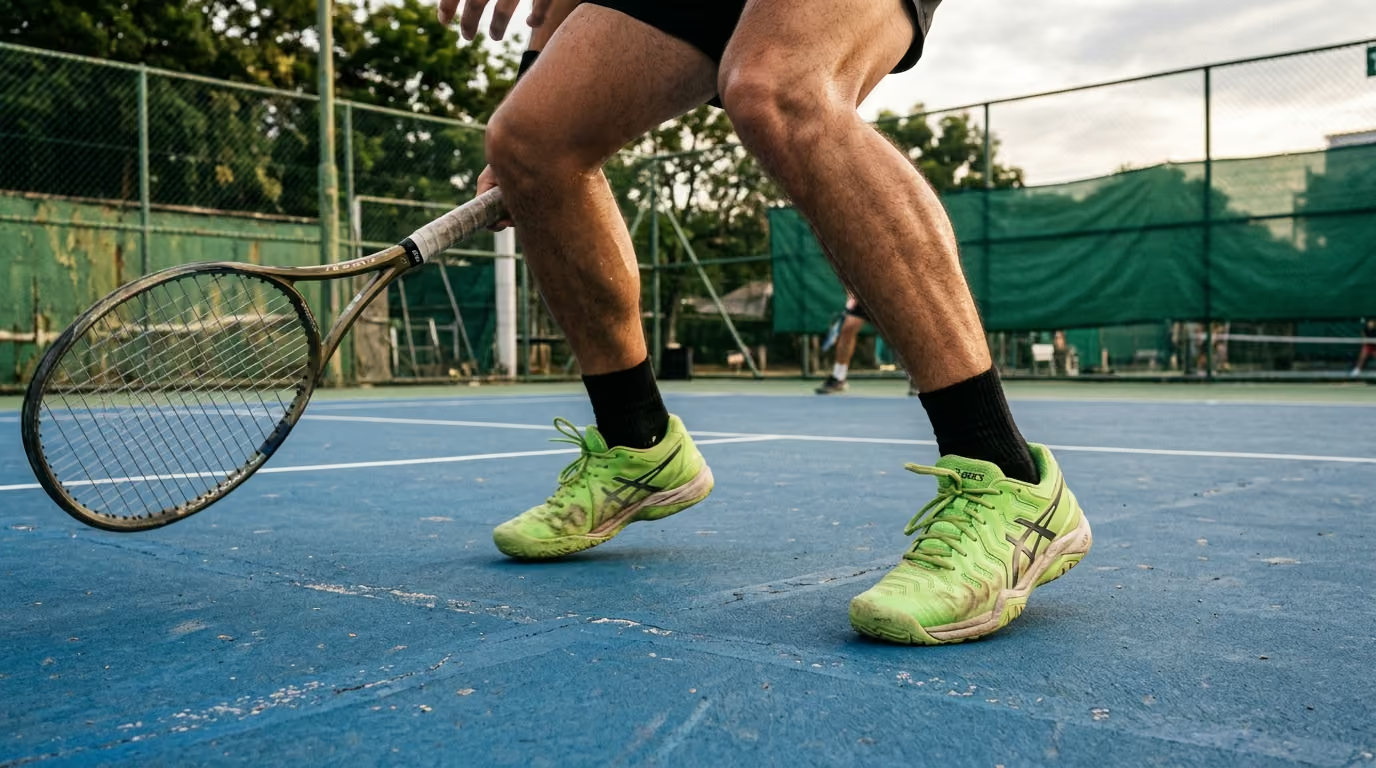
Court athletes can achieve lasting peak performance and avoid common injuries with a strategic, year-round injury prevention plan.




Many dedicated court players believe that maintaining peak competitive fitness all year is the safest way to avoid injury. This approach usually backfires. The human body is not built to withstand continuous, high-intensity athletic performance without structural decay. Attempting to stay in tournament-ready shape for twelve consecutive months increases tissue fatigue, drains mental energy, and eventually leads to chronic overuse injuries.
To maintain year-round court readiness without constant maximal loading, players must systematically rotate through phases of training, maintenance, and planned recovery. This approach balances your physical capacity against changing life demands while maintaining enough strength and movement variety to keep your joints resilient. By treating injury prevention as a continuous, adaptable process, you can preserve your athletic longevity and continue playing the sports you love for decades.
This comprehensive guide outline a practical, science-backed framework to keep you on the court. You will learn how to monitor your body, structure your training year, and adapt your physical preparation for tennis, pickleball, and padel.
To build a durable body, you must understand the relationship between physical training, tissue fatigue, and injury risk. The International Olympic Committee (IOC) describes training and competition load management as a multi-dimensional process. It involves tracking both the physical work you perform on the court and how your body responds to that work.
Sports scientists divide the demands placed on your body into two distinct categories. External load is the physical work you perform during matches and practice sessions. This includes your total minutes played, the number of matches you contest, and the physical actions you complete. Every jump, landing, acceleration, deceleration, and serve contributes to your overall external load.
Internal load is your physiological and psychological response to that physical work. This response is highly individual and changes daily. Your internal load is influenced by your heart rate, muscular soreness, perceived fatigue, and psychological stress. Sleep quality and overall life stress also play major roles in how your body processes physical work.
A simple way to distinguish between the two is that external load is what you do on the court. Internal load is how much that work costs your body on that particular day. The exact same training session can produce a vastly different internal load depending on your sleep, stress, and nutrition. If you play a tough match after a stressful work week, your body experiences higher internal strain than if you played the same match while fully rested.
To manage injury risk, you must look at how physical demand accumulates over time. Acute load refers to the work you have performed recently, typically over the past week. Chronic load represents your historical training volume, which is usually calculated over the preceding month.
When your acute load suddenly spikes far above your chronic load, your risk of tissue failure rises. These sudden spikes often occur when players enter weekend tournaments without adequate preparation. Conversely, keeping your training identical week after week creates high monotony. This lack of variation can lead to chronic strain and overuse injuries.
According to a team-physician consensus statement on load management, modifying your training volume and adding variety to your routines are highly effective ways to avoid tissue monotony. Consistently monitoring your physical work helps you avoid abrupt training changes. This tracking allows you to build a stable base of physical fitness that protects your joints.
Your physical capacity is your body’s ability to tolerate and recover from physical demands. This capacity is built from several different components. It includes your maximal strength, tendon durability, cardiovascular fitness, and balance. It also depends on your joint range of motion and your technical skill when you are tired.
When the demands of your sport exceed your physical capacity, injury risk increases. This is particularly true when physical demand rises faster than your tissues can adapt. Our goal is to keep your physical capacity higher than the demands of your match play. We do this by matching your current workload to your physical preparation and ensuring you get enough recovery.
This does not mean that load management guarantees you will never experience an injury. Unpredictable contact, court surfaces, equipment, and prior injuries always play a role in sports safety. However, maximizing your tissue capacity is your best defense against both acute sprains and chronic wear. For more information on building physical durability, check out the Evercourts guide on injury prevention resources.
Court sports expose the lower extremity to extreme, repetitive forces. Injury surveillance data from collegiate sports show that ankle sprains are incredibly common. In NCAA men's and women's basketball, lateral ankle sprains consistently rank as the most frequent injury, representing over 16 percent of all reported issues.
Furthermore, surveillance data show that injuries occur at significantly higher rates during competitive matches than during practice sessions. This difference highlights the intense physical toll of match play, where unpredictable movements and high speeds place maximum stress on your tissues. A systematic review of sports injury epidemiology confirms that court and team sports present a high risk of lower-limb trauma.
These findings show that year-round injury-prevention plans must focus on specific physical priorities. You must target ankle stability, knee load management, patellar and Achilles tendon capacity, and hip control. For overhead court athletes, shoulder workload management and rotator-cuff strength are also vital.
To maintain athletic longevity, you must move away from the idea of constant, year-round competitive preparation. Instead, you should divide your year into distinct phases, each with its own clear goals. This seasonal approach allows you to develop physical qualities that are difficult to build when you are playing matches every week.
This phase begins immediately after your primary competitive season or your busiest playing months. The main goals are to reduce accumulated physical fatigue and restore your normal sleep patterns. This is also the perfect time to address any lingering aches, joint stiffness, or minor movement limitations.
Recovery during this phase does not mean lying on the couch for weeks. Complete inactivity can actually cause your muscles and tendons to lose their conditioning. Instead, focus on low-impact physical activity that does not mimic the intense demands of court play.
Consider activities like swimming, cycling, mobility exercises, and light resistance training. During this phase, ask yourself what areas of your body tolerated the season poorly. Did your shoulder ache after serving, or did your knees feel stiff after long matches? The answers to these questions will help you plan your next training block.
Once your body is rested, you enter the general preparation phase. This is the ideal time to build foundational physical qualities that protect your joints during intense play. Because you are not playing frequent competitive matches, you can dedicate more energy to strength training and conditioning.
Your priorities during this phase should include developing maximal strength, eccentric strength, and tendon capacity. You can also work on aerobic fitness, single-leg stability, and core control. Research shows that structured resistance training is highly effective for reducing musculoskeletal injuries.
Do not treat this phase as an unofficial playing season. Build your training volume progressively rather than jumping straight into intense court drills. If you want to dive deeper into structuring these workouts, explore our resources on strength and conditioning.
The specific preparation phase bridge the gap between gym strength and the chaotic demands of court play. During this phase, you gradually reintroduce sport-specific movements in a controlled manner.
Your physical progression should move from simple, planned exercises to complex, reactive drills. Start with controlled jumping and landing exercises. Next, introduce planned acceleration and deceleration runs, followed by planned changes of direction. Finally, add reactive agility drills where you must respond to a partner or a visual cue.
This progression ensures your tissues are prepared for high-speed cutting and jumping. A player who can perform a perfect squat in the gym is not automatically ready for the unpredictable movements of a match. This phase prepares your nervous system and your muscles for the rapid, reactive nature of racquet sports.
During your primary playing season, your focus shifts to performance and staying healthy. Your training volume should decrease, but you must keep your intensity and specificity relatively high. The goal is to maintain the physical qualities you built during the preparation phases without adding unnecessary fatigue.
Your in-season program should include short, high-quality strength sessions, neuromuscular warm-ups, and targeted mobility work. In a busy schedule, you can maintain your strength with just a few heavy sets per week. Keep these sessions focused on fundamental movements like squats, hinges, and calf raises.
By preserving your strength and power during the season, you protect your joints from the fatiguing effects of successive matches. This balance ensures you always step onto the court feeling resilient and ready to compete.
Many court athletes participate in multiple leagues, pickup games, or tournament series throughout the year. The risk during these periods is the stacking of similar physical demands. For example, adding recreational basketball games to your weekly tennis schedule can overload your knees and ankles.
When planning your year, you must account for all of your physical activities. Create a master calendar that includes primary matches, secondary sports, gym workouts, and travel. If your total playing volume rises, you must temporarily reduce your gym volume to avoid overloading your joints.
To prevent overuse injuries, you must design a balanced weekly schedule. An effective weekly plan prevents you from accidentally combining too many high-demand sessions in a row. It also ensures you have dedicated time for recovery.
A simple way to organize your week is to classify each day as high, medium, or low demand. High-demand days include competitive tournament matches, intense practice games, or heavy lower-body strength sessions. These days place maximum stress on your nervous system and your joints.
Moderate-demand days feature technical practice, light conditioning, or moderate-intensity strength training. Low-demand days are reserved for mobility work, active recovery, or complete rest.
Try to avoid scheduling consecutive high-demand days. If you play a long match on Wednesday, make Thursday a low-demand recovery day. This undulating pattern gives your tissues time to repair and adapt before the next physical challenge.
A training session can be physically demanding in different ways. Some sessions place a high load on your nervous system, while others stress your muscular and connective tissues.
High-neural sessions involve maximal effort movements. This includes sprinting, high jumping, reactive agility drills, and heavy strength training. These sessions require a fresh nervous system and take longer to recover from mentally.
High-tissue sessions involve repetitive movements over a longer duration. Examples include high-volume court practice, long endurance runs, and repetitive overhead serving. These sessions fatigue your muscles and tendons, making them susceptible to micro-tearing if performed too frequently.
You do not need expensive technology to monitor your training load. A simple daily training log is an incredibly powerful tool for preventing injuries. Each day, take a few moments to rate several subjective variables on a scale from zero to ten.
Track your physical fatigue, joint soreness, stress levels, sleep quality, and match readiness. Also, record the duration and difficulty of each court session.
A single poor score should not cause you to cancel your training. However, if you notice a multi-day trend of rising soreness, declining sleep quality, and persistent fatigue, you should adjust your schedule. This simple habit helps you spot potential overtraining issues before they turn into injuries.
Use a simple traffic-light system to guide your daily training decisions:
This model is a practical self-assessment tool, not a diagnostic medical test. It helps you make smart, real-time adjustments to protect your physical health.
To build a durable body for court sports, you must target the specific muscles and joints that absorb the highest forces. Your physical preparation should focus on strength, eccentric control, foot and ankle capacity, landing mechanics, and dynamic mobility.
Court movement is highly asymmetrical and reactive. Your strength program must include both two-legged and single-legged exercises to prepare your body for these demands. Focus on fundamental movement patterns that carry over directly to the court.
Include squats, hinges, split squats, step-ups, calf raises, and hamstring curls in your routine. Do not ignore your upper body and core. Push, pull, and carry variations help build a strong trunk that can transfer force efficiently from your legs to your arms.
Unilateral exercises like single-leg split squats are particularly valuable. They help correct strength imbalances between your legs and improve your balance on the court. Strength training also increases your body's ability to decelerate and change direction safely.
Court movement requires rapid braking and sudden changes of direction. This place extreme eccentric forces on your muscles and tendons. Eccentric contractions occur when a muscle lengthens under tension, such as when you land from a jump or slow down after a sprint.
To prepare your tissues for these forces, you must train them eccentrically. Include exercises like Nordic hamstring curls, slow single-leg Romanian deadlifts, and controlled drop landings. You can also perform slow calf raises and controlled shoulder external-rotation exercises.
Research shows that eccentric hamstring training is associated with lower hamstring injury rates and increased muscle fascicle length. This structural adaptation helps your muscles tolerate high-velocity movements on the court. To learn more about restoring natural joint pathways, read our article on mobility and movement resources.
Your feet and ankles are your only points of contact with the court. They must absorb massive ground-reaction forces and transfer that energy into explosive movements. Building a strong ankle-foot complex is critical for preventing sprains and Achilles tendinopathy.
Perform both straight-knee and bent-knee calf raises to target the different muscles of your lower leg. Add isometric calf holds to build tendon stiffness, and strengthen your tibialis anterior on the front of your shin. You should also work on single-leg balance and foot intrinsic strength.
As your strength improves, progress to faster, elastic movements. Include low-amplitude hopping exercises and rapid landing drills. This progression ensures your ankles can tolerate the rapid, spring-like actions required during matches.
Many knee and ankle injuries occur when players land awkwardly or try to stop too quickly. To reduce these risks, you must train your brain and muscles to coordinate safe landings.
Practice landing with soft knees, absorbing the impact through your hips, knees, and ankles. Avoid allowing your knees to collapse inward, a movement pattern known as knee valgus. Train yourself to land in a variety of athletic positions, preparing your body for the unpredictable nature of play.
Include deceleration drills in your warm-ups. Practice sprinting forward and then coming to a controlled stop over a distance of two to three steps. This skill is vital for protecting your anterior cruciate ligament (ACL) and patellar tendons from excessive stress.
An injury-prevention plan is only useful if you can apply it consistently on the court. To make this practical, you need structured routines that you can perform before, during, and after your matches.
A structured, dynamic warm-up is one of your most powerful injury-prevention tools. Research published in prominent sports medicine journals shows that neuromuscular warm-ups can reduce injury rates in team and court sports by up to 60 percent. These routines should take about 10 to 15 minutes and combine several key components.
Your warm-up should move from general aerobic activation to specific, high-velocity movements. Avoid static stretching before you play, as this can temporarily reduce your muscle power. Instead, use dynamic movements that prepare your cardiovascular system and your nervous system for the physical demands of your sport.
Perform this structured routine before every match and practice session:
During your matches, pay close attention to your movement quality and physical fatigue. Fatigue is a major contributor to injuries, as it degrades your technical skill and slows your reaction times.
If you are playing in a long tournament, manage your court time wisely. Take advantage of changeovers to hydrate, consume easily digestible carbohydrates, and perform light mobility resets. Avoid playing through sharp, localized pain or severe joint stiffness.
If you feel your movement mechanics starting to break down due to fatigue, consider playing more conservatively. Focus on efficient positioning rather than attempting high-risk, physically demanding shots. This mental adjustment can save your joints from excessive stress late in a match.
What you do immediately after stepping off the court sets the stage for your next session. A simple, consistent recovery routine helps flush metabolic waste from your muscles and kickstarts the tissue repair process.
Begin with 5 minutes of low-intensity walking to allow your heart rate and blood pressure to return to baseline. Follow this with gentle static stretching for your calves, hamstrings, quadriceps, hip flexors, and shoulders. Hold each stretch for 30 seconds while focusing on deep, relaxed breathing.
Hydrate with water and electrolytes to replace fluids lost through sweat. Consume a light snack containing both protein and carbohydrates within an hour of finishing your match. This provides your body with the raw materials it needs to rebuild muscle tissue and replenish muscle glycogen stores.
While all court sports share some common movement patterns, each discipline places unique demands on your body. To maximize your athletic longevity, you must tailor your injury-prevention plan to your specific sport.
Tennis is characterized by explosive, multi-directional sprints, hard deceleration slides, and powerful rotational swings. The relatively large court size means you must cover significant distances, placing high cardiovascular and muscular demands on your body.
The tennis serve is one of the most physically demanding actions in racquet sports. It requires a coordinated kinetic chain, transferring energy from your feet through your hips, trunk, shoulder, and wrist. To protect your shoulder from overuse, you must maintain excellent thoracic mobility and rotator-cuff strength.
The sliding movements common on modern hard and clay courts place extreme eccentric loads on your hips, knees, and ankles. Your preparation must focus on building deep leg strength and hip rotatory control. This ensures your joints can safely absorb and redirect these massive lateral forces.
Pickleball is played on a smaller court, which reduces your total sprinting distance but dramatically increases the frequency of short, explosive steps. The game is dominated by rapid transitions, quick reaction volleys, and extended periods of low squatting at the non-volley zone line.
This constant low-squatting position places sustained isometric stress on your quadriceps and patellar tendons. To prevent knee pain, you must develop excellent quadriceps endurance and hip mobility. Without adequate hip range of motion, your lower back and knees must bend excessively to reach low ball bounces.
The sudden, short forward steps required to reach dink shots place high tensile loads on your Achilles tendons. This is particularly true for older recreational players whose tendons are naturally less elastic. Your prevention program must prioritize heavy calf raises and progressive ankle mobility exercises. To learn more about maintaining your joints as you age, explore the Evercourts guide on healthy aging and athletic longevity.
Padel is played in an enclosed glass cage, creating a highly dynamic game filled with rapid turns, wall rebounds, and constant directional changes. The synthetic turf court surface, which is often treated with sand, can be unpredictable, placing unique stresses on your ankles and knees.
The game features an incredibly high volume of overhead shots, such as the bandeja and vibora. Unlike tennis, where the serve is the primary overhead action, padel players must hit overheads repeatedly throughout a point. This repetitive shoulder action can quickly lead to rotator-cuff tendinopathy and labral irritation.
To protect your shoulder, you must monitor your total overhead volume and build strong scapular stabilizers. Additionally, the constant rotational movements required to play balls off the glass walls place high twisting forces on your spine and knees. Your training must emphasize core rotational strength and single-leg stability to control these forces safely.
Even well-meaning athletes can make training errors that undermine their physical health. By recognizing and avoiding these common pitfalls, you can protect your body from unnecessary wear and tear.
Many players treat recovery as a purely passive process, relying on massage, foam rolling, compression garments, or ice baths to heal their bodies. While these tools can help reduce your subjective feelings of muscle soreness, they do not build physical capacity.
If you rely solely on rest and passive therapies, your muscles and tendons will slowly decondition. When you return to the court, your tissues will be less prepared to handle the forces of match play, increasing your risk of injury.
True recovery is active. It involves progressive strength training, structured movement preparation, and targeted mobility work. These active strategies build tissue resilience, ensuring your body is actually prepared for the physical demands of your sport.
With the rising popularity of pickleball and padel, many court athletes now play multiple racquet sports in the same week. A player might play tennis on Monday, pickleball on Wednesday, and padel on Friday, assuming this variety is healthy for their body.
However, these sports all share highly similar physical demands. They all require repetitive lateral cutting, sudden deceleration, rapid lunging, and high-volume overhead movements.
By stacking these sports, you dramatically increase the cumulative load on your ankles, knees, patellar tendons, and shoulders. Your body does not distinguish between a tennis slide and a padel turn; it only experiences the accumulated tissue stress. If you play multiple racquet sports, you must treat them as a single, combined workload and adjust your recovery time accordingly.
Many athletes believe that a workout is only effective if it leaves them feeling incredibly sore the next day. This is a dangerous misconception. Muscle soreness, also known as delayed onset muscle soreness (DOMS), is simply a sign of novel or excessive eccentric muscle damage.
Soreness is not a reliable indicator of muscular adaptation, strength gains, or cardiovascular improvement. In fact, persistent or severe muscle soreness is a warning sign that your training volume or intensity has exceeded your body’s ability to recover.
If you are constantly sore, your movement mechanics on the court will degrade, placing abnormal stress on your joints. Focus on progressive, controlled training sessions that leave you feeling energized and capable, rather than physically exhausted and sore.
To sustain high performance and prevent overuse injuries, you must prioritize your recovery. Sleep, nutrition, stress management, and travel logistics are the true foundations of physical durability.
Sleep is the single most powerful recovery tool available to court athletes. During deep sleep stages, your body releases human growth hormone and other vital substances that drive tissue repair and muscle growth.
Consistently sleeping less than seven hours per night dramatically increases your risk of sports injuries. Chronic sleep deprivation impairs your motor control, slows your reaction times, and reduces your cognitive processing speed. This mental fatigue makes you far more likely to make a technical error on the court that leads to an acute joint sprain.
Protect your sleep by maintaining a consistent bedtime routine, keeping your bedroom cool and dark, and avoiding screens before bed. If you travel for tournaments, prioritize your first post-travel sleep opportunity to help your body adapt to the new environment. To explore more about the science of rest, read our guide on recovery science resources.
Traveling for matches, tournaments, or recreational trips can place a significant physical toll on your body. Long periods of sitting, altered meal times, dehydration, and time-zone shifts all contribute to travel fatigue.
A consensus review on athlete travel indicates that travel fatigue can increase your subjective physical burden and influence your injury risk. To protect your body during long trips, plan your travel logistics carefully.
Use the following strategies to minimize the physical toll of travel:
Your body cannot rebuild damaged tissues or adapt to physical training without adequate nutrition. To support your year-round injury-prevention plan, focus on consistent, high-quality fueling strategies.
Ensure you are consuming enough overall calories to match your daily activity levels. Chronic energy deficiency impairs your muscle recovery, weakens your immune system, and decreases your bone mineral density, making you highly susceptible to stress fractures.
Distribute your protein intake evenly throughout the day to support continuous muscle protein synthesis. Consume a mix of high-quality carbohydrates and protein before and after your matches to fuel your performance and kickstart the recovery process. Finally, maintain a healthy hydration status by drinking fluids and consuming essential electrolytes during long, intense playing sessions.
Self-management and structured prevention plans are incredibly valuable, but they have clear limits. To protect your long-term health, you must know when to step off the court and seek professional medical guidance.
While mild, transient muscle soreness after a tough match is normal, specific symptoms require immediate clinical evaluation. If you experience any of these red flags, stop playing immediately and schedule an appointment with a qualified healthcare provider:
If you are dealing with persistent, nagging pain that does not improve with rest, modification, or simple recovery strategies, do not ignore it. Attempting to push through chronic discomfort usually leads to compensatory movement patterns, which can cause injuries in other areas of your body.
A qualified physical therapist or sports physician can perform a comprehensive clinical assessment. They can help diagnose the root cause of your pain, identify underlying strength or mobility deficits, and design a targeted rehabilitation plan.
Early intervention is key. Addressing a minor tendon issue or muscle imbalance today can prevent a major, season-ending injury tomorrow. Your long-term athletic longevity depends on your willingness to listen to your body and seek professional support when needed.
To see how these principles work in practice, let us examine three common player profiles and their tailored year-round plans.
Profile: A 45-year-old recreational player who plays competitive singles tennis twice a week, travels frequently for business, and enters weekend tournaments during the summer.
Risk Pattern: This player has a modest weekly playing volume but experiences sudden spikes in match play during tournament weekends. Frequent business travel, poor sleep, and prolonged sitting at work further reduce their physical resilience.
Plan:
Profile: A 35-year-old competitive padel player who plays three to four times a week and experiences nagging shoulder stiffness after matches featuring high-volume overheads.
Risk Pattern: This player has not tracked their weekly overhead contact volume. They frequently transition from prolonged desk work directly to the court without warming up their upper body.
Plan:
Profile: A 50-year-old pickleball player who suffered a moderate lateral ankle sprain six weeks ago. They can walk and light jog without pain but experience soreness when attempting rapid lateral movements.
Risk Pattern: This player equates the reduction of acute pain with restored court readiness. They are at high risk of re-injuring the ankle or developing chronic joint instability if they return to play too quickly.
Plan:
Building a long-term, year-round injury-prevention plan is not about performing a collection of isolated exercises. It is a systematic process of managing your daily physical load, building physical capacity, and prioritizing recovery. By making these principles a consistent part of your routine, you can protect your body, perform at your best, and enjoy your favorite court sports for many years to come.
Follow Evercourts for practical insights on tennis, pickleball and padel performance, movement, recovery and healthy ageing. Stay connected for new articles, research-led guidance and ideas to help you play well and keep playing for years.


Read practical guidance for better movement, smarter preparation and a game that keeps working for you.
explore the Blog