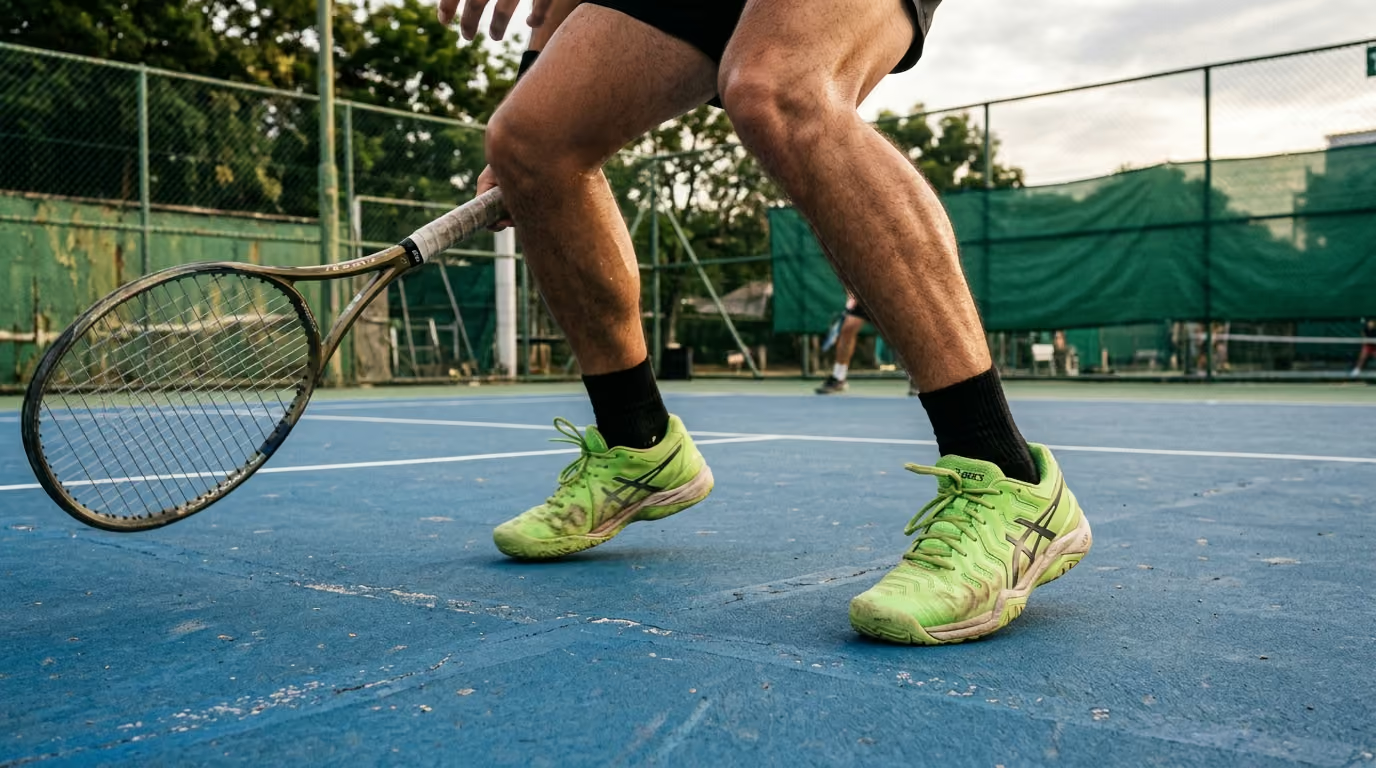
When a stressful day at work makes a light practice feel like a grueling match, your recovery needs are changing due to your total stress load.




Many players believe that recovery is calculated purely by tracking hours spent on the court. In reality, a stressful day at work can make a light practice session just as physically taxing as a grueling three-set match. Your recovery capacity is not a fixed metric, but a constantly shifting target shaped by the total physical, cognitive, and emotional load of your daily life.
To play your best, you must look beyond the court. Total stress load represents the combined physiological and psychological burden you carry. This includes your time playing matches, but it also includes work deadlines, emotional strain, poor sleep, and family duties. The human body does not have separate energy reserves for sport and life. It all drains from the same central reservoir.
The concept of allostatic load describes the cumulative physiological cost of this repeated adaptation. When your body is forced to handle constant demands, several systems begin to show signs of wear. This wear affects your sleep, your hormone levels, and your autonomic nervous system. In our experience, ignoring these non-sport pressures is the fastest path to chronic fatigue and reduced performance.
Many competitive players try to separate their athletic goals from their personal lives. We have seen athletes push through high-stress work weeks only to wonder why their reaction times are slow and their muscles feel weak. Our team at Evercourts has observed that physical performance is deeply tied to emotional peace. If you want to play for years to come, you must treat your daily stress as part of your training load.
This perspective shift is essential for healthy aging and athletic longevity resources. As we age, our physiological resilience naturally changes. We cannot recover from mistakes in workload management as easily as we did in our twenties. Recognizing that your life stress dictates your court readiness is a mature, sustainable way to approach your sport.
To manage your energy, you must understand the difference between external and internal load. External load refers to the physical work you perform during a session. This includes the duration of your practice, the distance you run, and the number of balls you hit. It is the objective content of your training schedule.
Internal load is your body's biological and psychological response to that work. This includes your heart rate, your perceived exertion, and your mental fatigue. According to consensus statements from sports scientists, the same external load can create vastly different internal responses. A simple drill might feel easy on a morning when you are well-rested, but that same drill can feel exhausting after a poor night of sleep.
A good coach or self-guided player should ask two distinct questions before every session. First, what are the objective demands of the planned workout? Second, what is this physical work going to cost the body today? If your internal strain is already elevated due to work stress, the planned session may be too demanding.
This distinction helps explain why some weeks feel much harder than others. Even if your court hours remain identical, your internal load might be twice as high due to external life events. Monitoring this internal response is one of the most effective injury prevention strategies you can use. It allows you to make smart adjustments before your body reaches a breaking point.
Sleep is the absolute foundation of athletic recovery. Research published in various sports medicine journals shows that sleep loss impairs muscle strength, speed, and endurance. It also compromises your cognitive function, which is critical for fast-paced racquet sports. When you are sleep-deprived, your brain cannot process visual information as quickly.
The impact of sleep on injury risk is an area of ongoing study. Some research in adolescent athletes shows a clear link, where those sleeping less than eight hours had a significantly higher injury rate. However, systematic reviews in adult athletes show more complex and mixed results. In adults, poor sleep is strongly linked to worse performance and higher perceived exertion, but it is not always an independent predictor of sudden injury.
This means you should not panic after one bad night. A single evening of poor sleep does not guarantee you will get hurt on the court. It does mean you should approach your next practice with realistic expectations. You will likely feel more fatigued, and your coordination may be slightly off.
To mitigate these effects, sports scientists recommend prioritizing sleep extension and daytime naps. Adding even thirty minutes of sleep to your daily routine can measurably improve your coordination and mood. If you want to study recovery methods, you can read our recovery science resources to find evidence-based sleep strategies.
Your job and academic pursuits place a massive cognitive demand on your brain. An intermittent work study showed that mental fatigue directly impairs physical capacity. Participants with high mental workloads experienced faster strength declines and slower heart-rate recovery. This confirms that mental exhaustion is not just in your head, as it has real physical consequences.
Another key concept is off-job detachment. This refers to your ability to mentally step away from your professional responsibilities when you leave the office. Research suggests that players who cannot detach from work struggle to recover between matches. Their bodies remain in a mild state of fight-or-flight, which delays tissue repair.
Emotional strain from family, relationships, or financial worry acts as another silent energy drain. The psychological stress response can narrow your peripheral vision and slow your reaction times. This attentional narrowing makes it difficult to track a fast-moving ball or adjust your feet on a slick court. It also increases your susceptibility to minor muscle strains.
Travel is another non-sport stressor that requires careful management. Long-haul travel causes physical fatigue from sitting, disrupted routines, and dehydration. When you cross time zones, jet lag further disrupts your circadian rhythms and hormone balance. Studies on traveling athletes show mixed effects on performance, but they consistently show increased fatigue and altered physiological markers.
To manage your total stress load, you need a practical way to assess your daily readiness. We recommend using a simple four-part screen that takes less than two minutes to complete. First, record your sport load, which includes court time, match intensity, and your rate of perceived exertion. This gives you a clear picture of your recent physical work.
Second, evaluate your life load. This includes work deadlines, commute times, family obligations, and travel stress. Rate this load on a simple scale from low to high. Do not overcomplicate this step, as a simple mental note is often enough to highlight potential red flags.
Third, assess your recovery indicators. Pay close attention to your sleep quality, muscle soreness, hydration, and general mood. If you wake up feeling irritable or unusually sore, your recovery capacity is likely compromised. These subjective markers are often more sensitive than expensive wearable technology.
Fourth, observe your performance response during your warm-up. Pay attention to your coordination, your movement speed, and how hard the first few hits feel. If the warm-up feels unusually difficult, your body is telling you that its readiness is low. Combining these four areas gives you a complete picture of your current state.
Once you have assessed your readiness, you can use a traffic-light system to guide your training. A green light means your total stress is low, your sleep is good, and your warm-up feels normal. In this state, you can safely proceed with your planned high-intensity session. This is the time to push your limits and build court conditioning.
A yellow light indicates that your total stress is elevated. You might have had a poor night of sleep, or perhaps you are facing a busy week at work. Your coordination is acceptable, but you feel slightly sluggish. In this state, you should modify your session by reducing total volume while keeping some intensity.
A red light means your total stress is dangerously high, or you have physical symptoms of illness. You might be experiencing severe sleep deprivation, intense emotional distress, or joint pain that alters how you run. In a red-light state, you must replace your planned workout with rest or low-intensity mobility work. Pushing through a red light rarely leads to better performance.
Applying these rules requires honesty and self-awareness. It can be hard to step back when you are highly motivated to play. However, making these smart adjustments is what keeps you healthy over the long term. You can read more about balancing competition with physical health in our player health articles.
When you need to scale back your training, you have several options beyond simply staying home. You can start by reducing the volume of your session. This means hitting for forty-five minutes instead of ninety, or playing two sets instead of three. Reducing the total number of repetitions is the easiest way to lower your internal load.
Another effective strategy is to decrease the density of your work. You can do this by taking longer rests between games or drill repetitions. Giving your heart rate more time to recover prevents the accumulation of excessive physical fatigue. This is especially useful on hot days or when you feel mentally drained.
You can also simplify the complexity of your practice. Highly complex drills require intense mental focus and rapid decision-making. When you are stressed, your brain is already working at capacity. Swapping complex tactical drills for simple, predictable hitting patterns allows you to maintain your skills without burning out your mind.
Finally, consider your playing surface and your physical environment. Playing on a hard court is much more taxing on your joints than playing on clay or turf. If you are feeling sore and stressed, moving your session to a softer surface can reduce the physical impact. This is a simple adjustment that can protect your body while still letting you enjoy your sport.
The physical demands of tennis, pickleball, and padel differ significantly, which changes how they interact with your total stress load. Tennis requires covering a large court with explosive, linear sprints and heavy rotational forces. This high-velocity movement places a substantial demand on your hamstrings, shoulders, and lower back. When your stress load is high, the risk of explosive movement errors in tennis increases.
Pickleball is played on a much smaller court, which reduces the need for long, high-speed sprints. However, it requires constant, rapid lateral shuffling, deep bending, and quick reaction times at the kitchen line. The physical strain is concentrated in the knees, Achilles tendons, and lower back. If you are sleep-deprived, your reaction times at the net will suffer, which can lead to late movements and joint strain.
Padel is played in an enclosed glass court, combining elements of tennis and squash. It features high-frequency changes of direction, constant overhead play, and wall rebounds that require deep squats. The overhead actions put significant stress on the rotator cuff and elbow, while the artificial turf over concrete can be tough on the knees. In our experience, the multi-directional demands of padel make physical readiness particularly important.
Regardless of which sport you play, you must adjust your approach based on these unique demands. If you are a tennis player under high stress, you might want to avoid heavy serving practice. If you play pickleball, you might focus on soft dinking drills rather than aggressive court coverage. For padel players, reducing the number of high-intensity overhead smashes can protect a tired shoulder.
Let us look at how these adjustments work in real life through a few common scenarios. Consider a player facing a major project deadline at work. They have slept poorly for three nights and feel mentally exhausted, but they still want to play their weekly singles match. This is a classic case of high cognitive load and sleep restriction.
The smart adjustment here is to skip the competitive match and replace it with a light, non-competitive hitting session. The player gets the benefit of movement and social interaction without the high-stress demands of competition. This keeps them active while protecting their depleted physical reserves.
Another common scenario involves physical labor. A player who works as a landscape gardener or construction worker arrives at evening practice after an eight-hour shift of lifting and walking. Their baseline external load is already extremely high before they even step onto the court.
For this player, the evening session should focus on technical skill and tactical positioning rather than high-intensity conditioning. They do not need more physical stress to build fitness. Instead, they need high-quality, low-impact practice that respects the physical work they have already done.
We also see players returning to the court after long travel. If you have just flown across several time zones, your body clock is out of sync. In this situation, your first session should be short, simple, and played at a moderate intensity. Focus on hydration, gentle stretching, and light hitting to help your body adapt to the new environment.
One of the biggest mistakes players make is relying on recovery gadgets to solve an overloaded life. High-tech massage guns, compression boots, and expensive supplements cannot replace basic sleep and proper nutrition. If you are sleeping four hours a night and working sixty hours a week, a cold plunge will not save you from exhaustion. Focus on the fundamentals before spending money on trendy recovery tools.
Another common pitfall is reducing training intensity while keeping the total volume too high. Many players think that hit-and-giggle tennis or slow, easy pickleball is recovery. However, spending two hours on your feet still creates a massive physical demand, even if the pace is slow. If you need to recover, you must reduce the time you spend on the court, not just the speed of your play.
Players also tend to ignore positive stress. Getting married, buying a home, or receiving a promotion are all positive life events, but they still disrupt your routines and elevate your stress hormones. Your body does not distinguish between good stress and bad stress. Both require energy to process, and both will temporarily reduce your recovery capacity.
Finally, do not treat subjective feelings of low motivation as a sign of laziness. A sudden drop in your desire to play is often a primary indicator of systemic fatigue or emotional burnout. Instead of forcing yourself to push through, use it as a signal to review your total stress load. Taking a few days off to rest can often restore your enthusiasm and protect your health.
When total life stress is elevated, the nervous system shifts into a sympathetic dominant state. This state of constant readiness alters blood flow and increases muscle tension across the body. When your muscles are chronically tight, they lose some of their natural elasticity and shock absorbing capacity. This increased baseline tension places extra strain on your tendons and joints during explosive movements.
Furthermore, high cortisol levels associated with chronic stress can slow down protein synthesis. This means your body takes longer to repair the micro-tears in muscle fibers that naturally occur during a tough match. A workout that you would normally recover from in twenty-four hours might now leave you sore for three full days. Your connective tissues, including your tendons and ligaments, are particularly vulnerable to this delayed repair process.
We must also consider how physical discomfort interacts with our mental state. I remember finishing a tough two hour padel match on a cold Tuesday night and waking up the next morning feeling like my lower back was locked in concrete. For a long time, I just accepted this as the price of playing hard in my forties. But once I started spending just ten minutes on targeted hip mobility before heading to the club, the stiffness almost completely vanished. It taught me that we do not have to accept pain as a default state of aging. Incorporating consistent mobility and movement practices can dramatically reduce the daily physical strain we carry onto the court.
By understanding these physiological mechanisms, you can make better decisions about when to rest. You will start to see that taking a recovery day is not a sign of weakness. Instead, it is a necessary investment in your physical longevity. Giving your tissues the time they need to rebuild ensures you can keep playing the sports you love for years to come.
While self-monitoring is incredibly valuable, there are times when you must seek professional medical guidance. If you experience persistent fatigue that does not improve after several days of complete rest, it is time to see a doctor. This could be a sign of an underlying medical issue, such as a nutritional deficiency or hormonal imbalance.
You should also seek professional help if you experience chest pain, unusual shortness of breath, or dizziness during play. These symptoms require immediate medical evaluation to rule out cardiovascular concerns. Never try to push through these warning signs, as doing so can be extremely dangerous.
Persistent joint or muscle pain that changes how you move is another reason to see a physical therapist. Trying to play through pain often causes you to alter your mechanics, which can lead to secondary injuries elsewhere in your body. A qualified professional can help you identify the root cause of the issue and design a safe rehabilitation plan.
Finally, do not ignore signs of severe emotional distress, anxiety, or depression. If your life stress feels overwhelming and is affecting your sleep, appetite, or ability to function, seek support from a mental health professional. Taking care of your mind is just as important as taking care of your body, and it is a vital part of maintaining your athletic longevity.
By treating recovery as a dynamic process and respecting your total stress load, you can protect your health and continue enjoying your favorite racquet sports for many years to come.
Follow Evercourts for practical insights on tennis, pickleball and padel performance, movement, recovery and healthy ageing. Stay connected for new articles, research-led guidance and ideas to help you play well and keep playing for years.


Read practical guidance for better movement, smarter preparation and a game that keeps working for you.
explore the Blog