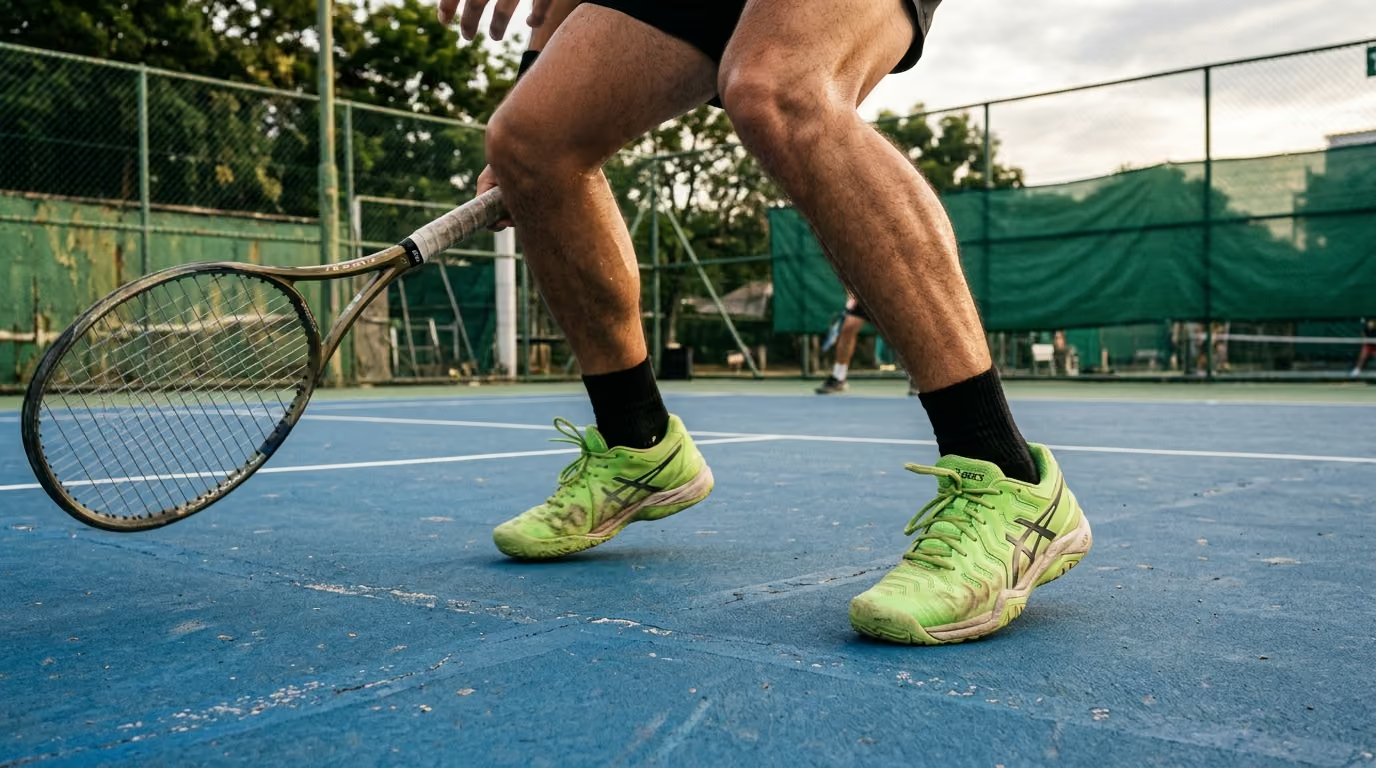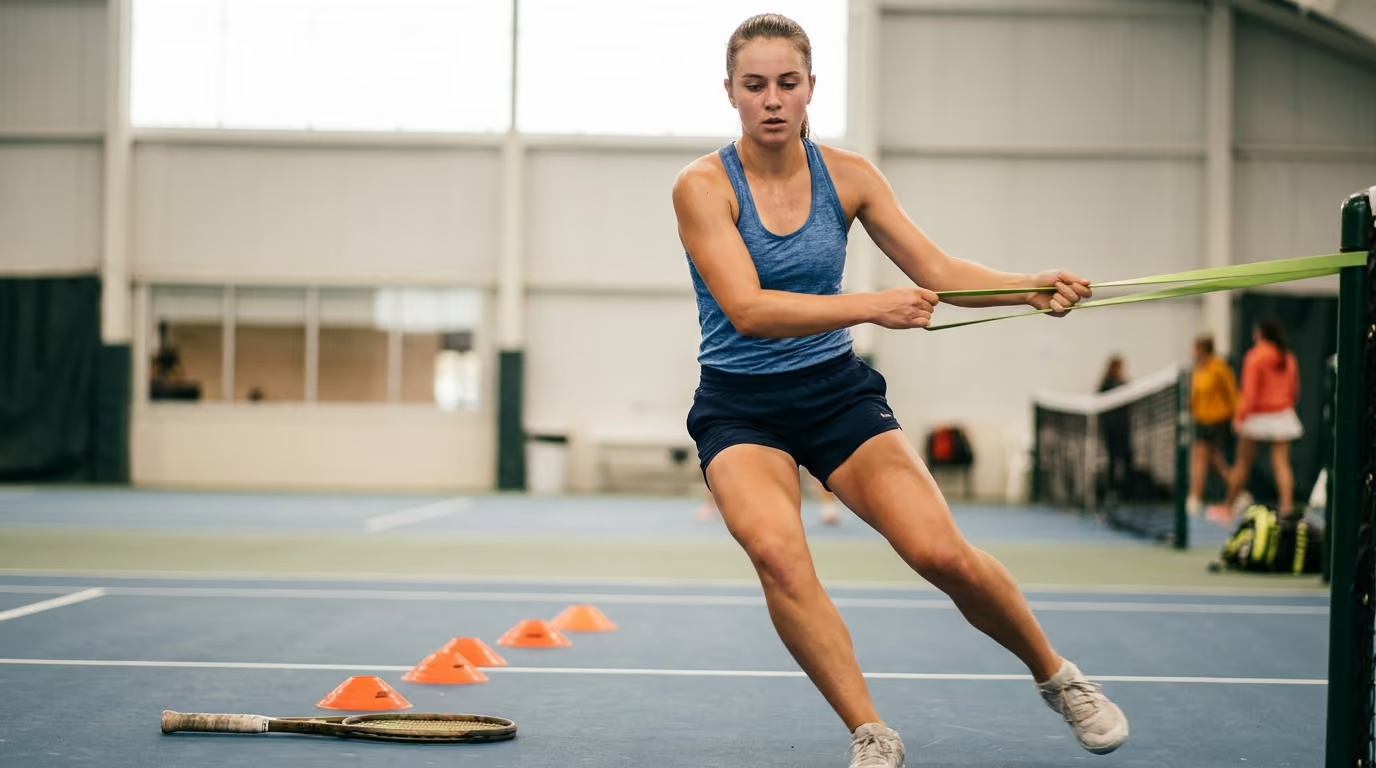

Tournament and league injury prevention involves proactive load management strategies, including gradual increases in match play and structured warm-ups.




You sign up for a weekend doubles tournament or a local league play-off with high expectations. By Sunday morning, your hips feel locked, your lower back is stiff, and every lateral step requires a massive mental effort. Many adult players accept this physical toll as an unavoidable part of competitive play. However, this sudden physical decline is often the direct result of a rapid increase in physical demand without proper preparation.
Preventing injuries during tournaments and intense league play requires proactive load management rather than just a thorough warm-up. Players can protect their bodies by gradually increasing their weekly match play ahead of time, tapering training volume in the final days, and using structured neuromuscular warm-ups. This approach prevents sudden spikes in physical demand while keeping muscles fresh for competition.
Current sports science indicates that competition injuries often stem from sudden changes in training volume. When players jump from playing twice a week to playing multiple matches in a single weekend, their tissues face unaccustomed stress. Research suggests that keeping your weekly activity consistent helps prepare your body for these temporary increases in intensity. Understanding how to manage this workload is the key to maintaining your health on the court.
I remember finishing a tough two hour padel match on a cold Tuesday night and waking up the next morning feeling like my lower back was locked in concrete. For a long time, I just accepted this as the price of playing hard in my forties. But once I started spending just ten minutes on targeted hip mobility before heading to the club, the stiffness almost completely vanished. It taught me that we do not have to accept pain as a default state of aging.
To prepare your body for the stress of tournament play, you must understand the difference between external and internal load. External load refers to the physical work you perform on the court. This includes the total minutes you play, the distance you run, and the number of times you change direction. It also includes the number of swings, serves, and maximum-effort sprints you complete during a match.
Internal load describes how your body reacts to that physical work. Your heart rate, muscle fatigue, and perceived exertion are all indicators of internal load. Two players can complete the exact same singles match but experience very different internal loads. A player who is returning from a break will experience much higher internal stress than a highly conditioned player.
Your preparation must account for both types of load to prevent overuse injuries. If you only track your playing minutes, you might miss signs of accumulating fatigue. Monitoring your sleep quality, muscle soreness, and daily energy levels helps you understand your internal load. This dual approach allows you to adjust your training before your tissues reach a breaking point.
A helpful way to analyze your injury risk is through the relationship between your recent training and your historical training. Your acute workload is the total amount of exercise you perform over a seven-day period. Your chronic workload is the weekly average of the work you completed over the previous three to six weeks. Comparing these two numbers helps you see if you are increasing your activity too quickly.
This relationship is often calculated as the acute:chronic workload ratio. A 2026 systematic review and multilevel meta-analysis found a small-to-moderate association between an elevated ratio and increased injury risk. However, the researchers also reported extremely high variation across different studies and sports. This means there is no single safe ratio that applies to every athlete in every situation.
Because of this variation, you should view this ratio as a general guide rather than a strict rule. Do not assume you are completely safe just because your weekly increase looks gradual on paper. You must also consider your personal injury history, your age, and the environmental conditions of the tournament. If you are playing in high heat or on an unfamiliar surface, your body will experience greater stress.
A sudden spike in workload is particularly dangerous when it involves highly demanding movements. For racquet sports players, these movements include maximum-effort sprinting, deep lunging, and high-velocity serving. If your chronic training does not include these actions, introducing them suddenly during a tournament increases your risk of tissue strain. Progressive exposure is the most reliable way to build lasting tissue tolerance.
To prepare your body for a congested tournament schedule, you should organize your training into four distinct phases. This systematic approach allows you to build physical capacity safely.
This phase should begin four to six weeks before your tournament or league starts. The goal is to build a strong physical foundation through targeted training. You should focus on general strength, aerobic conditioning, and joint mobility. Incorporating structured strength and conditioning systems during this phase is highly beneficial.
A systematic review of randomized trials showed that consistent strength training cut sports injuries to less than one-third of their normal rate. It also halved the occurrence of overuse injuries in the athletes studied. Your strength routine should target the muscles that support your knees, hips, and shoulders. Building strength in these areas creates a buffer against the repetitive impacts of court play.
Two to three weeks before the competition, you must shift your focus toward match-specific movements. General strength is valuable, but your tissues must adapt to the rapid forces of competitive play. You should introduce lateral cutting, rapid decelerations, and high-velocity overhead actions.
Use this phase to practice moving efficiently in all directions. Utilizing targeted mobility and movement resources can help you maintain fluid joint ranges during these intense sessions. You should gradually increase the intensity of your practice matches to mimic tournament conditions. This progressive exposure ensures your tendons and muscles are prepared for the speed of real competition.
The final week before your event is designed to reduce fatigue while keeping your physical skills sharp. Many recreational players make the mistake of training hard right up to the day of the tournament. This approach guarantees you will step onto the court with accumulated fatigue.
Instead, you should reduce your total training volume by forty to sixty percent. Keep your sessions short, but maintain a high level of intensity during your brief rallies. Perform a few short sprints and technical drills to keep your nervous system responsive. You should finish every taper session feeling energized rather than exhausted.
During the tournament, your primary objective is to preserve your performance and limit physical breakdown. This phase requires meticulous attention to hydration, nutrition, and sleep. You must also manage your movement between matches to prevent excessive stiffness.
Once the tournament ends, you must transition into a structured rebuilding phase. Do not jump immediately back into your normal high-volume training routine. Give your body time to repair microscopic tissue damage before you subject it to heavy loads again. A gradual return to play is the best way to maintain your athletic longevity.
The physical stress of a tournament varies significantly depending on your chosen racquet sport. Tailoring your preparation to these specific demands is essential for effective injury prevention strategies.
Tennis requires long, explosive sprints across a large playing surface. The sport places a massive demand on your cardiovascular system and requires significant eccentric braking force to stop and change direction. The serve is a highly repetitive, high-velocity overhead motion that stresses the shoulder and trunk.
Hard court tournaments are particularly demanding on your joints due to the unforgiving surface. If your tournament is on clay, your groin muscles must be prepared for the sliding and stabilizing movements. Your preparation should include longer sprint distances and specific shoulder strengthening exercises.
Pickleball is played on a smaller court, but it features a very high density of rapid reactions. The game requires constant lateral shuffling and deep lunging at the kitchen line. Because the paddle is short, players must bend their knees and hips deeply to retrieve low balls.
This constant low-profile posture places significant stress on the quadriceps tendons and the lower back. The quick volley exchanges also require rapid wrist and elbow stability. Your pickleball preparation should emphasize deep squatting mobility and rapid lateral footwork drills.
Padel combines the overhead volume of tennis with the quick reactions of pickleball. The presence of the walls means rallies are often highly prolonged, leading to extended physical exchanges. Players must frequently turn, twist, and look upward to track lobbed balls.
The artificial turf surface, which is often laid over concrete, creates unique traction and impact forces. The frequent use of the smash stroke places high demands on the shoulder rotator cuff and the abdominal muscles. Padel players should focus heavily on thoracic spine rotation and shoulder deceleration strength.
A proper warm-up does more than just raise your body temperature. It prepares your nervous system to coordinate fast, powerful movements under pressure.
For decades, players were told to perform static stretches before stepping onto the court. However, a systematic review of randomized trials found that stretching alone does not offer clear preventive benefits against injuries. Holding static stretches can actually decrease your muscle power and reaction speed temporarily.
Static stretching still has value for general flexibility when performed after play. However, your pre-match routine should focus on active, dynamic movements. You need to activate your muscles and prepare your joints for the specific ranges of motion required during play.
A highly effective court warm-up should follow a progressive sequence of movements. This approach is based on successful programs like the FIFA 11+, which have been shown to reduce injury rates significantly.
In multi-match tournaments, you may have to wait several hours between your appearances. Performing a full, thirty-minute warm-up before every match can create excessive fatigue over a long weekend.
Instead, you should use a shortened re-warm-up routine for subsequent matches. Spend five minutes on joint mobility and another five minutes on quick footwork and progressive accelerations. This approach prepares your nervous system without draining your energy reserves.
The final seven days before a tournament should be planned backward from your first match. This ensures you arrive at the court fully recovered and physically prepared.
This is your final opportunity to perform a high-quality, match-speed practice session. You should play a competitive set or completed game to expose your body to tournament-level forces. Follow this session with a thorough cool-down and a focus on nutrient-rich meals.
Reduce your total playing time by roughly thirty percent. Focus on tactical drills, serving practice, and light return-of-serve repetitions. Avoid long, exhausting rallies that leave your legs feeling heavy. This is a great time to review your strategy and mental preparation.
Keep your sessions very short, aiming for thirty to forty-five minutes of light court work. You should focus on crisp technical execution and quick reaction drills. Avoid any new exercise routines, unfamiliar footwear, or dramatic changes to your racquet setup.
This day should be dedicated to light movement and active recovery. Spend fifteen minutes on gentle mobility work and light activation drills. Pack your gear bag, prepare your hydration mixes, and prioritize getting a high-quality night of sleep.
When you must compete multiple times in a short window, you must make smart decisions to protect your tissues from overloading.
Before the tournament begins, calculate a realistic estimate of your playing time. If you are entering both singles and doubles events, your total time on court will accumulate rapidly.
Be prepared to adjust your play if your matches are exceptionally long or physically grueling. If you play a three-hour singles match in the morning, you must adapt your approach for your afternoon doubles play. Share this budget with your playing partners so everyone is aligned on physical safety.
In league play, rotating players is a highly effective way to manage physical stress. Do not view rotation solely as a tactical tool to confuse your opponents. Use it to protect players who are carrying minor aches or recovering from recent illness.
When managing a roster, keep track of each player's recent competitive minutes. Ensure that players who sit out as substitutes still perform light movement on the sidelines. A substitute who enters a high-intensity match cold faces a elevated risk of acute muscle strain.
Using a simple monitoring system helps you make objective decisions about whether to continue playing during a demanding weekend.
The choices you make in the hours following a match will directly dictate your performance and safety in the next round. Utilizing established recovery science guidelines is vital for maintaining physical readiness.
Your recovery nutrition should begin within thirty minutes of stepping off the court. The International Olympic Committee sports-nutrition consensus emphasizes the importance of replenishing your glycogen stores quickly.
Consume a meal or snack rich in easily digestible carbohydrates to restore your energy reserves. The same consensus recommends consuming fifteen to twenty-five grams of high-quality protein after play to support muscle repair. Hydrate with water and electrolytes, aiming to replace any fluid lost through sweat during your match.
High-quality sleep is the most powerful recovery tool available to any athlete. While a systematic review of adult athletes found limited evidence that poor sleep is a direct, independent cause of injury, chronic sleep restriction is a major concern.
Other reviews suggest that consistently sleeping seven hours or less over a two-week period is associated with a 1.7 times greater risk of musculoskeletal injury. During a tournament, protect your sleep by keeping your bedroom cool, dark, and quiet. Avoid late-night screen exposure and heavy meals close to your bedtime.
A short, low-intensity recovery session can help reduce muscle stiffness after a long match. Spend ten minutes spinning on a stationary bike or walking slowly around the facility. Follow this with gentle mobility movements to restore normal joint ranges of motion.
Passive tools like compression garments, massage, and cold-water immersion can help reduce your perception of soreness. However, you should never view these modalities as a replacement for proper load management and sleep. Reduced muscle soreness does not always mean your tissues have fully recovered their structural strength.
The risk of injury does not vanish once the tournament is over. Many players experience injuries in the week following a major competition due to a poorly managed return to training.
After a grueling tournament, your body is in a state of localized tissue fatigue and metabolic depletion. If you take two days of complete rest and then jump immediately back into heavy training, you create another dangerous load spike.
Your tissues are highly vulnerable to strain during this transitional window. Instead of rushing back to your normal routine, you must use a staged rebuilding process. This gradual approach protects your joints while restoring your baseline fitness level.
A safe post-tournament transition should progress over several days depending on your total match volume.
Reviewing these real-world scenarios can help you recognize and avoid common preparation mistakes.
While muscle soreness and general fatigue are normal responses to a demanding tournament, you must be able to recognize the signs of a more serious issue. You should consult a qualified healthcare provider if you experience any of the following symptoms:
Seeking professional guidance early can prevent a minor tissue strain from turning into a chronic, long-term limitation. A qualified physical therapist or sports physician can help you design a safe, individualized return-to-play protocol.
You should return to this preparation guide four to six weeks before any major athletic event. This includes your local league start date, an annual club championship, or a weekend multi-match tournament. Reviewing these principles regularly will help you plan your training phases, design your warm-up routines, and manage your recovery effectively. Taking a proactive, structured approach to your tournament preparation is the most reliable way to protect your physical health and enjoy competitive racquet sports for years to come.
Follow Evercourts for practical insights on tennis, pickleball and padel performance, movement, recovery and healthy ageing. Stay connected for new articles, research-led guidance and ideas to help you play well and keep playing for years.


Read practical guidance for better movement, smarter preparation and a game that keeps working for you.
explore the Blog