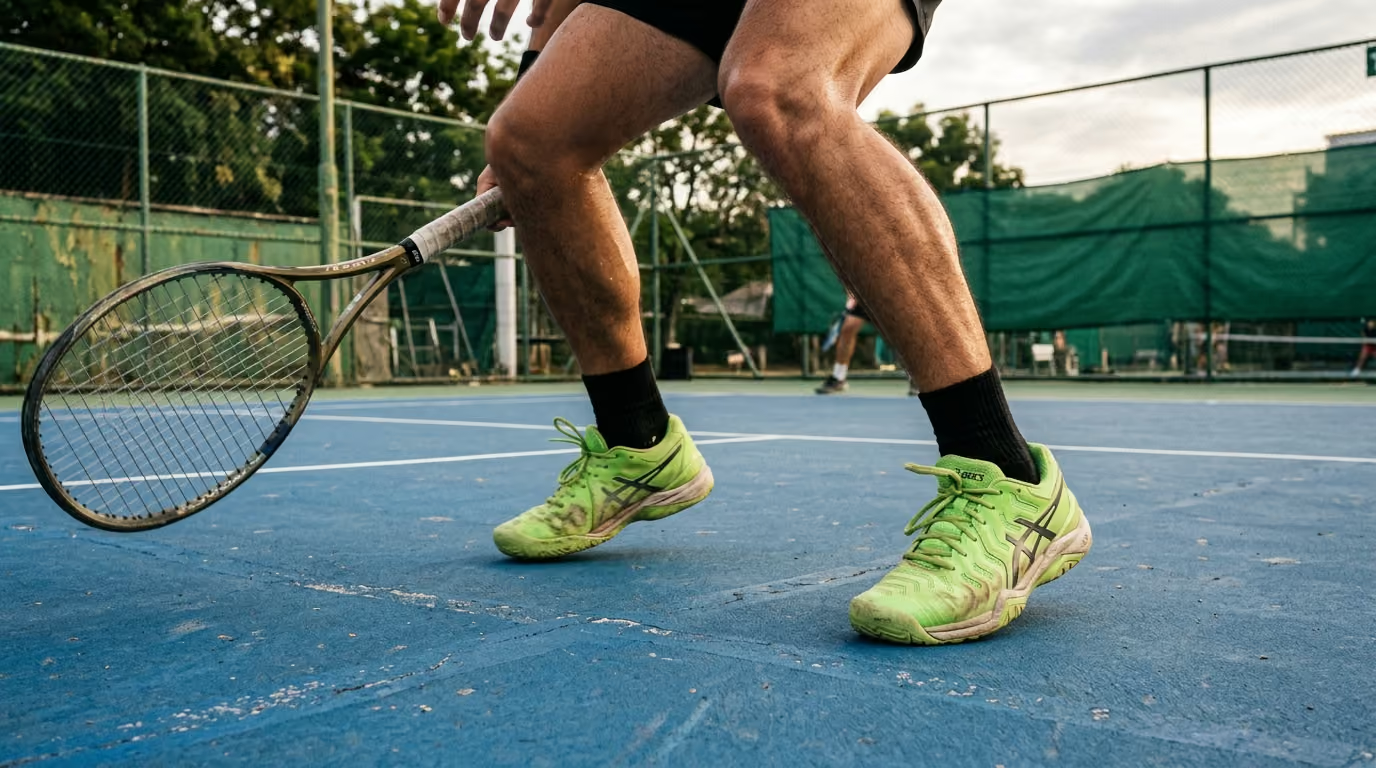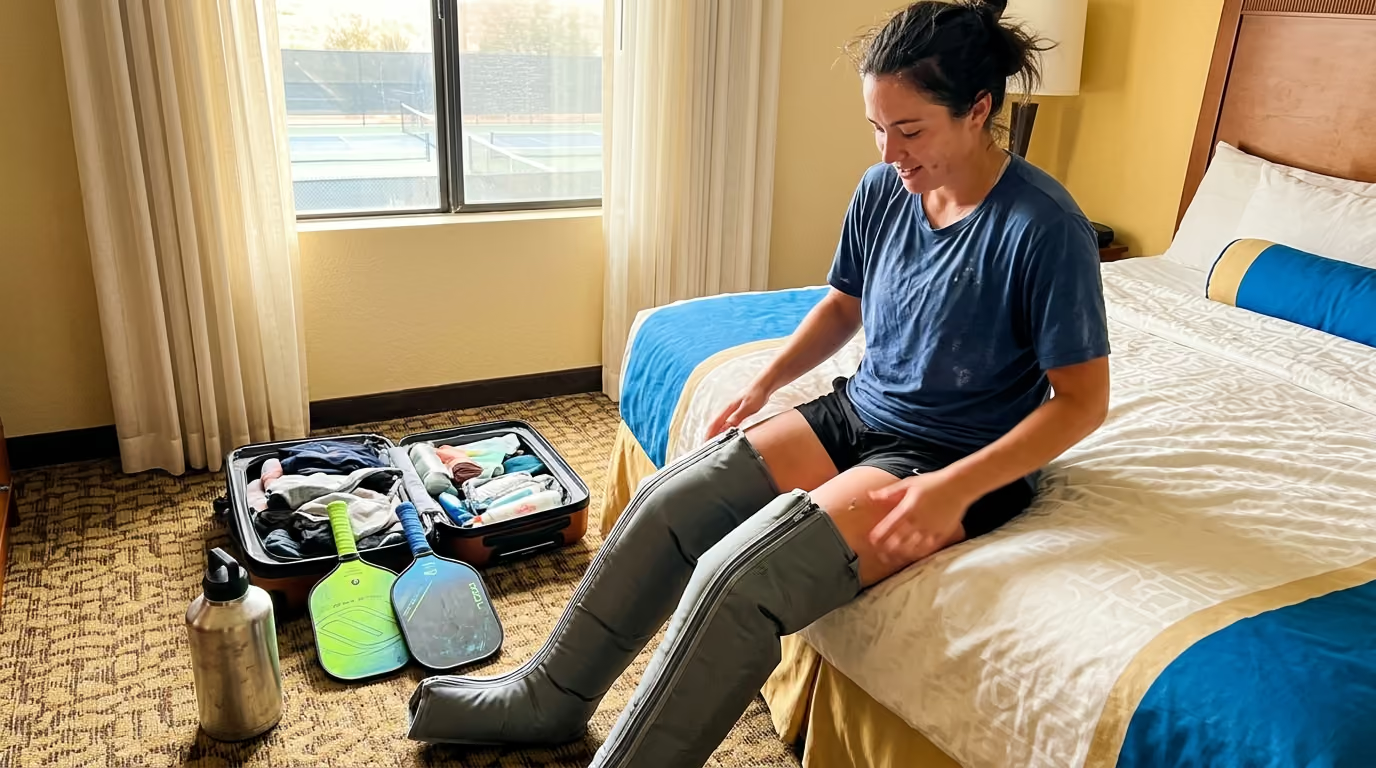

While many assume travel recovery for racquet sports is simple, it requires a systematic approach to manage fatigue, stress, and match load for peak performance.




Travel recovery for court athletes is not a simple matter of performing a few stretches or drinking a bottle of water in a hotel lobby. It is a systematic process of managing travel fatigue, physiological stress, and tournament match load to maintain on-court performance. To protect your joints and play consistently, you must manage travel fatigue and jet lag as distinct physical challenges. This resource outlines a structured recovery framework based on sleep, hydration, mobility, and workload management.
Whether you are driving two hours for a weekend tournament or flying across time zones for a national championship, travel disrupts your routine. Prolonged sitting tightens your muscles, changes in altitude dehydrate your body, and unfamiliar hotel rooms compromise your sleep. This guide provides a practical, evidence-based approach to keeping your body moving well during transit. By treating travel as an active part of your athletic schedule, you can walk onto the court feeling loose, responsive, and ready to play.
To recover effectively, you must understand what happens to your body during a journey. Sports scientists make a clear distinction between travel fatigue and jet lag. Travel fatigue refers to the general weariness, muscle stiffness, and mild dehydration caused by the journey itself. It affects you whether you drive fifty miles or fly five thousand miles. Jet lag is a separate issue that occurs only when you cross multiple time zones, causing a temporary mismatch between your internal body clock and the local time.
According to a travel fatigue consensus review published in the British Journal of Sports Medicine, prolonged sitting is one of the main contributors to travel fatigue. When you sit in a car or an airplane seat for hours, blood pools in your lower limbs. This reduced circulation leads to muscle tightness, particularly in your calves, hips, and lower back. The dry air in airplane cabins also accelerates fluid loss through breathing, causing mild dehydration before you even hit the court.
Jet lag adds a layer of complexity by disrupting your circadian rhythms. These internal rhythms regulate your sleep cycles, hormone production, body temperature, and digestion. When you cross time zones, your body expects to sleep and eat according to your home clock. Research shows that eastward travel is generally harder on the body than westward travel. This is because traveling east requires you to advance your body clock, making it harder to fall asleep at an earlier local time.
A study on professional female tennis players published in Clinical Journal of Sport Medicine highlighted this directional difference. The researchers found that each hour of time-zone difference reduced sleep by about eleven minutes on the first night. Eastward travel caused a sleep reduction of nearly twenty-five minutes per night. Westward travel actually increased sleep by thirty minutes on the first night. This demonstrates why traveling east requires a more conservative recovery plan.
Tournament play imposes much greater physical demands than your regular weekly matches or practice sessions. During a typical training week, you have control over your schedule, intensity, and rest intervals. In a tournament, you must adapt to fixed match times, changing weather conditions, and unfamiliar court surfaces. You may also have to play multiple matches in a single weekend or even on the same day.
To manage this physical stress, sports scientists look at external load and internal load. External load is the physical work you perform on the court. This includes match duration, running distance, accelerations, decelerations, and change-of-direction movements. A systematic review of junior and elite tennis players showed that typical training sessions rarely reproduce the intense physical demands of real tournament matches. Tournament matches feature longer rallies, higher emotional stress, and fewer extended rest breaks.
The playing surface also plays a major role in your external load. The same systematic review noted that rallies on clay courts are about twenty-two percent longer than those on hard courts. This leads to higher total playing time, elevated heart rates, and higher blood lactate levels. Playing on clay requires more slide-and-recovery movements, which places unique demands on your groin and hip stabilizers. Hard courts, on the other hand, produce higher impact forces on your knees, ankles, and lower back.
Internal load is how your individual body reacts to that external work. It is influenced by your fitness level, age, sleep quality, and stress. If your body cannot recover between matches, your internal load spikes. Research shows that playing multiple matches in a single day impairs your jumping, sprinting, and change-of-direction performance. It also increases muscle soreness, fatigue, and joint pain. To monitor this, you should keep a simple daily log of your sleep quality, morning muscle soreness, and perceived exertion.
A useful concept for preventing injury is the acute-to-chronic workload ratio. This ratio compares your training volume over the past week with your average training volume over the past month. The International Olympic Committee consensus on training load suggests that keeping this ratio between 0.8 and 1.3 helps lower injury risk. If your tournament week causes your workload to spike above 1.5, your risk of injury or illness increases significantly. Understanding this helps you plan post-tournament rest rather than jumping straight back into heavy training.
Sleep is the single most powerful recovery tool available to athletes. It is during deep sleep that your body releases growth hormone, repairs damaged muscle fibers, and clears metabolic waste. When travel disrupts your sleep, your physical performance, reaction time, and decision-making suffer. To maintain your edge on the court, you must treat sleep as a key performance input.
Rather than sticking to a rigid sleep schedule, you should aim for sleep extension before and after travel. A review of sleep interventions in athletes suggests that adding forty-six to one hundred and thirteen minutes of sleep per night can help offset travel fatigue. You can achieve this by going to bed an hour earlier in the days leading up to your journey. This sleep banking builds up a buffer that helps protect your performance when travel disruptions occur.
Naps are another highly effective way to manage sleep debt during a tournament. The same sports-medicine research outlines two types of strategic naps:
These naps last twenty to thirty minutes. They are ideal when you need to boost your alertness before a match without feeling groggy. A short nap prevents you from entering deep sleep, so you avoid sleep inertia, which is that heavy, sluggish feeling that can last for an hour after waking.
These naps last sixty to ninety minutes. They are best used on non-match days when you are severely sleep-deprived. A longer nap allows you to complete a full sleep cycle, which aids tissue repair and mental recovery. However, you should complete these naps at least three hours before bedtime to avoid disrupting your night sleep.
When staying in a hotel, you must actively manage your sleep environment. The travel consensus recommends keeping your room cool, dark, and quiet. A room temperature between sixty and sixty-seven degrees Fahrenheit is generally ideal for deep sleep. To build a highly effective hotel-room sleep kit, pack an eye mask, earplugs, a portable white-noise machine, and a low-light reading book. You should also carry high-quality protein snacks so that hunger does not wake you up in the middle of the night.
To keep your brain chemistry balanced for sleep, you must use caffeine strategically. Avoid drinking coffee or energy drinks in the late afternoon or evening, as caffeine can remain in your system for up to eight hours. You should also avoid alcohol and nicotine near bedtime. While alcohol can make you feel sleepy, it disrupts your sleep architecture, reduces deep sleep, and increases nighttime dehydration.
For long-haul travel crossing multiple time zones, start adjusting your schedule to the destination time zone as soon as you board your flight. Set your watch to the local time of your destination. If it is daytime at your destination, try to stay awake on the plane by exposing yourself to bright light. If it is nighttime at your destination, wear an eye mask and try to sleep. A helpful rule of thumb is that it takes about half a day of adjustment per time zone crossed westward, and a full day per time zone crossed eastward.
Dehydration is a quiet performance killer on the court. When you lose just two percent of your body mass in fluids, your aerobic capacity drops, your reaction time slows, and your perceived exertion increases. Because sweat rates and sweat-electrolyte concentrations vary widely from player to player, you should avoid generic hydration plans. Instead, learn to estimate your personal sweat rate.
You can calculate your sweat rate by weighing yourself in light clothing immediately before and after a hard one-hour practice session. Note how much fluid you drink during that hour, and subtract any urine loss. For every pound of weight lost, you have a fluid deficit of sixteen ounces. According to position stands from the American College of Sports Medicine, typical fluid intake during intense activity should range between 0.4 and 0.8 liters per hour. However, this must be tailored to your body size, local weather conditions, and digestive comfort.
During long car rides or flights, do not try to hydrate by drinking massive amounts of water all at once. This can lead to gastrointestinal discomfort and increases the risk of hyponatremia, which is a dangerous dilution of sodium levels in your blood. Instead, take regular, small sips of water or an electrolyte drink throughout the journey. Begin your travel day fully hydrated, which you can verify by checking that your urine is a pale straw color.
For tournament nutrition, preparation is key. Never rely on the food options at airports, gas stations, or tournament venues, as they are often high in sodium and low in quality nutrients. Pack a cooler or a travel bag with easily digestible carbohydrates, lean proteins, and healthy fats. Excellent travel-friendly options include bananas, apples, oatmeal cups, rice cakes, almonds, turkey jerky, and quality protein powders.
Your post-match nutrition should focus on three goals, which you can read about in our science of recovery resources:
A simple recovery drink, such as chocolate milk or a plant-based protein shake mixed with a banana, is an easy way to meet these goals within thirty minutes of stepping off the court.
Prolonged sitting during travel places your muscles in a shortened position, which leads to stiffness and reduced range of motion. This is particularly true for your hip flexors, hamstrings, calves, and thoracic spine. When you transition directly from a long drive or flight to the court, these tight tissues limit your movement and increase your risk of injury.
According to travel safety guidelines from the Centers for Disease Control and Prevention (CDC), moving your legs regularly during long trips is essential for maintaining healthy circulation. For road trips, the CDC recommends stopping every two hours to walk and stretch. If you are flying, stand up to walk the aisle every hour, and perform simple exercises in your seat to keep blood flowing.
Once you arrive at your hotel, you should perform a low-fatigue mobility routine to restore your range of motion. The goal is not to perform a hard workout, but to gently signal to your nervous system that it is safe to let your muscles relax. You can learn more about these principles in our guide on mobility and movement training.
I remember finishing a tough two hour padel match on a cold Tuesday night and waking up the next morning feeling like my lower back was locked in concrete. For a long time, I just accepted this as the price of playing hard in my forties. But once I started spending just ten minutes on targeted hip mobility before heading to the club, the stiffness almost completely vanished. It taught me that we do not have to accept pain as a default state of aging.
Here is an easy, ten-minute hotel-room mobility routine you can use after any journey:
Begin with two minutes of relaxed, deep breathing while lying on your back with your legs bent and feet flat on the floor. This helps downregulate your nervous system after the stress of travel.
Perform fifteen slow ankle circles in each direction, followed by fifteen ankle pumps, where you pull your toes toward your shins and then point them away. This restores movement in your ankle joints and pumps pooled blood back toward your heart.
Kneel on one knee, keeping your torso upright, and gently tuck your pelvis under until you feel a mild stretch in the front of your hip. Hold this position for thirty seconds, breathing deeply, then switch sides. Do not arch your lower back.
Get on your hands and knees. Place one hand behind your head, and gently rotate your elbow down toward your opposite wrist, then up toward the ceiling. Follow your elbow with your eyes, performing eight slow repetitions on each side to loosen your upper back.
Stand with your feet shoulder-width apart, and perform ten slow, controlled bodyweight squats. Focus on keeping your chest up and pushing your knees outward over your toes. This wakes up your glutes, quadriceps, and hamstrings after hours of sitting.
One of the biggest mistakes competitive players make is training too hard on their arrival day. When you are tired from a long journey, your coordination, reaction time, and muscle activation are compromised. Trying to match your normal training intensity on arrival day dramatically increases your risk of injury. Instead, use a structured workload-adjustment strategy to ease your body back into movement.
Your arrival-day session should focus on adaptation rather than building fitness. Keep the session short, lasting no more than thirty to forty-five minutes. Focus on light aerobic movement, dynamic stretching, and low-volume technical work, such as soft hitting or shadow swing patterns. Avoid explosive sprinting, maximal jumping, or high-volume serving drills, which place intense stress on fatigued shoulders and knees.
When you are close to competition day, follow a clear physical hierarchy. Your main priorities should be sleep, hydration, nutrition, and a high-quality warm-up. Minimizing unnecessary strength training or intense conditioning sessions during tournament week keeps your muscles fresh. This matches the recommendations of the International Olympic Committee, which advises prioritizing rest and recovery during dense competition periods to protect performance and immune health.
To make smart decisions about your daily training volume, use the following post-travel adjustment matrix. It helps you customize your schedule based on your travel distance, match load, and sleep quality:
Maintain your planned training schedule, but keep your total volume moderate. Focus on technical refinement and tactical awareness.
Reduce your training intensity and volume by fifty percent. Replace hard conditioning with active recovery, light mobility, and tactical visualization.
Postpone any planned high-intensity conditioning or heavy strength workouts. Instead, perform a short, thirty-minute session of easy court movement and technical hitting, then prioritize sleep.
This is a high-risk scenario for injury. Cancel any formal training sessions. Focus entirely on nutrition, hydration, light walking, and resting in your room to allow your nervous system to recover.
If you are a master's athlete or older recreational player, you must be even more conservative with your workload adjustments. As we age, our tendons lose elasticity, our recovery rates slow, and our sleep can be more easily disrupted by travel. To support healthy aging and athletic longevity, older players should build larger recovery windows into their tournament schedules. If a younger player needs one day to adjust to travel, an older player should consider taking two days of light movement before playing competitive matches.
The sports recovery market is filled with expensive gadgets, compression garments, and complex protocols. However, it is vital to separate tools that make your muscles feel better from those that actually restore your physical performance capacity. Many popular recovery modalities simply reduce your perception of soreness without accelerating tissue repair or restoring your muscle power.
According to a study on recovery modalities in tennis published in the Journal of Sports Sciences, cold-water immersion and compression garments can be useful tools for tournament play. The researchers found that soaking in cold water after intense sessions led to faster reductions in heart rate and blood lactate levels, while also lowering perceived muscle soreness. These benefits can help you feel better when you have to back up and play again the next day.
However, a study simulating a multi-day tennis tournament showed that active recovery, stretching, cold baths, and massage do not always improve objective match performance. While these tools might reduce your soreness, they do not replace the need for sleep, fluids, and carbohydrates. You should treat recovery tools as optional bonuses that sit on top of solid sleep and nutrition, rather than as a replacement for them.
If you choose to use these recovery modalities, here is how to apply them safely and effectively:
Even highly experienced players can fall into common travel and recovery traps. These mistakes can compromise your performance and increase your risk of injury. By recognizing these pitfalls, you can plan your tournament travel more effectively.
When you step out of a car or airplane with stiff, aching hips, your natural instinct is to perform deep, aggressive stretches. However, travel stiffness is often a protective response from your nervous system, or is caused by mild tissue swelling from sitting. Forcing your joints into extreme stretches when they are cold and fatigued can irritate your tendons and joint capsules. Instead of static stretching, use gentle, active movements like short walks, bodyweight squats, and hip circles to restore normal blood flow.
Many players try to prepare for a hot tournament day by chugging gallons of water on their travel day. As discussed in our injury prevention strategies guides, drinking too much plain water can dilute your blood's sodium levels, leading to headaches, muscle cramps, and fatigue. Your hydration plan should focus on consistent, moderate fluid intake, paired with sodium and other electrolytes to match your individual sweat rate.
It is common for dedicated players to feel guilty about traveling, leading them to squeeze a full gym workout or intense training session into their arrival day. Remember that travel itself is a physical stressor. Your body does not distinguish between the physical stress of a three-hour drive and the physical stress of a hard training session. During tournament and travel weeks, reduce your overall training volume to allow your body to cope with the extra demands of transit and competition.
If you arrive at your hotel feeling exhausted at 4:00 PM, taking a two-hour nap seems like a great recovery choice. However, a long nap at this time will disrupt your sleep drive, making it very difficult to fall asleep at your normal bedtime. If you must nap in the afternoon, set an alarm for twenty to thirty minutes. This short rest will refresh your brain without interfering with your night of deep sleep.
While general muscle soreness and travel stiffness are normal parts of tournament play, some symptoms require immediate medical attention. Long-distance travel, especially when combined with dehydration and intense physical play, can increase the risk of serious medical conditions.
According to travel safety resources from the Centers for Disease Control and Prevention, long-distance travel of four hours or more increases your risk of developing a deep vein thrombosis (DVT). A DVT is a blood clot that forms in a deep vein, usually in your lower leg or thigh. If you experience any of the following symptoms in your calf or leg after a long journey, do not attempt to stretch, massage, or roll it out. Seek medical evaluation immediately:
You should also seek immediate emergency medical care if you experience any chest pain, shortness of breath, sudden coughing, or unexplained dizziness after a long journey, as these can be signs of a life-threatening pulmonary embolism.
Additionally, do not ignore sharp, localized joint pain, swelling that appears within hours of a match, or numbness and tingling in your arms or legs. These symptoms point to structural joint damage or nerve irritation rather than simple travel fatigue. Consulting a physical therapist, sports physician, or other qualified healthcare provider ensures you receive an accurate diagnosis and a safe return-to-play plan.
If the door-to-door travel time is similar, driving is often better for your recovery. When you drive, you have complete control over your schedule, allowing you to stop every two hours for a quick walk and stretch. You can also pack a cooler with your own fresh, healthy food and fluids, and you avoid the low-humidity, pressurized cabin air of commercial flights, which can accelerate dehydration and fatigue.
A helpful rule of thumb is to allow one day of adjustment for every time zone you cross when traveling eastward, and half a day per time zone when traveling westward. If you are crossing six time zones eastward, arriving six days early is ideal to allow your circadian rhythms to adapt. If that is not practical due to work or budget constraints, arrive as early as you can, and use strategic light exposure and dark-room timing to help speed up your body clock's adjustment.
Yes, gentle foam rolling can help ease muscle tension and improve your blood circulation after travel. Focus on large muscle groups like your calves, hamstrings, glutes, and upper back, spending about one minute on each area with light to moderate pressure. Avoid rolling over bony prominences, direct joint spaces, or areas that are acutely painful and swollen, as aggressive rolling on fatigued tissues can cause further muscle guarding and inflammation.
Melatonin can be a helpful tool for adjusting your sleep-wake cycle to a new time zone, but it should be used with care. Because the timing, dosage, and quality of melatonin supplements can vary widely, it is best to discuss its use with a sports-medicine professional before your trip. Always establish solid sleep hygiene first, including a dark, cool room and consistent bedtimes, before relying on sleep supplements.
Follow Evercourts for practical insights on tennis, pickleball and padel performance, movement, recovery and healthy ageing. Stay connected for new articles, research-led guidance and ideas to help you play well and keep playing for years.


Read practical guidance for better movement, smarter preparation and a game that keeps working for you.
explore the Blog