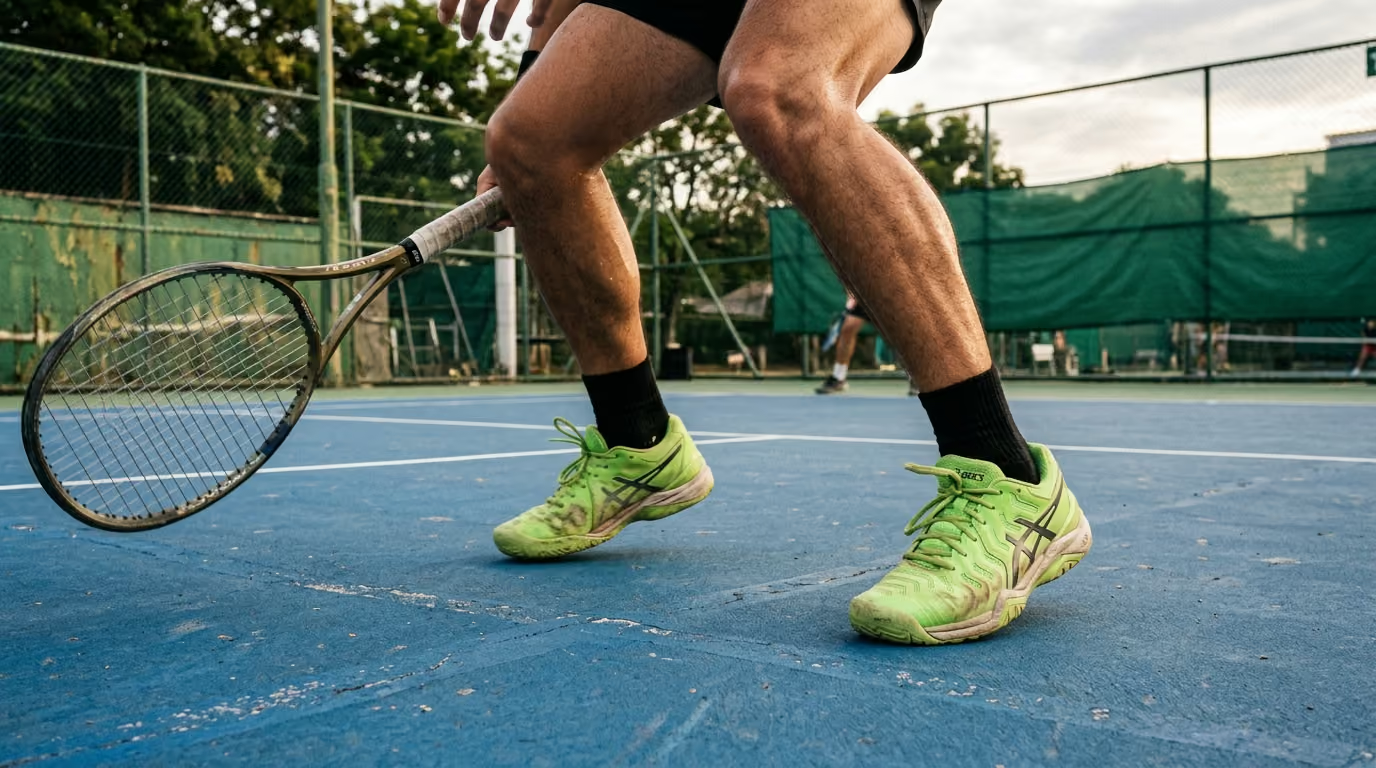
While many assume travel recovery is solely about sleep, effective strategies for racquet sports players involve separating physical stiffness from circadian disruption.




Many players have typed a variation of "how to get rid of travel stiffness before a match" into a search bar late at night. You sit in a car or a plane for hours, arrive at your hotel, and wake up feeling like your lower back is locked in concrete. This guide offers a definitive, research-backed strategy to protect your movement and performance when traveling for racquet sports.
To recover effectively from travel, you must separate the physical stiffness of the journey itself from the circadian disruption of crossing time zones. Minimizing physical inactivity during transit, aligning light exposure on arrival, and performing a progressive warm-up before stepping on the court will restore your lateral mobility. Protecting your first-night sleep opportunity at your destination is the single most important factor for maintaining your on-court performance.
Understanding these physiological demands is key to applying modern recovery science to your travel schedule. With the right systems in place, you can travel to any tournament and step onto the court feeling loose, responsive, and ready to compete.
To plan your recovery, you must first recognize that travel fatigue and jet lag are two different physiological states. Travel fatigue is the cumulative tiredness and physical discomfort caused by the journey itself. It stems from prolonged sitting, restricted movement, disrupted meals, transport noise, and mild dehydration. A consensus review from sports science researchers recommends maximizing sleep during the journey when travel fatigue is your primary challenge.
Jet lag is a distinct condition caused by crossing multiple time zones quickly. This rapid transit creates a mismatch between your internal body clock and the local time at your destination. Symptoms of jet lag often include poor sleep quality, daytime fatigue, gastrointestinal issues, and decreased motor performance. These symptoms can severely impact your timing and balance on the court.
The practical difference matters because you can experience severe travel fatigue without ever crossing a time zone. For example, a ten-hour drive to a regional tournament produces immense physical stiffness and mental exhaustion. Conversely, a short flight across three time zones might cause mild jet lag despite very little physical exertion.
To manage these demands, you can use a simple planning model that breaks down your trip into six factors. First, assess your journey load, which is the total time spent sitting, carrying bags, and waiting. Second, evaluate your circadian load by counting how many time zones you will cross. Third, look at your competition load to see how soon your first match begins after arrival.
Fourth, consider the environmental load, which includes changes in humidity, altitude, temperature, and court surfaces. Fifth, evaluate your sleep opportunity to ensure you have enough hours for rest before you play. Finally, account for your individual vulnerability to sleeping in unfamiliar beds or experiencing travel anxiety.
Tennis, pickleball, and padel require constant acceleration, deceleration, rapid directional changes, and high-speed visual tracking. These physical demands make players highly sensitive to even minor reductions in reaction speed, coordination, and lower-limb mobility. When you sit in a cramped seat for hours, your hips, ankles, and spine lose their natural readiness.
A systematic review of padel match play shows that the sport involves moderate physiological responses and high levels of perceived effort. Players must perform rapid bursts of movement with very little recovery time between rallies. In elite padel, research shows that eighty percent of recorded accelerations and decelerations occur within a short distance of one to two meters. Travel stiffness directly compromises this short-distance braking and re-acceleration.
Pickleball is sometimes viewed as less physically demanding than tennis, but the metabolic numbers tell a different story. Research tracking middle-aged and older adults playing pickleball recorded an average heart rate of nearly 109 beats per minute. This represents about fifty percent of their heart-rate reserve. The study also measured an average energy expenditure of 353 calories per match.
These studies show that all three racquet sports demand a high level of physical readiness. When travel disrupts your sleep, meal times, and movement patterns, your nervous system struggles to fire efficiently. Whether you play tennis, pickleball, or padel, a long journey presents a clear physical challenge that you must actively manage.
The first night after you travel is always the most vulnerable period for your sleep cycle. A 2025 study of fifty-two professional female tennis players used wearable technology to track sleep during travel. The athletes averaged 437 minutes of sleep per night under normal conditions. On their first night after traveling, their sleep duration fell significantly.
The researchers found that sleep duration dropped by about eleven minutes for every hour of time-zone difference. Interestingly, the direction of travel played a major role in these sleep reductions. Eastward travel caused an additional sleep loss of nearly twenty-five minutes on that first night. Conversely, westward travel actually increased sleep duration by about thirty minutes in this group.
These sleep reductions generally began to resolve over the next two nights at the destination. However, the study shows that players must give themselves enough time to adapt, especially when traveling east. The data showed that a two-hour eastward shift or a four-hour westward shift was enough to drop first-night sleep below seven hours.
Another controlled study of athletes confirmed that traveling east produces worse sleep, higher fatigue ratings, and lower motivation than traveling west. The athletes also showed significant reductions in sprint performance during the first three days after eastward travel. These findings highlight why you should plan your arrival carefully when heading east for a tournament.
Surprisingly, the study of professional tennis players found no direct link between first-night sleep loss and match outcomes. This does not mean sleep loss has no effect on your body. It indicates that experienced players can often find ways to perform well despite feeling tired. You should avoid worrying if you sleep poorly before a match, as your training and preparation can still carry you through.
To prepare your body for competition in a new time zone, you must target three specific areas. The first target is to protect your sleep immediately upon arrival. This means selecting flight or driving times that preserve your normal sleeping hours. Use earplugs and eye masks during transit to keep your sleep quality as high as possible.
The second target is to shift your internal body clock to match the local time. The most powerful tool for this shift is strategic exposure to bright light. Your brain uses light to determine when to sleep and when to be alert. You should seek bright light in the morning when traveling east, or in the evening when traveling west.
Be careful not to apply generic advice like "get as much sun as possible" without a plan. Getting light at the wrong time can actually push your body clock in the opposite direction. If you are crossing more than three time zones, try to consult a specialist to build a custom light schedule.
The third target is to align your training, meals, and warm-ups with local time. Gradually shift your meal times toward the local schedule even before you leave home if possible. When you arrive, avoid jumping straight into an intense training session. Instead, schedule a light walk or a gentle mobility routine to signal to your body that it is time to adapt.
By taking care of your internal clock, you protect your long-term player health during tournament season. This structured approach ensures that you do not waste energy trying to fight your body's natural rhythms.
Sitting for long periods causes fluid to pool in your lower legs and makes your joints feel tight. Medical guidelines for travel safety recommend moving your body at least once every three hours during long journeys. This movement helps maintain healthy circulation and keeps your muscles from locking up.
There is a common belief that drinking massive amounts of water during a flight will prevent blood clots. However, the Centers for Disease Control and Prevention states that dehydration is not directly linked to travel-related clotting events. While staying hydrated is excellent for your energy levels, physical movement is the true key to protecting your circulation. Hydration keeps your joints lubricated, but it cannot replace the physical act of moving.
I remember finishing a tough two hour padel match on a cold Tuesday night and waking up the next morning feeling like my lower back was locked in concrete. For a long time, I just accepted this as the price of playing hard in my forties. But once I started spending just ten minutes on targeted hip mobility before heading to the club, the stiffness almost completely vanished. It taught me that we do not have to accept pain as a default state of aging. When we travel, this stiffness is compounded by prolonged sitting.
Focusing on mobility and movement during transit prevents the structural locking that limits your speed on court. You can use a simple movement routine while seated to keep your lower body active. Every twenty minutes, perform twenty ankle circles in each direction to stimulate blood flow. Follow this with twenty heel raises and toe raises to engage your calf muscles.
Additionally, stand up and walk down the aisle of the plane or train at least once every hour. If you are driving, pull over at a rest stop every ninety minutes to walk for five minutes. Use this time to perform light lunges and gentle torso twists. This simple habit keeps your hips from tightening up before you arrive at the courts.
Your nutrition plan during travel should focus on simplicity, predictability, and timing. You should begin your journey well-hydrated by drinking water regularly in the days leading up to your trip. During transit, drink according to your thirst rather than forcing yourself to consume gallons of water. Over-drinking will only disrupt your sleep with frequent bathroom visits.
For the journey itself, plain water is your best choice because your physical activity levels are low. Save electrolyte drinks and sports drinks for when you actually begin sweating on the court. Pack familiar, easily digestible snacks like bananas, oatmeal packets, or protein bars to avoid relying on fast food at airports and gas stations.
When you prepare for exercise, follow established guidelines to manage your fluid intake. The National Athletic Trainers' Association suggests drinking about twenty ounces of water two to three hours before your match. Drink another ten ounces about fifteen minutes before you step onto the court. These numbers are general guidelines, so you should adjust them based on your body size and the local climate.
If your match lasts longer than forty-five minutes, consider using a sports drink containing carbohydrates and sodium. This helps maintain your energy levels and replaces the salt you lose through sweat. After your match, focus on rebuilding your energy reserves with a recovery snack.
The United States Tennis Association recommends consuming a snack with a four-to-one ratio of carbohydrates to protein within thirty minutes of finishing. This could be a commercial recovery shake, a turkey sandwich, or Greek yogurt with fruit. Drink twenty ounces of fluid for every pound of body weight you lost during play to fully restore your hydration.
When you step onto the court after a long journey, your body requires a longer, more progressive warm-up. Your joints are stiff, your muscles are cold, and your nervous system is operating at a slower pace. Skip your usual short hit and dedicate twenty minutes to preparing your body to move dynamically.
Begin with five to ten minutes of low-intensity aerobic movement to raise your core body temperature. You can walk briskly around the court, ride a stationary bike, or jog slowly. Use this time to tune in to your body and check for any areas of tightness or asymmetry.
Next, perform dynamic stretches that target the specific patterns used in racquet sports. Perform ten deep bodyweight squats to wake up your glutes and quads. Follow this with ten lunges with a gentle torso twist to stretch your hip flexors and back.
Incorporate arm circles and shoulder blade shrugs to prepare your upper body for serving and overhead hits. Work on your ankles by performing dynamic calf stretches against a net post. Keep every movement controlled, smooth, and pain-free.
Now, transition to sport-specific footwork patterns at a moderate intensity. Perform side shuffles across the double alley, focusing on keeping your hips low. Add in split steps, backward jogging, and gentle acceleration runs over ten meters.
Do not sprint at maximum effort yet, but let your muscles get used to changing direction. This phase helps your brain reconnect with the physical boundaries of the court.
Start your hitting session with short-court mini-tennis or cooperative rallies. Focus on finding your rhythm, timing, and footwork without trying to hit the ball hard. Gradually move back to the baseline as your confidence and movement quality improve.
Only practice high-impact movements like serves and overheads after you feel fully warm. If you feel any sharp pain or unusual stiffness during this phase, slow down immediately.
While all racquet sports share similar movement patterns, travel affects players of each sport in different ways. The unique equipment, court dimensions, and match structures of each game require specific recovery adjustments.
Tennis players face the longest match durations, which often exceed two hours. The heavier racket and yellow felt ball place high demands on your shoulder, elbow, and wrist. Because tennis courts are large, you must cover significant distances using long, explosive strides.
Travel stiffness can severely impact your ability to slide on clay or push off on hard courts. To protect your shoulder after a long flight, spend extra time warming up your rotator cuff muscles. You can read more about managing these demands in our tennis articles section.
Pickleball is played on a much smaller court, which reduces the total running distance but increases reaction demands. The game is highly repetitive, requiring hundreds of shallow lunges and quick wrist movements during dinking rallies.
Although the physical strain is different from tennis, middle-aged and older players must still manage their cardiovascular loads. A long car ride can leave your knees and lower back feeling tight, making low dinks difficult to reach safely. Read our dedicated pickleball articles to learn how to keep your joints loose for tournament play.
Padel combines the explosive overheads of tennis with the quick reactions of pickleball. The presence of glass walls requires constant turning, twisting, and spatial awareness.
Because padel matches involve hundreds of short-distance sprints, your calf muscles and Achilles tendons are under constant stress. Travel fatigue can slow your reaction time, making it hard to read the ball off the wall. To stay sharp, check out our padel articles for movement tips.
Every trip presents a unique combination of travel time, sleeping conditions, and competition schedules. To help you plan, we have outlined four common travel scenarios with practical solutions for each.
Your risk profile in this scenario is characterized by a short journey but a significant disruption to your sleep cycle. Traveling east makes it harder to fall asleep early, which can leave you feeling groggy for your morning match.
To prepare, try shifting your bedtime thirty minutes earlier for two nights before you depart. On the night of your arrival, turn off all screens one hour before bed and keep your room cool. In the morning, spend an extra ten minutes on your dynamic warm-up to wake up your nervous system.
Your primary risk here is physical stiffness from prolonged sitting, combined with poor nutrition from roadside stops. You will not experience jet lag, but your lower back and hips will feel compressed.
To manage this, plan to stop every ninety minutes to stretch your hips and walk for five minutes. Pack a cooler with water, fruit, and turkey wraps so you do not have to buy fast food. Arrive at the tournament venue the night before if possible, rather than driving on the morning of your match.
In this scenario, you face repeated high-intensity matches on the same day in an unfamiliar city. The physical stress of short accelerations is compounded by travel fatigue.
Focus on immediate recovery between your matches. Drink a carb-protein shake within twenty minutes of finishing your first match, and change into dry clothes to stay warm. Keep your body moving gently between matches rather than sitting still for hours in a cold lounge.
You will likely experience a reduced sleep opportunity combined with a high volume of matches the next day. Even though doubles pickleball has a smaller court, the reaction speeds are incredibly fast.
Use a short twenty-minute nap in the afternoon if you feel exhausted, but keep it brief to avoid ruining your nighttime sleep. Eat a familiar breakfast that you know is easy on your stomach. Spend extra time on eye-tracking drills during your warm-up to sharpen your reflexes.
Sleeping in an unfamiliar bed can trigger what researchers call the first-night effect. Your brain naturally stays slightly more alert in a new environment, which can lead to lighter, more fragmented sleep. While you cannot always avoid this reaction, you can take steps to minimize its impact.
Create a travel sleep kit that you take to every tournament. Pack a high-quality eye mask to block out light from hallway cracks or electronic displays. Bring earplugs or use a white-noise app on your phone to drown out hotel corridor sounds.
If you have space, pack your own pillowcase from home, as the familiar scent can help your brain feel safe and relaxed. Keep your hotel room temperature set between sixty-five and sixty-eight degrees, which is the ideal range for deep sleep.
Avoid checking the time if you wake up in the middle of the night, as this only causes anxiety about your match. Instead, practice deep breathing exercises to help your body drift back to sleep. Remember that one night of poor sleep will not ruin your performance if you stay calm and focused.
There are several popular myths surrounding travel recovery that can lead players to make poor decisions. Let us look at the facts behind these common misconceptions.
As noted earlier, the CDC has found no direct link between dehydration and travel-related blood clots. While drinking water is essential for your athletic performance, physical movement is the only proven way to reduce clot risk. Focus on walking and stretching during your journey rather than just drinking water.
Some players believe that pushing through a grueling workout on arrival will shock their system into adapting. In reality, a hard workout when you are exhausted only increases your risk of injury and muscle damage. Use light movement and strategic light exposure to adjust your body clock instead.
Unless you have a match the next morning, an arrival-day training session is rarely necessary. If you are stiff and tired, a long walk and a good meal are far more beneficial than a stressful practice session. Listen to your body and prioritize rest when you need it.
While traveling west is generally easier on your body clock, the physical act of travel still causes fatigue. You must still deal with prolonged sitting, carrying heavy gear, and disrupted meals. Treat westward travel with the same physical respect as eastward journeys.
The study of professional tennis players showed no correlation between first-night sleep loss and match performance. Your body is highly resilient, and your muscle memory can easily carry you through a tough match. Stay positive and trust your training, even if you did not sleep well.
Holding long, static stretches on cold, stiff muscles can actually cause minor muscle strains. Dynamic stretching and light aerobic movement are far safer and more effective for restoring your mobility. Save the deep static stretches for after your matches when your muscles are fully warm.
While most travel stiffness is harmless and resolves with movement, some symptoms require immediate medical attention. Long journeys can increase the risk of serious vascular issues, especially for older players or those with pre-existing health conditions.
If you experience sudden, severe swelling in one of your legs, particularly in the calf, do not try to stretch it out. Other warning signs of deep vein thrombosis include localized warmth, redness, or a throbbing pain that worsens when you walk. These symptoms require an urgent evaluation by a qualified healthcare professional.
Seek emergency medical care if you develop chest pain, sudden shortness of breath, or unexplained dizziness during or after travel. These can be signs of a pulmonary embolism, which occurs when a blood clot travels to the lungs. Never ignore these critical symptoms in the hope that they will improve.
For chronic joint issues or persistent muscle pain that does not improve after travel, consult a sports physiotherapist. They can help you design a customized mobility program that protects your joints for long-term play. Investing in professional guidance is a smart way to support your healthy aging and athletic longevity.
Use this simple checklist to prepare for your next tournament or weekend match.
By following these simple, science-backed steps, you can protect your movement quality and keep enjoying your favorite racquet sports for years to come. Safe travels, and enjoy your time on the court!
Follow Evercourts for practical insights on tennis, pickleball and padel performance, movement, recovery and healthy ageing. Stay connected for new articles, research-led guidance and ideas to help you play well and keep playing for years.


Read practical guidance for better movement, smarter preparation and a game that keeps working for you.
explore the Blog