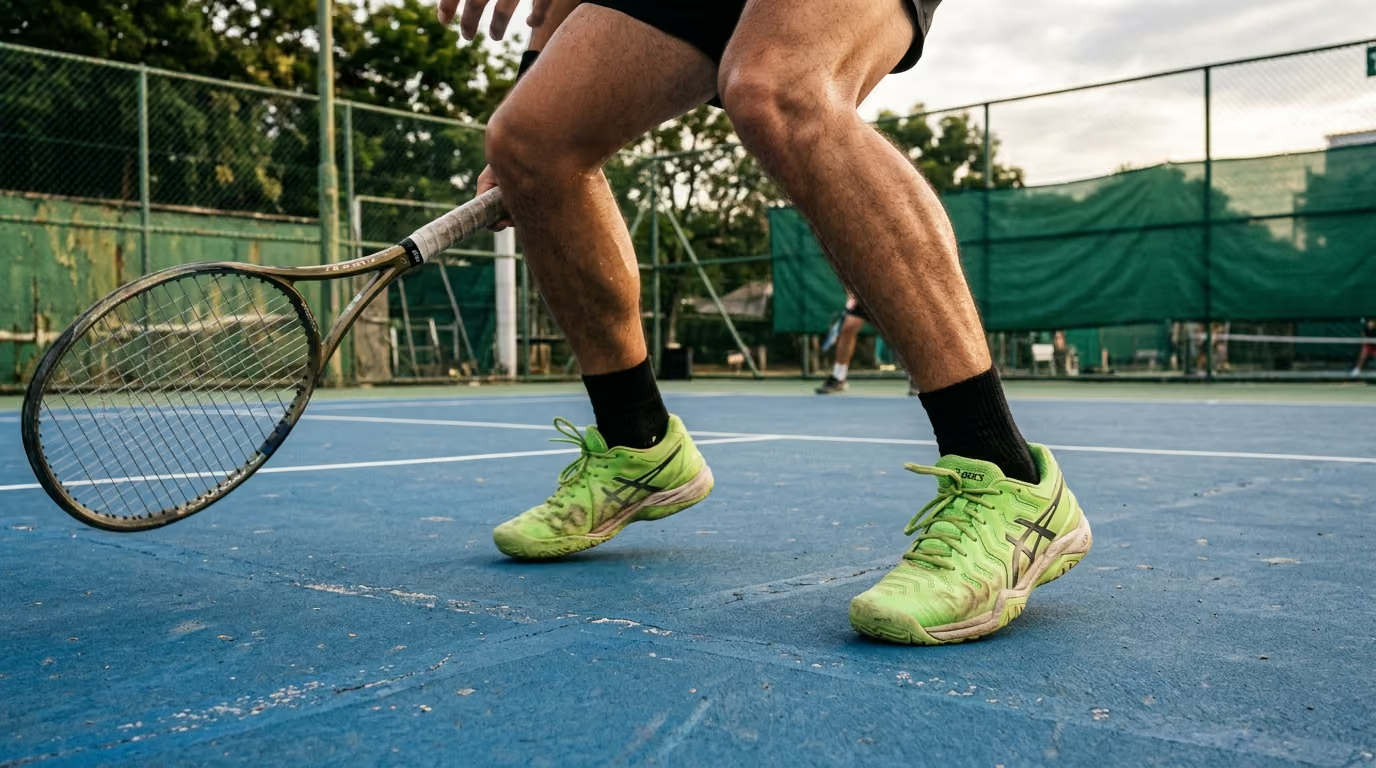
While many players still believe static stretching is ideal before a match, dynamic warm-ups actually prepare the body more effectively for racquet sports.




Imagine arriving at the court ten minutes late on a cold autumn evening. You quickly change your shoes, grab your racquet, and start playing immediately. On the very first point, you chase a deep lob and feel a sudden twitch in your lower back. This familiar discomfort is a stark reminder that your body requires preparation before high-intensity court play.
Preparing your body for court play requires a progressive, active rehearsal of the movements and speeds you will face during a match rather than a simple static stretching routine. A structured warm-up raises tissue temperature, improves joint mobility, and coordinates your nervous system for rapid changes of direction. This proactive physical preparation is the foundation of long-term participation and healthy movement in court sports.
When you are resting, your muscles and tendons are relatively cool and stiff. Sudden explosive movements on the court place high stress on these cold tissues. A dynamic warm-up raises your core body temperature and increases local blood flow to active muscle groups. This biological shift reduces the viscosity of your muscles, making them more pliable and resilient.
At the same time, joint movement stimulates the production of synovial fluid. This fluid acts as a natural lubricant for your cartilage, reducing friction during deep lunges or sudden stops. Your nervous system also benefits from a progressive wake-up call. Active movement improves the speed of your nerve impulses, which helps you react faster to a changing ball flight.
This physiological transition directly prepares you for the high physical demands of court sports. In our experience, skipping this phase often leads to early-match sluggishness or unnecessary muscle strains. Research shows that proper preparation enhances your movement quality and coordinates complex muscular actions. It establishes a solid foundation for performance from the very first point of your match.
For decades, players believed that holding long, static stretches before a match was the best way to prepare. However, sports science has shifted its view on pre-match flexibility. Studies indicate that holding a static stretch for more than thirty seconds can temporarily reduce muscle power. This reduction occurs because static stretching relaxes the muscle-tendon unit, decreasing its ability to store and release elastic energy quickly.
In contrast, dynamic stretching uses active, controlled movements through a full range of motion. Examples include walking lunges, leg swings, and thoracic rotations. A meta-analysis published in the Journal of Strength and Conditioning Research found that seven to ten minutes of dynamic stretching produced the best explosive performance outcomes. This active approach prepares your muscles without compromising your vertical jump or sprint speed.
Static stretching is not inherently bad for court athletes. It remains a valuable tool when your goal is to build long-term flexibility over several weeks. You can incorporate static stretches into separate evening sessions or use them during your post-match routine. If you choose to static stretch before play, keep the holds under fifteen seconds and follow them with dynamic movements.
To build a resilient body, you should prioritize dynamic patterns that mimic the court. Incorporating targeted movement routines into your daily schedule is far more effective than forcing cold static holds. This approach preserves your explosive strength while encouraging healthy joint mechanics.
The RAMP framework offers a logical structure to organize your pre-match preparation. It stands for Raise, Activate, Mobilize, and Potentiate. This system ensures that you transition smoothly from a resting state to high-intensity court play. By following these four steps, you can create a highly efficient routine.
The Raise phase focuses on increasing your heart rate and muscle temperature. You can achieve this with two minutes of brisk walking, easy jogging, or relaxed side shuffles. The goal is to break a light sweat without causing fatigue. This simple cardiovascular stimulation prepares your circulatory system for the demands ahead.
The Activate phase targets key muscle groups that support your joints during play. You should focus on your calves, glutes, core, and shoulder stabilizers. Simple exercises like bodyweight squats or standing calf raises work well here. This step ensures that your primary support muscles are awake and ready to absorb impact forces.
The Mobilize phase uses dynamic movements to access your functional joint ranges. You perform controlled movements like ankle rocks, deep side lunges, and torso twists. This phase does not force extreme joint angles. Instead, it coaxes your hips, spine, and shoulders into the positions required during athletic movement.
The Potentiate phase is your final transition into the sport itself. Here, you increase the speed and intensity of your movements to match actual play. You might practice split steps, short acceleration bursts, or progressive shadow swings. This final phase prepares your nervous system to react to your opponent with full confidence.
To make your preparation highly effective, you should follow a general-to-specific progression. This structured approach moves from low-intensity baseline movements to high-speed, sport-specific actions. By dividing your warm-up into five distinct levels, you can systematically prepare every system in your body. This sequence prevents you from placing sudden stress on cold tissues.
Level one focuses on establishing a low-impact aerobic baseline. This level involves simple, continuous movements like brisk walking or easy cycling for two minutes. This light activity opens up your capillaries and increases systemic circulation. It signals to your body that physical work is about to begin.
Level two transitions into joint range acquisition. During this phase, you perform active movements that gently challenge your joint boundaries. Focus on large-amplitude movements like leg swings, arm circles, and gentle lateral lunges. This active mobility work helps restore range of motion that may be restricted from a day of sitting.
Level three targets stabilizer muscle recruitment. You perform low-fatigue exercises designed to engage specific postural and stabilizing muscles. These include single-leg balances, glute bridges, and scapular wall slides. Activating these muscles helps stabilize your pelvis, spine, and shoulder girdles before explosive loading.
Level four focuses on court footwork and deceleration patterning. You practice the exact footwork patterns you will use during play. This includes light split steps, lateral shuffles, and backward recovery runs. Pay close attention to your braking mechanics by stopping under full control during these drills.
Level five is the gradual stroke and power ramp-up. For tennis, pickleball, and padel, this involves starting with mini-court rallies. You focus on clean contact, relaxed swing paths, and progressive racket speed. You should only hit full-power serves or explosive overheads after completing this final level of preparation.
While all court sports share common physical demands, each discipline requires unique preparation. The dimensions of the court, the weight of the ball, and the height of the net change how your body moves. Understanding these differences allows you to customize your routine for your specific sport. This targeted preparation helps address the typical physical stresses associated with each game.
Tennis is played on a large court that requires explosive multi-directional sprinting and deep sliding lunges. A tennis-specific review reported that lower-extremity injuries account for approximately 31% to 67% of tennis injuries. Additionally, upper-extremity injuries account for 20% to 49% of reported cases, while trunk injuries represent 3% to 21%. These statistics highlight the need for a comprehensive warm-up that addresses both the upper and lower body.
The repetitive nature of the tennis serve places massive stress on the shoulder and elbow. Tennis elbow incidence has been reported to range from 9% to 35% in recreational players. To protect these vulnerable areas, your tennis warm-up must prioritize thoracic extension and rotator cuff activation. This upper-body preparation should be supported by strength and conditioning programs designed to handle repetitive rotations over multiple sets.
Pickleball is played on a smaller court, which reduces the need for long-distance sprinting. However, the game demands rapid, short-distance accelerations and sudden stops at the kitchen line. A 2025 study of older pickleball participants found that 32.1% reported an injury during the previous year. Within this group, lower-extremity injuries represented 57.9% of the issues, and muscle or tendon injuries represented 61.8%.
Furthermore, slips, trips, falls, and dives accounted for 64.3% of injury mechanisms in one age-group analysis. Older players were nearly three times as likely as younger players to be injured by a fall. They also had nearly three times the odds of sustaining a fracture. These findings show that a pickleball warm-up for older adults must focus heavily on single-leg balance and weight transfer. This focus aligns with our focus on athletic longevity goals for mature players who want to remain active on the court.
Padel is played in an enclosed glass court, which requires constant rotation, low-to-high transitions, and rapid adjustments to ball rebounds. The court surface of synthetic turf over concrete can place high impact forces on your knees and lower back. The frequent use of overhead shots like the bandeja and gancho requires excellent shoulder mobility and trunk control. This constant twisting can strain your lumbar spine if your hips are stiff.
I remember finishing a tough two hour padel match on a cold Tuesday night and waking up the next morning feeling like my lower back was locked in concrete. For a long time, I just accepted this as the price of playing hard in my forties. But once I started spending just ten minutes on targeted hip mobility before heading to the club, the stiffness almost completely vanished. It taught me that we do not have to accept pain as a default state of aging. Padel players must focus on active hip rotation and thoracic mobility to protect their lower back during high-speed rotational rallies.
As we age, our physical capacity naturally changes, but court sports offer an excellent way to maintain health. The World Health Organization recommends that adults perform 150 to 300 minutes of moderate-intensity aerobic activity weekly. Alternatively, you can complete 75 to 150 minutes of vigorous aerobic activity, combined with muscle-strengthening exercises on at least two days per week. These guidelines form the foundation of a healthy, active lifestyle.
For older adults, the World Health Organization recommends additional physical activities. Their guidance suggests including multicomponent physical activity emphasizing functional balance and strength on three or more days per week. This specific type of training helps improve functional capacity and plays a key role in preventing falls. Your pre-court warm-up is a perfect opportunity to practice these essential balance skills in a structured setting.
By practicing single-leg stability, weight transfer, and controlled deceleration, you build practical resilience against trips and slips. These movement patterns do not just improve your play on the court. They directly enhance your ability to navigate uneven sidewalks, stairs, and daily obstacles at home. Investing ten minutes in these skills before you play is a powerful strategy for sustainable movement. This active preparation is a cornerstone of sustainable strategies for healthy aging and athletic longevity on and off the court.
Many players believe that a cool-down is a mandatory step that cures post-match muscle soreness. However, a narrative review of active cool-downs presents a more modest reality. Current sports science evidence indicates that an active cool-down does not reliably prevent injuries. It also does not show a consistent ability to improve same-day or next-day athletic performance.
While a cool-down is not a magical recovery cure, it still offers several practical benefits. It provides a gradual transition from intense physical exertion to a state of rest. This gradual reduction in activity allows your heart rate and blood pressure to return to baseline levels safely. It also prevents blood pooling in your lower limbs, which can cause lightheadedness after intense exercise.
A well-structured cool-down also serves as a valuable psychological decompression tool. It gives you a dedicated window to assess how your body feels after a demanding match. You can check for any joint pain, muscle tightness, or unusual fatigue. Understanding these recovery science principles helps you plan your post-match schedule and separate realistic strategies from common myths.
To keep your cool-down effective, follow a few simple guidelines. Keep the duration between five and fifteen minutes of low-intensity movement. Use low-impact actions like easy walking, stationary cycling, or relaxed shadow swings. Avoid adding substantial physical fatigue, as this can interfere with muscle glycogen replenishment and delay your overall recovery.
Even well-meaning players often make mistakes when preparing for a match or practice session. These errors can waste valuable energy or place unnecessary stress on your joints. By recognizing these common pitfalls, you can refine your routine for better efficiency. This adjustment ensures that your preparation supports your long-term athletic goals.
Many players perform long, high-intensity fitness drills right before they start playing. While conditioning is important, a warm-up should never leave you feeling exhausted. Performing high-volume jump squats, long sprints, or heavy core circuits before a match drains your energy stores. This fatigue can compromise your movement mechanics and increase your risk of early-match mistakes.
The fix is to focus on quality and the minimum effective dose of preparation. Keep your dynamic movements brief, controlled, and below your maximal physical capacity. Your warm-up is complete when you feel warm, alert, and coordinated. Save your demanding physical conditioning workouts for separate training sessions after your court play is done.
Another frequent error is stepping onto the court cold and immediately playing at full intensity. Some players believe that hitting a few casual groundstrokes counts as a sufficient warm-up. However, this approach exposes your cold muscles and stiff joints to sudden, unpredictable forces. Chasing a drop shot or hitting a high-velocity overhead serve without preparation can overload unprepared tissues.
The fix is to follow a systematic progression before you play any competitive points. Spend at least five minutes performing dynamic movements off the court. When you begin hitting, start with mini-tennis and focus on controlled, easy swings. Gradually increase your speed, court coverage, and swing power over several minutes before starting your match.
To build lasting physical resilience, you must integrate your preparation routines into a balanced weekly schedule. This organization helps you balance court play, strength training, and recovery. A well-planned week ensures that you can perform well without overloading your joints. It also provides a structured approach to managing your physical workloads over time.
Your weekly schedule should combine court play with targeted strength and mobility work. The World Health Organization recommends including muscle-strengthening activities on two or more days per week. You can perform these strength sessions on separate days or immediately after easy practice sessions. This structured approach helps build the physical capacity required to handle the high impact forces of your sport.
The design of your warm-up should shift depending on the specific demands of your day. On match days, your preparation should focus on reaction speed, timing, and dynamic readiness. On technical practice days, you can use a shorter, movement-focused preparation routine. For strength sessions, your warm-up should prioritize the specific joint mobility and muscle activation needed for your lifts.
Before starting any high-intensity exercise program, you should consider your overall health and fitness. Preparticipation health screening guidance suggests assessing your current physical activity level and any known cardiovascular or metabolic issues. If you are returning to exercise after a long break, consult a professional to ensure your plan is safe. This proactive approach helps protect your health as you build a sustainable court lifestyle.
To help you apply this knowledge, our team has created several simple, step-by-step preparation and recovery protocols. These routines are designed to be efficient and easy to perform right at the court. You do not need any complex equipment to complete these exercises. Choose the protocol that matches your schedule and physical needs for the day.
Use this routine when you are short on time but still need to prepare your joints and muscles for play.
This is our standard preparation routine for technical practice sessions and friendly club matches.
Use this detailed routine before tournament play or intense competitive singles matches to prepare your reaction speed.
This routine focuses on stability, weight transfer, and controlled movement to help older players move safely and prevent falls.
Use this routine in the gym to prepare your muscles and joints for loaded lifting sessions.
Perform this simple routine immediately after your match to help your body transition smoothly to a resting state.
A structured warm-up can make physical movement feel much easier, but it cannot resolve an underlying injury. Ignoring persistent physical symptoms is a common mistake that can lead to chronic tissue damage. You should listen to your body and recognize the signs that indicate a need for professional medical care. This proactive approach helps protect your health and supports your long-term athletic goals.
You should consult a qualified healthcare provider if you experience persistent pain, joint swelling, or physical instability. Sharp, burning, or electrical sensations are clear warning signs that require professional evaluation by a physical therapist or sports physician. Additionally, if your pain worsens during play rather than fading with warmth, you should stop playing immediately.
To learn more about our commitment to player health and sustainable movement, you can read about the mission of Evercourts. Our team believes that early intervention is the key to managing physical demands and staying active for life.
When to revisit this resource: Review this playbook at the start of every new playing season, when returning to the court after a long break, or whenever you feel persistent morning stiffness.
Staying active on the court for years to come is not about working harder, but about preparing smarter.
Follow Evercourts for practical insights on tennis, pickleball and padel performance, movement, recovery and healthy ageing. Stay connected for new articles, research-led guidance and ideas to help you play well and keep playing for years.


Read practical guidance for better movement, smarter preparation and a game that keeps working for you.
explore the Blog