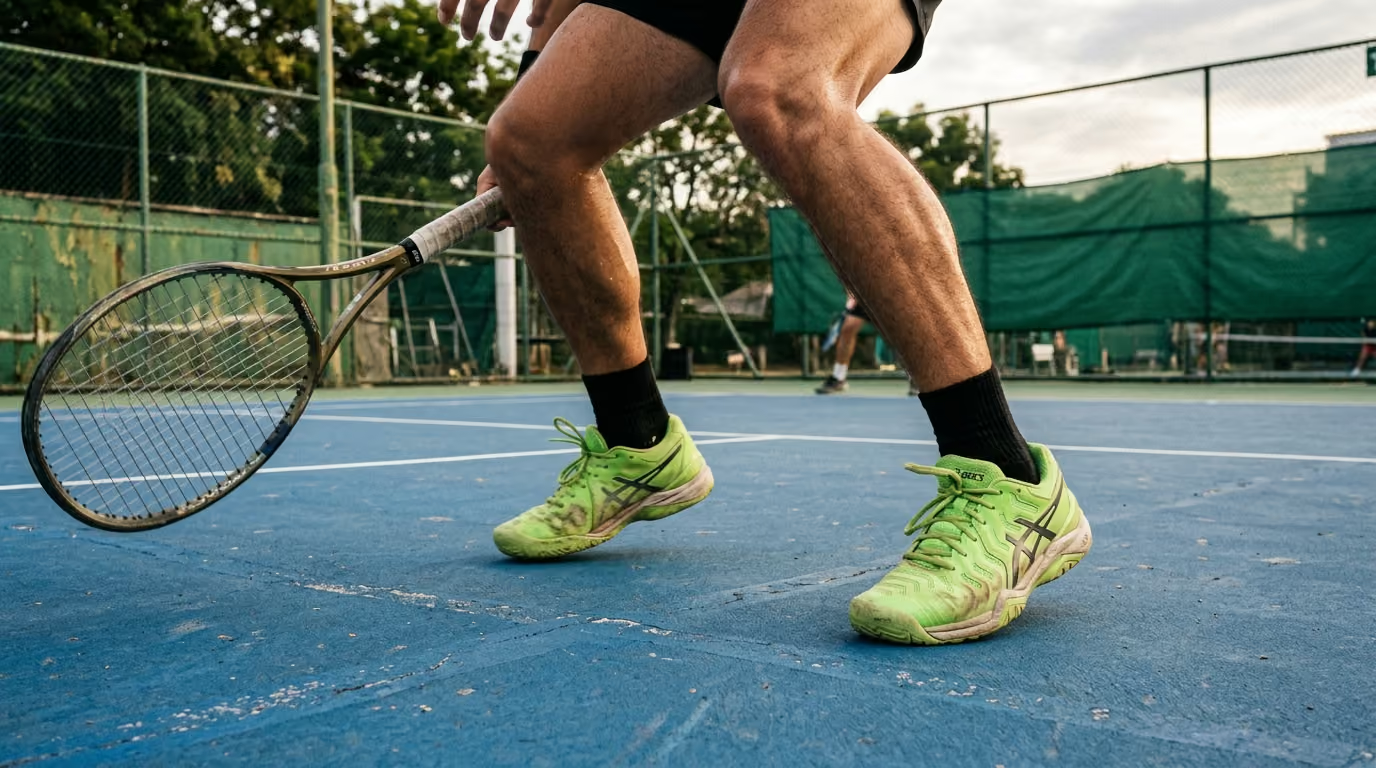
While many assume wearable recovery metrics offer a complete picture, these devices provide only estimates of systemic strain and sleep patterns.




You wake up after a grueling evening on the court, and your shoulder feels stiff. You look at your wrist, and your smart watch displays a low recovery score. Should you cancel your match, or should you play anyway?
Wearable devices offer useful estimates of systemic strain and sleep patterns, but they cannot prove whether you are fully recovered or ready to perform. To make the best training decisions, you must combine your device metrics with your physical symptoms and on-court movement quality. This balanced approach helps protect your health while keeping you active for years to come.
Understanding how to separate raw physiological measurements from device-generated scores is key to managing your physical workload. By combining these digital tracking tools with your own sensory feedback, you can build a sustainable approach to long-term performance.
Heart rate variability, or HRV, is the variation in time between successive heartbeats. Rather than beating at a perfectly steady rhythm, a healthy heart constantly shifts its timing by milliseconds. This micro-variation reflects the ongoing activity of your autonomic nervous system, which coordinates your stress and recovery responses.
A higher HRV generally indicates that your parasympathetic nervous system is active, helping your body rest and digest. A lower HRV often shows that your sympathetic nervous system is dominant, preparing your body for action or reacting to stress. However, HRV is highly individual, and players should only compare readings with their own historical averages.
When you look at your wearable data, you are often looking at RMSSD. This stands for the root mean square of successive differences between beat-to-beat intervals. According to research on field-based athlete monitoring, RMSSD is the most practical and reliable metric for daily tracking because it has a low measurement error across portable devices.
One major benefit of RMSSD is that it requires very short recording times. A simple one-minute measurement can provide an accurate reading. Many apps display this value as lnRMSSD, which is simply the natural logarithm of RMSSD. This mathematical conversion reduces extreme day-to-day fluctuations, making it much easier to spot long-term recovery trends.
Some advanced wearables display SDNN, which is the standard deviation of normal beat-to-beat intervals. SDNN is highly sensitive to the duration of the recording. Because of this sensitivity, short resting measurements from a watch should not be compared with long-term clinical recordings.
Other devices track frequency-domain metrics, such as high-frequency power or the ratio between low and high frequencies. These values change easily based on your breathing rate, posture, and environmental noise. You should avoid viewing these values as a simple score of your stress level, as the underlying math is complex and highly sensitive.
Heart rate recovery describes how fast your heart rate drops after you stop exercising. This metric shows how quickly your cardiovascular system can transition from work to rest. A faster drop in heart rate generally points to good aerobic fitness and efficient autonomic recovery.
A study comparing trained athletes with sedentary controls found that athletes had significantly faster heart rate recovery alongside higher resting HRV values. While this makes the metric highly useful for tracking cardiovascular fitness, it is not a standalone diagnostic test. Your recovery speed can be influenced by temperature, dehydration, and how hard you played.
Resting heart rate, or RHR, is the number of times your heart beats per minute when your body is completely at rest. Most modern wearables track this metric automatically overnight using optical sensors on your skin. This nocturnal baseline is highly sensitive to physical and environmental changes.
A lower resting heart rate is a common sign of aerobic fitness and cardiovascular adaptation. As your heart muscle becomes stronger and more efficient, it pumps more blood with each beat. This efficiency allows your heart to beat fewer times per minute while still meeting your metabolic demands.
A sudden increase in your resting heart rate above your personal baseline is a clear warning sign. This elevation can occur when your body is fighting an infection, processing alcohol, or dealing with dehydration. It can also point to poor sleep, psychological stress, or high room temperatures.
However, an unchanged resting heart rate does not prove that your body has fully recovered. Your muscles, tendons, and joints can still be highly fatigued even when your cardiovascular system appears normal. RHR is a helpful indicator of systemic stress, but it only tells one part of the recovery story.
The accuracy of your resting heart rate data depends heavily on the quality of your wearable device. A validation study showed that consumer wearables vary significantly in their ability to measure nocturnal heart rate and HRV when compared to medical ECG chest straps. Because of this variation, you should not worry about small shifts of one or two beats per minute.
To get the most accurate RHR data, wear your device snugly and consistently in the same position each night. Look for sustained changes that last for several days rather than reacting to a single night of unusual data. This long-term view helps you separate meaningful trends from random device noise.
Most modern wearables provide a detailed breakdown of your sleep each morning. These apps display metrics such as total sleep duration, sleep efficiency, and estimates of your sleep stages. While these numbers look precise, it is important to understand what your device can actually measure.
Consumer wearables are highly effective at tracking your sleep duration, which is the total time you spend asleep. They use movement sensors and heart rate tracking to determine when you fall asleep and when you wake up. However, tracking your sleep architecture, or the exact stages of light, deep, and REM sleep, is much more difficult.
A review of wearable sleep technology found that consumer devices have a sleep sensitivity above 90 percent. This means they are excellent at detecting when you are asleep, but they often struggle to detect brief periods of quiet wakefulness. If you lie perfectly still in bed, your watch may mistake that time for actual sleep.
When compared to clinical polysomnography, which measures brain waves directly, consumer sleep trackers show a wide variation in accuracy. A comprehensive review found that these trackers are only 50 to 90 percent accurate for light sleep. The accuracy drops even lower, to between 30 and 80 percent, when estimating deep and REM sleep.
Because of these limitations, you should use sleep wearables to identify broad patterns rather than stressing over the exact minutes of deep sleep. If you consistently sleep fewer than seven hours, your athletic longevity may be affected over time. However, you do not need to worry if your watch claims you missed your target REM sleep by a few minutes.
Your personal perception of how well you slept is just as important as the numbers on your screen. If you wake up feeling refreshed and energetic, you are likely ready to perform, even if your watch gave you a mediocre sleep score. Conversely, an excellent sleep score does not guarantee that you are ready for a high-intensity match if your muscles are sore.
Try to cross-reference your device data with your subjective feelings each morning. This habit helps you build a more accurate understanding of your true recovery state. You can learn more about how recovery processes affect your long-term health by reviewing science-backed recovery strategies.
To manage your physical recovery, you must track your training load, which represents the total stress placed on your body. Training load is divided into external load and internal load. Tracking both aspects helps you understand the true physical cost of your matches and practice sessions.
External load is the physical work you perform during a session. On the court, this includes your total playing time, the number of matches played, and the distance you ran. It also covers high-intensity movements, such as explosive sprints, sudden stops, lunges, and the total number of strokes you hit.
While external load tells you what you did, it does not show how hard your body worked to do it. Playing a fast-paced singles match for one hour imposes a much higher physical toll than playing a relaxed doubles match for the same duration. To capture this difference, you must also measure your internal load.
Internal load represents your body's physiological and psychological response to exercise. The session-RPE method is a highly valid way to track this response without needing complex equipment. To calculate this load, multiply the duration of your session in minutes by your rate of perceived exertion on a scale of one to ten.
A systematic review confirmed that the session-RPE method is a reliable and valid tool across many sports. A separate meta-analysis found a strong correlation of approximately r = 0.74 between session-RPE and heart-rate-based training loads. This makes it an exceptionally useful tool for racquet sports, where short bursts of movement may not always register fully on standard heart rate monitors.
The acute-to-chronic workload ratio, or ACWR, is a popular concept used to monitor training spikes. This ratio compares your acute load, which is your total training load over the past seven days, to your chronic load, which is your weekly average over the past 28 days. The goal is to keep your acute load from rising too quickly relative to your chronic preparation.
A systematic review and meta-analysis found a small-to-moderate link between an elevated ACWR and an increased risk of injury. However, the study also reported high heterogeneity, meaning the relationship varies widely between individuals. Furthermore, research in elite youth football showed that managing loads strictly through ACWR did not prevent health problems.
You should view ACWR as a general context tool rather than a precise injury predictor. It can help you spot sudden increases in match frequency, court time, or tournament density. This is particularly valuable when transitioning between different court surfaces or returning from a period of rest.
Many commercial wearable platforms compile your physiological data into a single, daily recovery score. These scores are often displayed as percentages, color-coded circles, or battery levels. While these scores are highly convenient, you must understand how they are built to use them effectively.
A wearable recovery score is an algorithmic interpretation of several different metrics. These formulas typically combine your overnight HRV, resting heart rate, recent sleep duration, and training history. Because these algorithms are proprietary, you cannot see the exact weight given to each variable.
It is important to remember that validating a specific sensor is not the same as validating a recovery score. A device may measure your heart rate with high accuracy, but its custom readiness formula remains an unproven interpretation. These scores are designed for the general public, not specifically for the demands of racquet sports.
You should treat daily recovery scores as general guides rather than strict rules. A high recovery score does not mean you are completely immune to injury, and a low score does not mean your training session will be wasted. If you rely too heavily on these scores, you may ignore important signals from your own body.
If your device displays a low recovery score, use it as a prompt to check in with yourself. Ask yourself if you feel unusually sore, tired, or mentally fatigued. If your subjective feelings match the low score, then modifying your training volume or intensity is a smart way to support your athletic longevity.
To get the most value from your wearable, you can use a systematic, five-step decision framework. This model combines your device data with your physical sensations and on-court movement. This practical approach helps you make smart training adjustments without overreacting to daily fluctuations.
Before you make any training changes, check the quality of your wearable data. Ensure you wore the device correctly throughout the night and did not experience any major gaps in tracking. If you woke up multiple times or removed the device, the morning metrics may not be accurate.
Avoid reacting to a single day of unusual numbers. Instead, look at your seven-day rolling averages for HRV and resting heart rate. A persistent downward trend in HRV over several days is much more meaningful than a single low reading after a late night.
Take a moment to assess your physical and mental state using a simple scale from one to five. Rate your muscle soreness, physical fatigue, stress levels, and motivation to play. This quick subjective check helps you put your wearable metrics into the proper context.
Before starting a hard match or practice session, spend five to ten minutes warming up on the court. Pay close attention to your split steps, lateral shuffles, and short lunges. If you feel coordinated and responsive during this warm-up, your body is likely ready to handle a high physical load.
If your data, subjective feelings, and movement screen all point to reduced recovery, you should modify your session. You do not need to cancel your play entirely. Instead, use these simple adjustments to reduce physical stress while still getting valuable court time:
While tennis, pickleball, and padel share many similarities, they impose different physical demands on your body. These unique physical profiles mean that your wearable metrics can highlight different types of recovery needs depending on your sport.
Tennis is characterized by long matches, explosive sprints, and repetitive overhead motions. The large court size means you must cover significant distances, leading to high systemic cardiovascular strain. This makes overnight RHR and HRV excellent tools for tracking your overall cardiovascular recovery.
However, tennis also places extreme rotational stress on your trunk and significant loading on your shoulder and elbow. A demanding serving session can stress your shoulder tendons without causing a large shift in your heart rate. You must monitor localized joint discomfort closely, as your wearable cannot detect tendon strain. If you are looking to manage these physical demands, you can find helpful advice in our injury prevention resources.
Pickleball is played on a smaller court, which generally results in lower cardiovascular strain per match than tennis. However, the game requires rapid lateral shuffles, deep lunges, and quick reaction times. This fast-paced, low-to-the-ground movement places high repetitive stress on your knees, ankles, and wrist joints.
For pickleball players, subjective lower-body fatigue and joint stiffness are critical recovery indicators. A wearable sleep tracker can show that your body is rested, but it cannot measure the local fatigue in your quadriceps or patellar tendons. Paying attention to your joint comfort during your warm-up is essential for long-term play.
Padel combines explosive movements, constant changes of direction, and complex play off the glass walls. This requires intense deceleration, vertical jumps, and continuous rotational movements. These demands can place a significant workload on your lower back and core muscles.
I remember finishing a tough two hour padel match on a cold Tuesday night and waking up the next morning feeling like my lower back was locked in concrete. For a long time, I just accepted this as the price of playing hard in my forties. But once I started spending just ten minutes on targeted hip mobility before heading to the club, the stiffness almost completely vanished. It taught me that we do not have to accept pain as a default state of healthy aging.
To support this type of recovery, you can incorporate targeted mobility and movement training into your weekly routine. This physical preparation helps your body handle the intense rotational demands of padel play.
To see how these concepts apply to real-world play, let us examine six common case patterns that racquet sports players often encounter. These examples show how to combine different data streams to make smart training decisions.
A tennis player wakes up to find their overnight HRV is significantly below their normal baseline. However, they feel refreshed, report minimal muscle soreness, and move with excellent coordination during their on-court warm-up.
In this scenario, the low HRV may be a temporary response to minor stress, a late meal, or simple measurement noise. Since their subjective readiness and movement quality are excellent, they can proceed with their planned session. They should simply avoid maximal testing or extreme fitness work and monitor their metrics the following morning.
A padel player shows a declining HRV trend over three consecutive mornings, an elevated resting heart rate, and poor sleep quality. During their warm-up, they feel heavy in their legs, struggle with their reaction time, and feel highly fatigued.
Here, multiple independent signals point to systemic fatigue or a coming illness. The player should reduce their training volume and avoid high-intensity competitive matches. Swapping a hard singles session for light technical drills or active rest will support their recovery and help prevent overuse injuries.
A pickleball player's wearable reports an excellent recovery score of 95 percent, showing optimal sleep and HRV. However, the player is experiencing progressive pain in their Achilles tendon when stepping on the court.
This case highlights the limits of systemic tracking. A wearable score is based on cardiovascular and autonomic markers, so it cannot detect localized structural damage or tendonitis. The player must prioritize their localized pain over the generic recovery score and consult a specialist if the discomfort persists.
A player participates in a late-night tournament match and sleeps only five hours. Their watch displays a poor sleep score, but they feel alert, motivated, and physically ready to play the next afternoon.
The short sleep duration represents a clear recovery deficit, but the player's subjective energy suggests they can still function well. They can proceed with a moderate training session, but they should avoid scheduling a second heavy workout on the same day. Prioritizing a longer sleep the following night will help pay down this short-term sleep debt.
A tennis player completes a highly demanding week of tournament play, logging high court hours and a high session-RPE. Despite this high workload, their overnight HRV, resting heart rate, and mood remain stable within their normal ranges.
This pattern suggests that the player's body is tolerating the physical workload exceptionally well. There is no immediate need to reduce their training, but they should not view this as an invitation to add even more work. Maintaining their current balance and monitoring for delayed fatigue over the coming days is the safest path forward.
A player has taken several days off from the court, but their wearable shows a declining HRV, an elevated resting heart rate, and poor sleep. They also report feeling constantly tired and irritable.
Because their physical training load is low, the cause of this fatigue is likely non-training stress, such as work pressure, travel, or an incoming cold. Since their body's resources are already strained, adding high-intensity court sessions is highly risky. The player should focus on stress management, hydration, and gentle movement until their metrics stabilize.
As wearables become more popular, several common misconceptions have emerged. Understanding these pitfalls can help you avoid unnecessary stress and make better use of your tracking data.
Many players believe that their primary goal should be to maximize their daily HRV or recovery score. However, physiological metrics are highly dynamic and fluctuate naturally based on many life factors. Attempting to force your numbers higher can lead to training anxiety and cause you to ignore how you actually feel.
Your target should be to maintain a stable baseline over weeks and months rather than stressing over daily numbers. Consistent, healthy habits are the key to athletic longevity. You can learn more about structured conditioning by reviewing our strength and conditioning concepts.
A single low HRV reading is often a simple reaction to a late night, a glass of wine, or a busy day at work. True overtraining syndrome is a complex clinical condition that develops over months of excessive work and insufficient rest. It cannot be diagnosed by a single metric on a commercial smart watch.
If your HRV is low, look for other signs of fatigue, such as persistent soreness, low motivation, or a loss of coordination. If these physical signs are not present, you do not need to assume you are overtraining. Use the low reading as a reminder to prioritize your sleep and nutrition.
Many players worry when their watch shows they only got 30 minutes of deep sleep on a particular night. As we discussed earlier, consumer wearables are highly inaccurate when estimating specific sleep stages. Worrying about these numbers can actually cause sleep anxiety, making it harder to rest the next night.
Focus on your total sleep duration and your sleep consistency instead. Going to bed and waking up at similar times each day is highly beneficial for your body's circadian rhythm. This regularity is much more valuable for your recovery than trying to perfect your watch's deep sleep estimate.
While heart rate is a valuable tool for tracking cardiovascular strain, it has major limitations during racquet sports. A fast-paced doubles match may not push your heart rate into high zones, but the rapid starts, stops, and lunges still place a significant workload on your joints and muscles.
If you only use heart rate to track your training, you may underestimate the true physical toll of your sessions. This is why combining heart rate data with your subjective rating of perceived exertion is so important. Using both metrics gives you a much more complete picture of your daily training load.
Using a wearable consistently can help you protect your joints, muscles, and tendons over time. By tracking your training load and recovery trends, you can make smarter decisions that support your long-term health on the court.
Your body's soft tissues, such as your tendons and ligaments, adapt slowly to the physical demands of racquet sports. If you increase your playing time too quickly, these tissues can become overloaded, leading to chronic issues like tennis elbow or patellar tendonitis. Tracking your weekly court hours and session-RPE helps you avoid dangerous training spikes.
If you notice your weekly training load has risen by more than 15 percent, consider scheduling a lighter week. This proactive adjustment gives your tissues the time they need to rebuild and strengthen. Managing your physical workload is one of the most effective ways to maintain your athletic longevity.
When your wearable metrics show a clear trend of accumulated fatigue, you can plan targeted recovery sessions. Active recovery, such as gentle mobility work, swimming, or a relaxed walk, helps stimulate blood flow without adding impact. This approach is much more effective for tissue healing than complete inactivity.
Using these physiological indicators to guide your recovery helps you stay consistent with your training. Rather than waiting for an injury to force you off the court, you can make small, daily adjustments that keep you moving well. This proactive approach is a core focus of our team at Evercourts.
While wearable devices are excellent tools for tracking general wellness, they are not medical diagnostic instruments. Understanding when to seek guidance from a healthcare professional is crucial for protecting your health and ensuring your safety on the court.
If your resting heart rate remains significantly elevated or your HRV remains chronically depressed for more than two weeks despite taking rest days, you should consult a doctor. These persistent changes can point to an underlying medical issue, a chronic infection, or severe overtraining. A qualified healthcare provider can perform the necessary tests to determine the true cause.
You should never use a wearable's recovery score to clear yourself for play if you are feeling unwell. If you experience symptoms like chest pressure, dizziness, shortness of breath, or unexplained heart palpitations on the court, seek immediate medical attention. Your personal safety must always take priority over any watch metric.
If you experience localized pain, swelling, or joint stiffness that does not improve after a few days of rest, consult a physiotherapist or sports medicine specialist. A high recovery score on your watch cannot repair a damaged ligament, tendon, or muscle. A specialist can provide an accurate diagnosis and design a targeted rehabilitation plan.
When returning to the court after an injury, rely on your clinical team's guidance rather than a device score. Graded exposure and physical function tests are the only safe ways to determine if you are ready to resume full play. Your wearable can then help you monitor your workload as you gradually increase your court time.
When to revisit this resource: Review this guide whenever you purchase a new wearable device, when you are planning your tournament schedule, or if you feel your current training load is causing unusual physical fatigue.
Combining your personal physiological trends, sleep quality, and daily movement remains the most effective way to protect your physical longevity and perform at your best.
Follow Evercourts for practical insights on tennis, pickleball and padel performance, movement, recovery and healthy ageing. Stay connected for new articles, research-led guidance and ideas to help you play well and keep playing for years.


Read practical guidance for better movement, smarter preparation and a game that keeps working for you.
explore the Blog