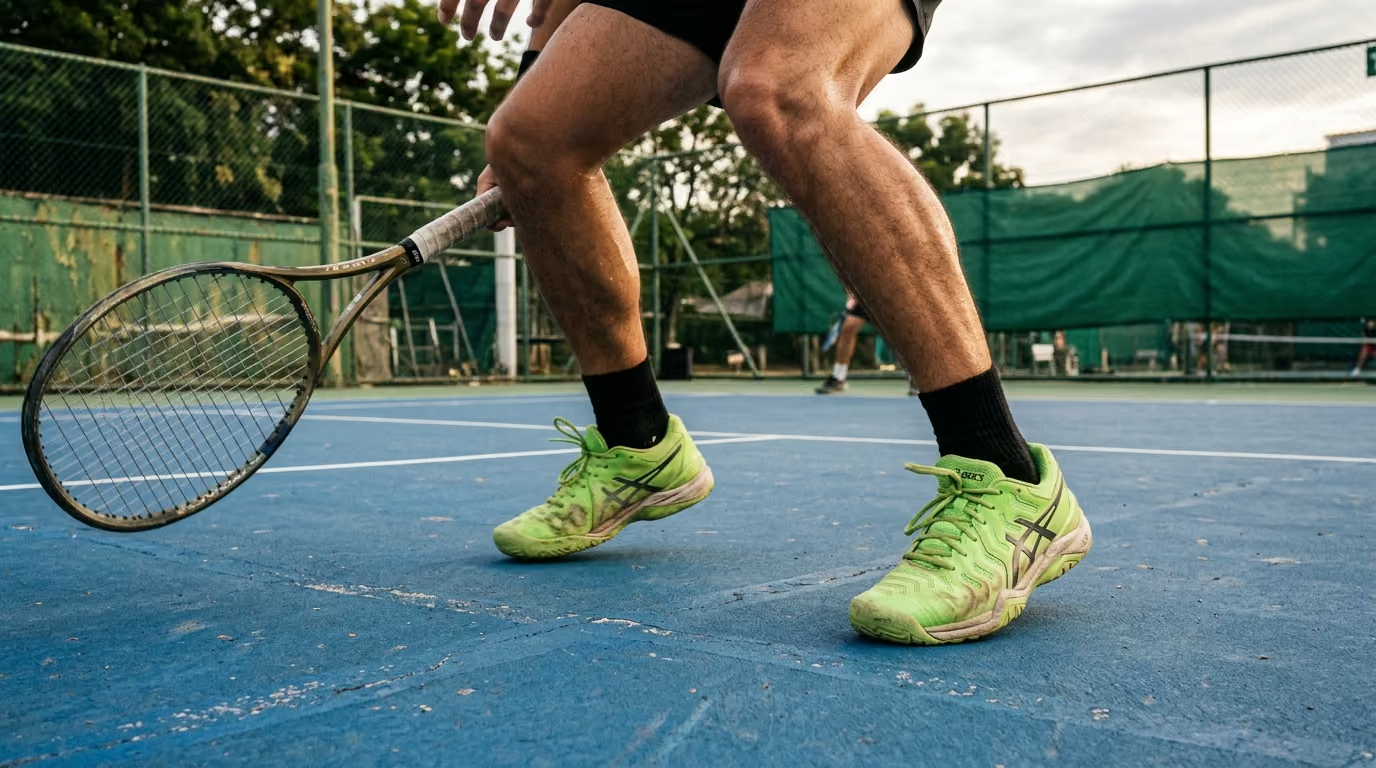
Managing weather and court conditions in racquet sports is crucial for injury prevention, as environmental factors significantly impact physical performance and safety.




Outdoor court sports place unique physical demands on your body. Unlike indoor training, playing tennis, pickleball, or padel outdoors means you must adapt to a constantly shifting environment. Many players treat the weather as a minor background detail. However, experienced athletes know that wind, heat, cold, humidity, and sun directly affect physical performance and safety.
Managing weather and court conditions is about treating environmental factors as a dynamic physical load on your joints and cardiovascular system. By systematically adjusting your hydration, warm-up length, clothing layers, and resting intervals based on actual court-side conditions, you can significantly reduce your risk of acute muscle strains and heat-related illness. This proactive approach ensures you can maintain athletic longevity while continuing to enjoy your sport in any season.
To stay on the court for years to come, you need a structured way to evaluate these conditions. We can look at this through a practical environmental load equation. Your actual risk on any given day is the interaction of environmental stress, exercise demand, athlete vulnerability, and exposure duration, minus your available controls. Controls include things like shade, hydration, modified drills, and proper clothing. By understanding this framework, you can make smart decisions before you even strike your first warm-up ball.
When you step onto the court, your body must maintain its internal temperature while performing explosive movements. Research shows that weather affects injury risk through several interacting pathways. These include thermal strain, dehydration, altered muscle and tendon readiness, impaired vision, changes in footing, and fatigue-related technique breakdown. If your body is fighting to stay cool or warm, it has fewer resources to dedicate to coordination and joint stabilization.
The primary tool for measuring environmental heat in organized sports is the Wet-Bulb Globe Temperature (WBGT). Unlike simple air temperature, WBGT incorporates humidity, wind speed, air temperature, and radiant heat from the sun. This is highly relevant for racquet sports because courts are often surrounded by heat-absorbing concrete or wind-blocking screens. A simple weather-station reading on your phone can easily underestimate the heat stress you experience on a hard court.
In fact, court surfaces create their own localized microclimates. A study comparing tennis courts found that hard courts and sand-filled artificial-grass courts often have higher WBGT readings than the nearest official meteorological reference. The materials used to construct courts absorb solar radiation throughout the day. This stored heat is then radiated directly back up at your feet and lower body, creating a much harsher environment than the surrounding grass or air.
This localized thermal load accelerates fatigue, which is a major contributor to movement errors. As you tire, your reaction times slow down and your kinetic chain begins to break down. You may start reaching for balls with your arm alone rather than using your legs and torso. This shift increases the mechanical stress on your shoulder, elbow, and lower back. By monitoring the environment as a physical load, you can anticipate this fatigue and adjust your play style before injuries occur.
Heat strain is the physiological burden your body experiences when it tries to dissipate heat during exercise. This strain leads to a rising core temperature, elevated heart rate, increased sweating, and rapid fluid loss. To keep you cool, your body redirects blood flow away from working muscles and toward your skin. This cardiorespiratory compromise means your muscles receive less oxygen, which accelerates exhaustion and decreases joint stability.
High humidity acts as a dangerous multiplier of heat stress. Sweat must evaporate from your skin to cool your body down. In highly humid conditions, the moisture in the air prevents this evaporation from occurring. You may find yourself sweating heavily, but your body is not actually cooling down. This ineffective sweating quickly drains your fluids and essential electrolytes without lowering your core temperature.
To protect yourself, you must understand the process of heat acclimatization. According to consensus guidance from sports medicine organizations, athletes should gradually adapt to hot conditions over a period of seven to fourteen days. During this transition, you should slowly increase the duration and intensity of your playing sessions. This process helps your body expand its blood plasma volume, lower its sweat-threshold temperature, and improve cardiovascular stability.
Without proper preparation, high heat and humidity can lead to heat exhaustion or exertional heat stroke. Heat exhaustion is characterized by heavy sweating, rapid pulse, dizziness, and headache. It requires immediate removal from the court, active cooling, and hydration. Exertional heat stroke is a life-threatening medical emergency marked by confusion, altered mental state, and a high core body temperature. If you suspect heat stroke, you must call emergency services immediately and begin aggressive whole-body cooling.
When the court is hot, your warm-up should focus on preparing your joints without pre-loading your core temperature. You do not need to spend twenty minutes jogging in the direct sun before a hot match. Instead, move your dynamic mobility exercises, shadow swings, and agility drills into the shade whenever possible. This preserves your physical readiness while saving your energy for actual point play.
In hot conditions, you should also shorten the duration of your hitting drills before a match. Build in frequent water and cooling breaks during your warm-up rather than waiting for the match to begin. Avoid arriving at the facility already heat-loaded from sitting in a hot car or walking across asphalt in the sun. Keep your pre-match preparation concise, focused, and physically efficient.
Adjusting your work-to-rest ratios is essential when playing in high temperatures. Take longer breaks between points and utilize the shade during changeovers. If you are playing a friendly match, agree to add structured breaks every few games. You can find more advice on structuring your training sessions to manage intensity in our guide to strength and conditioning programs.
Modifying your drills can also help you manage environmental stress. Reduce the volume of live-ball running drills and focus on tactical play that requires less high-intensity sprinting. If conditions become extreme, consider postponing your training to the early morning or late evening. Your longevity on the court depends on your willingness to adapt your schedule to the environment.
Cold weather presents a different set of challenges for racquet sports players. Low temperatures reduce muscle and tendon elasticity, which can increase the risk of acute strains. Your body also restricts blood flow to your limbs to protect your internal organs, which can decrease dexterity in your hands and feet. The American College of Sports Medicine (ACSM) states that exercise can be performed safely in cold climates, but it requires a structured risk-management strategy.
Wind is a critical factor in cold weather because it accelerates convective heat loss. This effect is measured as wind chill, which reflects how cold the air actually feels on your skin. High wind chill temperatures increase the risk of rapid cooling and localized cold injuries. If the effective wind chill drops below freezing, you must take extra precautions to cover exposed skin and monitor your extremities for numbness.
A cold-weather warm-up must be longer and more progressive than a warm-up in mild conditions. You need to actively raise your muscle temperature before performing explosive movements like serves, overheads, or sudden changes of direction. Spend ten to fifteen minutes performing low-intensity movements, dynamic hip openers, and light footwork drills. Do not rely on static stretching, as it does not raise your core body temperature or prepare your cardiovascular system.
A common hazard in cold weather is the interrupted match or practice session. If you sit on a bench during a long delay, your body temperature will drop rapidly, especially if your clothes are damp with sweat. Keep an extra jacket nearby to put on during rest breaks. If you have been inactive for more than five minutes, perform a brief re-warming sequence of light movements before you resume high-speed play.
The physical properties of your playing surface play a major role in how weather affects your body. Hard courts are made of concrete or asphalt covered with acrylic layers. These materials absorb solar radiation and hold onto heat. During peak hours, the surface temperature of a hard court can be significantly higher than the ambient air temperature. This radiating heat warms the air around your legs, which increases your overall cardiovascular strain.
Synthetic turf and clay courts behave differently under the sun. Research shows that synthetic grass surfaces can produce surface temperatures that are substantially higher than natural grass. Clay courts tend to hold moisture, which can provide a slight cooling effect in dry weather. However, if the clay is dry and dusty, wind can blow particles into your eyes, which disrupts your vision and timing.
Court surfaces also change their mechanical properties in cold or wet conditions. Damp hard courts become highly slippery, which increases the risk of slips, knee sprains, and ankle rollovers. Clay courts can become heavy and slow when wet, which increases the traction on your shoes. While high traction prevents slipping, it can also cause your foot to get stuck during a turn, which puts excessive torque on your knees.
Understanding these surface characteristics helps you select the correct footwear. On hot hard courts, you need shoes with durable outsoles and supportive insoles to handle the heat and friction. On damp clay, you need a deep herringbone tread pattern to ensure reliable grip. Paying attention to these details is a key component of protecting your joints, and you can learn more about movement mechanics in our mobility and movement guides.
Playing under direct sunlight exposes you to ultraviolet (UV) radiation and intense glare. The World Health Organization (WHO) recommends using active sun protection whenever the UV Index reaches 3 or higher. UV damage is cumulative, meaning that regular exposure over years increases your risk of skin issues. This makes sun safety a core part of your long-term athletic longevity.
To protect your skin, apply a broad-spectrum sunscreen with an SPF of 30 or higher before you head out to the court. Reapply this sunscreen every two hours, particularly if you are sweating heavily. Wearing a lightweight, long-sleeved shirt with a high ultraviolet protection factor (UPF) rating can also shield your skin without causing you to overheat.
Glare is another major hazard that can lead to acute movement injuries on the court. When you look directly into the sun to track a high lob or hit an overhead serve, you experience temporary visual disruption. To compensate, you might bend your neck backward at an awkward angle or strike the ball off-center. These sudden adjustments can strain your cervical spine and shoulder tendons.
To manage glare, wear sports-specific sunglasses with UV-filtering lenses. Ensure your sunglasses are designed for athletic use so they do not shatter upon impact or slip down your nose when you sweat. A dark hat or visor can also block overhead sunlight and protect your eyes. If possible, try to schedule your matches when the sun is lower in the sky, or change ends frequently to share the visual challenge with your opponent.
For years, sports coaches recommended that players follow rigid, universal hydration formulas. However, modern sports science shows that sweat rates and sodium loss vary widely from person to person. A larger player running hard on a hot day will lose fluid much faster than a smaller player in mild conditions. This is why you need an individualized hydration plan rather than a generic rule.
To estimate your personal sweat rate, you can perform a simple body-mass test. Weigh yourself without clothes immediately before a one-hour practice session. After the session, dry your skin thoroughly and weigh yourself again. The difference in weight, adjusted for any water you drank during the session, represents your hourly sweat loss. This figure gives you a baseline for how much fluid you need to replace during play.
The Wilderness Medical Society recommends drinking to your natural sense of thirst while working to prevent a body-mass loss of more than 2% during activity. You should avoid over-drinking, as consuming too much plain water can dilute your blood sodium levels, leading to a dangerous condition called hyponatremia. Symptoms of hyponatremia include confusion, bloating, headache, and nausea.
For matches lasting longer than one hour, or for players who lose a lot of salt, sports drinks containing sodium are highly beneficial. Sodium helps your body retain fluids and prevents muscle cramps. In cold weather, you still lose fluids through your breath and light sweating, so do not neglect your hydration just because you do not feel hot. Keep a thermos of lukewarm water or an electrolyte mix nearby to support your performance and recovery.
While all three sports are played on courts, their environmental demands differ due to court sizes, equipment, and match dynamics. Understanding these nuances helps you tailor your injury-prevention strategies to your specific sport.
Tennis is played on a large court that requires long, explosive sprints and demanding lateral recoveries. Points can be highly intense, and matches can easily extend beyond two hours. Because of this, tennis players face a high risk of cumulative heat exhaustion and significant fluid loss. The heavy tennis ball also absorbs moisture in damp conditions, which increases its weight and places extra stress on your shoulder and elbow joints during serves.
Pickleball courts are smaller, which reduces your total running distance but increases the density of quick, lateral movements and deep lunges. Glare is a major concern in pickleball because players stand close to each other at the kitchen line, requiring rapid reactions. If you are blinded by the sun for a split second, you have very little time to protect your face or body from a fast-moving ball. Additionally, the lightweight plastic pickleball is highly sensitive to wind, which can cause unpredictable movements and lead to late, off-balance swings.
Padel is played in an enclosed court surrounded by glass and metal mesh walls. These glass walls can trap heat and humidity, creating a warm microclimate inside the court. When the humidity is high, condensation can form on the glass, which changes how the ball bounces off the walls. This forces you to make quick, unexpected rotational adjustments that can strain your lower back and knees. Padel players must also watch their footing on the sand-filled artificial turf, which can become slick when damp.
One of the most common mistakes is relying solely on the air temperature forecast on your phone while ignoring humidity and court heat. A day that is listed as 24°C (75°F) can feel like 30°C (86°F) on a dark hard court under direct sunlight if the relative humidity is high. Always check the humidity levels and consider how much shade is available on your court before you decide how hard to play.
Another frequent error is failing to adjust your warm-up routine based on the temperature. Some players perform the exact same pre-match routine whether it is freezing cold or boiling hot. In hot weather, an excessively long warm-up pre-exhausts your muscles and raises your core temperature too early. In cold weather, skipping a progressive warm-up leaves your muscles stiff and unprepared for explosive movements, which increases your risk of a strain.
Playing in extreme weather conditions increases the physical toll on your body, which extends your required recovery time. When you play in high heat, your muscles experience greater metabolic stress and accumulate more micro-damage. Dehydration also reduces the lubrication in your joints, which can increase cartilage friction and leave your muscles feeling stiffer the next day.
Cold weather can also lead to post-match soreness if you do not manage your body temperature properly. If your muscles cool down too quickly after a match, they can tighten up, which restricts your joint range of motion. To support your tissue health and speed up your recovery, you should prioritize sleep, nutrition, and hydration immediately after your match. You can find more evidence-based recovery strategies in our Recovery Science Resources.
In our experience, lifestyle factors are just as important as on-court strategies. I used to think a tough conditioning block was the only way to improve my court endurance. Then I started tracking my sleep. I noticed that on days I slept less than six hours, my reaction time at the net was noticeably sluggish, and I felt gassed by the second set. Prioritizing consistent rest did more for my late match stamina than any extra sprints ever did. Recovery is the true foundation of performance.
To help your tissues recover after a demanding match in the heat, spend ten minutes cooling down in an air-conditioned room or in the shade. Gently stretch your calves, hamstrings, and shoulders, and drink water to replace any weight you lost. If you are training in cold weather, change out of your damp clothes immediately after you finish playing to prevent your body temperature from dropping too rapidly.
While most weather-related challenges can be managed with smart preparation, some symptoms require professional medical attention. You should consult a doctor or physical therapist if you experience any of the following signs:
If you are dealing with lingering joint pain or muscle stiffness that affects your movement on the court, consider working with a professional. A physical therapist can help you design a customized preparation and recovery plan that supports your athletic longevity resources goals. For more information on finding the right guidance, visit our Injury Prevention Resources page.
For matches or practice sessions that last less than an hour, plain water is usually sufficient if you started your session well-hydrated. If you are playing for more than an hour, or if you are playing in high heat and humidity, sports drinks containing electrolytes and carbohydrates are highly beneficial. They help replace the sodium you lose in your sweat and provide quick energy to your working muscles.
Playing in the rain is generally not recommended because wet court surfaces are highly slippery. On hard courts, wet acrylic layers significantly increase your risk of slipping and injuring your knee or ankle ligaments. Additionally, wet balls become heavy and waterlogged, which increases the impact force on your elbow and shoulder joints when you hit them.
Joint stiffness is a common response to cold weather because low temperatures decrease the viscosity of your synovial fluid. If you feel stiff, do not start playing at full speed immediately. Spend extra time performing a progressive, dynamic warm-up until your joints feel loose and your core body temperature has risen. If the stiffness persists during play, take a break and add a warm layer of clothing.
High altitude increases your breathing rate, which accelerates fluid loss through respiration. When you combine high altitude with hot weather, your risk of dehydration and rapid fatigue rises significantly. To stay safe, you should reduce your playing intensity, take more frequent breaks, and increase your fluid intake compared to what you would drink at sea level.
Follow Evercourts for practical insights on tennis, pickleball and padel performance, movement, recovery and healthy ageing. Stay connected for new articles, research-led guidance and ideas to help you play well and keep playing for years.


Read practical guidance for better movement, smarter preparation and a game that keeps working for you.
explore the Blog