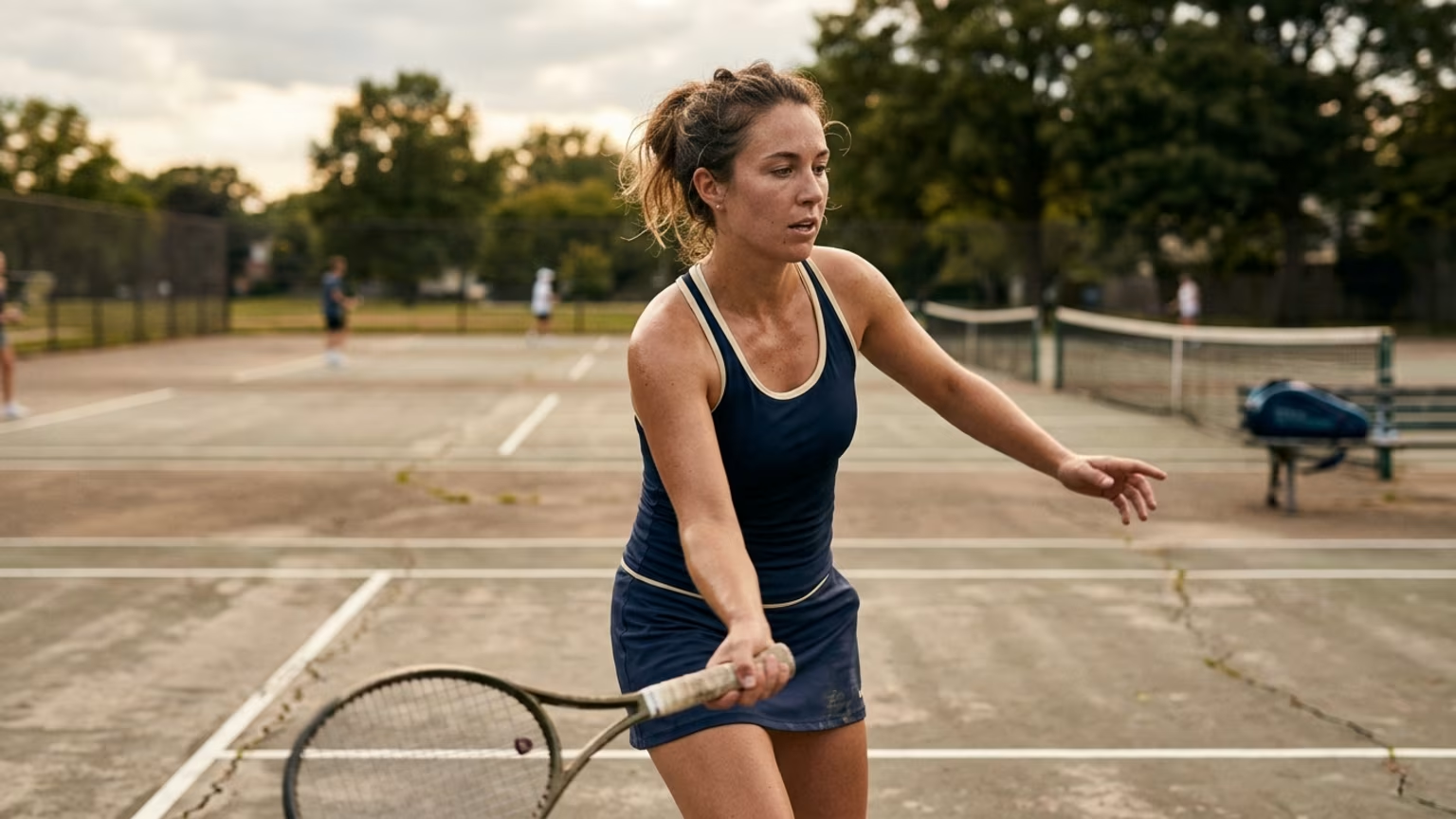

Replace vague stretching with a 10-minute active warm-up sequence for tennis, pickleball, and padel to improve movement and support athletic longevity.




The traditional approach to match preparation often relies on unstructured advice to simply warm up. For many players, this translates into a few minutes of static stretching on the sidelines. A 2026 systematic review in Frontiers in Physiology notes that static stretching can provide specific flexibility benefits. However, prolonged static holds do little to prepare the nervous system for a sudden sprint or an explosive overhead smash.
The National Federation of State High School Associations explicitly rejects a passive warm-up as the sole method of preparation. Bending over to touch your toes does not raise your core body temperature sufficiently for intense athletic activity. Relying entirely on passive preparation leaves a massive physical gap between a resting heart rate and the high intensity of the first competitive point. This outdated modality ultimately fails to prepare players for dynamic athletic movement.
Additionally, stepping onto a court cold directly limits your early match performance. A lack of movement before the first ball can lead to sluggish footwork and poorly timed contact points. Without raising the heart rate, your muscles remain stiff and less responsive to sudden directional changes. This makes the traditional static approach a poor choice for anyone looking to optimize their time on the court.
A practical warm-up begins with active general movement and progresses to movements that resemble the sport. The 10-minute active progression is a highly structured sequence designed to bridge the gap between rest and competition. A 5 to 15-minute warm-up is a commonly recommended range, with more demanding activity generally requiring more preparation. This specific 10-minute structure uses a graduated approach to build neuromuscular control and physical readiness.
The first two minutes focus on brisk walking, easy jogging, gentle skipping, or low-impact jumping jacks. The goal is a gradual rise in heart rate and body temperature. You should increase intensity gradually until you are close to match demands, but stop short of fatigue. This careful ramping prevents early exhaustion while ensuring your muscles are physically warm.
Minutes two through four shift into dynamic mobility with exercises like forward-and-back leg swings, walking knee hugs, and trunk rotations. The 2026 systematic review concluded that dynamic stretching may be a practical warm-up option for athletes who need mobility and power. This active movement prevents the loss of power output commonly associated with passive stretching. Moving your joints through their active ranges primes them for the upcoming physical load.
Minutes four through six introduce low-volume elastic preparation. You can perform gentle pogo-style rebounds, small split-step rebounds, and controlled side-to-side shuffles. Keep your foot contacts quiet and your landings controlled to prepare the braking mechanisms essential for court coverage. A 2026 systematic review and meta-analysis reported that neuromuscular training reduced ankle-joint injuries and improved measures of dynamic control and foot-and-ankle function.
During minutes six through eight, players rehearse sport-specific footwork patterns from the center of the court. You should split step, shuffle two or three steps to the right, recover to center, and repeat. This mimics the immediate demands of gameplay without placing maximum stress on unprepared muscles. Practicing these precise sequences sharpens your reaction time before you even touch a racquet.
The final two minutes focus on a progressive hitting sequence. Start with short-court hitting at an easy pace for the first 60 to 90 seconds. Move back for baseline rallying at a moderate effort before adding directional shots in the final minute. One tennis-specific recommendation progresses from soft service-line rallying to moderate baseline hitting and then more directional, higher-effort shots.
You must adjust this routine based on environmental conditions and your current health status. On a cold morning, extend the general movement phase and delay hard accelerations until the final stages. If you are returning to the court after time away, keep the first several sessions at a low-to-moderate effort. Do not simply compress a full warm-up into a shorter timeframe if you feel rushed.
Every racquet sport requires unique physical adaptations during the final stages of a warm-up. Tennis demands large court coverage, pronounced acceleration, and heavy braking. The sport-specific phase for a tennis player must prioritize deep lateral shuffles and progressive baseline hitting. This builds the foundational readiness required for long rallies and explosive service motions.
Taking the time for mastering these initial movement patterns allows you to command the baseline more effectively. Pickleball features a distinct stop-start nature within highly compact spaces. The footwork minutes should emphasize shorter explosive steps, frequent ready-position reactions, and compact recovery steps. Players should maintain a low ready position to prepare for the rapid exchanges characteristic of the sport.
You can browse our pickleball resources to further refine your preparation for these specific court dimensions. Padel introduces the complexity of multidirectional movement and spatial positioning around glass walls. A proper padel warm-up must include short lateral movements, forward approaches, and controlled backward positioning. Players should strictly avoid sprinting into the glass or attempting aggressive overheads before the shoulder and trunk are fully ready.
Tailoring your preparation to the specific geometry of your court ensures a safer transition into competitive play. An ideal approach focuses on precise positioning relative to the back wall while managing long-term court health over a long season.
When evaluating which preparation style best supports athletic longevity, the active 10-minute progression is the definitive winner. A passive warm-up simply cannot replicate the dynamic demands of racquet sports. In contrast, an active sequence systematically prepares your joints, muscles, and nervous system for the precise movements you are about to execute. This structured approach builds the resilience necessary for years of consistent play.
A warm-up is not a standalone substitute for long-term strength training, mobility work, or load management. However, replacing vague preparation habits with a predictable sequence gives you a reliable foundation for every match. If a schedule delay occurs, the National Federation of State High School Associations notes that a 5 to 10-minute rest period may follow the warm-up before competition. Maintaining physical readiness during these short pauses is critical.
By adopting an active and progressive routine, you protect your body from the shock of sudden, high-intensity movements. This directly supports the goal of healthy aging on the court. Better preparation translates to more confident movement and significantly fewer post-match aches. Start your next session by mapping out the exact active movements you will perform during those critical ten minutes before the first ball is struck.
Follow Evercourts for practical insights on tennis, pickleball and padel performance, movement, recovery and healthy ageing. Stay connected for new articles, research-led guidance and ideas to help you play well and keep playing for years.


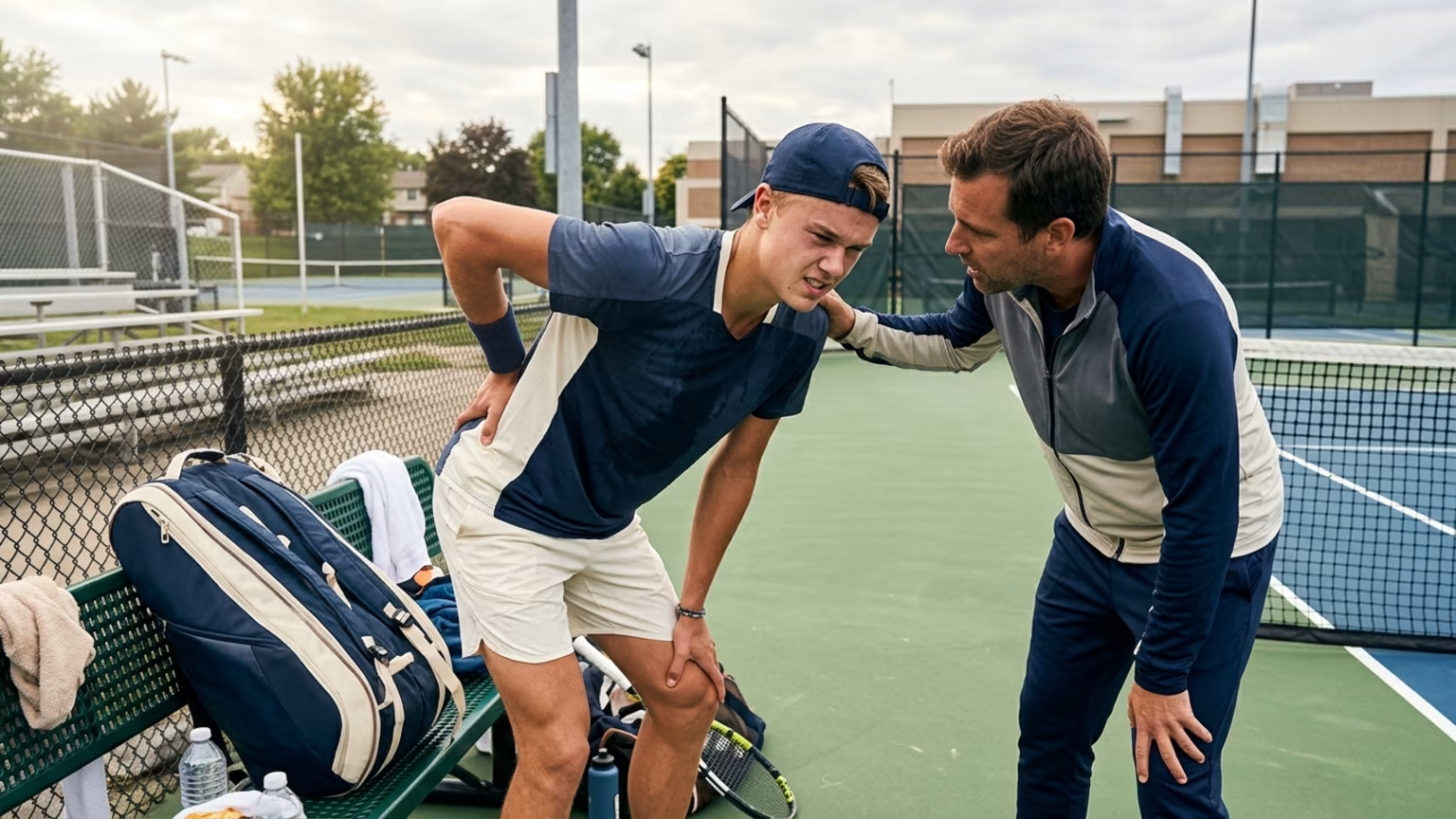
Holger Rune withdrew from the European Open with a back problem. The facts behind his decision and a grounded perspective for recreational players.

The Dink’s October 17 guide emphasizes deep returns, ball-height decisions and positioning against faster pickleball opponents.

A new report outlines padel and tennis gear trends. Learn how to assess adjustable rackets, sensor feedback and smart-court claims.
Read practical guidance for better movement, smarter preparation and a game that keeps working for you.
explore the Blog
