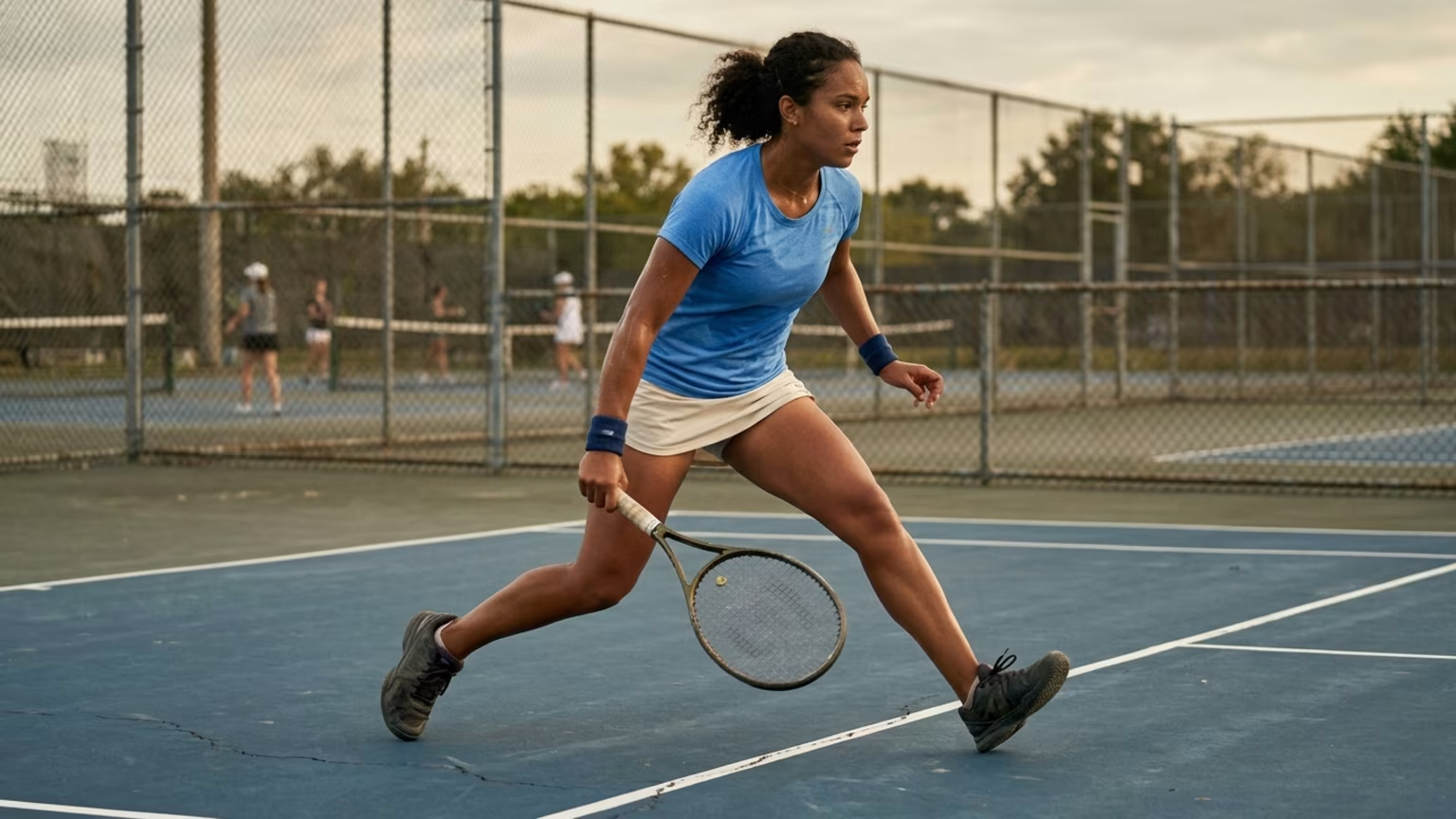

Learn how to optimize your first three steps on court for tennis, pickleball, and padel. Improve your court coverage and athletic longevity with our protocol.




Fast feet will not save you on a racquet court. You have just lunged for a wide ball, your knees are aching, and you realize your youthful sprint speed is fading fast. The problem is not how fast you run, but how efficiently you organize your body before the ball even crosses the net. Moving well requires precise timing and direction in your initial steps.
The objective of this routine is straightforward. It helps active players maintain their court coverage and athletic longevity without relying on exhausting sprints. By training the first movements correctly, you arrive balanced and ready to hit.
This protocol strips away generic agility drills and focuses on the exact demands of your sport. You can protect your joints and continue playing competitively for years. The focus is entirely on practical capability and intelligent movement patterns. evercourts believes in giving you tools that actually translate to match conditions. You will spend less energy recovering from bad positions and more time executing your shots.
The split step is your foundation for all court movement. Research indicates that using a split step results in approximately 104 milliseconds less total reach time and a large improvement in lateral velocity shortly after movement begins. You must time this brief unloading action perfectly. Land when the opponent makes contact with the ball.
This prevents you from getting caught flat-footed. A properly timed landing absorbs your previous momentum. It acts like a compressed spring for your next directional move. Focus your eyes on the opponent's paddle or racket to trigger your jump.
Your first step dictates your balance for the rest of the point. A recent movement-training article recommends controlling trunk lean, avoiding excessively wide plant steps and using more knee bend during the plant. Do not take a massive lunge if a smaller adjustment step will suffice. Keeping your feet under your hips helps reduce unnecessary joint strain.
This controlled plant sets up a balanced swing for your most challenging shots. Players often rush their footwork and overextend their lead leg when chasing wide balls. This overextension makes recovery to the center nearly impossible. A narrower plant base gives you much better rotational control. It allows you to pivot smoothly without locking out your knee joint.
The final step before your shot is for spacing rather than sheer speed. You should use this step to distance yourself correctly from the incoming ball. Arriving too close jams your swing and forces an awkward upper-body rotation. A compressed swing inevitably leads to a loss of control and power.
Use small adjustment steps as you near the contact zone. Understanding how to win the first two steps is essential for this spacing. This ensures your momentum transfers smoothly into the shot. Excellent spacing allows your racket to do the heavy lifting while your lower body remains grounded.
Recovery is not a blind sprint back to the center mark. Your return position must reflect the geometry of your own shot and your opponent's likely reply. Move back to a balanced ready stance immediately after your follow-through. Lingering and admiring a good shot will cost you the point against an alert opponent.
If you hit out wide, adjust your recovery to protect the open court. Tactical recovery saves energy and keeps you prepared for the next exchange. Building a repeatable match-day routine helps ingrain these recovery habits automatically. Smart positioning minimizes the ground you have to cover later in the point.
Tennis demands significant lateral coverage and larger directional shifts. After your split step, push off the leg opposite your intended direction to build speed. Use a crossover step to cover deep or wide balls efficiently. This initial explosive action separates intermediate players from advanced court covers.
You must read the ball early to decide between a short shuffle or a full sprint. Learning to train the first step is critical for tennis players covering a large baseline. Your recovery position will change constantly based on where you place the ball. Always prioritize a balanced finish over a desperate slide on hard courts.
Pickleball requires rapid braking and compact adjustments around the kitchen line. Coach Michael Loyd describes the split step as a ready hop timed with opponent contact and advises players not to sit on either the heels or the extreme tips of the toes. You must prioritize balance and the ability to stop quickly.
Avoid excessively wide lunges that pull your chest out of a square position. Your focus is staying available for rapid volley exchanges. Good pickleball footwork keeps your center of gravity very stable. Short lateral steps allow you to reset your paddle faster for the next dink. Players who overcommit their weight often lose the next exchange.
Padel demands that you move as a synchronized unit with your partner. Padel positioning guidance places players approximately three metres from the net in a centered attacking position and roughly one metre from the back wall when defending, although exact positioning depends on the situation. Communication and shared spatial awareness are vital. A unified front makes it incredibly difficult for opponents to hit clean winners.
Another positioning guide recommends advancing in stages after an approach and split-stepping when the opponent begins the swing. You must read the wall rebounds carefully before committing to a full sprint. Moving independently of your partner leaves massive gaps in your defense.
Padel footwork guidance recommends side shuffling between marked points without crossing the feet for short lateral coverage, keeping the racket up and the weight forward. This side shuffle preserves your body orientation toward the net. It also allows you to react instantly if a ball clips the cage or takes a strange spin.
Crossing your feet during short lateral shifts in padel leaves you vulnerable to fast volleys. By moving together, the team restricts angles for the opposing players. Consistent spacing creates a cohesive defensive wall that frustrates attacking opponents.
Great movement is rarely noticed by the crowd. It is just the quiet discipline of arriving early, planting firmly, and letting the game come to you.
Follow Evercourts for practical insights on tennis, pickleball and padel performance, movement, recovery and healthy ageing. Stay connected for new articles, research-led guidance and ideas to help you play well and keep playing for years.


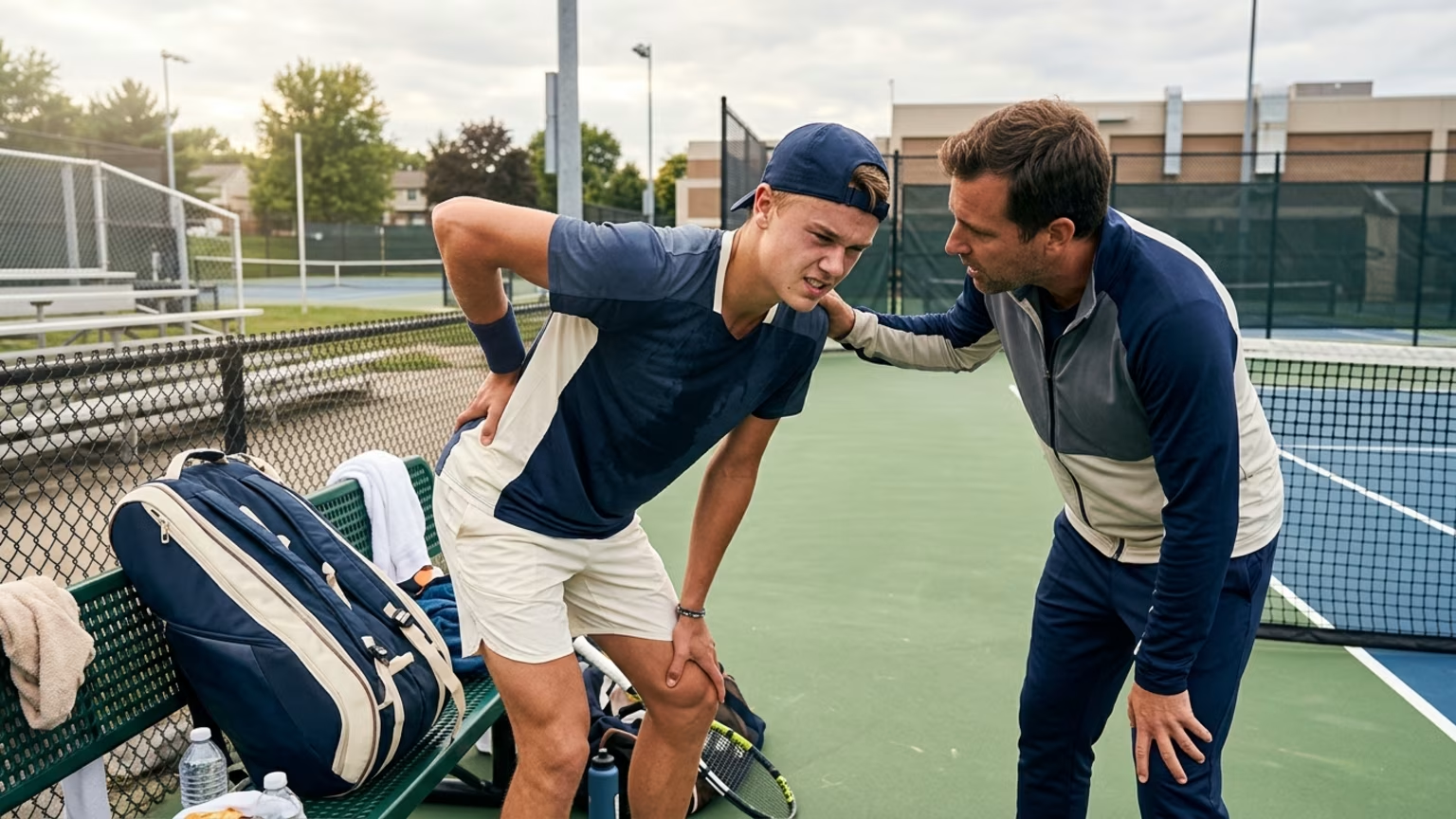
Holger Rune withdrew from the European Open with a back problem. The facts behind his decision and a grounded perspective for recreational players.

The Dink’s October 17 guide emphasizes deep returns, ball-height decisions and positioning against faster pickleball opponents.

A new report outlines padel and tennis gear trends. Learn how to assess adjustable rackets, sensor feedback and smart-court claims.
Read practical guidance for better movement, smarter preparation and a game that keeps working for you.
explore the Blog
