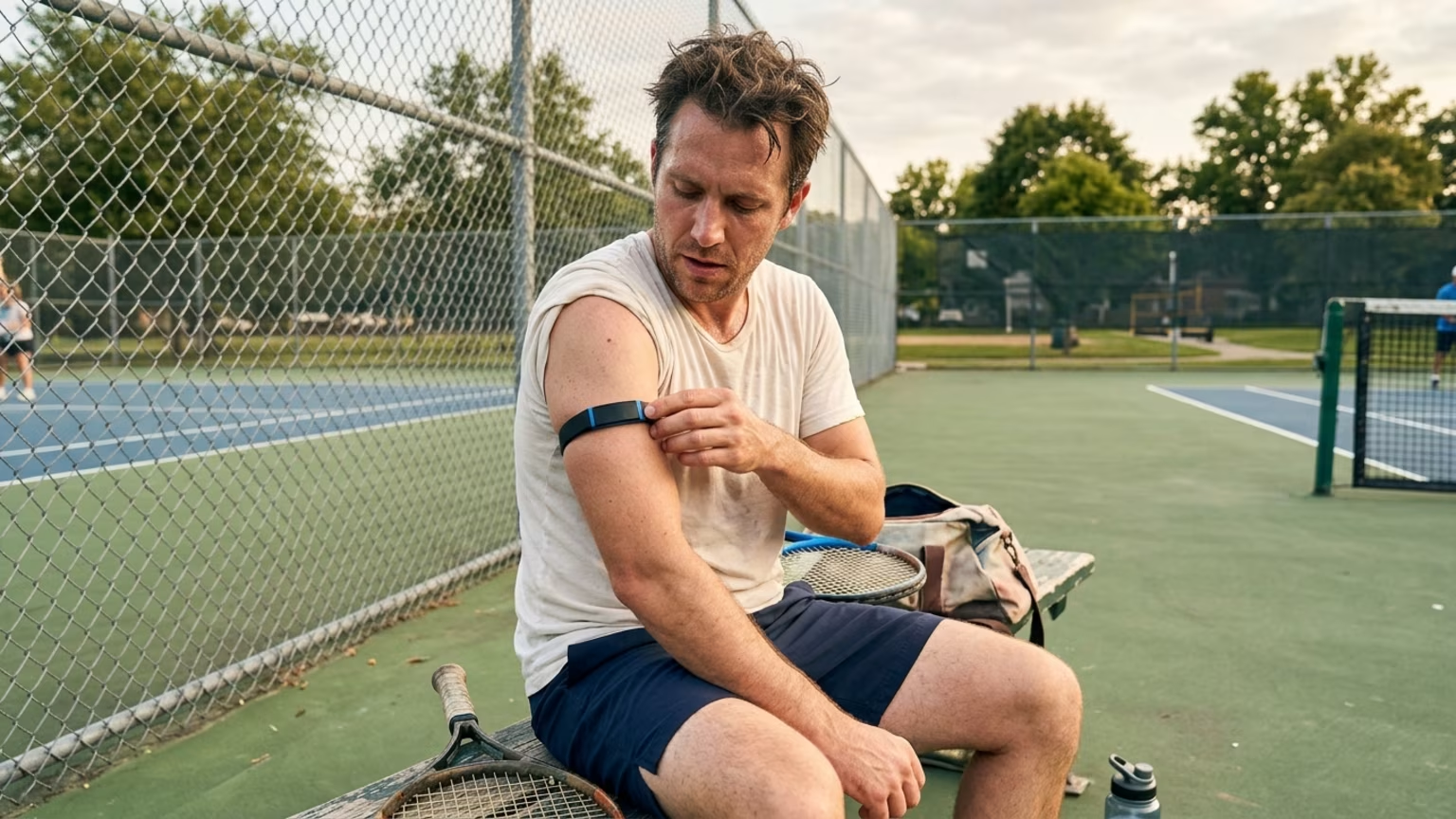

A practical guide to tracking tennis serving load, noticing changes in soreness or control, and knowing when to seek qualified advice.




Shoulder capacity is the ability to handle the physical demands of serving. A tennis serve combines leg drive, trunk movement and shoulder motion rather than relying on the shoulder alone. For a recreational player, the practical question is how much serving work you are asking that coordinated movement to handle.
That question deserves more attention than a fixed target for the practice basket. Serve attempts, effort and the way the session feels can all be recorded. The purpose is to make your serving exposure visible before deciding to add more.
Tennis, pickleball and padel involve repeated explosive efforts and changes of direction. The practical point is to consider shoulder work within that wider session, rather than treating serving as a separate pile of repetitions.
For tennis, note whether serving practice stood alone or followed other court work. A count records how many serves you attempted. Adding effort level and session duration gives that entry more context without requiring a device or a complicated formula.
Keep pickleball and padel separate from tennis in your notes. Describe the shoulder work you actually did instead of converting everything into tennis serves. For related reading, our way to think about padel overhead capacity keeps the discussion specific to that sport.
A tennis-load review article recommends watching for sharp workload rises from one week to the next. It also cautions that the acute:chronic workload ratio is methodologically contested. No trial has shown that acting on that ratio prevents injury.
The available evidence does not establish a safe serve-count limit or a universal weekly progression percentage. The simple log below has not been tested as an injury-prevention protocol either. These limits matter because a record of your serving cannot certify that a particular amount is safe for you.
The practical interpretation is straightforward: use tracking to notice changes and describe them clearly. Treat it as an awareness tool rather than a performance target or a medical decision.
This is a record of exposure and experience, not a score to maximise. A high serve count is not automatically a better session. An entry showing relaxed work should remain distinguishable from one dominated by high-effort attempts.
Keep the wording plain enough that you will understand it later. “Relaxed serves with steady placement” and “high-effort serves with increasing soreness” describe different experiences even without an elaborate rating system. Record what happened rather than trying to make the entry look like a successful training day.
Read the entries together rather than judging one number alone. An increase in attempts paired with more high-effort serving is worth noticing, particularly if soreness is increasing or control is slipping. The point is to identify a change you can describe.
For athletic longevity, the useful goal is continued participation rather than accumulating the largest possible number of serves. Keeping track gives that goal a practical form: consider what you have already done and how it felt before choosing to add more.
Progression can be a considered choice rather than an automatic increase every time you practise. If soreness is increasing or placement is visibly slipping, a cautious option is fewer or easier serves. Stopping serving for the day is also an option instead of adding more high-effort repetitions.
Adding serving work should not become a deadline you feel obliged to meet. A useful record leaves room for a quieter serving session when the previous one felt worse. That is a practical choice about participation, not a judgement about your commitment to tennis.
Our guidance on looking at the wider playing workload offers related context. Keep serving notes connected to the session they came from, instead of treating shoulder work as a separate challenge to complete.
Strength is a related topic, but a serving log is not a strength programme. Our resource on preparing for serves and overheads provides additional reading. The editorial aim is to make decisions about court time more informed, not to turn every session into another test.
Persistent or worsening shoulder symptoms are a reason to consult a qualified physio or healthcare provider. If increasing soreness and declining control keep appearing in your notes, bring that pattern to the appointment rather than using it to diagnose yourself.
You do not need to turn your log into a technical report. The useful information is what serving you did, how hard it felt and what changed. A qualified professional can consider those observations when discussing your individual situation.
Today, write down your latest serving session and how your shoulder felt so you have a clear starting point for future decisions.
Follow Evercourts for practical insights on tennis, pickleball and padel performance, movement, recovery and healthy ageing. Stay connected for new articles, research-led guidance and ideas to help you play well and keep playing for years.



Holger Rune withdrew from the European Open with a back problem. The facts behind his decision and a grounded perspective for recreational players.

The Dink’s October 17 guide emphasizes deep returns, ball-height decisions and positioning against faster pickleball opponents.

A new report outlines padel and tennis gear trends. Learn how to assess adjustable rackets, sensor feedback and smart-court claims.
Read practical guidance for better movement, smarter preparation and a game that keeps working for you.
explore the Blog
