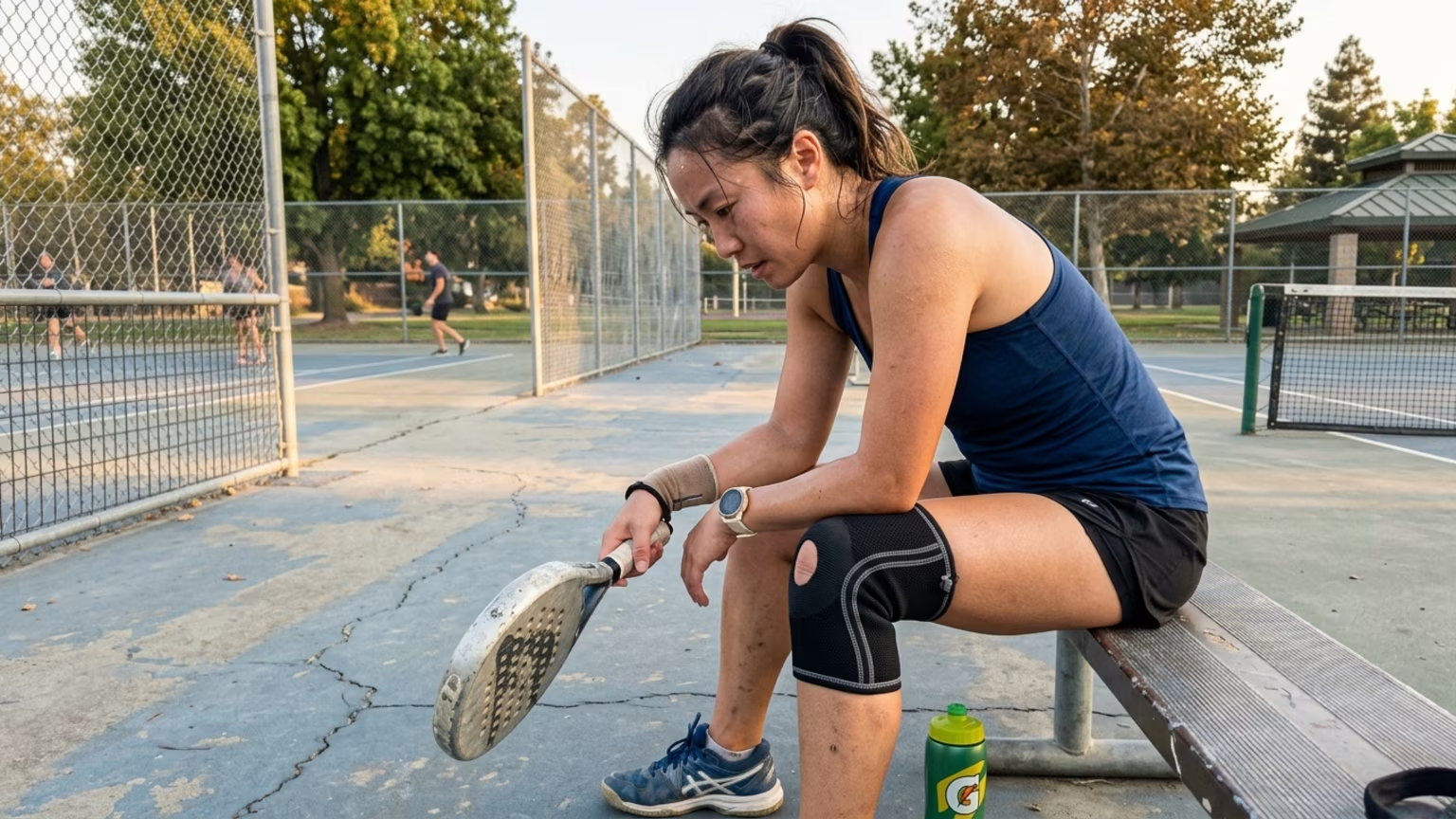

Thai padel player Natalie Narkprasert returned to the Asian Games after knee surgery. We examine why structured rehabilitation beats universal timelines.




On September 29, 2026, the International Padel Federation reported that Thai player Natalie Narkprasert and partner Dares Srirungreang beat Kuwait’s Noor Hasan and Zenab Sarkhoo in the women’s round of 32 at the Asian Games in Aichi-Nagoya, Japan.
The opening matches of the Asian Games padel tournament brought several notable results across the bracket. The International Padel Federation documented Narkprasert returning to international competition after a significant medical absence. According to the report, Narkprasert had played padel for about two and a half to three years before her injury. She told the federation that she sustained a complete ACL and meniscus tear. Such severe injuries completely halt a player's ability to practice or compete on court.
This injury required knee surgery and caused her to lose a full year of playing time. Narkprasert stated that the recovery process was so extensive that she had to learn to walk again. Her successful return alongside Srirungreang marked an important milestone in the women's tournament. It demonstrated a high level of physical resilience following a severe joint trauma.
The federation also reported several other key results from the second day of competition. Japan's Tomita and Hatakeyama defeated Thailand's Rawal and Mocciola with scores of 6 to 4 and 6 to 2. Additionally, Japan's Ozawa and Sato secured a victory over Qatar's Murad and Faramarzi by winning 6 to 1 and 6 to 4. These matches highlight the competitive level expected at this stage of the international tournament. The speed and intensity of these early rounds demonstrate the physical baseline required to compete internationally.
Recreational players often view elite athletic comebacks as a standard for their own recovery. Narkprasert's return offers a clear example of overcoming a major joint injury. However, adult amateur players must recognize the limitations of comparing personal recoveries to international competitors. The federation's account of Narkprasert provides a first person description rather than a comprehensive medical assessment.
The published report does not specify exactly when her injury occurred or detail the exact operation performed. It also omits her specific rehabilitation protocol and the actual date she resumed training. Furthermore, the coverage does not mention whether she received formal medical clearance before returning to competition. Without these clinical details, it is impossible to infer how long the entire physical recovery process truly took.
A single year away from the sport sounds like a clean timeline for a major knee operation. Yet, relying on another player's story as a personal timetable can lead to frustration or further injury. Every player requires a customized recovery and reloading framework that addresses their specific physical needs. Return to play decisions demand patience, professional medical clearance, and highly structured physical rehabilitation.
Jumping back into competitive matches too quickly often compromises healthy aging and athletic longevity. Evercourts consistently advises players to adopt a structured approach to returning to court following a prolonged absence. Healing from a complete ACL and meniscus tear involves more than just resting the joint. Players must carefully rebuild their physical strength and structural stability before facing the unpredictable movements of a live match.
Adult recreational players lack the dedicated medical teams that monitor elite competitors on a daily basis. A professional athlete might return to the court under the strict supervision of a full time physiotherapist. Amateur players typically manage their own recovery schedules alongside regular work and personal commitments. This fundamental difference in resources means that everyday players should be even more cautious when planning their return.
Ignoring these differences often leads to chronic pain or a recurrence of the original joint injury. Setting realistic expectations helps adult players enjoy the sport for decades rather than just a few more seasons.
Scientific research provides helpful context for understanding life after an ACL reconstruction. A 2026 report from News-Medical detailed findings from La Trobe University's SUPER-Knee trial. This trial observed 184 people aged 18 to 40 who experienced persistent knee problems one to three years after ACL reconstruction. The researchers compared a comprehensive physical program against a single education session.
Participants engaged in a four month physiotherapist led exercise and education program. The trial showed that these individuals improved their overall physical outcomes and muscle strength. Crucially, they achieved these gains without experiencing deterioration in knee cartilage or early osteoarthritis. This data reinforces the importance of guided, supervised recovery for long term joint health.
This trial confirms that supervised exercise programs can help people manage ongoing problems after major knee operations. However, the study does not establish a specific recovery protocol tailored exclusively to padel. It also does not prove that every injured player should follow the exact same physical plan. What it does show is that rebuilding movement confidence requires deliberate effort and professional guidance.
Racquet sports require rapid changes of direction, sudden stops, and explosive lateral movements. Managing persistent knee symptoms correctly is vital for anyone who hopes to continue playing for years. Adult players should prioritize strength training and targeted physical therapy over rushing back to the court. Objective medical data consistently supports taking the time to rehabilitate joints properly.
Building a foundation of muscle strength around the knee protects the joint from future damage. Many players mistakenly believe that simply resting until the pain stops is enough to heal a structural injury. The supervised exercise approach demonstrated in the SUPER-Knee trial challenges this passive recovery mindset. Active rehabilitation teaches the body how to handle the physical stress of competitive matches safely.
Integrating these evidence based principles into a daily routine can significantly extend a player's active years on the court.
As the Asian Games padel tournament progresses, the physical demands placed on competitors will only increase. We expect to see how players manage the cumulative fatigue of consecutive matches over the coming weeks. The ability to maintain joint health and move efficiently will likely determine who advances to the final rounds. Consistent physical conditioning remains the foundation for surviving these tightly scheduled international brackets.
Players who successfully balance their match load with adequate recovery will hold a distinct advantage. The sport will continue to challenge the physical resilience of its top competitors throughout the competitive year. We anticipate that discussions around structured injury management will become more prominent as the sport grows. Looking ahead, international events will continue to highlight the critical relationship between careful physical preparation and sustained athletic performance.
The Asian Games provide an excellent reminder that availability is just as important as technical skill. Maintaining long term health remains the ultimate victory for any racquet sports player.
Follow Evercourts for practical insights on tennis, pickleball and padel performance, movement, recovery and healthy ageing. Stay connected for new articles, research-led guidance and ideas to help you play well and keep playing for years.


An evidence check on sports supplements like tart cherry juice. Learn why racquet sports players should prioritize core nutrition over functional foods.
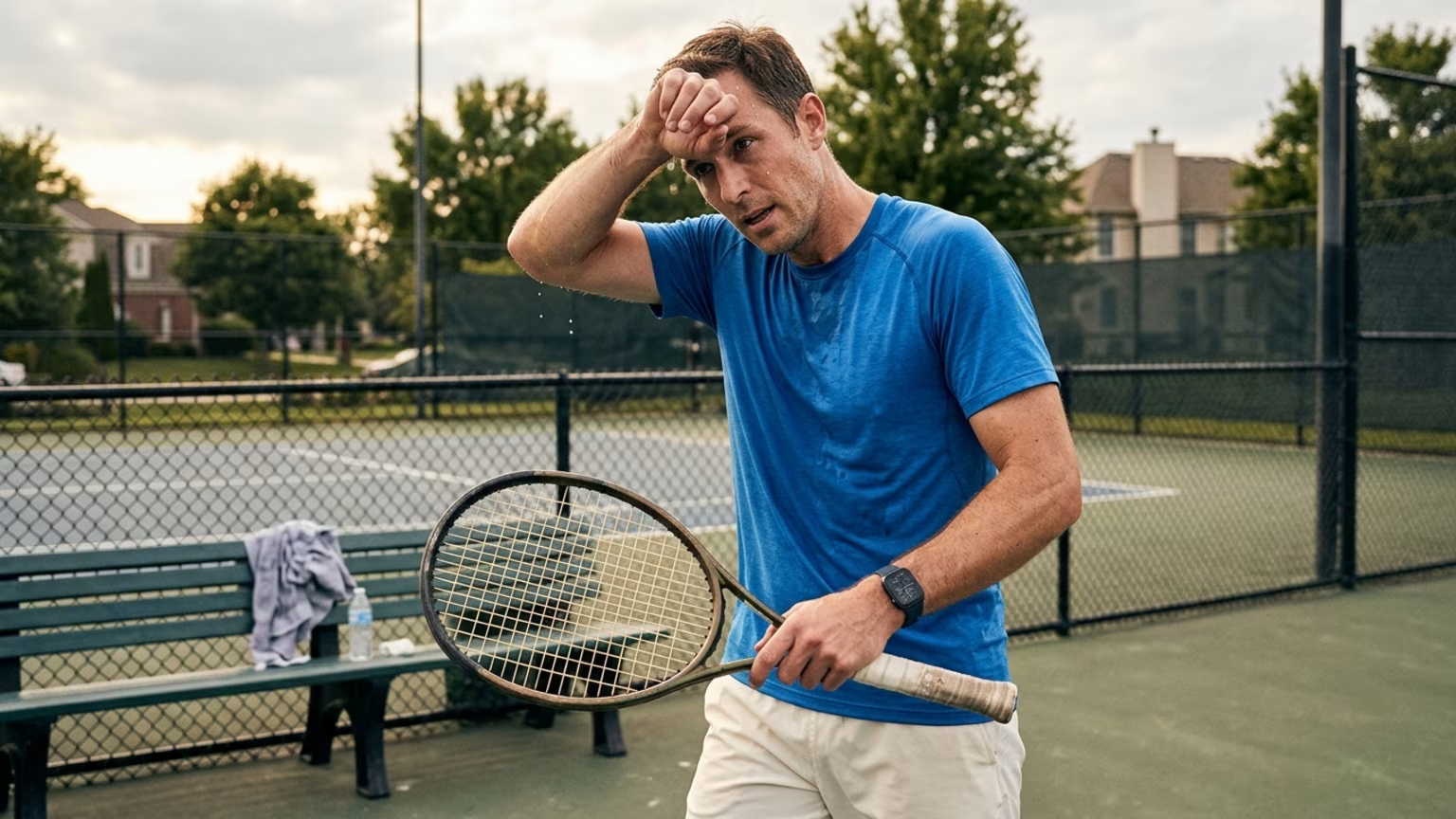
In late 2026, Oura analyzed wearable data to see how recreational tennis impacts heart health and recovery. Learn what this means for your athletic longevity.
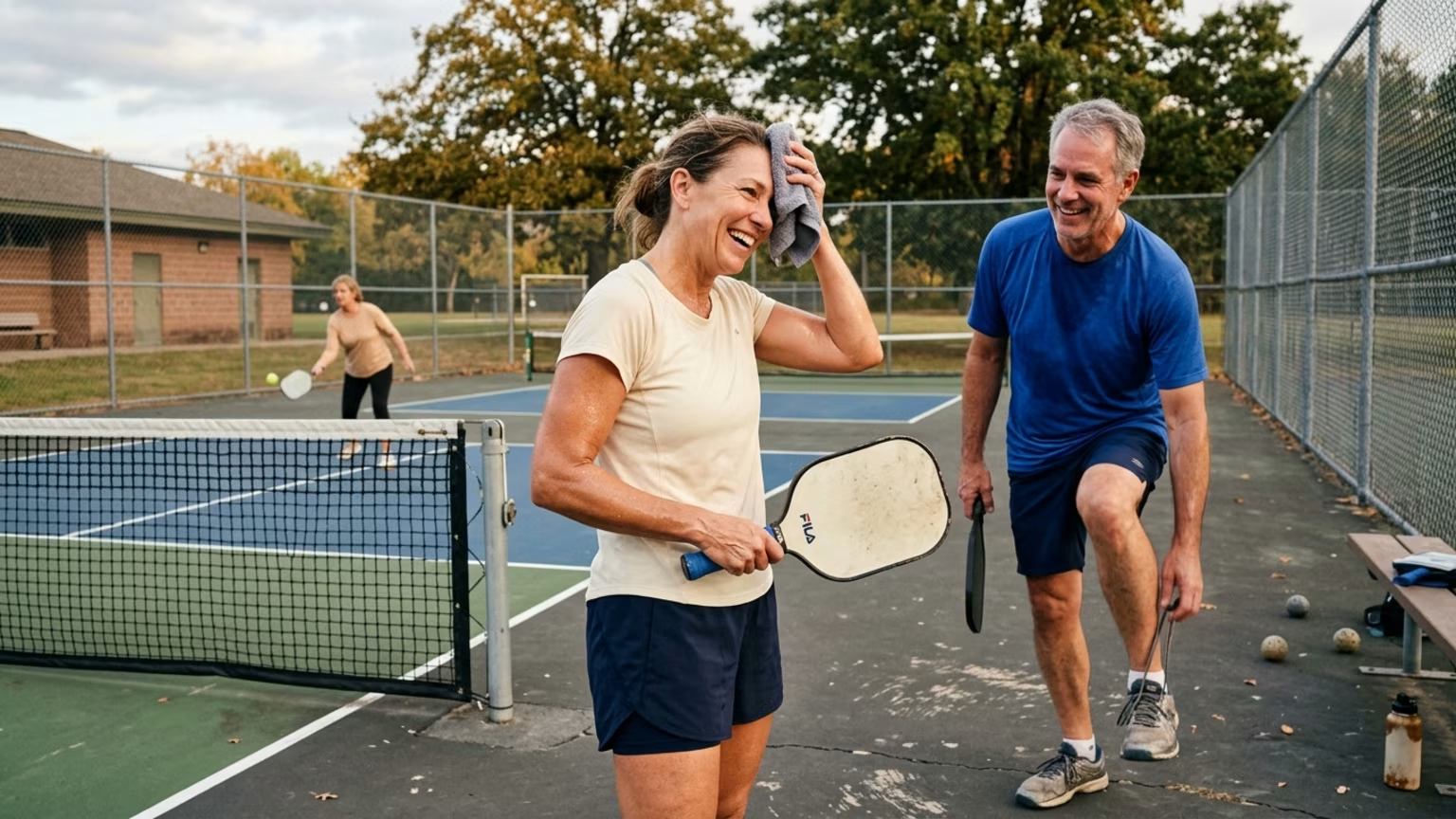
Recent guidelines emphasize gradual progression, dynamic warm-ups, and scheduled recovery to help adult racquet sports players maintain athletic longevity.
Read practical guidance for better movement, smarter preparation and a game that keeps working for you.
explore the Blog
