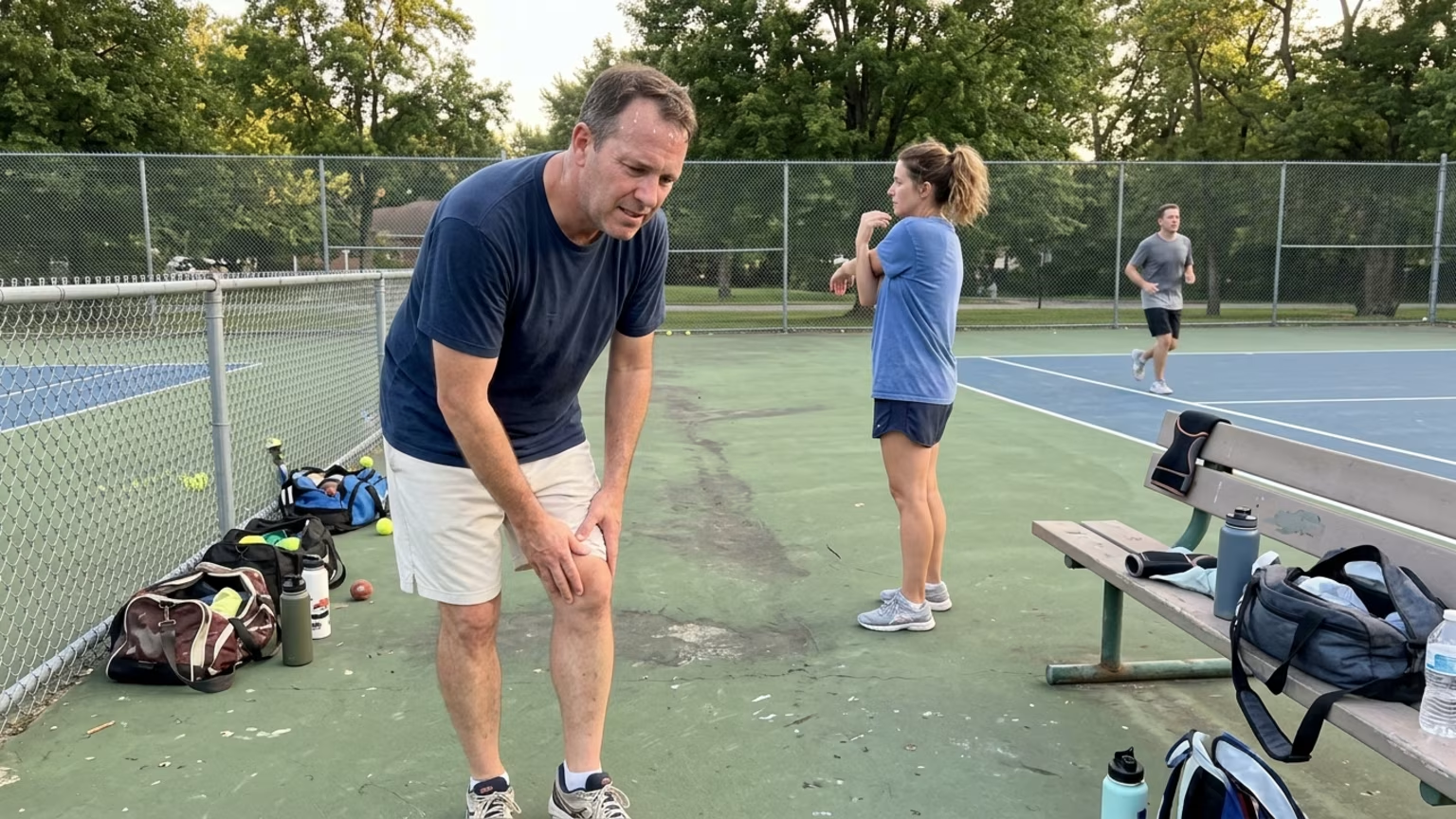

A progressive warm-up moves from easy activity to court-specific rehearsal. Learn how readiness differs from injury prevention and when symptoms need attention.




A warm-up is a period of movement that prepares a player for the activity about to begin. For tennis, pickleball and padel, its immediate job is to bridge the gap between arriving at court and responding at match pace. A progressive warm-up starts with easier movement before adding the footwork and strokes the session will require.
The useful question is not whether a routine looks demanding. It is whether its progression makes sense for the activity ahead. That shifts attention from completing a collection of exercises to preparing for the movement and hitting that follow.
For a broader preparation framework, Evercourts covers the transition from early movement to full play. Here, the focus is on understanding that transition without making the warm-up responsible for more than the evidence supports.
Tennis, pickleball and padel require preparation for repeated explosive efforts and changes of direction. The task is not simply to move continuously. Movement leads into a stroke, then into another response.
That gives sport-specific rehearsal a clear purpose: connecting movement with hitting before those actions become competitive. The practical interpretation is to make the later part of the warm-up resemble the task ahead rather than leaving general movement as the entire preparation.
The tennis example described in the research moves from running and dynamic stretching into short rallies and serve-return drills. Other exercise blocks include groundstrokes, movement and net play. These provide concrete examples of how preparation can become progressively more specific to tennis.
For pickleball, the court-side question is whether preparation connects footwork with the strokes about to be used. As an editorial application of the progression, controlled movement into a hitting position can accompany controlled ball exchanges. The emphasis is on rehearsing the sport rather than copying every element of a tennis routine.
For padel, the same framework needs a padel-specific expression. Movement rehearsal can lead into controlled strokes and net-play exchanges before approaching competitive pace. The point is not to prescribe an identical sequence across all three sports, but to preserve the transition from general activity to relevant court actions.
A 2026 scoping review in Sports Medicine - Open mapped 964 warm-up studies published from 1972 through 2026. The authors found that research was concentrated on immediate performance measures. These included jumping, sprinting and change of direction, alongside strength and power.
Those measures describe particular physical tasks. They are not the same as measuring how someone performs during competition. According to the review, competition-based outcomes and direct injury outcomes were comparatively less common.
The injury findings deserve careful wording. In the review, 34 studies contained an injury-related endpoint, symptom measure, proxy or perceived injury-protection outcome. That represented about 3.5% of the included studies. This percentage describes the research mix, not the likelihood that a warm-up will prevent an injury.
The authors also caution against treating proxy measures as proof of injury prevention. Better balance or different landing mechanics may be relevant measurements, but they do not establish that fewer injuries occurred. The review describes the limited injury evidence as an evidence and reporting gap rather than proof that warm-ups do not prevent injuries.
The remaining limitations belong together. Inconsistent reporting of duration and intensity, alongside sequence and transition timing, limits comparisons between routines. The tennis protocol information describes a small group of young adult competitive men but does not provide results. It therefore cannot establish superiority or support an age-specific routine for older recreational players.
The review makes another important distinction: immediate preparation is different from a longer-term injury-prevention program. The latter may depend on repeated exposure and adherence, as well as implementation and adaptation over time. A single court-side session and a sustained program are different interventions with different questions to answer.
The practical conclusion is straightforward. Use progressive movement as a framework for preparing to play. Do not turn an immediate performance measure into a claim about match results or injury reduction.
For adult players, athletic longevity is a wider concern than the first rally. It includes maintaining physical capabilities while continuing to enjoy the sport. Understanding the purpose of a warm-up gives preparation a sensible place within that larger picture.
For Evercourts, useful preparation advice should support both today's play and the ability to keep playing for years. That means keeping the warm-up connected to the demands of the session without treating it as a substitute for every other part of preparation.
A practical framework from the research is a gradual progression. It provides an order for preparation rather than a fixed prescription of minutes or repetitions:
The value of this framework is its clarity. General movement, movement preparation and sport rehearsal each have a place. They are related parts of the same transition rather than competing explanations for what a warm-up should be.
It also gives players a more useful vocabulary for discussing preparation. “I have started moving” describes something different from “I have rehearsed my court movement and strokes.” That distinction keeps the conversation tied to the task rather than to how impressive a routine appears.
Long-term participation deserves attention beyond the opening minutes. Preparation can sit alongside a more sustainable competition calendar and the broader organisation of court time. The editorial aim is to give each part of that picture an appropriate role.
Recurring aches or stiffness that keep changing court movement are reasons to involve a qualified physiotherapist or healthcare provider. The same applies when discomfort makes participation uncertain. These are questions for individual assessment rather than for another variation of a general warm-up.
A useful discussion can describe what the player notices: which movements feel uncomfortable, whether the issue recurs and how it affects play. That describes the experience without trying to diagnose its cause. Decisions about symptoms or treatment belong with qualified care.
The distinction matters when preparation becomes a repeated attempt to work around the same concern. A warm-up can have a role in readiness without being asked to explain persistent discomfort. Feeling prepared for a session and understanding a recurring problem are separate matters.
The first point is only one moment in a much longer relationship with the court.
Follow Evercourts for practical insights on tennis, pickleball and padel performance, movement, recovery and healthy ageing. Stay connected for new articles, research-led guidance and ideas to help you play well and keep playing for years.


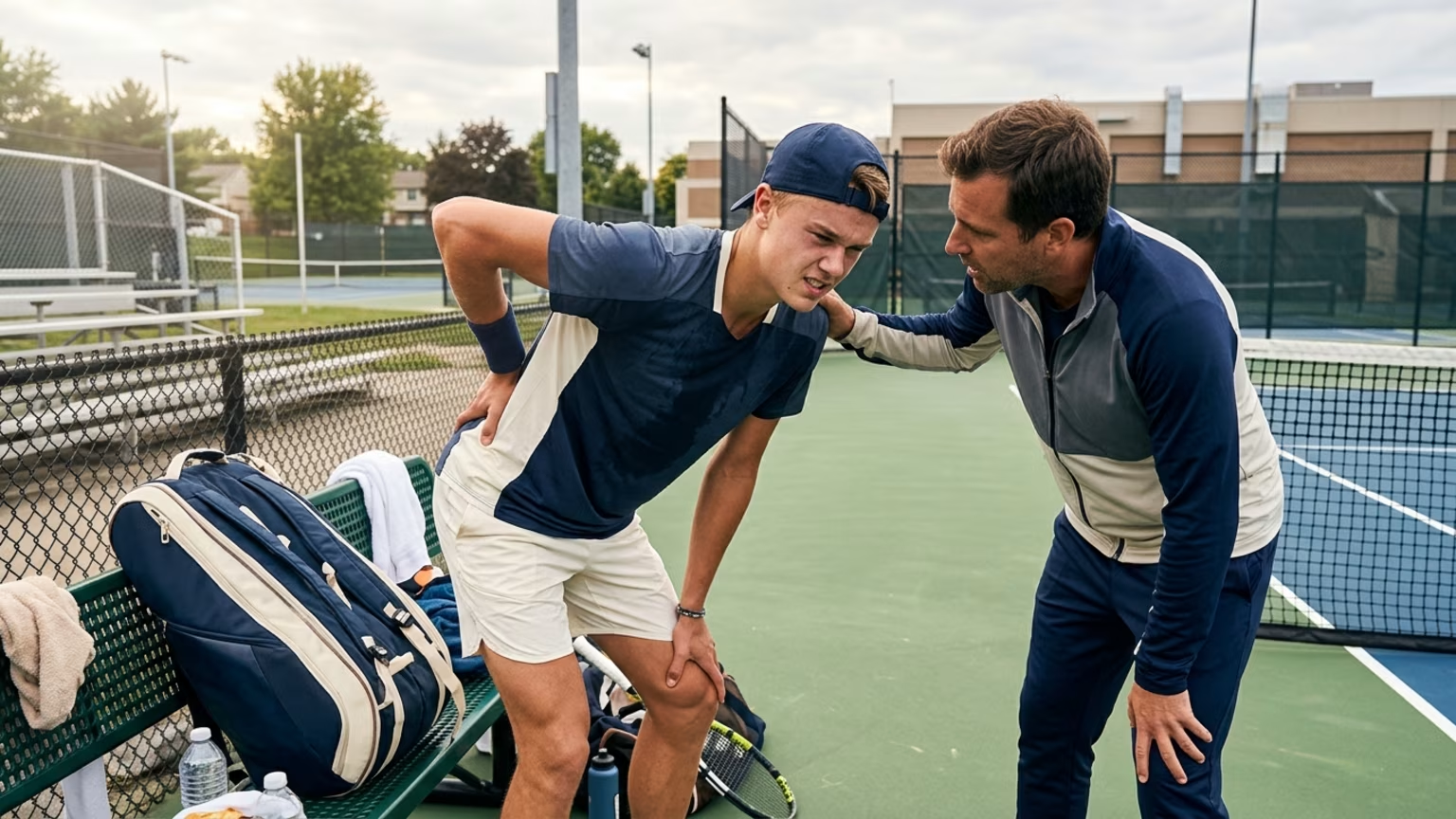
Holger Rune withdrew from the European Open with a back problem. The facts behind his decision and a grounded perspective for recreational players.

The Dink’s October 17 guide emphasizes deep returns, ball-height decisions and positioning against faster pickleball opponents.

A new report outlines padel and tennis gear trends. Learn how to assess adjustable rackets, sensor feedback and smart-court claims.
Read practical guidance for better movement, smarter preparation and a game that keeps working for you.
explore the Blog
