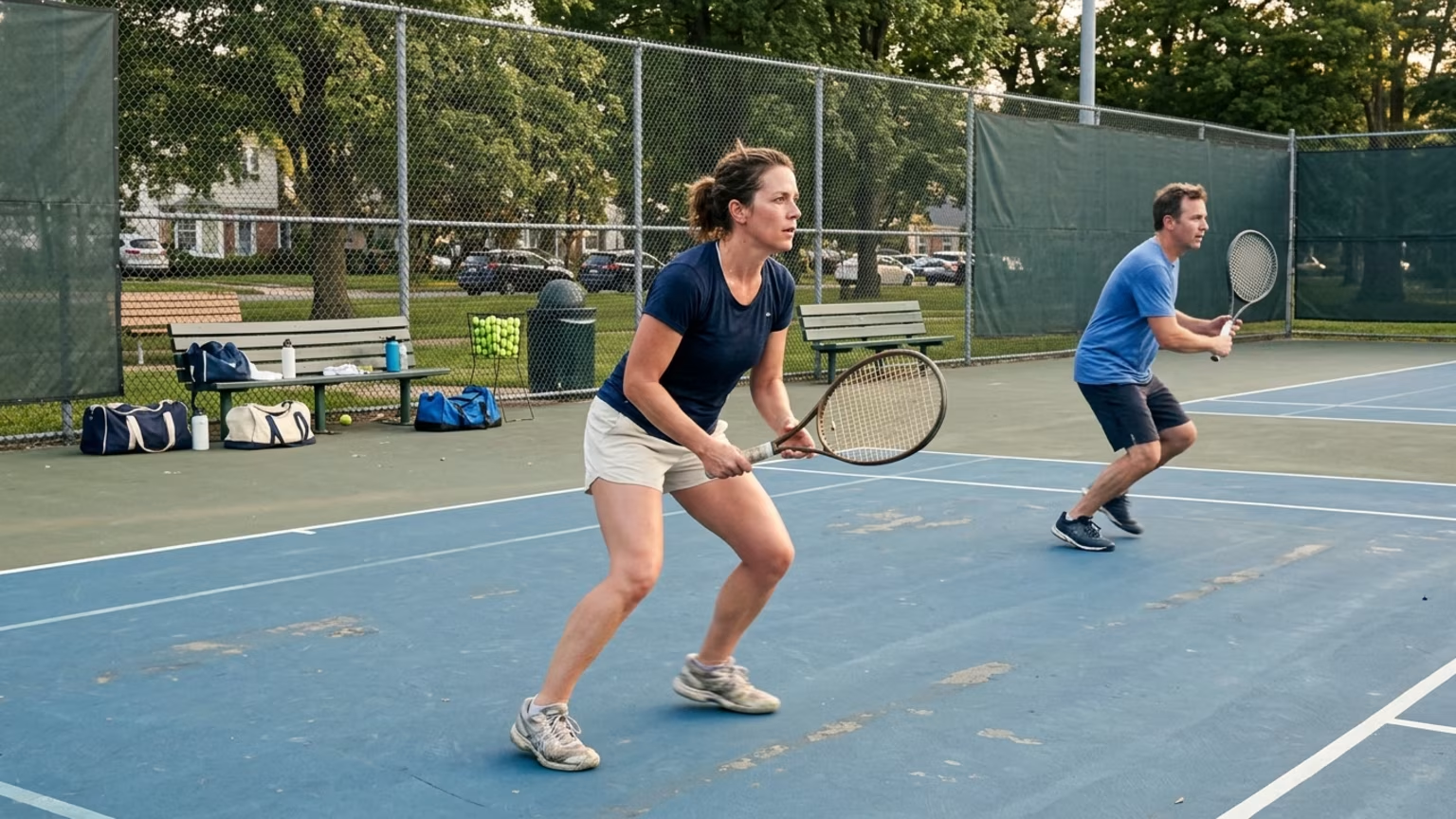

Build a court-ready warm-up for tennis, pickleball, and padel. Progress from easy movement to match pace to prepare your body and support healthy longevity.




Starting a match with cold muscles makes sudden changes of direction difficult and slows reaction times. A court-ready warm-up bridges the gap between arriving at the courts and playing at full speed, ensuring players are physically prepared for the first point.
For adult players focused on athletic longevity, the primary goal is maintaining court capability and feeling comfortable during play. Rehearsing the precise movements a match demands helps the body handle abrupt stops and quick lateral steps without distress. This routine does not rely on intense fitness drills or complex training equipment. It offers a practical progression to prepare the body for the mechanical stress of racquet sports.
Many players step onto the court and immediately begin hitting hard groundstrokes. This approach skips the critical transition from everyday walking to dynamic athletic movement. A repeatable match-day routine provides a structured way to signal to the body that play is about to begin. It allows active players to scale the speed and range of movement to their current comfort levels.
The physical demands of competitive play require muscles and joints to operate under sudden, unpredictable loads. Transitioning slowly into these movements gives the nervous system time to adapt. Players who build a deliberate physical routine often find it easier to find their rhythm when the match begins. This simple investment of time supports better performance and long-term participation.
The available evidence for these routines comes primarily from coaching guidance rather than highly validated medical protocols. The clearest step-by-step sources are coaching and clinical-practice pages that propose practical movement sequences. These sources do not establish that any specific routine prevents injuries or produces a measured performance benefit. Instead, they provide a sensible preparation rationale for adult recreational and competitive players.
The first step of any practical warm-up is to transition the body into motion without forcing intense efforts. One tennis routine from Crunch Time Coaching starts with progressive jogging to raise the heart rate safely. Players can then add lateral shuffles, carioca steps, arm circles, and leg swings. This approach reduces the initial shock to cold joints by building intensity slowly rather than starting with hard sprints.
Racquet sports require constant adjustments, so your warm-up must include controlled side-to-side movement and short changes of direction. This directly matches the cited coaching examples of lateral shuffles and carioca steps. You should rehearse these movements at an easy pace to practice your footwork safely. Understanding split steps, stances, and first step movement helps you integrate the correct mechanics into this phase.
Once your body is moving well, you can introduce a racquet and a ball. For tennis players, the Crunch Time Coaching routine includes an on-court hitting progression after movement and mobility work. You should begin hitting gently from a comfortable position before moving further back or increasing swing speed. Short baseline rallies at half speed are a practical way to begin.
As you progress through your hitting sequences, you need to rehearse the actual starts, stops, and direction changes your match will demand. The Padel School advises increasing intensity gradually and cautions against turning the warm-up into a competitive rally. Keep the dose appropriate for your current fitness level. The goal is to reach your competitive operating temperature without accumulating fatigue.
It is important to remember that these steps represent practical coaching advice. The Padel School explicitly presents its routine as coaching guidance and notes that it does not cite studies or quantified effectiveness evidence. While it makes logical sense to prepare the body, these sources do not prove that this exact routine prevents injury. Players should use these steps as a practical framework for healthy aging on the court.
Each racquet sport places slightly different demands on the body and requires specific warm-up adjustments. While the fundamental concepts remain the same, you should tweak the final stages of your preparation. This ensures that your body is ready for the unique biomechanical patterns of your chosen sport. Taking a few extra minutes to focus on your specific sport pays dividends during the first set.
Tennis courts are large and require significant ground coverage, which makes lower body mobility critical. Players should use easy progressive movement, lateral shuffles, and carioca steps to prepare their legs. Following this mobility and muscle activation phase, players should transition to a controlled hitting progression. This sequence allows tennis players to prepare for long baseline rallies and wide defensive stretching.
Pickleball is played on a smaller court, but it involves rapid, repetitive lunges and constant forward bending. Players can use dynamic options such as walking lunges, high knees, arm circles, and light lateral shuffles before play. After completing a few minutes of dynamic movement, players should ease into controlled dinking at the net. This progression prepares the lower back and knees for the quick, low stances required in pickleball.
Padel demands frequent pivoting, overhead reaching, and reacting to balls coming off the glass walls. The Padel School suggests a partner warm-up that progresses from controlled groundstrokes to volleys, overheads, and serve and return. Players must ensure they build intensity gradually as they move through these specific strokes. This approach ensures that the shoulders and core are ready for the varied shot selection of padel.
Modern pre-match preparation is moving beyond static stretching into dynamic, sport-specific rehearsals. Whether you are hitting a heavy tennis forehand or defending a padel smash, your warm-up should reflect those actions. By matching the warm-up to the sport, you give yourself the best chance to perform well from the very first point. A thoughtful routine replaces nervous anticipation with physical readiness.
Follow Evercourts for practical insights on tennis, pickleball and padel performance, movement, recovery and healthy ageing. Stay connected for new articles, research-led guidance and ideas to help you play well and keep playing for years.


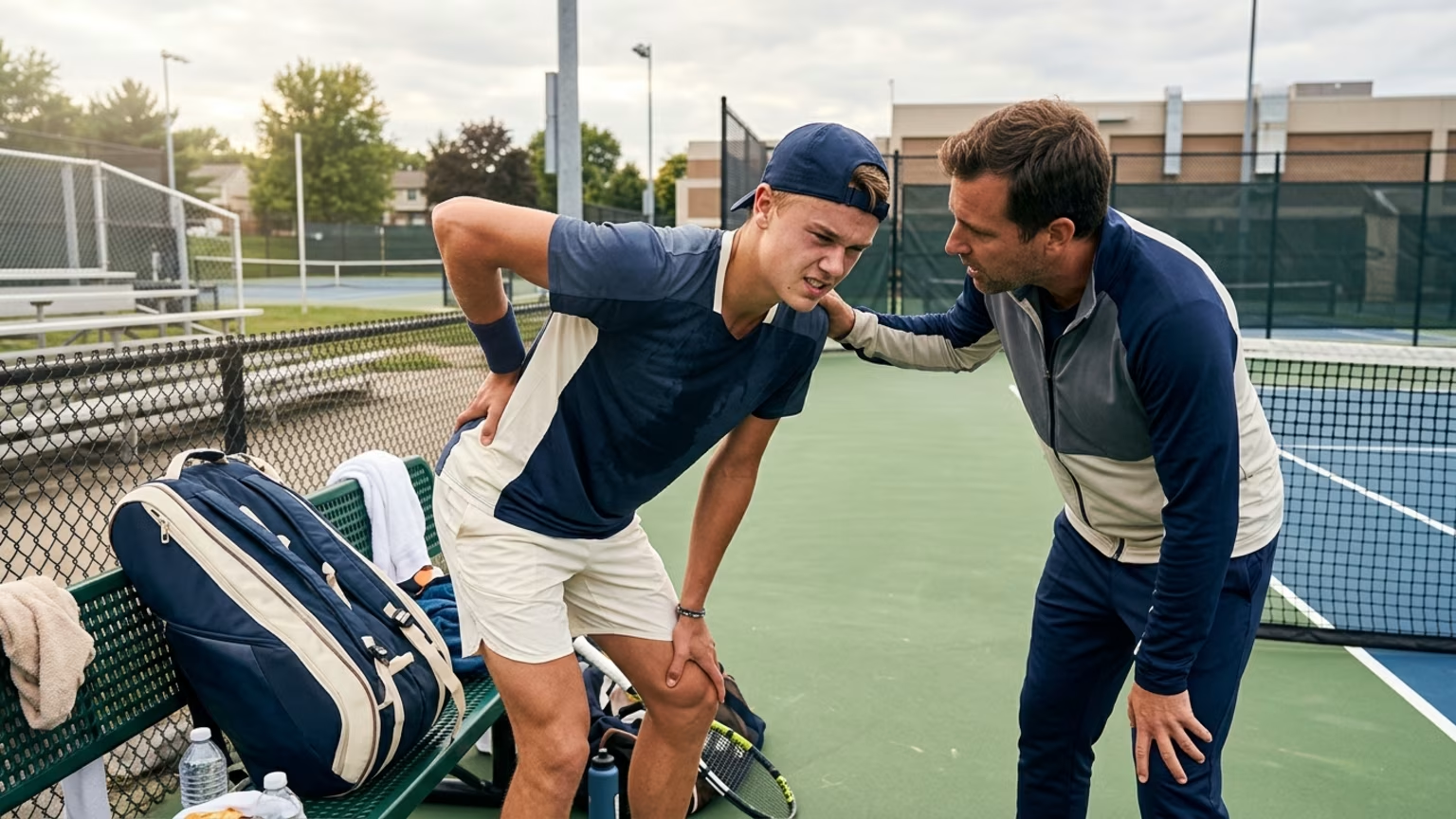
Holger Rune withdrew from the European Open with a back problem. The facts behind his decision and a grounded perspective for recreational players.

The Dink’s October 17 guide emphasizes deep returns, ball-height decisions and positioning against faster pickleball opponents.

A new report outlines padel and tennis gear trends. Learn how to assess adjustable rackets, sensor feedback and smart-court claims.
Read practical guidance for better movement, smarter preparation and a game that keeps working for you.
explore the Blog
