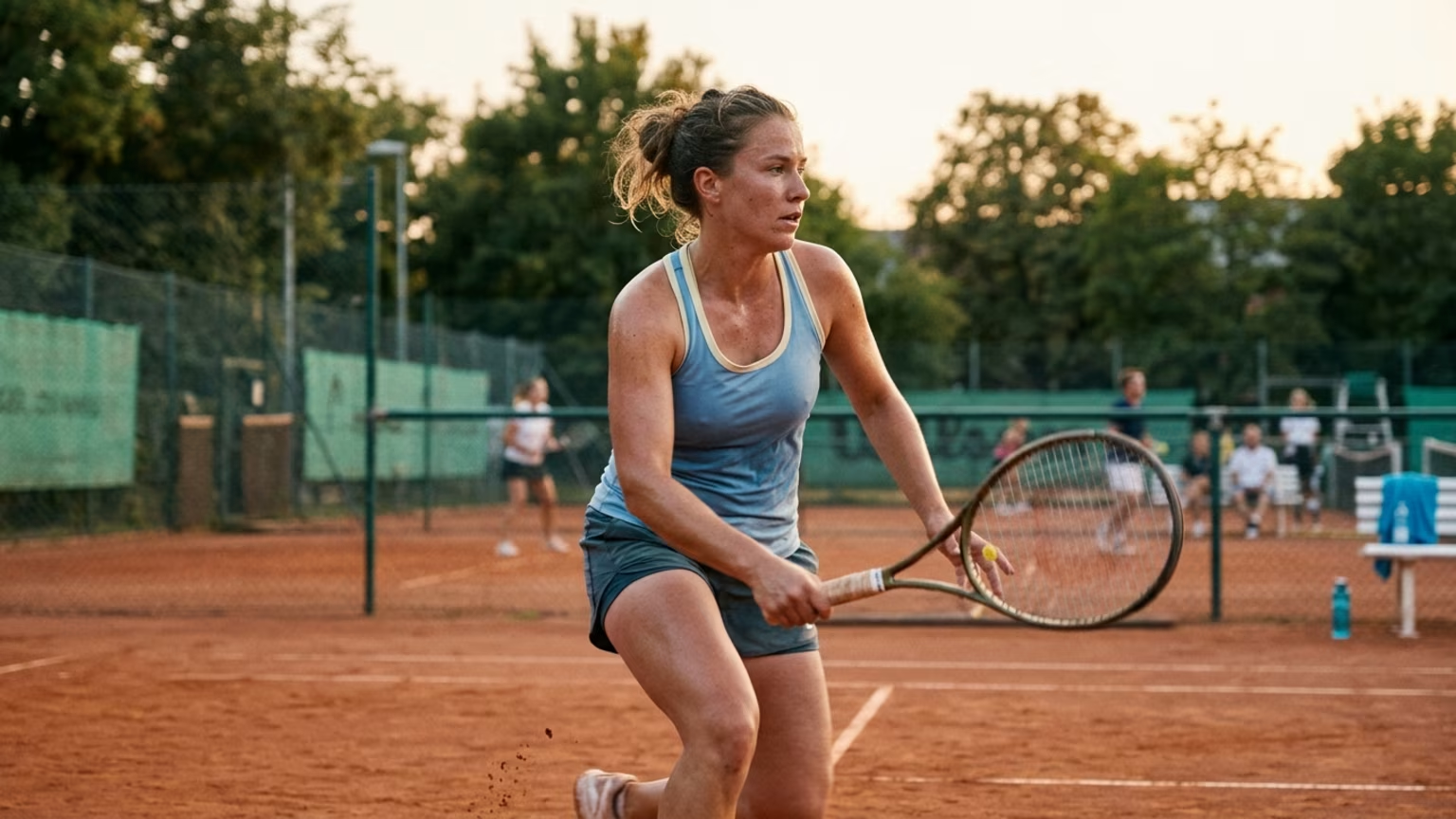

Learn how to structure your tennis, pickleball, and padel tournament schedule to prioritize athletic longevity and avoid burnout across your competitive season.




The high-volume tournament approach looks impressive on paper. Players enter multiple divisions, sign up for singles and doubles, and pack a massive amount of court time into two days. This strategy relies heavily on the idea that more repetition automatically leads to faster improvement. In reality, it often turns the weekend into a mere test of physical survival rather than a useful development experience.
With the rapid rise in racquet sports popularity, tournament draws have grown significantly. The Sports & Fitness Industry Association reported 24.3 million pickleball participants in the United States in 2025. That figure marks an impressive 22.8 percent increase from 2024, bringing a massive surge of new competitors to local courts. As a result, many events now feature massive brackets with very tight match spacing.
Adult players often find themselves playing three or four matches in a single day under this demanding schedule. When players follow this packed model, they regularly outpace their own recovery capabilities. The time between matches is frequently swallowed by cooling down, changing clothes, and rushing to the next assigned court. This leaves virtually no room for adequate hydration, deliberate fueling, or a proper secondary physical warm-up.
Travel elements compound the heavy stress of a high-volume calendar. Driving several hours after work, sleeping in an unfamiliar hotel room, and navigating a busy venue all drain energy. These factors deplete a player before the first competitive ball is ever struck. Players who ignore these hidden costs often step onto the court completely physically compromised.
A paced development schedule treats the competitive season as a multi-year project rather than a frantic sprint. This approach focuses on choosing events based on their developmental value, appropriate opposition, and reasonable match spacing. Players who use a paced schedule prioritize healthy aging and consistent physical readiness over collecting weekend trophies. They leave deliberate gaps in their calendars to allow for technical refinement and full systemic recovery.
A few years ago, I realized my tennis serve speed was dropping, and my shoulder was constantly throbbing after matches. Instead of pushing through the pain, I took a month to rebuild my mechanics and focus on rotator cuff endurance. I stopped trying to hit flat aces and developed a much heavier kick serve.
My win rate actually went up, and my shoulder stopped hurting. Sometimes longevity means outsmarting your own ego on the court. This strategic mindset aligns perfectly with the proven health benefits of lifelong racquet sports participation. A 2018 Danish cohort study followed 8577 residents from 1991 to 2017 to observe physical activity outcomes.
The researchers reported that regular tennis players had an estimated life expectancy nearly 10 years longer than sedentary counterparts. Protecting these incredible long-term benefits means building a smarter tournament calendar that avoids the trap of constant overplaying. Similarly, a 2018 study in the British Journal of Sports Medicine associated racquet-sport participation with a 47 percent lower risk of all-cause mortality. It also noted a 59 percent lower risk of cardiovascular-disease mortality for regular participants.
A paced schedule allows the body to absorb these positive adaptations without crossing the line into chronic overuse. It fundamentally respects the basic physiological limits of adult recreational athletes.
The way a packed schedule impacts your body depends heavily on your chosen sport. Tennis requires highly explosive, sustained efforts across a much larger court area. The official competition rules provide 25 seconds between points, a 90-second changeover, and a 120-second break between sets. However, these brief pauses exist to regulate match flow, not to provide genuine physiological recovery.
A tightly packed tennis schedule will quickly expose any weaknesses in a player's aerobic base or lower body strength. Pickleball presents a different set of physical challenges due to its unique layout and competitive format. The courts are smaller, but the matches are often scheduled back-to-back in rapid succession throughout the day. The Sports & Fitness Industry Association data from 2025 indicates there are 7.48 million core pickleball players competing at least eight times annually.
The same research identifies 16.8 million casual participants playing one to seven times per year. This blend of short intervals and high match volume makes the paced schedule far more advantageous for pickleball players. The rapid transitions from kitchen line dinking to sudden backward lunges put immense pressure on the knees. By managing court workload effectively, pickleball competitors can avoid breaking down on the second day of an event.
Padel requires complex multidirectional movement and a heavy reliance on reading glass rebounds. Rallies in padel are notoriously long, forcing players into deep squats, sudden sprints, and repetitive overhead swings. Playing a high-volume weekend in padel heavily taxes the hips, knees, and lower back over consecutive rounds. A paced approach ensures players maintain the explosive leg drive necessary for effective court positioning.
Across all three racquet sports, players must view their schedule through the lens of individual capacity. A professional can handle consecutive tournament weekends because they have access to dedicated physical therapists and mandated rest blocks. Adult recreational players must build those rest blocks into their own calendars proactively. Skipping this step is the fastest way to turn a healthy hobby into a chronic physical burden.
When evaluating the best path forward, the paced development schedule is the clear winner for athletic longevity. The high-volume weekend may provide a temporary thrill, but it consistently ignores the basic physiological needs of an adult athlete. Stacking matches, ignoring travel fatigue, and skipping recovery windows is a recipe for forced time away from the courts. The evercourts philosophy firmly roots itself in the belief that playing smart is just as important as playing hard.
A well-paced calendar treats recovery as a non-negotiable part of the performance equation. It allows players to arrive at the venue fully prepared, compete with high movement quality, and return to practice without lingering pain. The goal is not just to survive the current season, but to protect your physical capacity for the decades ahead. The true measure of a successful tournament calendar is your ability to step onto the court again next week.
Follow Evercourts for practical insights on tennis, pickleball and padel performance, movement, recovery and healthy ageing. Stay connected for new articles, research-led guidance and ideas to help you play well and keep playing for years.


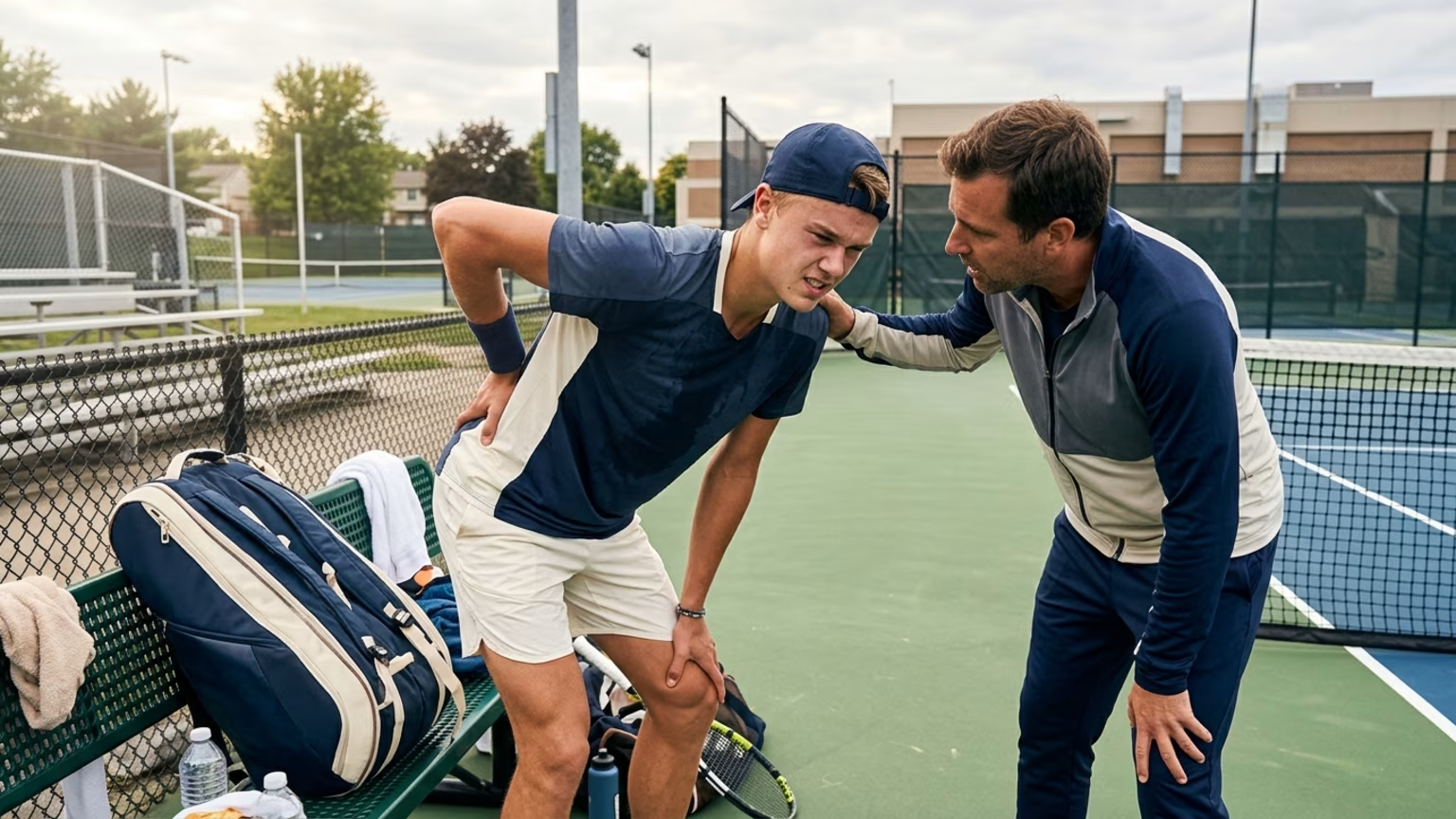
Holger Rune withdrew from the European Open with a back problem. The facts behind his decision and a grounded perspective for recreational players.

The Dink’s October 17 guide emphasizes deep returns, ball-height decisions and positioning against faster pickleball opponents.

A new report outlines padel and tennis gear trends. Learn how to assess adjustable rackets, sensor feedback and smart-court claims.
Read practical guidance for better movement, smarter preparation and a game that keeps working for you.
explore the Blog
