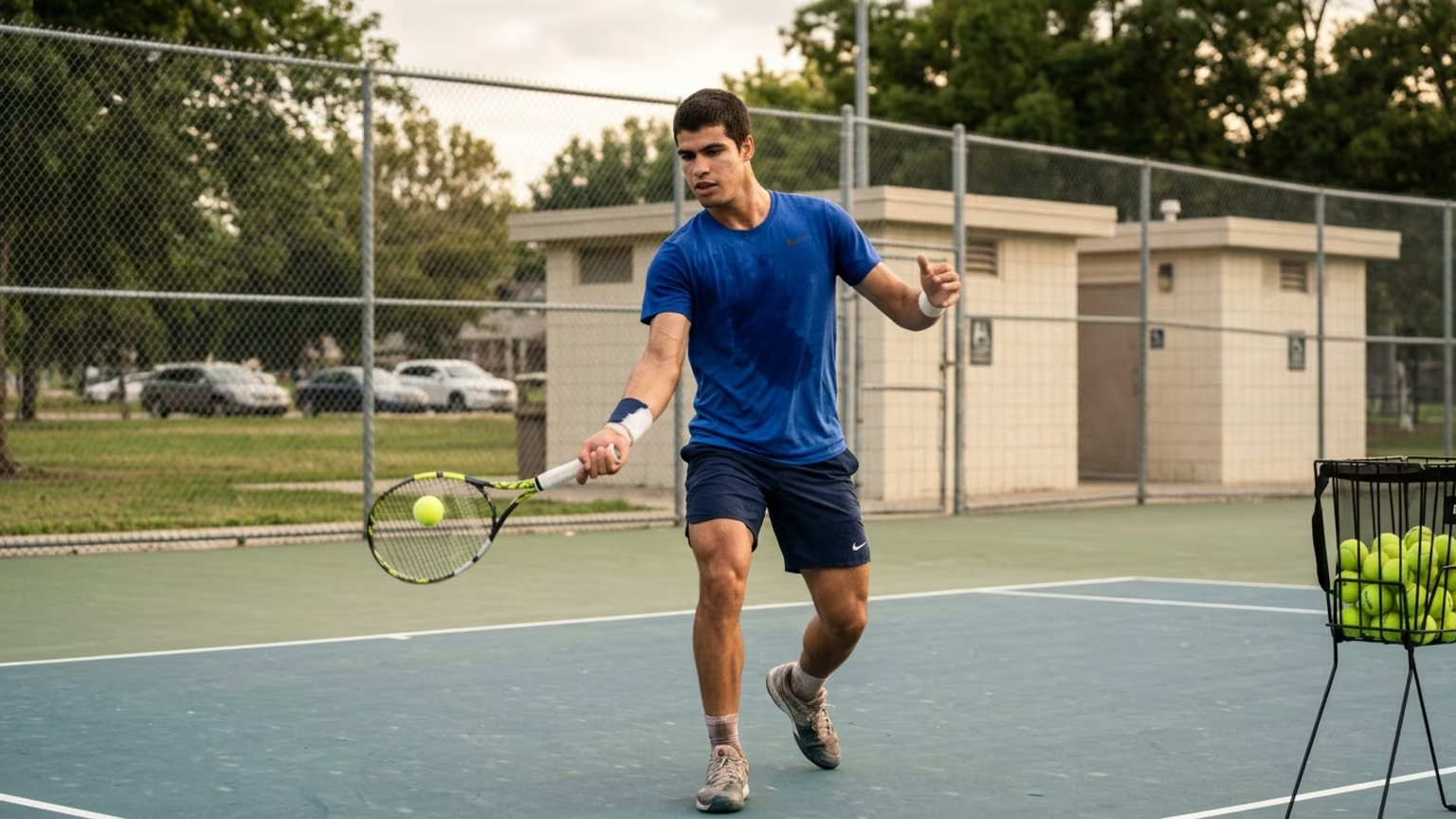

Carlos Alcaraz used a brief hitting session at the 2026 US Open to improve his strokes before bed. We explain how adult players can safely adapt this routine.




Carlos Alcaraz defeated Wu Yibing 6-3, 6-4, 6-1 in the third round of the 2026 US Open and immediately returned to the practice court. This unusual post-match routine generated significant interest from fans and analysts. Alcaraz was playing his fourth competitive match while returning from a right-wrist injury that had kept him out of competition for four months. Despite winning comfortably on the scoreboard, he was dissatisfied with his ball-striking and wanted to correct his technical form before the day ended.
Alcaraz described his return to the practice courts as a brief and low-pressure routine rather than a grueling workout. He told reporters that it is better to go back to the practice court and just hit for five to 10 minutes when a player is unhappy with their strokes. The primary goal of this session was to hit without nervousness or distracting thoughts. By finishing the evening with a cleaner technical session, he aimed to leave the facility with a better feeling in his strokes before going to bed.
Reporting from Punto de Break offered a slightly different timeline regarding the actual practice session. That outlet noted the post-match workout lasted approximately 20 to 30 minutes and focused heavily on refining his forehand. Regardless of the exact duration, Alcaraz connected this routine directly to his subsequent form on the court. He stated that it is really important how you go to bed, framing the activity as a psychological reset. Following this technical tune-up, Alcaraz advanced to the tournament quarterfinals without dropping a single set.
His next match resulted in an impressive 6-4, 6-3, 6-4 victory over Tommy Paul. The official US Open reporting noted that Alcaraz was feeling better after each match and was pleased with his ongoing recovery process. That quarterfinal run brought his overall set record to 12-0 at the grand slam event. While no source independently proves the hitting session directly caused the victory over Paul, the routine highlights how top athletes deliberately integrate mental resets into their schedules.
The elite professional environment allows a player to practice directly after a major match with a dedicated coaching staff. Adult recreational players face a much different and less supportive reality. Amateurs often finish their league matches late in the evening with limited or no access to practice courts. Attempting to add an extra 30 minutes of practice after a grueling match can easily increase overall fatigue. This is especially true for older players or those returning from a long-term wrist injury like the one Alcaraz successfully navigated.
A short hitting session might help settle a frustrated player mentally, but adding unnecessary court time can aggravate joint pain or delay physical repair. I used to think a tough conditioning block was the only way to improve my court endurance. Then I started tracking my sleep. I noticed that on days I slept less than six hours, my reaction time at the net was noticeably sluggish, and I felt gassed by the second set.
Prioritizing consistent rest did more for my late match stamina than any extra sprints ever did. Recovery is the true foundation of performance. If an amateur player chooses to adopt a brief post-match hitting routine, they should limit it strictly to five to 10 minutes of comfortable rallying. Players can choose one specific technical feeling to restore, such as a relaxed point of contact or a smoother forehand finish. Once that physical feeling returns, the hitting session should end immediately.
A frustrated weekend league player should never use post-match court time as a punishment for unforced match errors. The clear intent is to replace the memory of a stressful match with a positive and low-stress technical experience. If you feel depleted, sore, or overstimulated, you should absolutely skip the extra hitting. Proper hydration, optimal nutrition, and consistent sleep hygiene must always take priority over extra practice swings.
Alcaraz specifically mentioned the vital importance of how a player goes to bed after a competitive match. Sports-medicine reviews consistently identify sleep as an essential requirement for optimal physical recovery, adaptation to physical stress, and general athletic performance. Inadequate rest can severely impair physical and mental performance while increasing baseline fatigue. A late-night hitting session that delays bedtime or causes excessive physical soreness could actually undermine these primary recovery goals.
Recent sports science research highlights exactly how damaging poor sleep can be for competitive athletes. A recent athlete-sleep study evaluated the specific physiological costs of accumulating individualized sleep debt. The researchers reported that each additional hour of individualized sleep debt was associated with 15.1 percent lower next-day recovery in their tested sample. The recorded data showed measurable physiological changes alongside that significant drop in general recovery status.
The same study found that each additional hour of sleep debt resulted in a 4.34 percent lower heart-rate variability. It also led directly to a 1.70 percent higher resting heart rate among the participants. These concrete numbers demonstrate that failing to prioritize sleep has a direct and measurable cost on physical court readiness. While analyzing high-level recovery routines is incredibly helpful, recreational players must ensure any post-match activity actively supports their ability to get sufficient rest.
We expect to see more professional and amateur players experimenting with post-match psychological resets in the coming seasons. The traditional view of physical recovery relies heavily on passive treatments, basic stretching routines, and complete physical rest. The specific routine used by Alcaraz points toward an evolving hybrid model where mental clarity and technical confidence are treated as measurable recovery variables. Competitive players will likely begin viewing the final moments of their day as a critical bridge to their next athletic performance.
However, the practical interpretation of these routines will need to become significantly more disciplined. Coaches and sports science professionals will have to clearly separate a calm technical reset from a full and demanding training session. Pushing fatigued players into additional intensive drills simply to correct match errors is a fast path to chronic overuse injuries. The goal moving forward will be finding the precise personal balance between technical satisfaction and optimal physical rest. We anticipate that successful adult players will adopt these short sessions only when they genuinely lower physical tension before bed.
Follow Evercourts for practical insights on tennis, pickleball and padel performance, movement, recovery and healthy ageing. Stay connected for new articles, research-led guidance and ideas to help you play well and keep playing for years.


A practical tournament-day mailbag covering schedules, venue rules, food, fluids and flexible plans for tennis, pickleball and padel.

Understand tennis's strength, power, balance and braking demands, with a cautious framework for off-court preparation and long-term play.
Answers to padel racket questions about weight, balance, shape and grip, with practical trial prompts and guidance on persistent discomfort.
Read practical guidance for better movement, smarter preparation and a game that keeps working for you.
explore the Blog
