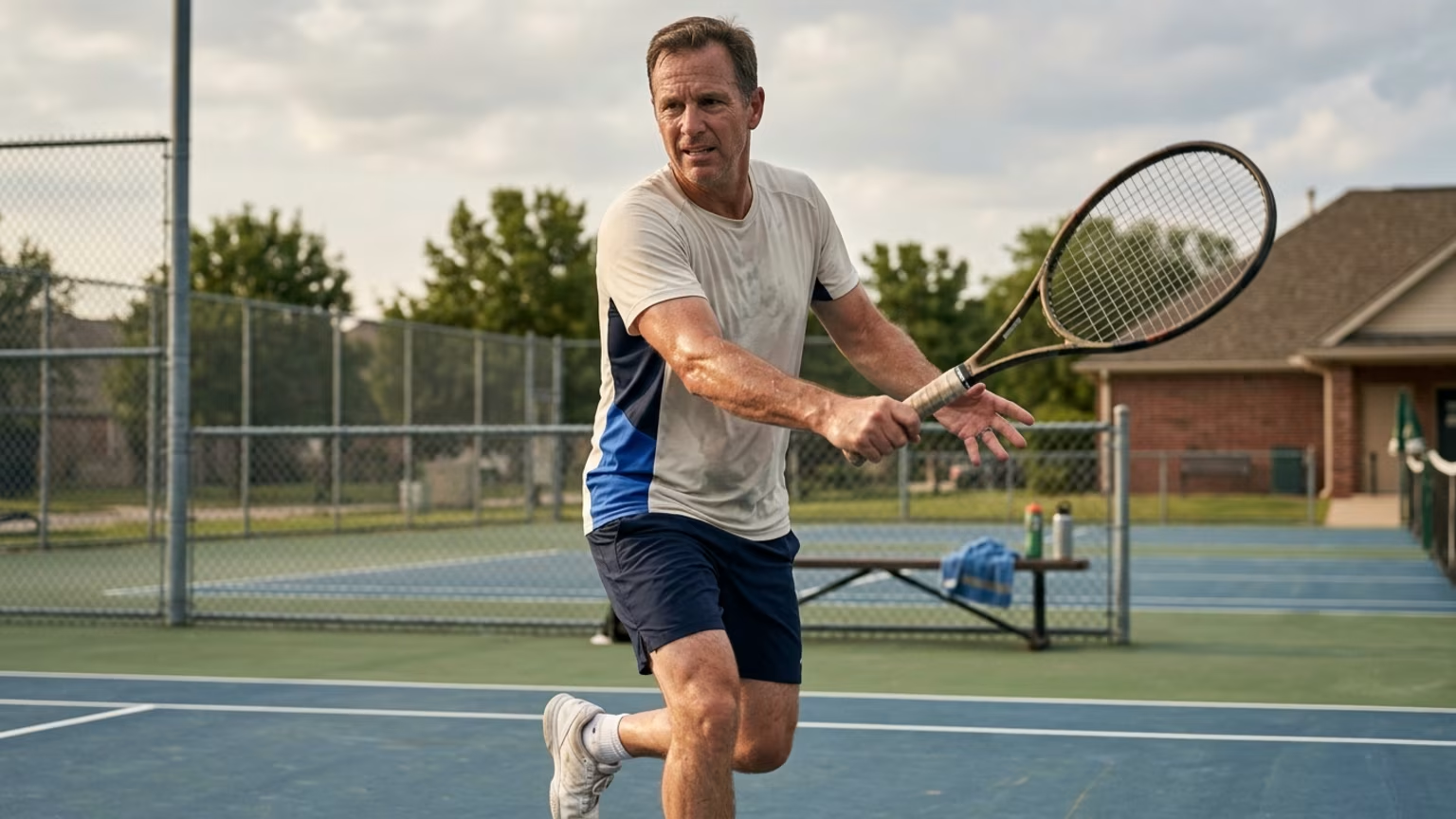

Learn how Roger Federer's focus on neuromuscular agility, consistent sleep, and periodized training supported his athletic longevity on the tennis court.




The morning sun hits the court, but my shoulder is already throbbing. I try to loosen up with a few shadow swings, feeling tight and sluggish. I wonder if I should have spent the winter lifting heavier weights to survive the summer tournament schedule. My opponent, ten years older, glides to the baseline looking entirely effortless.
You have heard it a million times: the secret to playing competitive tennis or padel for decades is building massive muscular strength in the gym. Here is why that is outdated. Raw muscle bulk does not directly translate to the split-second lateral changes needed on the court. True athletic longevity comes from prioritizing neuromuscular coordination, smart seasonal periodization, and dedicated recovery over pure gym numbers.
It is easy to see why players fall into the heavy-lifting trap. When our joints ache after a tough pickleball match, we naturally assume we are too weak. Fitness magazines have spent decades promoting traditional bodybuilding routines as a universal solution for physical vulnerability. We start doing endless heavy bench presses and bicep curls to protect ourselves, which is a completely logical instinct. The problem is that static lifting ignores how we actually move on a court.
A recent article published by the Chinese portal 163.com highlighted how Roger Federer managed these exact demands. Federer announced his retirement in September 2022 and played his final competitive match at the Laver Cup that month. He was highly successful, as ATP Tour statistics list Federer at an 83.5 percent hard-court winning percentage and 71 hard-court titles. The 163.com account emphasizes neuromuscular efficiency and multidirectional agility over muscle size for his conditioning.
Racquet sports demand unique physical qualities that separate them from straightforward endurance running or static heavy lifting. Players must constantly react to the ball, adjusting their footwork in milliseconds. This unpredictable environment is exactly why neuromuscular efficiency must be prioritized above simple muscle hypertrophy.
During a tennis or padel match, the body is forced to decelerate rapidly, rotate powerfully, and change direction instantly. Traditional gym strength does not prepare the nervous system for these sudden, chaotic court demands. A 2026 systematic review and meta-analysis of neuromuscular training in youth and young adult male tennis players found pooled benefits favoring neuromuscular-training interventions for stroke velocity and short-distance sprint performance. While the evidence certainty for those outcomes was low, this type of training better mimics the actual stress of court movement.
It is important to note that the available systematic review focused on youth and young adult male tennis players, not masters athletes or recreational adult racquet-sport players. However, the underlying principles of preparing the body for dynamic movement remain highly relevant for older players. In a female team-sport population, one meta-analysis reported a 35 percent lower overall injury risk with exercise-based neuromuscular prevention programs. Although certainty was low, this highlights why targeted movement practice is gaining popularity. While the population studied was female team-sport athletes rather than tennis players, the physiological logic remains sound. Preparing joints for rapid directional changes is a crucial part of any sensible training plan.
This aligns perfectly with the specific physical routines highlighted in the 163.com report. The exercises described include zigzag cone movements, variable-rhythm jump-rope work, volley drills performed on an unstable surface or mini-trampoline, and resistance-band exercises. The report also highlights lateral lunges and medicine-ball work. Dynamic planks, Russian twists, and Bulgarian split squats were also featured.
The primary article also claims that Federer used cryotherapy, massage, hydration strategies, and other recovery practices. It states that he avoided major injuries before retiring at 41.
Adult players can adapt this concept by building structured training seasons. The 163.com article presents Federer’s reported training as periodized, with different priorities across the year. The reported training model was periodized across the year: cardiovascular conditioning and functional strength during the offseason, power and speed during a transition phase, and injury prevention and recovery during the competitive period. Adult players can safely mimic this by planning lower intensity periods throughout their yearly schedule.
Recreational players should adopt a similar seasonal rhythm to support their own athletic capabilities. A few years ago, I realized my tennis serve speed was dropping, and my shoulder was constantly throbbing after matches. Instead of pushing through the pain, I took a month to rebuild my mechanics and focus on rotator cuff endurance. I stopped trying to hit flat aces and developed a much heavier kick serve.
My win rate actually went up, and my shoulder stopped hurting. Sometimes longevity means outsmarting your own ego on the court. Proper strategic match scheduling is often more valuable than forcing yourself through another grueling gym session. Adding simple strength workouts that focus on balance and mobility is a much smarter investment than chasing heavy lifting records.
Recovery and fueling are equally critical for sustained performance over a long season. Reports about Federer’s routine say he aimed for roughly 10 to 12 hours of sleep per day, including naps. While adult players rarely have time for that much sleep, prioritizing consistent rest is essential. A sports-recovery review links adequate sleep with better reaction time, endurance, concentration, and potentially lower injury risk.
Protecting your nightly sleep schedule is one of the most effective healthy aging resources available for active adults who want to keep playing. Nutrition should remain flexible but provide consistent energy for tough matches. The article describes Federer’s reported pre-match nutrition as a light pasta meal approximately two hours before competition, with bananas and energy bars used during matches. It also lists breakfasts such as homemade waffles or pancakes, fruit purée, orange juice, and apple-cider vinegar.
Dinners centered on fish or chicken and moderate-glycemic-index carbohydrates were also included. The article portrays Federer’s diet as flexible rather than exclusively restrictive. It mentions foods including Swiss chocolate, ice cream, homemade pizza, and fondue. Raclette was also included alongside more conventional sports-fueling choices.
Understanding competition nutrition guidelines can help you stay energized without feeling overly restricted.
The New Golden Rule: Train your nervous system for agility, treat sleep as your primary recovery tool, and scale your intensity based on your actual competitive season.
Instead of just lifting heavier weights, shift your focus to movement quality and consistent sleep. Try adding five minutes of multidirectional cone drills and balance work to your next pre-match warmup.
Follow Evercourts for practical insights on tennis, pickleball and padel performance, movement, recovery and healthy ageing. Stay connected for new articles, research-led guidance and ideas to help you play well and keep playing for years.


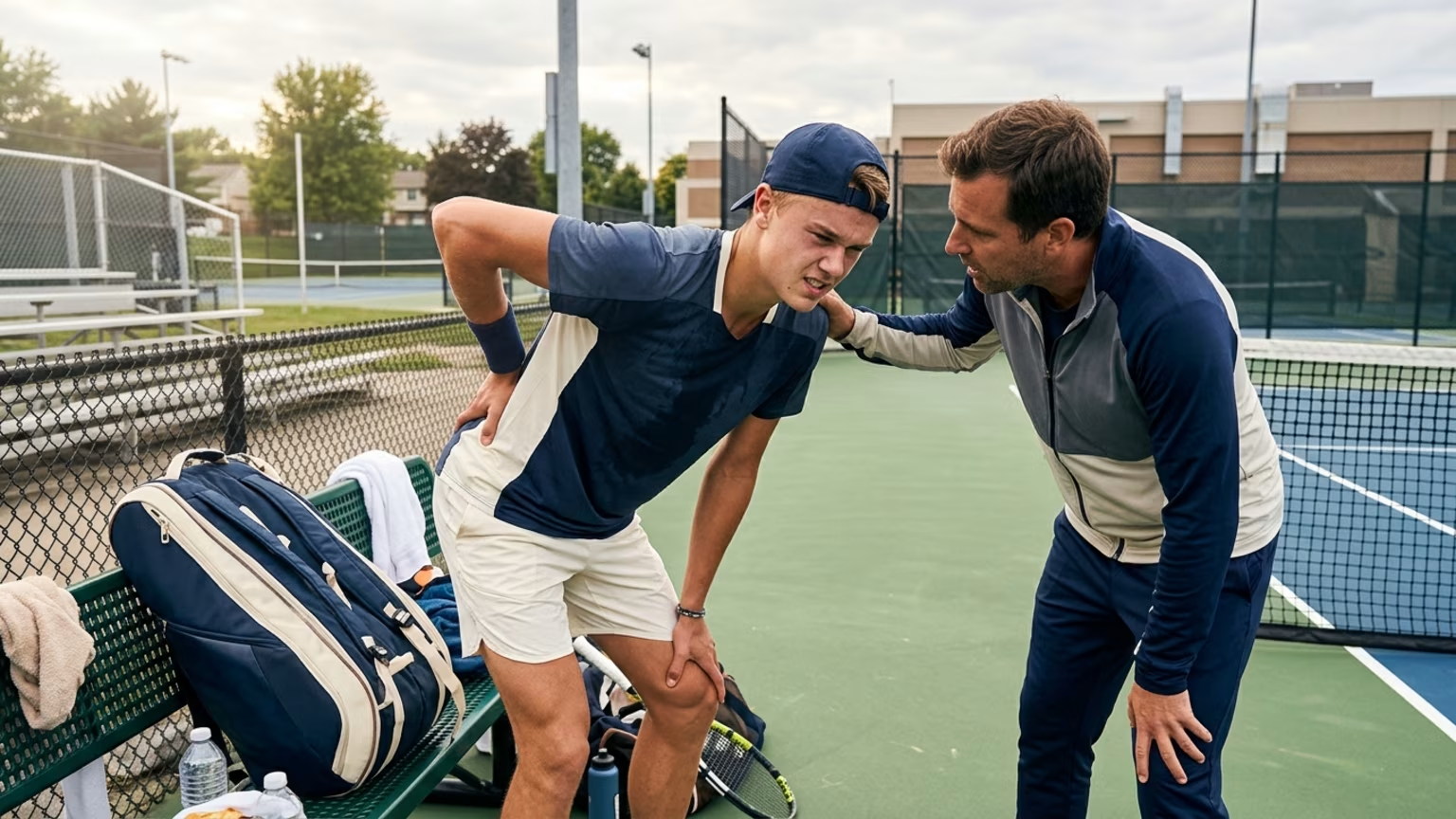
Holger Rune withdrew from the European Open with a back problem. The facts behind his decision and a grounded perspective for recreational players.

The Dink’s October 17 guide emphasizes deep returns, ball-height decisions and positioning against faster pickleball opponents.

A new report outlines padel and tennis gear trends. Learn how to assess adjustable rackets, sensor feedback and smart-court claims.
Read practical guidance for better movement, smarter preparation and a game that keeps working for you.
explore the Blog
