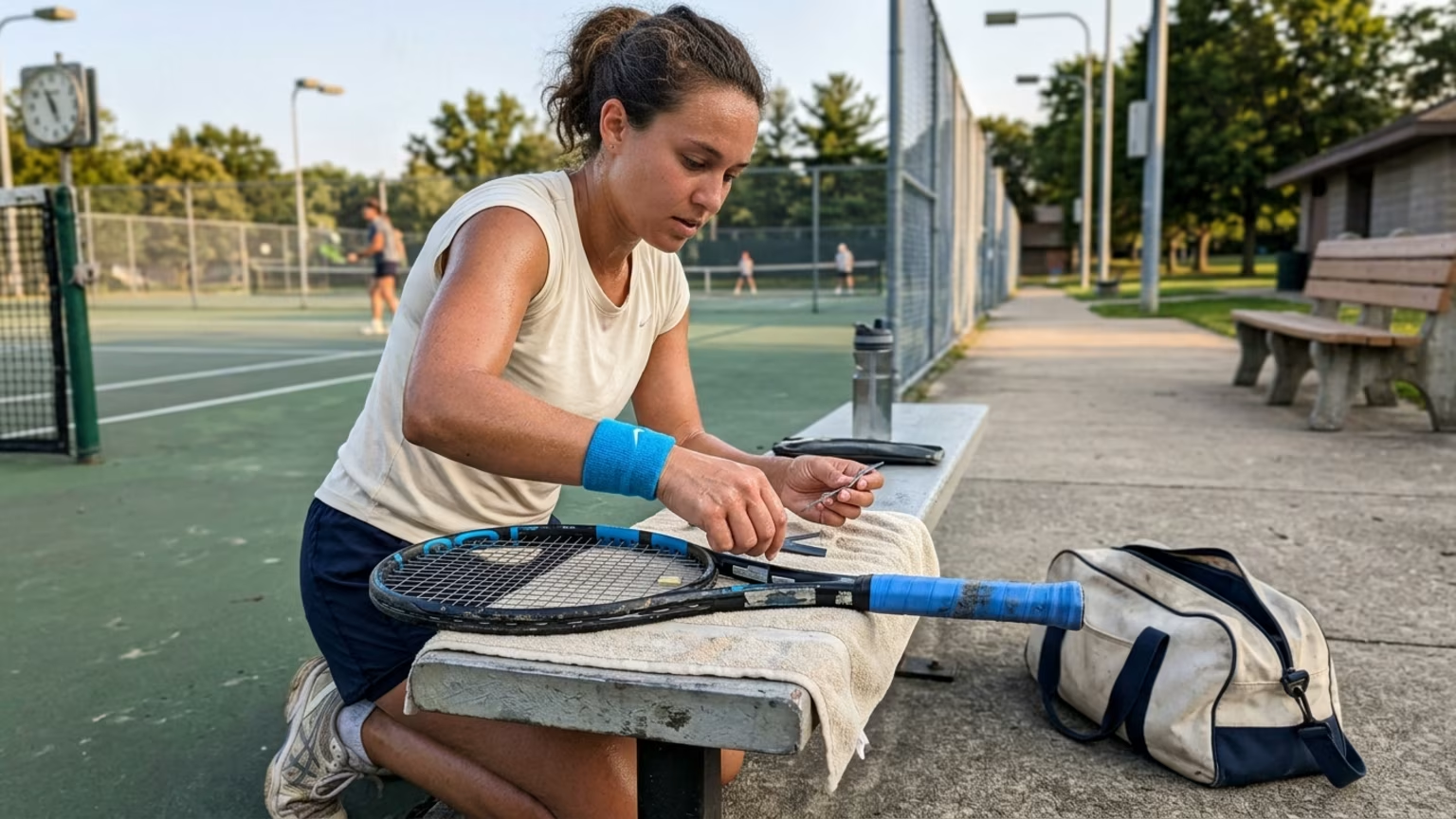

A new guide from ProfileX Tennis outlines how adult recreational players should document and systematically test racquet weight and string tension modifications.




On October 4, 2026, ProfileX Tennis published a new tennis racquet customization guide for players. The publication outlines a highly structured method for adjusting tennis equipment safely and effectively. It advises players to meticulously document setup changes across several specific variables. These variables include racquet weight and frame balance alongside grip size and string tension.
The guide instructs players to step away from making quick judgments based on casual swings. Instead, it strongly advises court players to test any modifications under actual match conditions. Testing under match conditions prevents players from committing to an untested setup during league matches. A racquet that swings comfortably in practice might feel completely different under competitive stress.
The core methodology presented by ProfileX Tennis centers on making modest and measurable equipment adjustments. Players are instructed to start their customization process conservatively by adding just two grams of mass. This additional weight should be applied using matching pieces to both sides of the string bed. Making minimal adjustments allows players to isolate the feeling of the specific change safely.
String tension adjustments follow the exact same philosophy of careful restraint. The guide recommends keeping tension changes modest so players can accurately evaluate the resulting feel. A shift of two pounds is offered as an explicit example of an adjustment that players will notice. By changing one factor at a time, competitors avoid the confusing overlap of multiple equipment variables.
A separate Matcheur article aligns perfectly with this systematic approach to gear modification. The Matcheur piece strongly recommends changing just one variable at a time and comparing play on the identical frame. This prevents players from wrongly attributing a change in performance to a string tension adjustment. It ensures that a different frame was not actually the cause of the new sensation.
The ProfileX Tennis publication explains exactly how these modifications alter the feeling of the frame upon impact. It notes that added mass may improve overall comfort by actively reducing shock and twisting upon ball contact. However, the guide pairs this potential physical benefit with a clear and important warning. An excessively heavy setup can easily strain the shoulder, wrist, or elbow when a player's technique begins to break down.
Professional players frequently alter their racquet specifications to find microscopic competitive advantages on the tour. Adult recreational players need to view customization through a completely different and more practical lens. For weekend competitors, gear adjustments should prioritize athletic longevity and joint health over raw power. Building the stamina to handle heavier gear requires dedicated aerobic conditioning for racquet sports.
Amateur players often lack the perfectly repeatable mechanics of elite athletes. When fatigue sets in during a long match, recreational technique naturally begins to falter. This is precisely when an overly heavy customized racquet becomes a physical liability rather than an asset. Recognizing this physical limit is just as important as maintaining a proper post-match recovery routine.
Recreational players often hope that a simple string tension change will cure chronic arm discomfort. The reality is that gear modifications are merely one small part of a sustainable playing strategy. The Matcheur article notes that equipment suggestions absolutely do not replace professional medical advice. Matcheur specifically advises players experiencing elbow pain to consult a doctor or physiotherapist before attempting racquet changes.
Placing medical advice ahead of equipment changes is crucial when an elbow actively hurts. Players returning from arm problems must treat the addition of mass gradually and carefully. Using a customization guide provides a structured way to test equipment without acting as a clinical intervention. Understanding how to manage persistent discomfort is essential for anyone interested in effective tennis elbow prevention.
At Evercourts, we consistently emphasize that physical capability dictates how well a player handles their equipment. Adult recreational players must honestly assess their movement quality before increasing racquet mass. Adding weight to a frame increases the physical demand placed on the player during every swing. If a player lacks the foundational mobility to execute a full kinetic chain, a heavier racquet will force the arm to absorb the deficit.
This is why a holistic approach to athletic longevity remains critical for all court sports. Players should pair any equipment testing with a strict commitment to maintaining their physical conditioning. A well-documented racquet setup works best when swung by a properly conditioned athlete. Addressing these mechanical requirements ensures that players can continue enjoying their sport for years without unnecessary stiffness.
The most valuable takeaway for the everyday player is the strict discipline of detailed documentation. Keeping a precise written record of your racquet specifications eliminates the guesswork from seasonal gear changes. When players document their setup changes, they can confidently revert to a familiar baseline if discomfort arises. This method provides a structured way to test equipment rather than guessing what went wrong.
This tracking process should extend beyond just the static physical equipment specifications. Players should note how different weights and tensions affect their body during demanding competitive scenarios. A setup that feels powerful during a short warm-up might feel unmanageable by the third set. Players can treat this documentation with the same diligence they apply to their shoulder longevity practices.
The advice from Matcheur to change one variable at a time requires patience that many players lack. It is tempting to change both the string material and the tension simultaneously when searching for more comfort. However, comparing play on the same frame with only a single alteration provides the only accurate data. If a player drops tension and adds weight on the same day, they cannot determine which change worked.
Taking the time to evaluate a two-pound tension drop over several practice sessions yields excellent insights. When applying the recommended two grams of added mass, players should focus on how the racquet moves. The sensation of the swing weight changing is often more noticeable than the static weight increase. While adding mass reduces twisting, it also demands slightly more effort to accelerate the racquet head.
The ProfileX Tennis guide advises explicitly testing changes under match conditions for a very specific reason. Many weekend competitors simply hand their racquet to a stringer, request a generic tension, and head into competition. This haphazard approach strips the player of any useful feedback loop regarding their personal gear preferences. By recording the starting weight and tension, players establish a concrete baseline for all future comparisons.
Recording these observations also helps players communicate more effectively with their local racquet technicians. A stringer can offer far better recommendations when a player provides a history of documented tension changes. This collaborative process removes the mystery from equipment maintenance and puts the player in full control. It transforms the racquet from a static tool into an adaptable piece of performance equipment.
The upcoming racquet sports season will likely see a shift toward more methodical equipment management among amateur players. Instead of buying entirely new frames to fix underlying technique issues, smart competitors will document isolated changes. This deliberate approach allows players to assess exactly how distinct modifications affect their fatigue levels. By treating racquet tuning as an ongoing measurement process, players will better understand their unique physical limits.
Follow Evercourts for practical insights on tennis, pickleball and padel performance, movement, recovery and healthy ageing. Stay connected for new articles, research-led guidance and ideas to help you play well and keep playing for years.


Sheffield Pickleball Club launches free Friday sessions to counter rising local court costs. Learn how subsidized access impacts adult racket sports players.

A recent live-play test of a silent pickleball highlights its value for practice, but standard balls still perform better for match play and power control.

An evidence check on sports supplements like tart cherry juice. Learn why racquet sports players should prioritize core nutrition over functional foods.
Read practical guidance for better movement, smarter preparation and a game that keeps working for you.
explore the Blog
