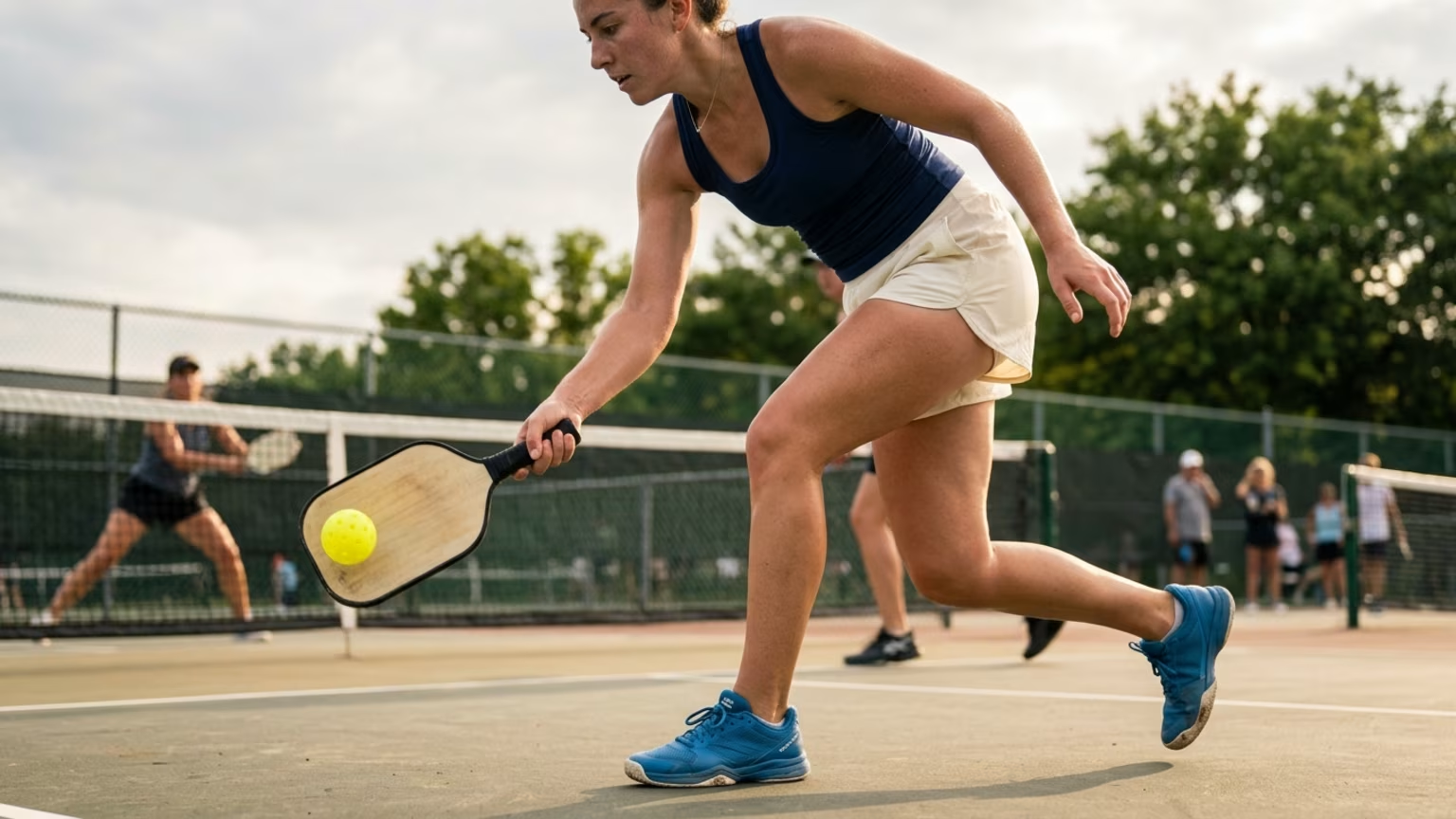

Learn how to evaluate dedicated racquet sports footwear for healthy aging and injury prevention, featuring insights from 361 Degrees' Match Point launch.




You have just finished a brutal three-setter and your knees are barking as you untie your worn running shoes.
The goal of this protocol is selecting the right footwear to support healthy aging and athletic longevity on the court. Sportswear companies are noticing the massive demand for racquet sports equipment. Pickleball’s participation base in the United States reached an estimated 24.3 million players in 2025, up 22.8% from the previous year, according to figures attributed to the Sports & Fitness Industry Association. The reported U.S. player count increased from 4.2 million in 2020 to 24.3 million in 2025. This expanding market means adult players now have access to more specialized, purpose-built footwear options.
Chinese sports brand 361 Degrees recently demonstrated the commercial value of this equipment demand in its unaudited results for the six months ended June 30, 2026. The company reported first-half revenue of RMB6.1598 billion, with profit attributable to equity holders rising 8.0% year over year to RMB925.9 million. Footwear remained 361 Degrees’ largest product category, generating RMB3.5174 billion in first-half revenue, up 7.0% year over year and representing 57.1% of total group revenue. The board declared an interim dividend of HK$0.222 per ordinary share, representing a 45% payout ratio. The company noted that its e-commerce business was responding to emerging consumer trends in tennis, badminton, and pickleball.
As part of this expansion, 361 Degrees announced the launch of the "Match Point" professional pickleball shoes. The brand also introduced the "Wenqing" all-round hard-court tennis shoes. For adult players, seeing established sportswear companies treat racquet sports as a distinct product opportunity is encouraging. However, players must evaluate these new products critically to protect their joints. This protocol outlines how to assess specialized footwear and implement practical habits for long-term court performance.
Understanding common court injuries helps players prioritize specific footwear features. A 2026 peer-reviewed study available through PubMed Central reported that lower-extremity injuries represented 44.0% of pickleball-related injuries in its analysis. The knee accounted for 21.4% of these injuries. The ankle or foot accounted for 15.8% of the recorded cases in the study.
These figures show exactly why movement mechanics and court shoes are relevant issues for adult players. Generic running shoes are designed for forward motion, and they often lack lateral stability. Dedicated court footwear directly addresses lower-limb joint protection by providing a secure heel and a stable platform. However, players should avoid assuming that any single shoe model automatically prevents injuries on its own.
When evaluating a new release like the Match Point, players should look for independently verifiable specifications. The 361 Degrees announcement describes the Match Point strictly as a professional pickleball shoe. It does not provide specific technical specifications, testing results, or independent proof of injury reduction. Players must look beyond the professional label when choosing equipment.
Crucial details for racquet sports include the outsole compound, tread pattern, and heel-to-toe drop. Players should also examine the cushioning materials and torsional rigidity. The source explicitly describes the Wenqing model as an all-round hard-court tennis shoe. It does not state that the Match Point was designed specifically for hard courts. Always confirm court-surface recommendations before making a purchase.
New footwear is only one part of a comprehensive approach to court health and injury prevention. When I first started playing pickleball, I noticed how many people skipped warming up entirely. They would jump straight out of their cars and right up to the kitchen line. I tried doing that and immediately pulled a calf muscle.
Pickleball requires just as much explosive lateral movement as tennis, just in a tighter space. Since then, I always spend five minutes doing dynamic lunges and ankle rolls. It changes everything about how confident I feel pushing off the baseline. Combining a stable court shoe with proper dynamic warm-ups for injury prevention is the best way to maintain physical capability over time.
Players switching from running shoes to dedicated court shoes should make the change gradually. Monitor your feet for blistering, arch symptoms, or Achilles irritation during the first few sessions. Court shoes are generally heavier and stiffer than generic running shoes. Your lower legs will need time to adapt to this new structural support.
If you experience persistent knee pain or recurrent ankle instability, seek individualized advice from a qualified clinician. Footwear is a helpful tool, but it is not a substitute for professional medical assessment. Incorporating progressive conditioning and lower-limb training will further support your physical transition.
Even the most advanced professional footwear cannot overcome poorly maintained playing surfaces. Before beginning a match, players should walk the baseline and check for accumulated dust or moisture. Hard courts can become incredibly slick when covered in light debris or pollen. Recognizing these environmental hazards allows you to adjust your movement patterns and avoid sudden slips.
Players must ensure their shoe tread is not excessively worn down. A dedicated court shoe loses its gripping capability once the outsole compound smooths out under the ball of the foot. Inspect your outsoles monthly, and replace your shoes when the tread pattern becomes shallow. Maintaining adequate traction is a fundamental component of protecting your knees and ankles from unexpected rotational forces.
This footwear protocol requires adjustments depending on your primary racquet sport. The biomechanical demands and playing surfaces dictate what type of shoe you actually need. Choosing the wrong traction pattern can increase your risk of slipping or jarring your joints. You must match your footwear to your chosen discipline.
Tennis requires extensive baseline coverage and heavy lateral braking on abrasive hard courts. Shoes built for this sport prioritize extreme outsole durability and medial drag protection. Models like the Wenqing hard-court shoe are typically constructed to handle these harsh friction levels. Players who prefer economical movement patterns still need robust lateral support for sudden changes in direction.
Pickleball involves rapid weight transfers, frequent stopping, and short bursts of movement near the kitchen line. The court space is tighter, meaning players change direction constantly. A proper pickleball shoe must offer exceptional torsional rigidity to prevent the foot from rolling. While established sportswear brands are releasing more specialized products, players must verify the traction handles outdoor hard courts effectively.
Padel is played on artificial turf that is often dressed with sand. This unique surface requires a very specific outsole grip to allow controlled sliding while preventing dangerous slips. Tennis or pickleball shoes designed for hard courts will not provide adequate traction on a padel court. If you are cross-training across racquet sports, you will likely need separate footwear for padel.
Follow Evercourts for practical insights on tennis, pickleball and padel performance, movement, recovery and healthy ageing. Stay connected for new articles, research-led guidance and ideas to help you play well and keep playing for years.


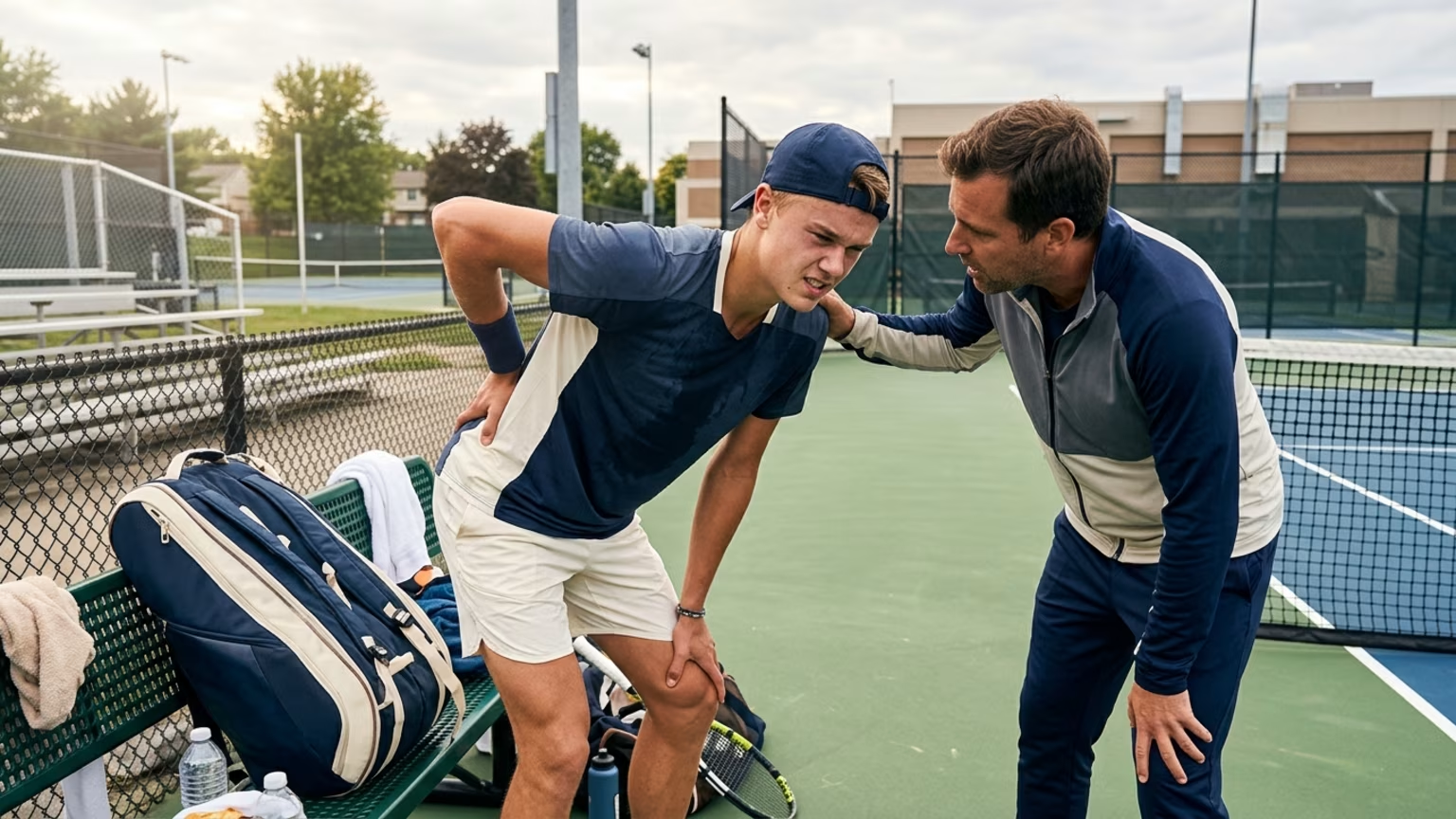
Holger Rune withdrew from the European Open with a back problem. The facts behind his decision and a grounded perspective for recreational players.

The Dink’s October 17 guide emphasizes deep returns, ball-height decisions and positioning against faster pickleball opponents.

A new report outlines padel and tennis gear trends. Learn how to assess adjustable rackets, sensor feedback and smart-court claims.
Read practical guidance for better movement, smarter preparation and a game that keeps working for you.
explore the Blog
