

An adaptable court warm-up example that progresses from easy movement to lunges, lateral footwork and hitting, with the evidence kept in perspective.




This routine addresses a practical gap: getting from standing at the baseline to rehearsing the footwork and hitting of play. It offers a repeatable progression through easy movement, court-like loading and increasingly game-like hitting.
For an active or aging player, the goal is usable movement rather than a demanding workout before a match. The routine gives walking or jogging a place alongside lateral footwork, balance and swings. The intended outcome is preparation for play, not a claim that a short warm-up delivers athletic longevity on its own.
That distinction fits Evercourts' focus on maintaining the capabilities that support continued court participation. Keep the question practical: does the preparation work toward the movements you are about to use?
A 2026 scoping review mapped 964 warm-up studies, including 20 classified as tennis studies. Most research examined short-term measures such as jumping, sprinting or change of direction rather than competition outcomes. Only 34 records included an injury-related outcome or proxy.
The review also found that 384 records (39.8%) did not report warm-up duration or specified it inadequately. Reporting gaps extended to exercise selection, intensity, progression and sequencing.
The authors describe a research map rather than a judgment of effectiveness and did not formally assess study bias. Limited injury tracking does not show that warm-ups fail to prevent injury. The Dink's routine is a published recommendation, not proof of superiority to baseline stretching.
Neither source establishes a universal duration for older players or compares the biomechanical demands of tennis, pickleball and padel. The sport and space adjustments below are editorial translations of the routine, not separate tested protocols. Use the sequence as a readiness framework rather than proven injury prevention. Pain or a recent injury calls for individualized guidance from a qualified healthcare professional rather than a warm-up adjustment alone.
The Dink's example follows a simple order: move for two minutes, load for three minutes, then play for three minutes. The stages below retain that order and its listed movements. Pace and movement range remain adaptable to how the player feels that day.
A repeatable order need not mean an identical session. A day that calls for smaller movements can still follow the same progression toward play. That flexibility is the useful part of this example: change the way the movements are performed without replacing the entire routine.
The opening stage uses walking or jogging with arm circles and leg swings. These are the source routine's ways of beginning with easy movement before adding court-style demands.
The practical emphasis is on starting comfortably rather than rushing through a list. Where space is limited, movements can stay small and controlled. Where room allows, walking or jogging can cover more ground.
The next stage introduces walking lunges, lateral shuffles, split-step hops and one-leg balance. This is the part of the sequence that makes room for reaching and side-to-side footwork as well as balance.
Here, loading means the lunge, shuffle, hop and balance work in the published routine. The practical distinction is between beginning with easy movement and adding tasks that resemble court footwork.
Short lateral shuffles are an option when space allows. In tighter surroundings, keep movement small and controlled rather than trying to cover unavailable court space. Scale pace and range to the day instead of making every lunge or shuffle an effort test.
The final stage introduces easy hitting that becomes progressively more game-like. The point is to connect preparation with paddle-and-ball or racquet-and-ball play rather than finish the warm-up with unrelated exercise.
Keep the earlier movement in view as hitting becomes the focus. An easy rally belongs at the end of this progression, not in place of its footwork and balance portions.
Evercourts' broader guide to warm-up progression gives this sequence a wider court-preparation context.
Keep the movement-to-loading-to-play structure while making the hitting stage relevant to the court ahead. The useful distinction here is what you rehearse with the ball rather than a different timetable for each sport.
For tennis, make easy racquet-and-ball hitting the bridge from footwork to swings. Retain lateral shuffles and lunges from the shared sequence rather than treating stroke practice as the entire warm-up. Let the hitting become more representative of the tennis you expect to play.
The same transition is the focus of Evercourts' tennis-specific approach to building toward play.
Pickleball is the sport for which The Dink published the original sequence. Keep its paddle-and-ball progression alongside the listed footwork and balance work. Adjusting the pace or using smaller movements preserves the structure without requiring the same execution on every playing day.
For padel, use easy racquet-and-ball hitting to bring swings and rotation into the final stage. Keep the earlier lateral movement and lunges in the sequence. Where preparation space is limited, small controlled movement remains the practical adjustment.
Evercourts' padel-focused preparation guide provides another sport-specific editorial reference.
Follow Evercourts for practical insights on tennis, pickleball and padel performance, movement, recovery and healthy ageing. Stay connected for new articles, research-led guidance and ideas to help you play well and keep playing for years.


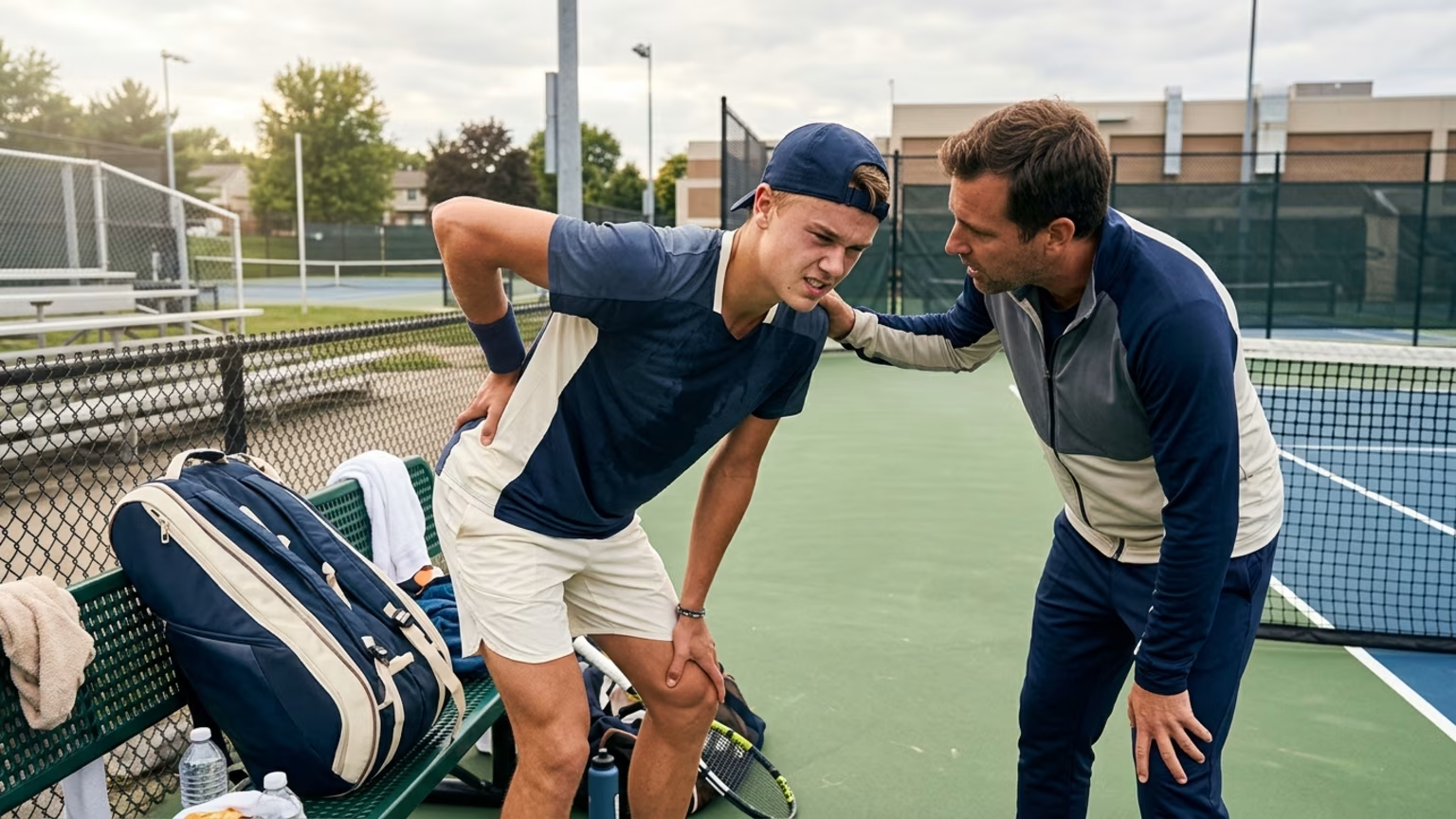
Holger Rune withdrew from the European Open with a back problem. The facts behind his decision and a grounded perspective for recreational players.

The Dink’s October 17 guide emphasizes deep returns, ball-height decisions and positioning against faster pickleball opponents.

A new report outlines padel and tennis gear trends. Learn how to assess adjustable rackets, sensor feedback and smart-court claims.
Read practical guidance for better movement, smarter preparation and a game that keeps working for you.
explore the Blog
