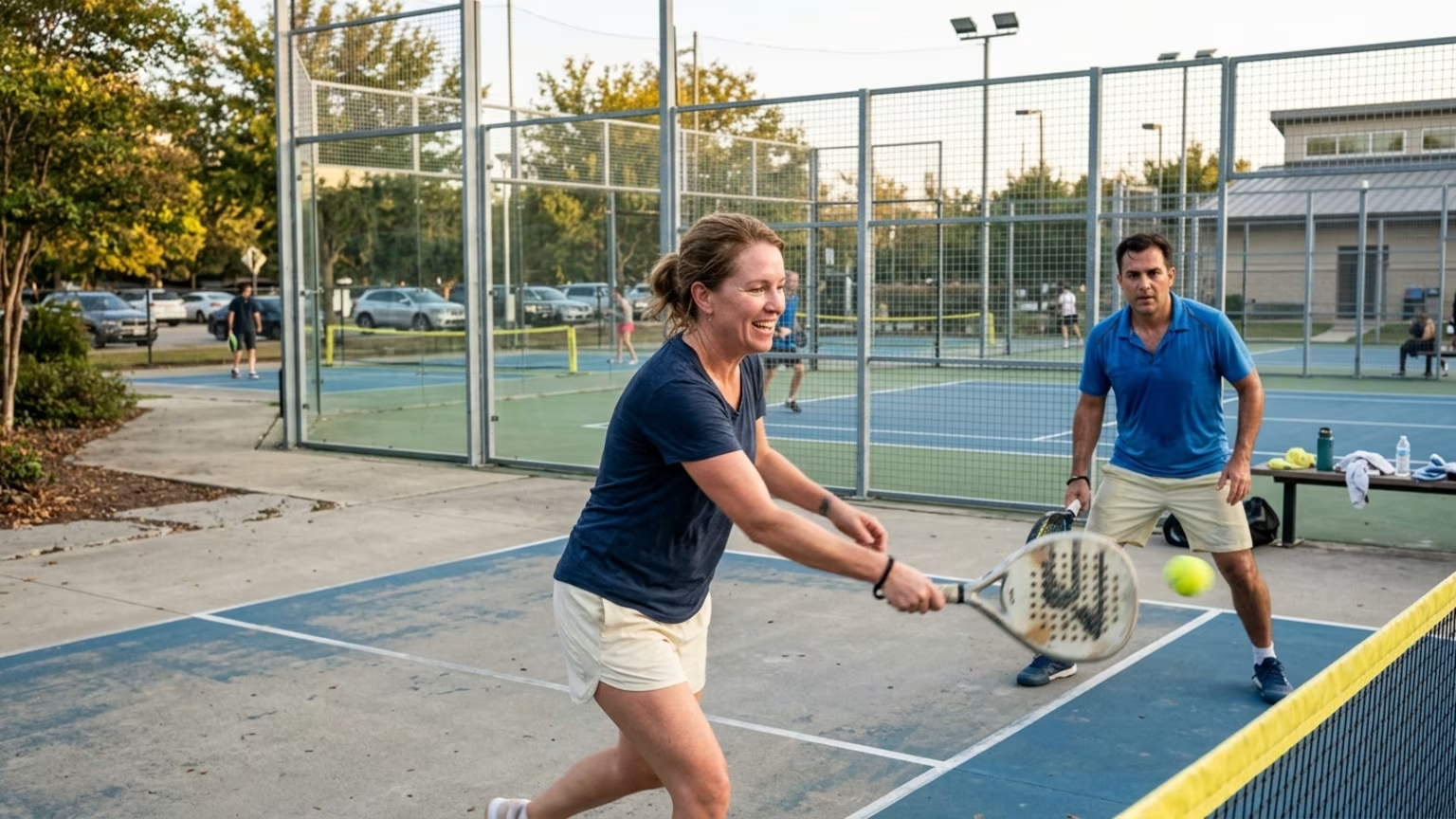

Prepare your body for the first point with a practical, 10-minute padel warm-up routine designed for healthy aging, movement readiness, and joint health.




The booking clock ticks down the moment players walk through the club doors. Four friends drop their bags beside the glass walls of the padel court. They grab their rackets, step onto the turf, and immediately start hitting aggressive overheads. Within three minutes, the first competitive point begins.
You have heard it a million times: warming up just means hitting balls back and forth for five minutes. Here is why that is outdated. Padel demands rapid lateral movement, sudden split steps, and explosive changes of direction. Striking a ball prepares your hand-eye coordination, but it does little to prepare your joints for abrupt stops.
A padel-focused clinical guide recommends progressing from easy whole-body movement to mobility, lateral steps, split-step practice, and easy court drills. Hitting balls at full speed right away ignores the physical demands of the first point. We need a routine that actually supports athletic longevity. Relying solely on ball striking is a flawed approach.
This includes whole-body movement, hip preparation, lateral steps, and split-step work. You should complete these essential steps before initiating hard points. Proper preparation gives your body the best chance to perform well from the very first serve. Players who prioritize movement quality consistently feel better on the court.
When I first started playing pickleball, I noticed how many people skipped warming up entirely. They would jump straight out of their cars and right up to the kitchen line. I tried doing that and immediately pulled a calf muscle.
Pickleball requires just as much explosive lateral movement as tennis, just in a tighter space. Since then, I always spend five minutes doing dynamic lunges and ankle rolls. It changes everything about how confident I feel pushing off the baseline. This same exact logic applies to padel.
Recreational players have busy schedules and limited court time. When you only have one hour booked, spending ten minutes on preparation feels like wasted play. Most of us learned court sports by simply walking on and starting a match. That casual approach made sense when we were younger and our bodies adapted easily to sudden strain.
Today, jumping straight into a competitive game is a fast track to stiffness and discomfort. The desire to maximize value per minute actually limits our ability to move freely later in the match. We must shift our mindset toward longevity.
The sport involves repetitive deceleration, controlled landings, and sudden lateral shifts. A 2026 study of amateur padel players in Saudi Arabia reported relatively common ankle sprains, persistent symptoms, and recurrent instability. These issues often appear when we demand peak performance from unprepared joints. Short return-to-play periods frequently leave players dealing with lingering discomfort.
In one 2026 study, players who reported always warming up had higher FADI scores than those who never warmed up. The FADI is the Foot and Ankle Disability Index. While practitioner commentary cautions that warm-up benefits should be matched to the injury mechanism and the player population, the correlation is hard to ignore. A 2023 article indexed by the University of Murcia describes a systematic review of padel research covering 71 to 105 pages in the Padel Scientific Journal.
This growing body of evidence indicates that the sport has a developing research base. Proper preparation matches the movement vocabulary of the sport before competitive intensity peaks. Moving laterally requires distinct essential footwork skills that must be consciously rehearsed. An active approach helps bridge the gap between resting state and competitive demands.
Adult recreational players need a practical routine that transitions from general temperature-raising to sport-specific movement. The goal is to prepare for the first point without becoming exhausted. This sequence offers a clear progression that players can easily adopt. Arrive early enough to move before the first competitive point, rather than treating the opening games as the warm-up.
Walk briskly around the court, then progress to an easy jog. Add relaxed arm swings and gentle trunk rotation. Keep the effort conversational. The objective is to become warmer, not fatigued.
Practice ankle rolls, calf raises, and gentle knee bends. Add lateral steps and backward steps at low speed. Avoid holding long static stretches immediately before explosive play. The goal is to prepare for movement rather than improve flexibility.
Perform low-amplitude side shuffles, forward-and-back steps, and controlled deceleration. Include short, comfortable changes of direction. Emphasize quiet landings, stable knees, and maintaining balance after each movement. This is particularly relevant for adults managing previous ankle or knee symptoms.
Rehearse a small split-step followed by a two-step movement to the forehand and backhand sides. Add controlled hip and trunk rotation without swinging hard. Practice recovering to a balanced ready position after each movement. This sequence directly mimics match conditions while keeping the intensity appropriately low.
Begin with gentle volleys and half-speed groundstrokes. Progress to relaxed overhead preparation, focusing on shoulder rotation, foot positioning, and recovery. Finish with easy cooperative points or feeds before starting competitive play. This is consistent with the recommendation to use easy court drills before hard points.
For a social session, players can use a five- to six-minute version. Spend one minute briskly walking, two minutes on ankle and hip preparation, and one minute on split-step practice. Finish with two minutes of gentle volleys and overhead preparation. This acts as a repeatable routine to prepare your body when you are short on time.
For competitive matches, expand the routine to 12 or 15 minutes. Add gradual jogging, repeated submaximal accelerations, and controlled overheads before full-speed smashes. A brief rehearsal of your first-point patterns can include your serve, return, net approach, and recovery. A player who starts with maximal smashes may be practicing demanding actions before being physically prepared.
Players with pain or instability need to modify their approach. Padel knee guidance recommends reducing movements that provoke symptoms, maintaining comfortable activity, and rebuilding strength before full matches. A cold player arriving from a sedentary day, an older player with ankle instability, and a highly trained competitor may require different durations. Treat recurring pain, swelling, or reduced range of motion as reasons to seek individualized physiotherapy advice.
The New Golden Rule: Court preparation is about rehearsing movement before rehearsing ball strikes. Healthy aging requires a consistent commitment to physical readiness. The warm-up helps players prepare for today’s movements. Strength, balance, recovery, and sensible load progression help preserve the ability to keep playing for years.
Healthy aging guidance favors a combination of aerobic activity, strength training, and balance-focused exercise. Relying on one activity alone is insufficient for long-term racquet-sport participation. Your pre-match routine should be positioned as one part of a broader physical-capacity plan. A warm-up cannot compensate for excessive training-load increases.
WHO recommends weekly aerobic activity alongside strength training at least twice weekly for older adults. For older adults, WHO also emphasizes regular multicomponent activity involving balance and strength. Combine this on-court routine with a comprehensive post-match recovery plan to maintain your baseline health. Evercourts remains committed to helping players perform better and enjoy racquet sports for years to come.
Follow Evercourts for practical insights on tennis, pickleball and padel performance, movement, recovery and healthy ageing. Stay connected for new articles, research-led guidance and ideas to help you play well and keep playing for years.


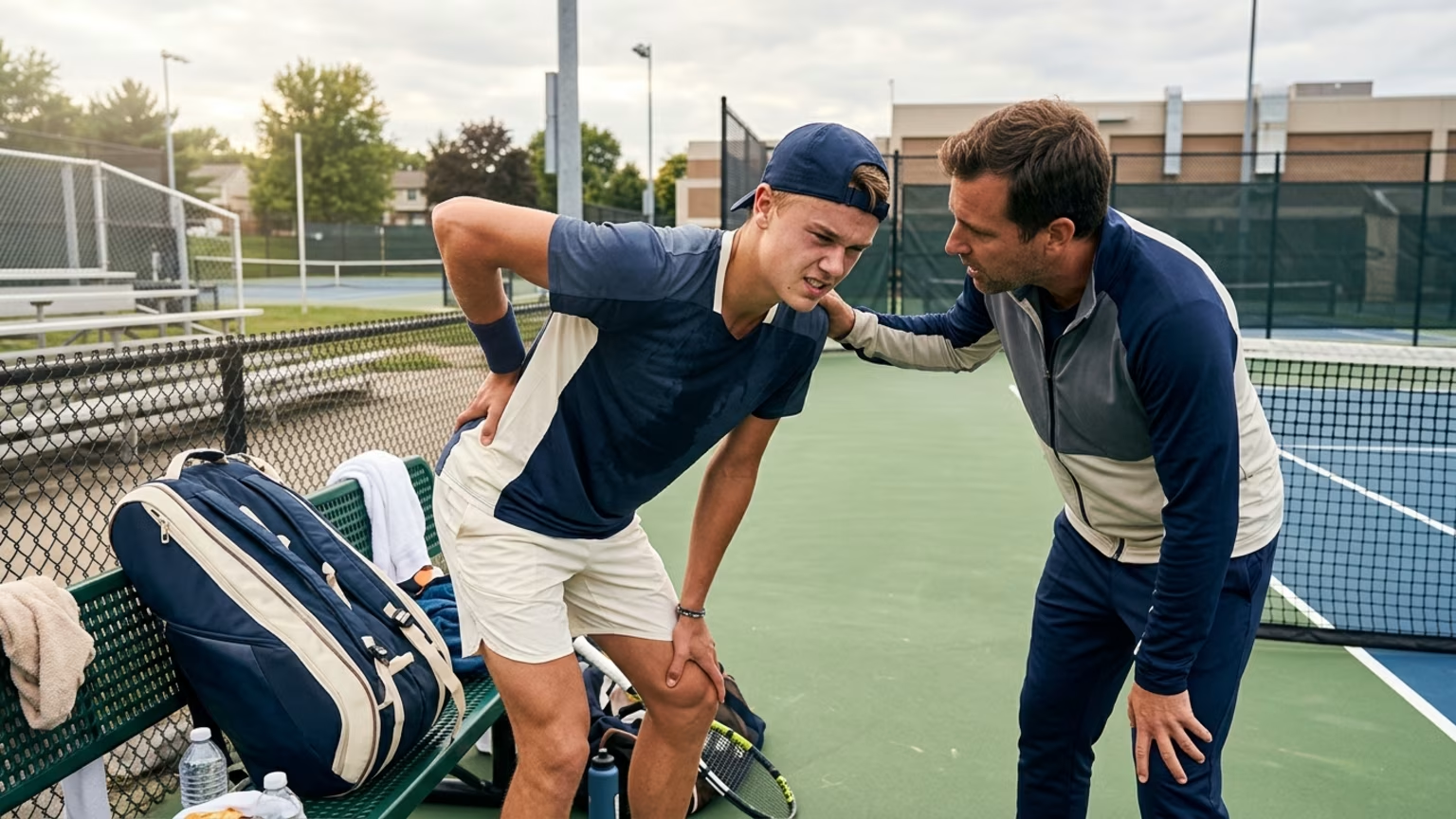
Holger Rune withdrew from the European Open with a back problem. The facts behind his decision and a grounded perspective for recreational players.

The Dink’s October 17 guide emphasizes deep returns, ball-height decisions and positioning against faster pickleball opponents.

A new report outlines padel and tennis gear trends. Learn how to assess adjustable rackets, sensor feedback and smart-court claims.
Read practical guidance for better movement, smarter preparation and a game that keeps working for you.
explore the Blog
