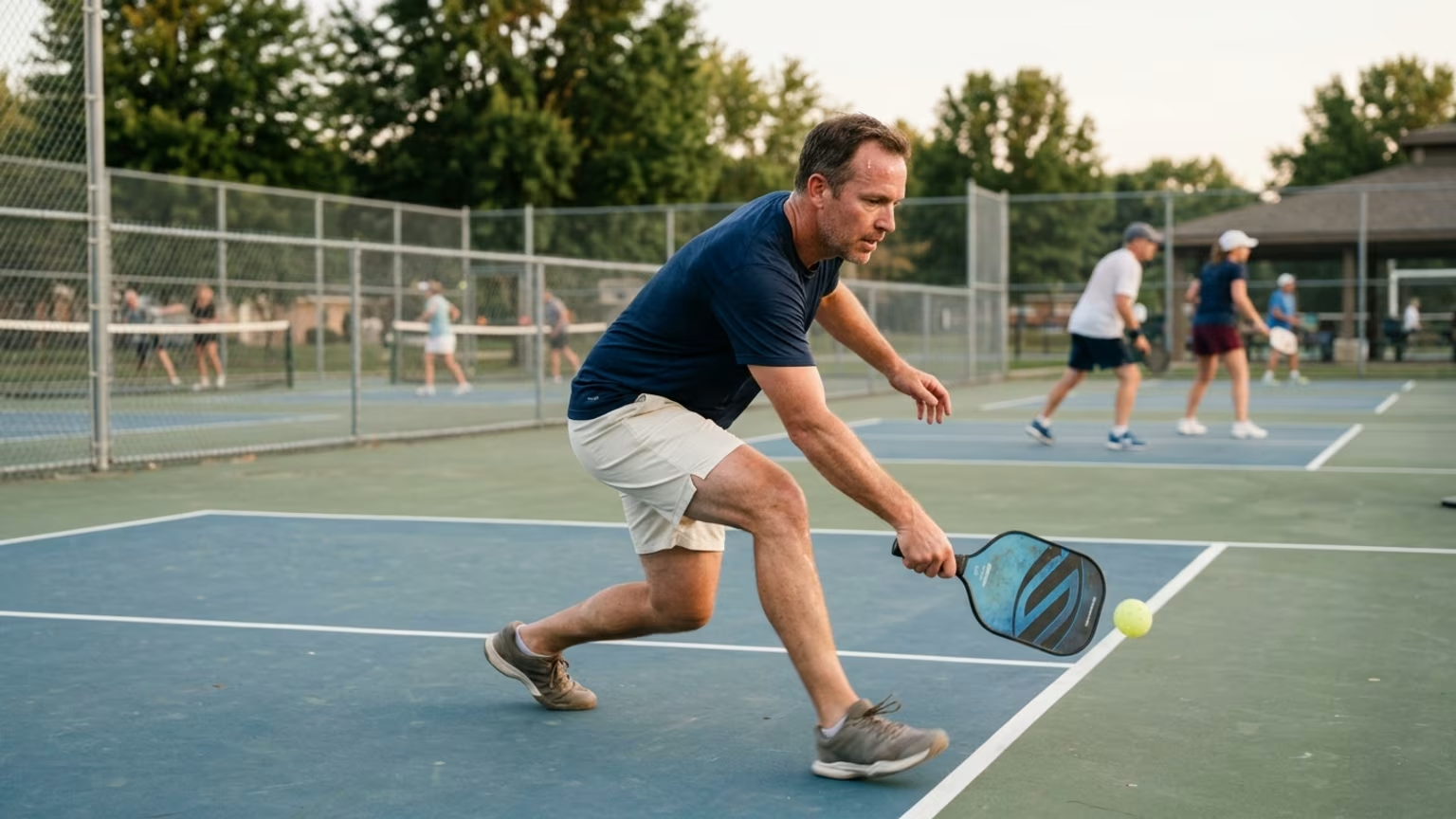

Learn how to defend the around-the-post (ATP) shot in pickleball safely. Master early anticipation, grounded footwork, and smart court positioning.




Most players believe defending the around-the-post shot requires highlight-reel speed and risky desperation lunges. The reality is that consistent defense relies on early angle recognition and controlled footwork rather than raw sprinting. Athletic longevity on the court is not about chasing every impossible ball. A reliable response is about holding your ground and letting the ball come to you.
Many amateur athletes compromise their physical safety by treating wide defensive shots as a mere footrace. Proper technique separates panicked reactions from deliberate athletic responses. The true art of covering the court centers on efficient positioning rather than physical extremes. This calculated approach protects your lower body joints while keeping you firmly in the point.
The around-the-post shot is frequently treated as a flashy professional highlight. Pickleball.com published an instructional guide by Victoria Radnothy on August 21, 2026. The article notes that this shot is increasingly routine at the professional level. Callie Smith suggests that modern paddle technology and greater spin capacity allow players to hit this angle more frequently.
A separate report published by The Fit Pickler highlights common physical risks for older athletes. The report details a study of 247 pickleball players aged 50 and older. The findings showed that roughly one in three participants reported an injury during the previous year. Lower-body injuries appeared frequently in the data, underscoring the need for careful lateral movement and proper defensive technique.
Amateur players watch these aggressive professional sequences and assume they must sprint outside the sidelines to survive the point. This mindset often leads to awkward reaches and unbalanced defensive swings. Instead of chaotic scrambling, professional advice emphasizes structural stability and intelligent court positioning. Taking unnecessary risks for a single point is counterproductive for healthy aging and sustained athletic performance.
Yates Johnson advises defenders to lower their paddle and use their legs because the ball usually stays very low. He recommends holding your ground and letting the ball reach your position rather than overcommitting forward. This pragmatic method keeps pickleball athletes balanced and ready for the next exchange. Lowering your center of gravity provides a stable base to manage heavy spin without straining your back.
Defending a wide shot safely requires sound biomechanics and a clear understanding of personal injury risks. The University of Texas Health Science Center at San Antonio summarizes research covering 1,110 cases that represent 66,350 pickleball-related injuries from 2013 through 2022. The data shows injuries were most common among players aged 65 to 80. Rapid lateral movements and desperate reaches can easily compromise balance for these older players.
Effective court defense minimizes this risk through early recognition rather than sudden acceleration. Michael Loyd says that defending this shot is equal parts anticipation and movement. He recommends moving diagonally toward the expected landing area instead of retreating straight backward. This diagonal path intercepts the ball sooner and prevents the awkward backpedaling that often leads to dangerous falls.
When modern paddle technology imparts heavy spin, the ball drops sharply toward the court surface. Yates Johnson explicitly emphasizes getting the paddle low to manage this dropping trajectory. Maintaining a low center of gravity prevents the need for a frantic last-second scoop. A calm defensive posture always yields a more consistent result than an anxious reaction.
The biomechanics of proper defense prioritize dropping the hips rather than folding at the waist. Bending forward to reach a low ball puts tremendous pressure on the lower back and limits paddle control. By flexing the knees and sinking into a balanced athletic stance, players retain their mobility. This physical adjustment translates into a stronger platform for sending the ball back over the net.
Proper lateral movement requires players to push off the inside edge of their trailing foot. When moving toward the sideline to defend a wide angle, your lead foot should step lightly while the back leg drives the motion. This technique keeps your upper body quiet and your vision stable as you track the ball. Bouncing or lunging dramatically disrupts your visual focus and makes solid contact nearly impossible.
Rushing straight to the sideline often pulls players entirely out of their defensive system. A smarter approach involves reading the trajectory of the ball immediately as it leaves the opponent's paddle. Recognizing the wide angle early gives you a crucial fraction of a second to set your feet. That tiny margin is what makes the difference between a controlled block and an erratic swing.
Players can adopt sensible habits to defend wide angles without risking physical harm. The first step is executing a proper physical routine before you step onto the court. The University of Texas Health Science Center at San Antonio recommends warming up with lunges, arm circles, and leg swings. This type of active pre-match preparation readies the lower body for demanding lateral shifts.
Once the match begins, your focus should shift to reading the opponent and adjusting your feet early. Callie Smith says defenders should evaluate the angle and slide toward the sideline based on how wide the incoming ball is. You must identify the flight path immediately to determine if the ball will land inside the court. Moving laterally with controlled side steps is far safer than crossing your feet in a dead sprint.
Smith also notes a specific doubles movement pattern where the non-hitting partner shifts to cover the down-the-line response. When that happens, she advises looking for a cross-court return behind the covering player to create a safe attacking opportunity. Coordinating this coverage with your partner ensures that one wide ball does not dismantle your entire team structure. Clear communication and synchronized movement are essential for successful doubles defense.
Defending the court is fundamentally a cognitive challenge before it becomes a physical one. Players must process the width of the incoming shot while simultaneously tracking the opponent's positioning. Attempting to solve this complex equation entirely with raw speed usually ends poorly. Training your eyes to recognize the angle early automatically improves your footwork efficiency.
Practice these movement patterns without a live ball before attempting them during a competitive match. Start from a ready position, take controlled diagonal steps, lower your base, and stop in complete balance. Gradually increase your speed only when you can maintain proper posture throughout the entire sequence. The University of Texas Health Science Center at San Antonio advises players to stop immediately if pain occurs.
Many injuries occur when players attempt to abruptly stop their momentum after hitting a desperate wide shot. Instead of planting a single foot hard into the court surface, allow your body weight to decelerate naturally over a few short steps. This controlled deceleration disperses the physical force across multiple muscle groups rather than isolating it in one knee or ankle. Taking the time to brake safely is far more important than rushing back to the center of the court.
During match play, your priority must always remain on personal safety and balance. Not every well-executed shot from your opponent requires a heroic defensive retrieval effort. Learning to concede an unbeatable angle is a mark of an experienced and mature player. Focusing on the shots you can retrieve safely will ultimately extend your playing years.
Reliable court defense is built on early anticipation, grounded footwork, and a low paddle rather than desperate speed.
Follow Evercourts for practical insights on tennis, pickleball and padel performance, movement, recovery and healthy ageing. Stay connected for new articles, research-led guidance and ideas to help you play well and keep playing for years.


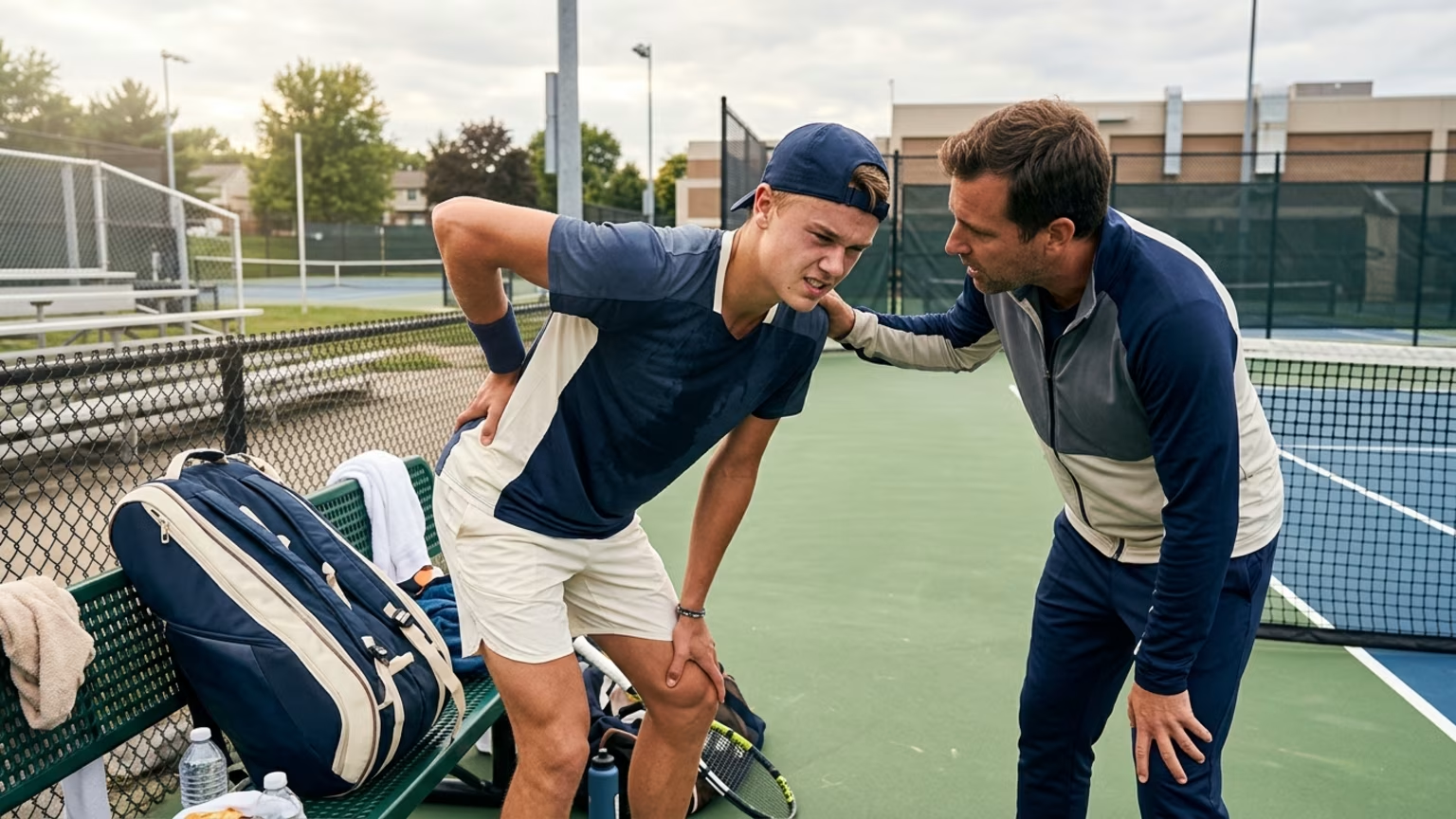
Holger Rune withdrew from the European Open with a back problem. The facts behind his decision and a grounded perspective for recreational players.

The Dink’s October 17 guide emphasizes deep returns, ball-height decisions and positioning against faster pickleball opponents.

A new report outlines padel and tennis gear trends. Learn how to assess adjustable rackets, sensor feedback and smart-court claims.
Read practical guidance for better movement, smarter preparation and a game that keeps working for you.
explore the Blog
