

Learn how everyday exercise habits impact racquet sports players. Review practical steps for healthy aging on the court based on orthopaedic guidance.




You step off the court after a bruising two-hour match, and your knees immediately remind you of every lunging volley you just hit.
The goal of this protocol is to keep you capable and active on the court without relying on fitness influencer hype. Achieving athletic longevity requires making sensible adjustments to your daily habits. I remember finishing a tough two hour padel match on a cold Tuesday night and waking up the next morning feeling like my lower back was locked in concrete. For a long time, I just accepted this as the price of playing hard in my forties. But once I started spending just ten minutes on targeted hip mobility before heading to the club, the stiffness almost completely vanished. It taught me that we do not have to accept pain as a default state of aging.
News18 published a helpful health explainer on August 28, 2026. The article featured comments from Dr. Ravikumar T. V., head and consultant in orthopaedics at Ramaiah Memorial Hospital in Bengaluru. He noted that exercise-related injuries often come from ordinary habits rather than major collisions.
Dr. Ravikumar told News18 that muscles can adapt faster than tendons and ligaments. This creates a potential mismatch when players increase load abruptly. The resulting strain is common among older adults who take up court sports. A University of Texas Health Science Center at San Antonio explainer highlighted a study estimating 66,350 pickleball-related injuries from 2013 through 2022.
Most of these injuries occurred among players aged 65 to 80. Ramping up your playing time too quickly is a frequent trigger for joint pain. You can protect your body by learning to manage your court workload safely. Adding volume slowly gives your connective tissues time to strengthen.
News18 identifies poor technique as a recurring risk pattern for recreational athletes. Hitting with improper form alters the load distribution across your lower back, knees, and shoulders. Taking a few lessons to refine your strokes can keep excessive stress off vulnerable joints. Moving efficiently is an important part of healthy aging and physical capability.
Skipping your warm-up is another major risk factor identified in the News18 explainer. A physical-therapy guidance article from RemixHQ recommends a five-to-10-minute dynamic preparation period before playing pickleball. This routine includes brisk walking or light jogging, arm circles, shoulder rolls, and leg swings. You should also incorporate walking lunges, torso rotations, and gentle calf mobility into your consistent preparation routine.
Wearing unsuitable footwear drastically increases your risk of injury on the court. News18 warns that running, gym training, and court sports impose entirely different demands on the lower limbs. Running shoes are made primarily for forward motion. Court shoes provide the lateral stability needed for quick changes of direction.
Many players interpret injury pain as productive discomfort. News18 clarifies that you should distinguish normal workout fatigue from pain that worsens during activity. Symptoms like swelling or altered movement patterns should prompt immediate rest. If these issues persist, you should seek a medical review. This process of distinguishing normal recovery from real injuries keeps small problems from becoming chronic.
Concentrating all your physical activity into the weekend creates sudden demands that your body has not prepared for. News18 advises that consistent moderate activity is generally safer than compressing all exertion into two days. Going straight from a sedentary desk job to a highly competitive match is a recipe for joint strain. Adding light exercise during the week keeps your body ready for match play.
Neglecting recovery is the final risk pattern highlighted by the orthopaedic expert. Tissues need downtime, sleep, and adequate spacing between sessions to rebuild and adapt. The RemixHQ guidance emphasizes hydration, sleep, a proper cool-down, and avoiding play through significant pain. Taking rest days is an active and necessary step in maintaining your capabilities.
The advice from health professionals applies to all court sports, but you need to adjust your approach based on the specific game you play. Tennis, pickleball, and padel each present unique biomechanical challenges.
Tennis players handle heavy racquets and generate high-velocity groundstrokes. This requires exceptional shoulder mobility and core stability to prevent repetitive strain. You must ensure your technique distributes the force of serving and hitting away from your elbow and lower back. Proper stroke mechanics will help you maintain your court speed and power over time.
Pickleball demands rapid accelerations, short deceleration steps, and frequent reaching. A report from KCUR summarized a ValuePenguin analysis of U.S. Consumer Product Safety Commission data. It noted that estimated pickleball-related emergency-room injuries rose from about 8,300 in 2018 to more than 31,000 in 2025. KCUR reported that falls, slips, and trips accounted for nearly 65,000 estimated emergency-room visits during 2018 through 2025, and that adults aged 50 and older accounted for about 125,000 visits over that period.
The University of Texas Health Science Center at San Antonio cited research estimating 397 pickleball-related fractures in emergency departments from 2002 through 2022. These fractures were most common among women over 60 and most often occurred in the wrist or arm. Additionally, a 2026 report from SSM Health cited a 2025 study identifying roughly 1,200 pickleball-related eye injuries in 2024 alone, noting possible underreporting. Protective eyewear and balance training are highly recommended tweaks for pickleball enthusiasts.
Padel involves continuous turning, sudden stops, and hitting balls off a glass cage. The rotational demands on your spine and hips are immense during overhead smashes. Padel players should dedicate extra time to torso rotations and lateral mobility exercises during their warm-up. Building core strength off the court will protect your back during intense rallies.
Follow Evercourts for practical insights on tennis, pickleball and padel performance, movement, recovery and healthy ageing. Stay connected for new articles, research-led guidance and ideas to help you play well and keep playing for years.


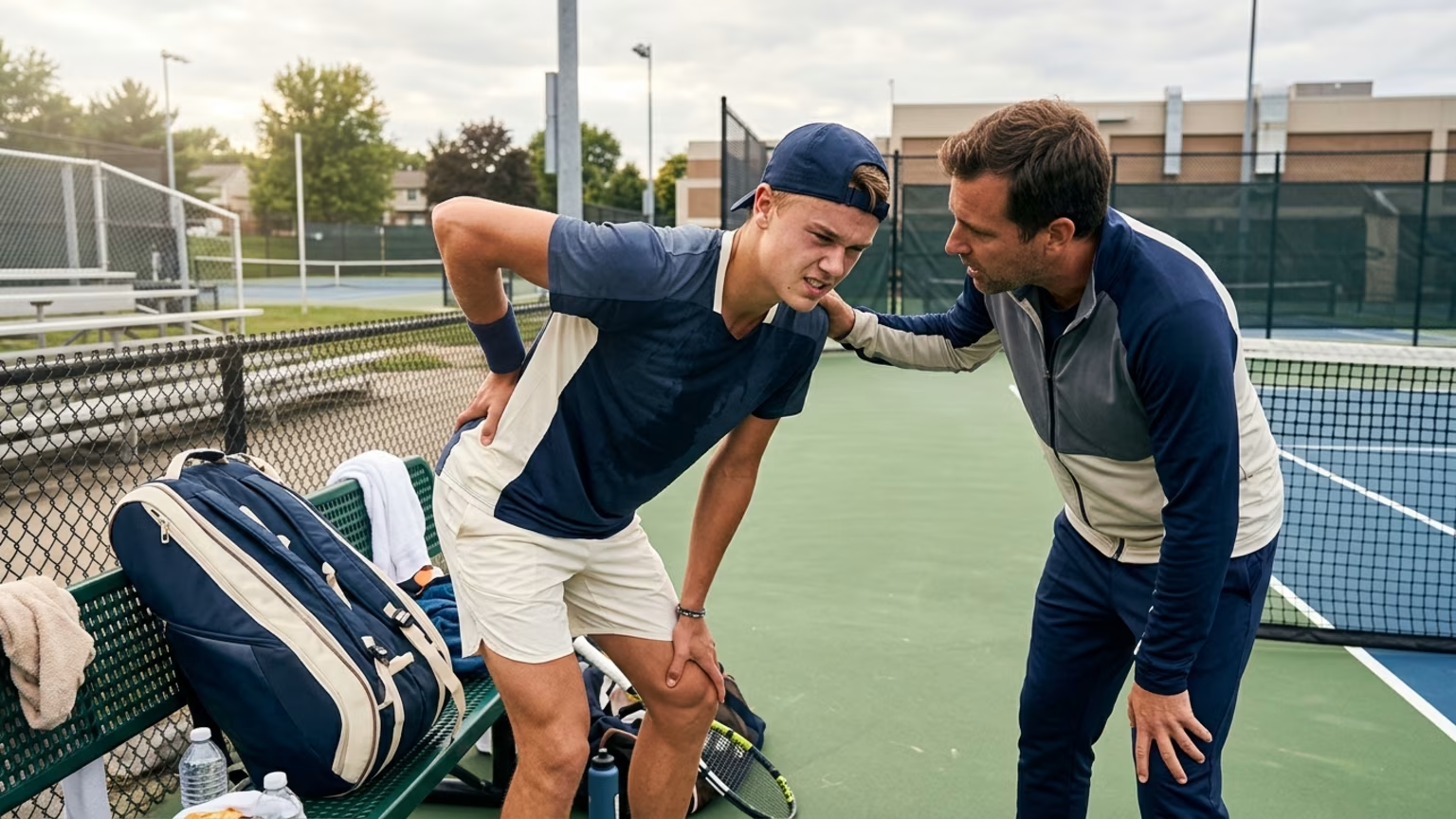
Holger Rune withdrew from the European Open with a back problem. The facts behind his decision and a grounded perspective for recreational players.

The Dink’s October 17 guide emphasizes deep returns, ball-height decisions and positioning against faster pickleball opponents.

A new report outlines padel and tennis gear trends. Learn how to assess adjustable rackets, sensor feedback and smart-court claims.
Read practical guidance for better movement, smarter preparation and a game that keeps working for you.
explore the Blog
