
Félix Auger-Aliassime’s dizzy US Open exit highlights why racquet sports players must stop playing and seek medical help when unexplained symptoms strike.




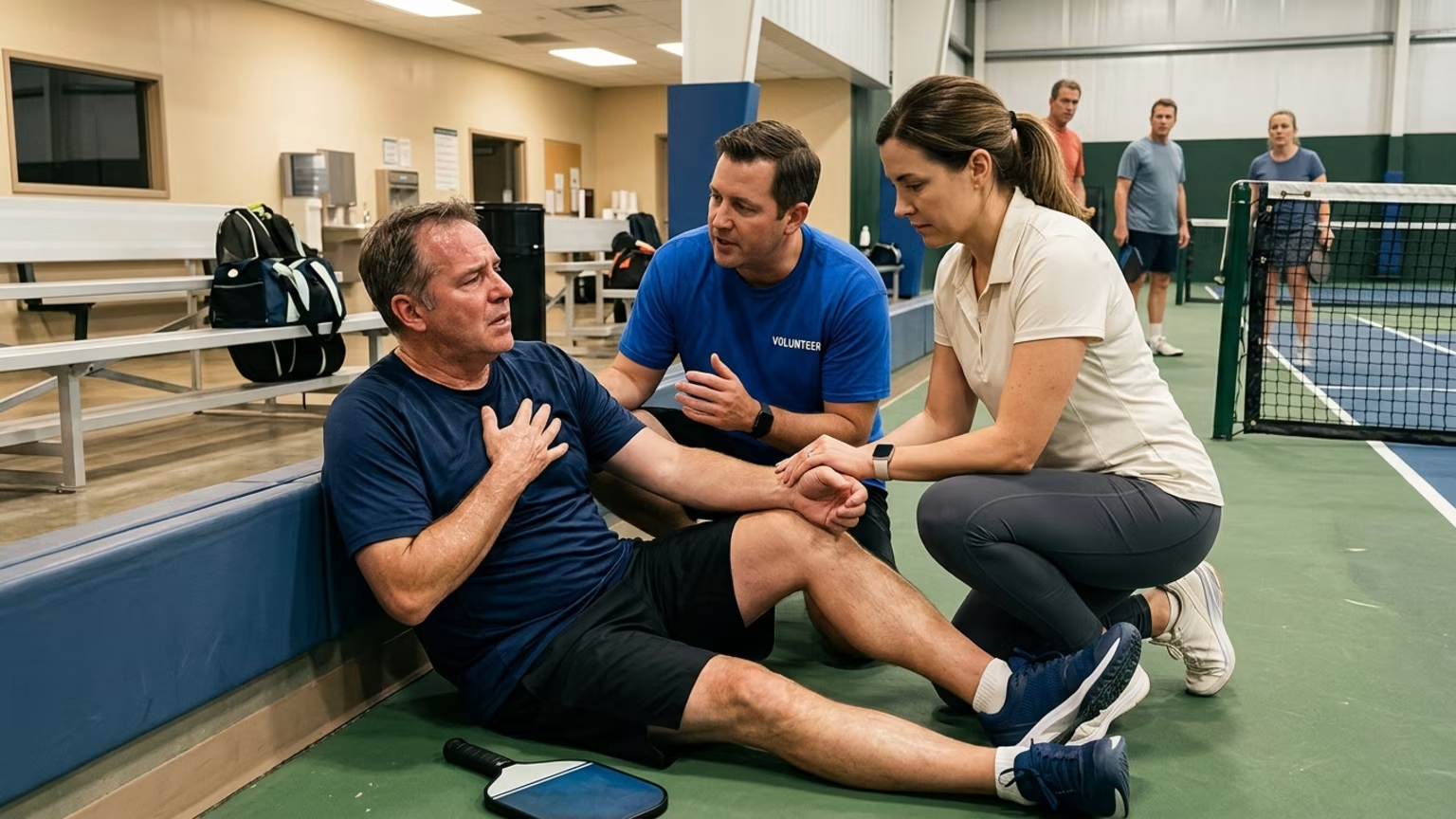
A top-tier professional suddenly cannot track the ball, feels dizzy, and struggles to stand between points. He stops playing, calls for help, and leaves the court with no immediate explanation. When unexplained physical symptoms strike in the middle of a competitive match, what is the safest way to respond? You must stop playing immediately, secure a medical evaluation, and never assume the issue is just basic fatigue.
Félix Auger-Aliassime was eliminated in the second round of the 2026 US Open after losing to Karen Khachanov 6-7 (5), 6-3, 6-2, 6-2. The No. 3 seed and world No. 4 entered the tournament as a highly anticipated contender. However, Tennis Majors reported that about a set and a half into the match he became dizzy, began seeing spots, and could not recover physically between points and games. The result made Khachanov the winner of his first Top 10 match of the year, according to the ATP Tour.
This incident sparked conversations about distinguishing typical tiredness from a serious medical warning sign. Auger-Aliassime described the episode as abnormal and unlike his previous experiences with cramps or ordinary late-match fatigue. He said the symptoms did not resolve, although he initially hoped they would pass. A player who develops visual changes, faintness, or unusual weakness must avoid treating the symptoms as routine exhaustion.
These signs should act as an immediate stop signal for any athlete on the court. Heat, inadequate food intake, medication effects, and cardiovascular conditions can produce overlapping symptoms. Players should avoid assuming that every episode of dizziness is solved by simply drinking a bottle of water. Recognizing the boundary between healthy physical effort and dangerous physical distress is absolutely critical for long-term athletic longevity.
Players frequently ask how sudden health events can happen when they feel completely fine before playing. Auger-Aliassime said he had felt normal in the preceding days and on the morning of the match, with no warning signs before play. This proves that a smooth pre-match routine does not guarantee that a physical problem will not emerge later. Relying solely on how you feel in the locker room is a risky strategy for competitive athletes.
In our experience, we often see players rush their preparation: "When I first started playing pickleball, I noticed how many people skipped warming up entirely. They would jump straight out of their cars and right up to the kitchen line. I tried doing that and immediately pulled a calf muscle."
"Pickleball requires just as much explosive lateral movement as tennis, just in a tighter space. Since then, I always spend five minutes doing dynamic lunges and ankle rolls. It changes everything about how confident I feel pushing off the baseline."
A solid warm-up routine is essential, but players also need a comprehensive pre-match checklist to ensure safety. Before stepping onto the court for intense play, athletes must honestly evaluate their recent sleep quality, any recent illness, and their fluid intake. Players who want to keep enjoying racquet sports for years must carefully monitor how well they recovered from their previous session. Cultivating smart habits around healthy aging helps build a much more resilient physical foundation for competition.
Recreational players regularly wonder how to manage demanding weather conditions safely across different court environments. Professional organizations are increasingly treating heat exposure and recovery opportunities as structural issues rather than matters of individual toughness. According to Curbed, the US Open provides a ten-minute pause between the third and fourth sets in men's matches. Professional players can also request a three-minute medical timeout for injuries during a competitive match.
Adult recreational players can adapt these professional principles by building environmental breaks directly into their local matches. Tennis players competing on unshaded hard courts should schedule longer rests and deliberately shorten sets during intense afternoon heat. Padel courts feature glass walls that can trap humidity, requiring players to step out and take frequent breaks to cool down. Pickleball players often compete in tightly packed spaces, so moving games indoors during severe weather is a highly effective strategy.
Event organizers and club managers play a significant role in protecting player health during difficult weather. Adjusting local tournament schedules and improving local court environments can support healthier play for everyone involved. No single heat policy fits every single location, but having a clear plan prevents players from pushing past their physical limits. Environmental awareness is just as important as shot selection when it comes to maintaining a long and active playing career.
Many players ask what steps they should take after experiencing an unexplained physical event on the court. The Canadian player said he planned to undergo tests after leaving New York and would work with doctors, fitness coaches, physiotherapists, and nutritionists to investigate the cause. No diagnosis had been publicly confirmed in the available coverage, meaning the incident remains under active investigation. This careful approach highlights the importance of thorough professional medical evaluation.
A Grand Slam professional clearly has access to specialized staff that most adult players simply do not have. However, Auger-Aliassime's planned multidisciplinary review serves as an excellent model for coordinated care. Adult athletes should similarly seek out professional medical assessments rather than relying on guesswork or internet searches. Adopting a physical therapy-first approach to recovery and consulting trusted medical experts ensures a much safer return to the court.
You should return to intense competition only after a qualified professional has evaluated the root cause of the episode. Keep an incident record that notes the time your symptoms began, the current court conditions, and your recent training load. This specific information can help a clinician assess your situation accurately and rule out serious underlying issues. Prioritizing careful medical screening over a rushed return is a cornerstone of responsible health management.
Prioritizing athletic longevity over a single match outcome ensures you will enjoy the court for years to come. If your body sends an unusual warning sign today, step off the court immediately, document your exact symptoms, and consult a medical professional before scheduling your next match.
Follow Evercourts for practical insights on tennis, pickleball and padel performance, movement, recovery and healthy ageing. Stay connected for new articles, research-led guidance and ideas to help you play well and keep playing for years.


Holger Rune withdrew from the European Open with a back problem. The facts behind his decision and a grounded perspective for recreational players.

The Dink’s October 17 guide emphasizes deep returns, ball-height decisions and positioning against faster pickleball opponents.

A new report outlines padel and tennis gear trends. Learn how to assess adjustable rackets, sensor feedback and smart-court claims.
Read practical guidance for better movement, smarter preparation and a game that keeps working for you.
explore the Blog
