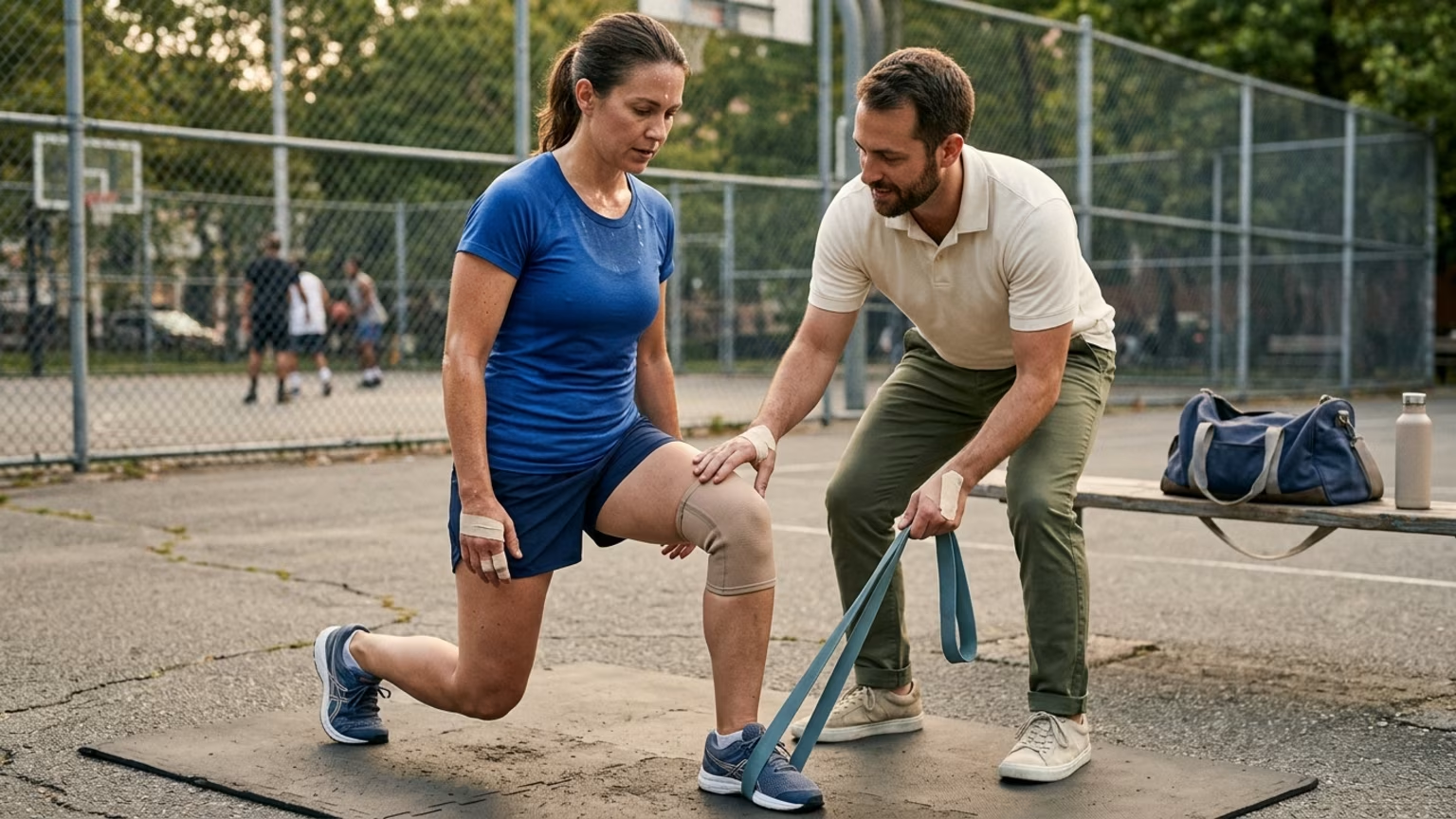

Experts recommend physical therapy before surgery for knee injuries. Read how tennis, pickleball, and padel players can safely rebuild joint strength.




A ValuePenguin analysis cited by Missouri Public Radio estimated that emergency room injuries related to pickleball rose from about 8,300 in 2018 to more than 31,000 in 2025. This dramatic increase challenges the assumption that a sharp joint pain on the court mandates immediate surgery. Experts increasingly recommend structured movement over the operating table as a first step for many players. Understanding this shift is critical for anyone hoping to stay active on the court.
Racquet sports demand repeated acceleration, rapid deceleration, and unpredictable lateral movement. The knee joint absorbs the brunt of these explosive efforts during every pivot and lunge. A systematic review characterized the return to sport as a dynamic process involving biological healing, functional recovery, psychological readiness, and load tolerance. These factors highlight why rehabilitation requires active preparation rather than passive rest.
I remember finishing a tough two hour padel match on a cold Tuesday night and waking up the next morning feeling like my lower back was locked in concrete. For a long time, I just accepted this as the price of playing hard in my forties. But once I started spending just ten minutes on targeted hip mobility before heading to the club, the stiffness almost completely vanished. It taught me that we do not have to accept pain as a default state of aging.
The clinical evidence supports this proactive approach to physical maintenance. The NICE NG226 pathway places therapeutic exercise among the core first line treatments for knee osteoarthritis. This approach relies on individualized land based activity combined with local muscle strengthening. Players must understand that generic advice to remain active is insufficient for actual joint preservation.
A proper return program demands specific conditioning to rebuild tissue tolerance. The goal is to prepare the joint for the unique stresses of your chosen sport. Passive rest simply allows the supportive muscles to weaken over time. Active preparation ensures the knee can handle the explosive forces required on the court.
The demographic data provides a clear picture of who is seeking medical help for joint issues. In the cited analysis, adults aged 50 and older accounted for approximately 125,000 emergency room visits related to pickleball during the 2018 to 2025 period. This group represented more than four fifths of the total visits in that study. Half of those specific visits involved people aged 65 and older.
These injury figures should be interpreted cautiously because they concern emergency room visits rather than all players or all injuries. The available source does not establish that the increase was caused by any single factor. Participation growth, aging participants, playing style, or changes in reporting could all play a role. However, the sheer volume of cases highlights the need for better structural management.
On August 21, 2026, Fox Baltimore published a Health Watch segment examining treatment options for people recovering from knee injuries. Dr. Kelby Kaplan of the University of Maryland School of Medicine appeared on the segment to discuss nonoperative pathways. Fox Baltimore’s report encouraged injured people to consider physical therapy before resorting to surgery. This advice aligns with modern approaches for managing joint wear over time.
A recent consensus review found that exercise, neuromuscular training, and proprioceptive work are likely to improve aspects of recovery after ACL reconstruction. The review noted that supervised and unsupervised exercise both offer measurable benefits for patients. That review also concluded that rehabilitation lasting at least nine months is likely associated with optimal recovery. True rehabilitation demands structured work focused on sensorimotor control and functional outcomes.
Knee rehabilitation must address more than just straight line walking to be effective for racquet sport athletes. Tennis requires covering larger distances with long baseline sprints and abrupt stops. The ground reaction forces in tennis place immense strain on the patellar tendon during every wide forehand retrieval. Players must manage the transition between sprinting and setting up for a heavy groundstroke.
Pickleball forces players into rapid lateral shifts and deep lunges near the non volley zone. A recent review of pickleball research noted that these repeated movements create injury risks involving falls and sprains. The short court dimensions encourage sudden directional changes that test the stability of the knee joint. Players must develop the necessary hip to knee control to manage this constant starting and stopping.
Without proper neuromuscular training, the risk of reinjury remains high for these athletes. A thorough rehabilitation program addresses these specific sport mechanics to restore confidence in the joint. Repeated lateral movements require a strong foundation of single leg stability. Building this strength takes deliberate practice away from the competitive environment.
Padel combines these stresses with intense rotational movements and sudden changes of direction off the glass. The unpredictable nature of the rebounds requires exceptional single leg control and rapid physical responses. A proper return program should progress toward task specific movement and impact tolerance for your specific sport. The ACL consensus specifically identifies neuromuscular and proprioceptive training as highly relevant to functional outcomes.
The transition from physical therapy back to competitive play requires objective checkpoints rather than calendar dates. A systematic review found that many studies use pain, strength symmetry of at least 90 percent, and functional testing among return to sport criteria. You should not base your return solely on how much time has passed since the injury. A guided approach is critical for assessing physical readiness safely.
However, the physical therapy first approach should not be interpreted as meaning surgery is never necessary. The available AAOS guidance summary identifies displaced tears and tears that restrict motion as situations requiring early surgical consideration. A locked knee or repeated giving way episodes indicate a problem requiring thorough orthopedic assessment. Listening to your body and respecting mechanical limitations is the foundation of long term knee health.
Players should build capacity progressively by restoring comfortable motion and improving strength before adding agility drills. A useful progression is to develop single leg balance and quadriceps control before advancing further. Only then should you add jogging, lateral movement, deceleration, and racquet specific drills. Introduce court exposure gradually by starting with controlled hitting before advancing to full matches.
The journey back to the court is rarely a straight line. Maintaining athletic longevity requires patience, objective measurement, and a willingness to adapt your weekly routines. The most durable players understand that true recovery is a quiet commitment to the fundamentals of movement.
Follow Evercourts for practical insights on tennis, pickleball and padel performance, movement, recovery and healthy ageing. Stay connected for new articles, research-led guidance and ideas to help you play well and keep playing for years.


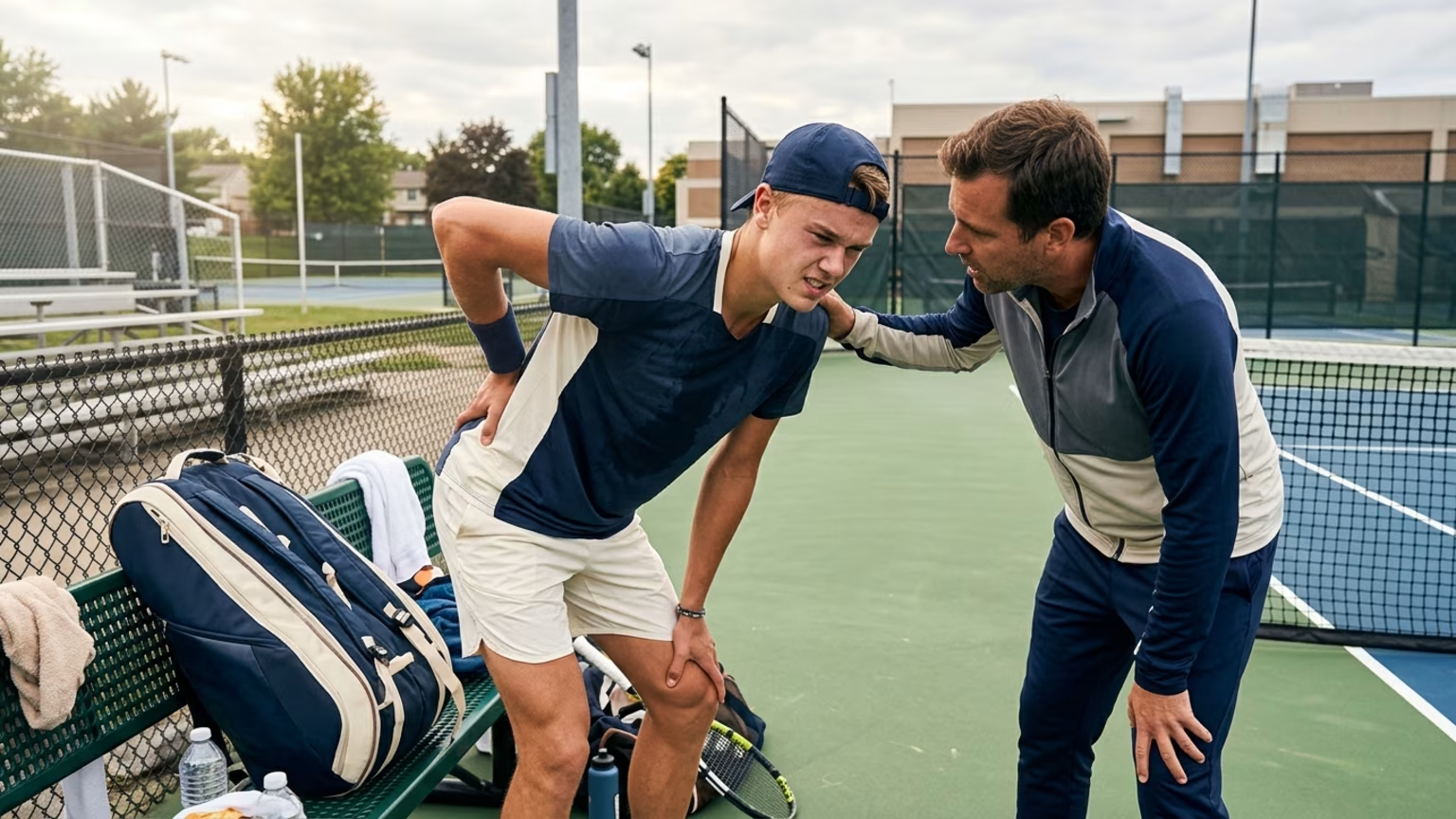
Holger Rune withdrew from the European Open with a back problem. The facts behind his decision and a grounded perspective for recreational players.

The Dink’s October 17 guide emphasizes deep returns, ball-height decisions and positioning against faster pickleball opponents.

A new report outlines padel and tennis gear trends. Learn how to assess adjustable rackets, sensor feedback and smart-court claims.
Read practical guidance for better movement, smarter preparation and a game that keeps working for you.
explore the Blog
