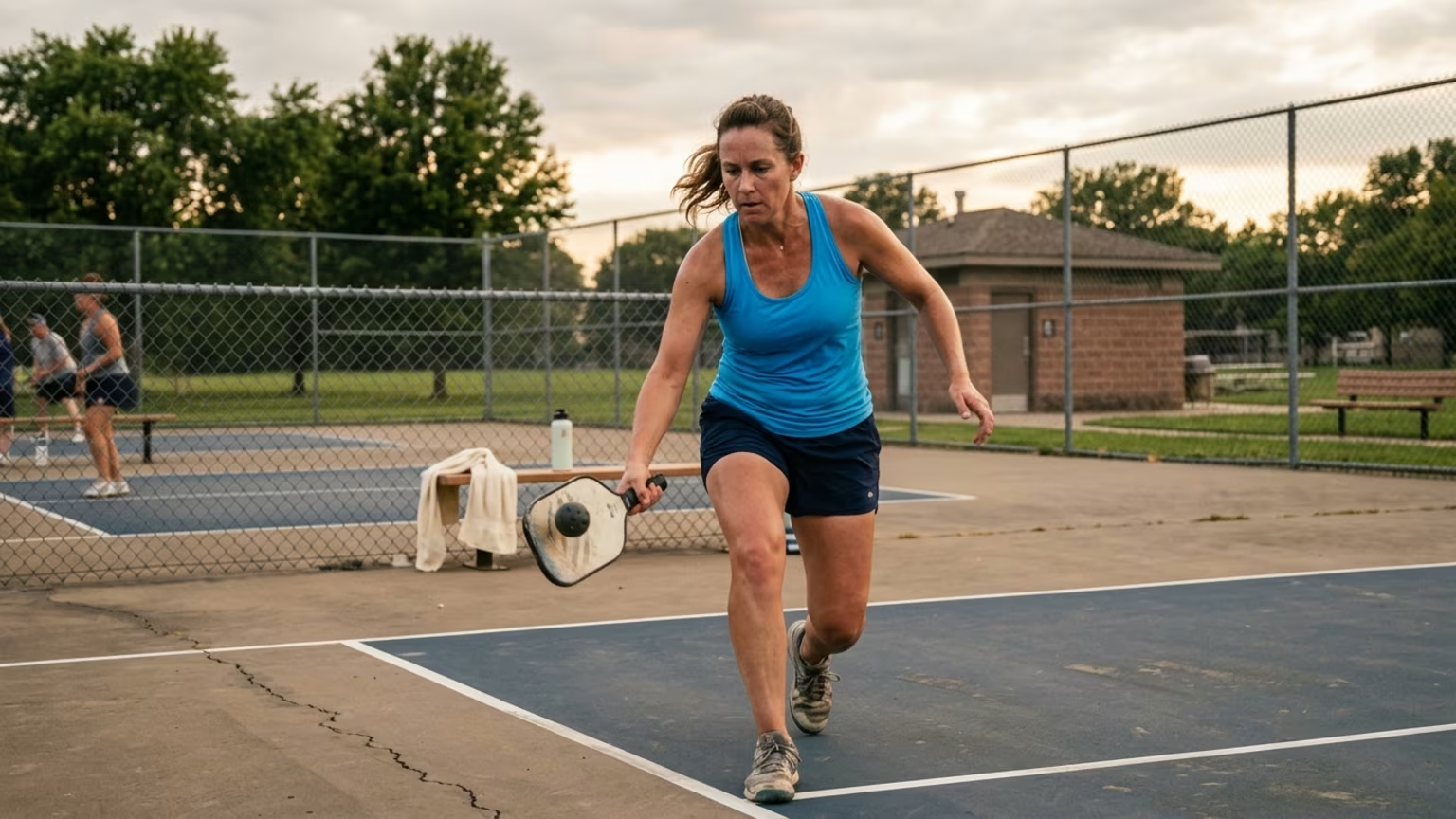

Gaël Monfils won at the US Open on his 40th birthday. Here is why tactical match management and controlled movement are the keys to athletic longevity.




Gaël Monfils stood on the US Open court on his 40th birthday. He had just dropped the opening set by a score of 2-6 against Adolfo Daniel Vallejo. The tension was palpable in what will be his 18th and final US Open appearance. He then took complete control to win the match.
You have heard it a million times: aging players must play perfectly from the very first point to stand a chance against younger opponents. Here is why that is outdated. Real athletic longevity depends on tactical adaptation, mental composure, and intelligent match management rather than flawless early execution.
The idea that veteran players must dominate early is common in locker rooms everywhere. This assumption creates intense panic during tight matches, especially against younger opponents. When a first set slips away, older competitors frequently overcompensate by rushing their shots. They try to hit harder, move faster, and finish points prematurely to conserve energy.
This flawed thinking stems from watching highlight reels rather than analyzing full matches. We see explosive shots on television and assume raw speed dictates the final outcome. In reality, a poor start is just a collection of data that highlights what is not working. Panic only wastes the precious mental and physical energy that a player desperately needs for the later sets.
This psychological trap is common across tennis, pickleball, and padel courts everywhere. Older players frequently convince themselves that their bodies cannot recover from an early deficit. This narrative is reinforced by a sports culture that constantly praises explosive early leads. When an older player falls behind, they often view it as a permanent physical failure rather than a temporary tactical issue.
Many adult recreational players carry this fear of fatigue onto the court. Because of this fear, they abandon their tactical plans the moment they fall behind. They forget that tennis, pickleball, and padel are sports of momentum and problem solving. A steady, composed response is far more effective than a rushed attempt to win the set back in a single game.
The media also contributes to this misunderstanding of athletic longevity. Broadcasters frequently focus on age differences, highlighting youth as an insurmountable advantage. This narrative convinces older athletes that they cannot recover from a slow start. However, experienced players know that the competitor who moves the smartest will usually outlast the player who moves the fastest.
The recent US Open victory by Gaël Monfils provides a clear counter to the myth of the perfect start. Monfils marked his 40th birthday by defeating Vallejo in the opening round. He lost the first set 2-6 before winning the next three sets 6-1, 6-2, and 6-0. This made him the oldest man to win a US Open match since Jimmy Connors achieved the same feat on his own 40th birthday in 1992.
He accomplished this despite entering the tournament with a wild card and holding a ranking of No. 311. His opponent, Adolfo Daniel Vallejo of Paraguay, held a significantly higher ranking at No. 60. However, the French player relied on his deep competitive background, making his 70th Grand Slam tournament appearance. Vallejo was playing in only his third Grand Slam event, highlighting a massive experience gap that ultimately shaped the outcome.
Monfils used that accumulated knowledge to solve the tactical puzzle on the court. He is a former top tier competitor who reached a career-high ranking of No. 6 in 2016. His best previous US Open result was a semifinal appearance in 2016, when he lost to Novak Djokovic. This recent victory was his first Grand Slam match win since the first round of Wimbledon in 2025.
According to BBC coverage of the event, Monfils described the need to improve after his shaky start in this opening match. He talked about adapting his backhand, using his forehand effectively, and continuing to push for his shots. This calculated adjustment completely changed the momentum of the contest. He managed the rest of the contest effectively once he gained the lead, proving that stamina and tactics can outlast early speed.
The broader context of his 2026 US Open campaign adds another layer to this longevity story. Before beginning his singles play, Monfils also competed in mixed doubles alongside his wife, Elina Svitolina. The pair successfully reached the semifinals in their very first tournament together in that discipline. This detail proves that competitive participation at an advanced age involves making smart scheduling choices rather than simply trying to reproduce a grueling earlier career workload.
Even his famous athleticism served a tactical and psychological purpose late in the match. During the fourth set, Monfils leapt to hit a forehand winner before bowing to the spectators. Fans at Louis Armstrong Stadium eventually sang "Happy Birthday" during his post match interview. The spectacular forehand shot happened only after he had firmly secured control of the match.
Recreational players can learn valuable lessons from this resilient performance. You do not need to hit a leaping forehand to win matches as you get older. Instead, focus heavily on how you respond to early setbacks and lost sets. Your movement must remain controlled, balanced, and repeatable under tournament pressure, which is a core pillar of healthy aging.
When you lose an opening set, treat it as a vital information gathering session. Notice your opponent's preferred patterns, adjust your court positioning, and identify their weaknesses. Slow down your pace between points to manage your breathing effectively. Reduce unnecessary risks on your second serve, and establish a clear tactical objective for the next game.
You must also match your competition schedule to your current physical capacity. Monfils has said he plans to retire after the 2026 season, making this his 18th and final US Open appearance. Choosing the right competition schedule for your season is critical for protecting your joints and staying fresh. You should balance high intensity matches with adequate rest and lighter practice sessions.
Furthermore, maintaining physical readiness requires consistent off court preparation. You cannot adapt your tactics if your body refuses to move efficiently to the ball. Adult players must prioritize strength, mobility, and neuromuscular training for better movement. Learning how to cover the court better without moving faster will save your legs for a decisive third set.
It is also important to remember that entertainment and enjoyment still matter. Monfils credited the New York crowd for making the occasion incredible. He asked the audience to keep the energy going for his second round match against American Learner Tien, the No. 14 seed. Finding joy in your time on the court will keep you motivated to train properly.
The New Golden Rule: Athletic longevity is about solving the match in front of you with the body you have today, rather than trying to recreate the speed of your youth.
If you take one action today, review your last difficult match and identify one tactical change you could have made to slow the opponent down.
Follow Evercourts for practical insights on tennis, pickleball and padel performance, movement, recovery and healthy ageing. Stay connected for new articles, research-led guidance and ideas to help you play well and keep playing for years.


Holger Rune withdrew from the European Open with a back problem. The facts behind his decision and a grounded perspective for recreational players.

The Dink’s October 17 guide emphasizes deep returns, ball-height decisions and positioning against faster pickleball opponents.

A new report outlines padel and tennis gear trends. Learn how to assess adjustable rackets, sensor feedback and smart-court claims.
Read practical guidance for better movement, smarter preparation and a game that keeps working for you.
explore the Blog
