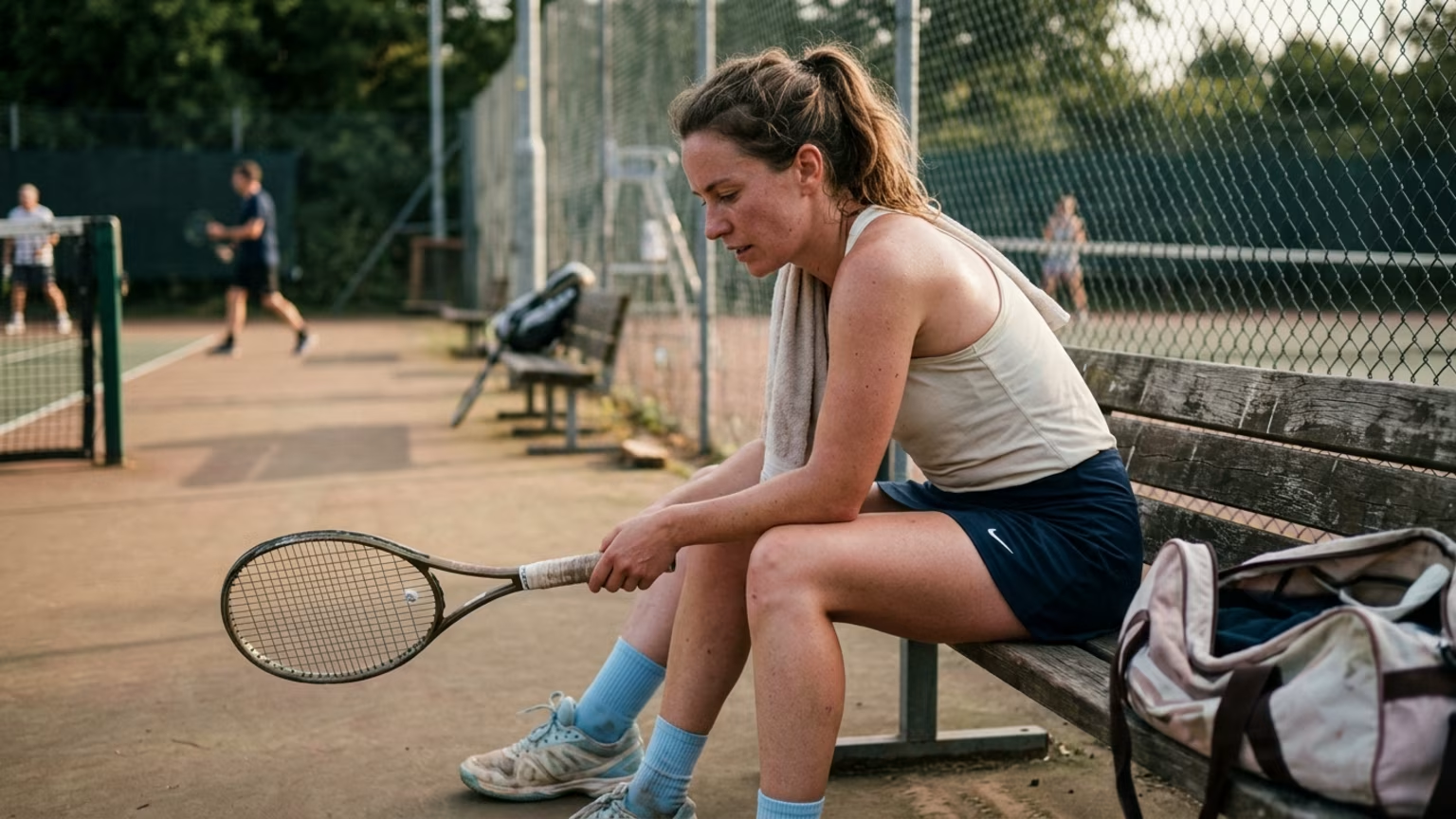

Learn how to choose the right tennis, pickleball, and padel events for your schedule. Discover a framework to manage match fatigue and prioritize recovery.




The Sports and Fitness Industry Association reported that 24.3 million Americans played pickleball in 2025, up from 4.2 million in 2020. This massive surge in participation means players face an overwhelming calendar of ladders, leagues, and weekend tournaments. The tension for adult athletes is no longer finding a match, but deciding which ones to skip. Registration pages are always open, but the physical cost remains hidden.
A packed competitive calendar quietly accumulates physical stress over time. When you play a multi-day tournament, your body absorbs repeated explosive efforts. A single match demands hundreds of lunges, rapid split steps, and aggressive overhead swings. Stacking these matches over a weekend severely limits your biological recovery window. Muscle tissue sustains microscopic stress that needs time to heal, while joints endure heavy impact forces.
In casual practice, you control the pace, intensity, and duration. In sanctioned competition, you lose that control entirely to the draw and the daily schedule. A one-day event often compresses several intense rounds into a few short hours. This format requires the nervous system to stay highly alert, draining your mental and physical energy. The pressure to perform keeps your heart rate elevated, even during the brief resting periods between your matches.
The travel involved in competitive events adds another layer of physical demand to your weekend. Driving for several hours or navigating busy airports introduces prolonged sitting, which stiffens the hips. Evaluating your readiness requires a simple traffic-light approach before you pay a registration fee. A green light means you have normal sleep, normal energy, and no worsening pain.
An amber light means you have reduced sleep, lingering soreness, or a highly stressful work week. A red light means escalating pain, illness, or marked fatigue, which signals that you should stay home entirely. Learning how to adjust your training when you feel run down is absolutely critical for long-term tournament survival. Entering events without a clear travel and recovery plan turns basic fatigue into persistent stiffness.
The rapid expansion of organized racquet sports creates more ways to accumulate fatigue than ever before. Premier Padel summarized the 2025 International Padel Federation report, noting that the sport now has more than 35 million amateur players globally. The infrastructure to support these athletes is growing at a historic pace. The same report identified more than 77,300 courts across 24,600-plus clubs in 150 different countries.
With more courts comes a steep increase in officially sanctioned organized play. The 2025 report showed that FIP tournaments increased from 182 in 2024 to 290 in 2025. The number of individual countries hosting these competitive events also rose from 36 to 49. As local clubs launch more competitive events, recreational players increasingly face professional-level scheduling demands.
The World Health Organization recommends 150 to 300 minutes of moderate aerobic activity weekly for general health. It alternatively recommends 75 to 150 minutes of vigorous activity, alongside muscle-strengthening work on at least two days. A single tournament weekend can easily exceed these vigorous activity guidelines in just 48 hours. This extreme density of play requires a sustainable competition season to prevent physical breakdown.
Players must track their match counts, travel hours, and sleep quality closely. Relying solely on your competitive drive will eventually lead to overtraining. A structured approach ensures that you only take on the workload that your body can realistically handle.
Each racquet sport applies physical stress differently based on court size and the specific competition format. The USTA says U.S. tennis participation has grown by 33% over the past four years and is targeting 35 million players by 2035. With this growth, tennis leagues often require singles play, which demands massive court coverage and sustained cardiovascular output. USTA adult tournaments are organized into levels 1 through 7 to help players manage these varying demands.
USTA Eastern specifically describes Level 7 events as one-day competitions, making them highly suitable for busy adults. For tennis players managing their time, a ladder format is also incredibly useful. Set a strict limit in advance, such as one meaningful ladder match per week, to avoid treating every challenge as mandatory. The ladder should support your consistency, rather than creating a stressful obligation to play whenever a higher-ranked opponent becomes available.
Pickleball courts are smaller, but the competitive formats present a very unique physical trap. Rated round robins guarantee play against multiple opponents in a very short operational window. DUPR says its integrated round-robin tools can match players by rating and submit completed scores automatically. This popular structure creates numerous rapid starts, sudden stops, and short bursts of intense activity. The sheer volume of matches in a single pickleball session can rival the physical load of a long tennis match.
Padel introduces the complexity of the walls and a heavy reliance on repetitive overheads. The rapid expansion to 290 FIP tournaments in 2025 shows how quickly amateur players are entering competitive padel structures. The sport demands deep lunges, very low defensive stances, and constant tactical partner communication. You must carefully balance singles, doubles, and mixed doubles play across your sports to avoid overloading specific muscle groups.
The physical demands of padel also require honest self-assessment. A rating helps you find an approximate level, but it does not capture your current fitness, injury status, or recent time away from the sport. A technically strong player returning from an injury may need a lower-load format, even if their historical rating remains very high.
Doubles play across all three sports is often mistakenly viewed as a light workout. While it clearly reduces the total distance you have to cover, it still requires sharp reaction times. USTA league formats vary by age and division, with some older divisions using three doubles matches. Even in a strictly doubles-based league, back-to-back matches require a high level of muscular endurance and joint resilience.
The participation data clearly shows that the number of opportunities to play will only continue to climb. Your primary goal is to stay healthy enough to enjoy these courts for years to come. Evaluating an event requires looking past the entry fee and actively considering the travel burden. A highly balanced schedule protects your joints, preserves your energy, and keeps your motivation consistently high.
A practical way to manage this load is dividing your calendar into A, B, and C events. Your A events are the season's most important competitions, which you should enter very sparingly. Your B events provide useful competitive tests without completely draining your physical reserves. Your C events are low-stakes local matches that can be easily skipped without any disappointment.
The highest-risk schedule is not necessarily the one with the highest total number of matches. It is the schedule that recklessly combines several physical and mental stressors simultaneously. Hard training, tournament matches, long travel, and poor sleep create a dangerous environment for soft tissue injuries. You can drastically reduce your total stress by simply removing just one of these overlapping layers.
Review your calendar today and categorize your upcoming events into a strict priority list. Choose one major event per season, block out your recovery days around it, and comfortably decline the rest.
Follow Evercourts for practical insights on tennis, pickleball and padel performance, movement, recovery and healthy ageing. Stay connected for new articles, research-led guidance and ideas to help you play well and keep playing for years.


A recent live-play test of a silent pickleball highlights its value for practice, but standard balls still perform better for match play and power control.

An evidence check on sports supplements like tart cherry juice. Learn why racquet sports players should prioritize core nutrition over functional foods.
In late 2026, Oura analyzed wearable data to see how recreational tennis impacts heart health and recovery. Learn what this means for your athletic longevity.
Read practical guidance for better movement, smarter preparation and a game that keeps working for you.
explore the Blog
