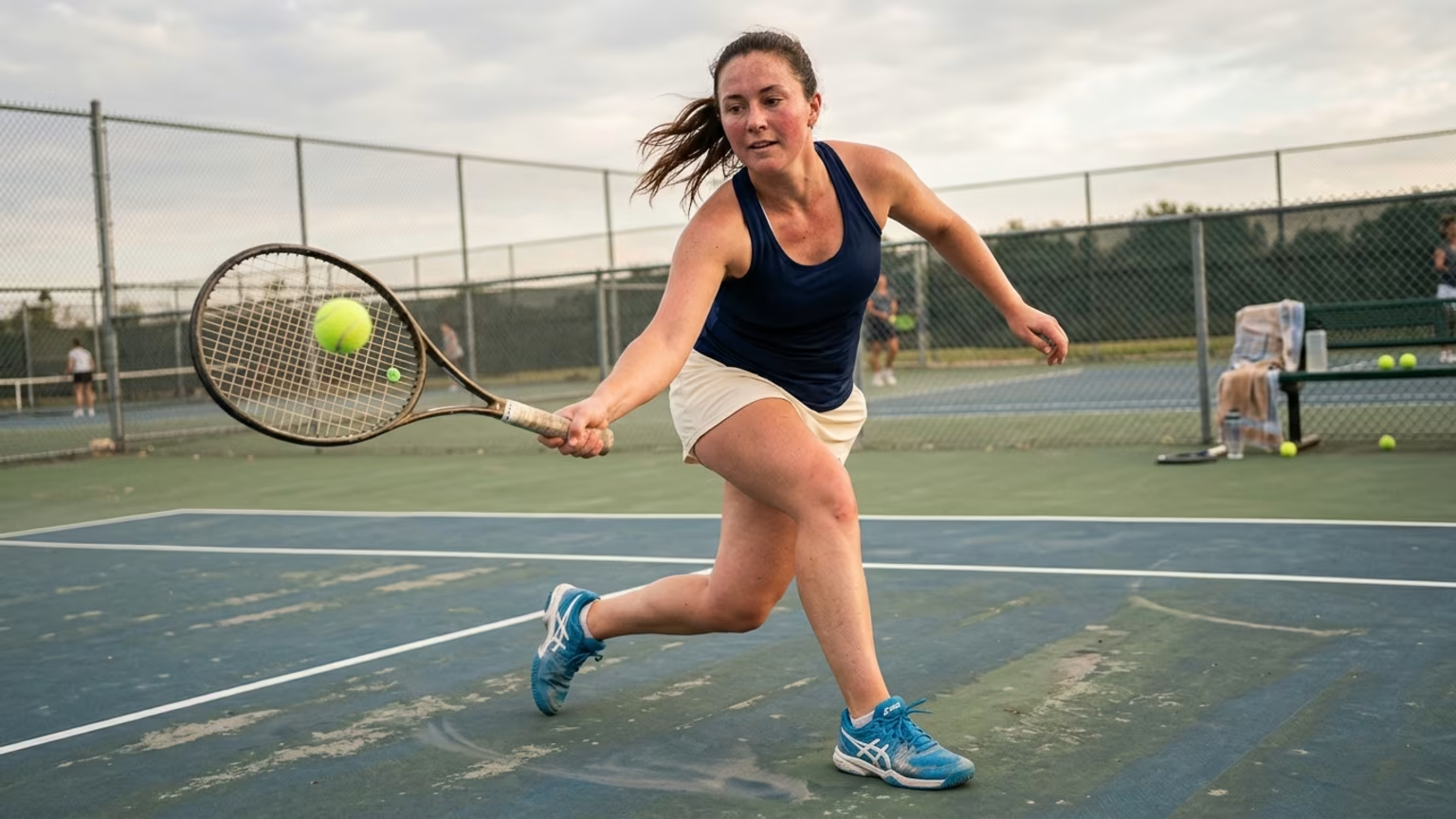

Learn when to replace your tennis, pickleball, or padel gear. Discover how proper court shoes and condition-based upgrades support your athletic longevity.




Court shoes are specifically designed to handle the rigorous movement patterns of racquet sports. Dr. William Wu, quoted by the American Medical Association, advises players to consider court shoes because these activities require constant cutting and pivoting. Tennis shoes generally provide firmer outsoles and the necessary lateral support to keep your foot secure. This stability prevents the foot from sliding over the edge of the midsole during aggressive directional changes.
Comfort is an equally critical factor for any footwear choice. Wu emphasizes that court shoes should be comfortable enough that players will actually want to wear them. Warning signs for replacement include smooth outsole areas, unstable lateral movement, and a collapsed midsole. You should also watch for new blisters or a heel cup that no longer holds your foot securely.
Before investing in a new pair, players should try on options late in the day when feet naturally swell. This ensures the fit remains secure and comfortable during long and demanding matches. Proper preparation is just as important as your gear condition. Dr. Wu recommends dynamic movements before play and static stretching during your cooldown.
This routine ensures that physical stiffness is not mistakenly blamed on failing equipment. Evaluating whether you need new gear requires understanding how your body responds to a proper warmup and mobility routine. Replacing shoes at the right time is a simple investment in your overall health on the court. Taking gear selection seriously protects your joints from unnecessary strain.
Running shoes are engineered almost entirely for forward motion. They tend to feature substantial cushioning to absorb the repetitive linear impact of jogging or walking. This design approach directly contrasts with the needs of a court player. Thick cushioning without firm lateral walls can become a liability during intense sideways movements.
Many recreational players choose running shoes initially because they feel very soft right out of the box. However, that soft platform fails to secure the foot when you suddenly change direction to chase a wide ball. This lack of stability can limit your ability to push off aggressively. Relying on running shoes for court sports creates a mismatch between your equipment and your movement demands.
A shoe that feels highly responsive on a straight track might feel unpredictable on a hard court. Players returning to action after a break should be especially conservative with their footwear choices. Taking the time to select purpose-built gear reduces the mechanical stress placed on your lower body. Court players simply need a different structural foundation than endurance runners.
Tennis requires explosive bursts of speed to reach balls across a large court area. The USTA says more than 27.3 million Americans played tennis in 2025, with nearly 40 percent playing in public parks. These hard public surfaces demand highly durable outsoles that can withstand repeated high-force lateral slides. The USTA has set a goal of reaching 35 million U.S. tennis players by 2035, meaning more players will need durable gear.
Pickleball is heavily defined by its sudden shifts in momentum near the non-volley zone. Proper footwear secures the foot during rapid stutter-steps and quick positional adjustments. The Sports and Fitness Industry Association reported that 24.3 million Americans played pickleball in 2025. They also noted that players participating at least eight times annually increased from 1.4 million in 2020 to 7.5 million in 2025.
The Orthopaedic and Sports Injury Research Center reports that over eight in ten ruptures in a cited study involved patients over 50. They strongly recommend supportive court shoes and lower-body conditioning to manage the stresses of pickleball. Proper gear choices help athletes mitigate the risks associated with these sudden stops. Padel involves multidirectional movement with frequent glass and court-edge interactions.
Players must pivot constantly to track balls bouncing unpredictably off the padel walls. Premier Padel’s 2025 materials report more than 35 million amateur players and 77,300 courts across 150 countries. Because padel involves so much enclosed space movement, reliable traction is an absolute necessity. Adapting your footwear to these specific spatial demands improves your overall court experience.
Evaluating your racquet sports gear lifecycle extends beyond footwear to your primary structural equipment. A tennis racquet does not need replacement simply because it is a few seasons old. You should look for visible frame cracks, loose grommets, or a noticeable change in weight and balance. If the frame is structurally sound, you might only need new strings or a fresh replacement overgrip.
Strings represent a separate maintenance decision from the actual racquet frame. Tennis Planet cites USRSA executive David Bone’s recommendation to restring after tension falls by more than 30 percent. Accessories like vibration dampeners mainly affect sound and string-bed feel, rather than preventing injuries. A review of published research says dampeners do not meaningfully alter the frame-vibration measures associated with tennis elbow.
Pickleball equipment specialists commonly identify dead spots, reduced spin, and altered sound as reasons to inspect a paddle. Visible signs like cracks, bubbling, and face delamination are clear indicators that the paddle needs replacement. The USTA’s August 2026 investment in Rec Technologies aims to simplify court bookings, which may encourage more frequent play. As you spend more time on the court, routine checks of your paddle faces and edges become increasingly important.
Your equipment bag should be replaced when zippers, seams, or thermal compartments fail. An intact bag protects your expensive gear from extreme heat, moisture, and impact damage. Replacing a worn overgrip is a low-cost intervention that immediately improves handle stability. These small equipment audits keep your gear functioning without requiring a massive budget.
Court shoes are the clear winner for maintaining your physical capabilities over years of play. They provide the necessary lateral stability for the unique movement patterns of racquet sports. Upgrading worn shoes or failing paddles prevents your equipment from actively limiting your performance or comfort. At evercourts, we believe approaching gear through a condition-based lens is essential for healthy aging on the court.
Building your long-term support team includes having trusted stringers and equipment specialists who can assess your gear objectively. You should replace your equipment when it becomes damaged, unreliable, or mismatched to your current movement demands. Chasing the newest models on a rigid calendar will not automatically improve poor mechanics or resolve overuse pain. Before your next match, check your shoe outsoles for smooth patches and replace them if the traction is visibly worn.
Follow Evercourts for practical insights on tennis, pickleball and padel performance, movement, recovery and healthy ageing. Stay connected for new articles, research-led guidance and ideas to help you play well and keep playing for years.


A recent live-play test of a silent pickleball highlights its value for practice, but standard balls still perform better for match play and power control.

An evidence check on sports supplements like tart cherry juice. Learn why racquet sports players should prioritize core nutrition over functional foods.
In late 2026, Oura analyzed wearable data to see how recreational tennis impacts heart health and recovery. Learn what this means for your athletic longevity.
Read practical guidance for better movement, smarter preparation and a game that keeps working for you.
explore the Blog
