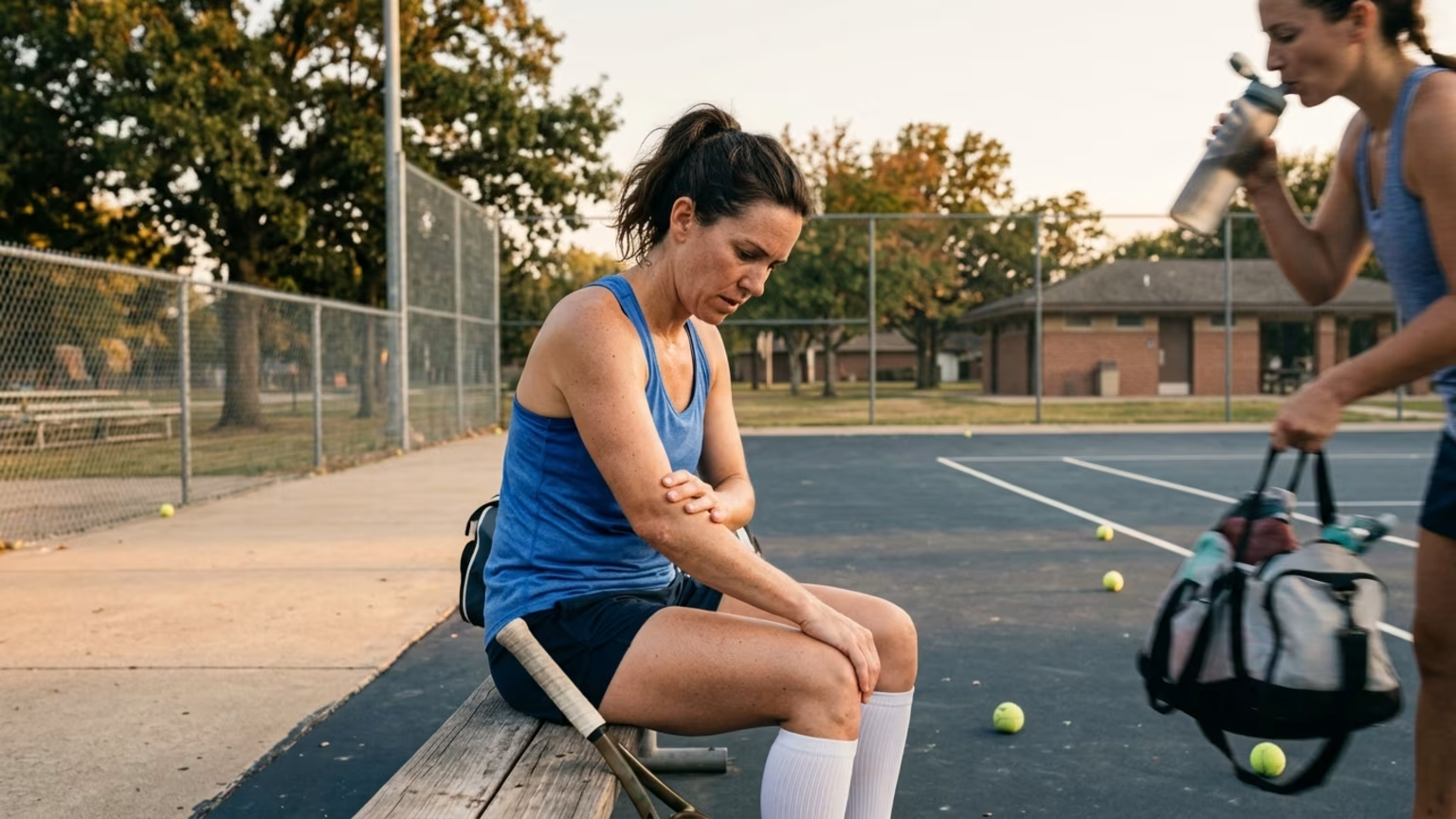

A new four-minute light therapy protocol for tennis elbow shows promise. Learn why players should view it as a supplement rather than a replacement for rehab.




Across 13 randomized trials involving 730 patients with lateral elbow tendinopathy, light therapy produced an overall average pain reduction of just 10.2 millimeters on a 100-millimeter scale. That modest number serves as a quiet reality check for adult racquet sports players seeking rapid recovery. Modern marketing often promises instant relief with minimal effort for frustrating joint issues. However, passive modalities will rarely replace the demanding work of active tendon rehabilitation.
Players are understandably desperate for relief when gripping a racquet becomes agonizing. Tendon pain can make routine match play feel impossible for recreational and competitive athletes alike. A quick fix always sounds appealing when you are sidelined from the sport you love. Yet, true athletic longevity requires a more grounded approach to load management and tissue health.
On August 26, 2026, Cleveland 19 News reported on an emerging treatment for tennis elbow. Solon-based Multi Radiance Medical is promoting a red and infrared light treatment protocol for patients. The broadcast featured a recreational pickleball player named Tom Udelson. He stated he had suffered from elbow pain for approximately 10 years before trying this system.
Udelson described piercing pain that interfered with his racquet swings. The pain also affected his ability to lift objects, reach overhead and open doors. He noticed relief after his very first light therapy session. By the time the segment aired, he had completed approximately six treatments.
The company protocol uses four one-minute treatments applied to four targeted areas. A four-minute session that produces rapid relief makes for a highly compelling television narrative. Udelson even described his initial result as being nothing short of miraculous. For an adult player struggling to hold a paddle, that kind of praise is incredibly alluring.
However, players should approach these brief protocols with reasonable caution. A single patient testimonial does not establish clinical effectiveness for the wider athletic community. Immediate pain relief does not prove that a damaged tendon has structurally healed. Tom Kelly, the president and CEO of Multi Radiance Medical, emphasized that the treatment is not necessarily a cure for disease.
Dr. Nick Bigrigg uses the treatment at Aligned Health Center in Westlake. He described the treatment as painless, easy to use and effective. While his early clinical experience has been very good, this is not evidence from a large comparative trial. Treating the underlying cause of injury often requires more than simply masking the initial pain.
A few years ago, I realized my tennis serve speed was dropping, and my shoulder was constantly throbbing after matches. Instead of pushing through the pain, I took a month to rebuild my mechanics and focus on rotator cuff endurance. I stopped trying to hit flat aces and developed a much heavier kick serve. My win rate actually went up, and my shoulder stopped hurting.
Sometimes longevity means outsmarting your own ego on the court. Finding the right balance between passive treatments and active effort requires that same honest assessment. If a player returns to full play immediately after a pain-relieving laser session, the pain will likely return. Real recovery involves changing how the arm handles stress over time.
The treatment showcased in Ohio falls under a category called photobiomodulation. The results of this therapy depend heavily on specific device settings and application targets. A clinical review found that using 904-nanometer light applied directly to the tendon resulted in a larger 17.2-millimeter pain reduction. Meanwhile, trials using other wavelengths failed to show any statistically significant effect.
Multi Radiance says its protocol is based on carefully evaluated wavelengths, beam angles, dosages and dose rates. Yet, the Cleveland 19 News report does not publicly disclose those technical parameters. This lack of detail makes it difficult to compare the local protocol against published studies. Not every red light panel or infrared device will produce the same biological response.
A more recent umbrella review further tempers expectations for passive treatments. That review summarized 15 meta-analyses covering 204 randomized trials and more than 9,000 participants. It reported that none of the photobiomodulation outcomes reached high-certainty evidence. While early data can be promising, the scientific consensus does not support treating light therapy as a standalone cure.
When we look at the broader landscape of lateral elbow tendinopathy management, active exercise remains the cornerstone. A PEDro evidence summary indicates that physiotherapy combining elbow manipulation and exercise outperforms a wait-and-see approach. This active combination also serves as a reasonable alternative to corticosteroid injection over the medium to long term. Relying solely on passive modalities ignores these proven recovery strategies.
Another evidence summary reported that eccentric exercise can improve pain and muscle strength for these patients. Furthermore, a separate PEDro record found that high-speed resistance exercise was more effective than conventional exercises for lateral epicondylitis management. A 2026 real-world trial summary even found that adding blood-flow-restriction physiotherapy to a heavy-load protocol offered no additional benefit over the standard protocol with a home-exercise program. The loading plan itself is clearly the most crucial element of a reliable rehabilitation journey.
Racquet sports players should treat light therapy as a potential adjunct rather than a primary solution. Before booking multiple sessions, ask your clinician for the technical details of their device. You need an accurate diagnosis from a physician or physical therapist before starting any new regimen. Chronic lateral elbow pain could stem from radial tunnel symptoms, cervical joint pathology or other non-tendon issues.
You must keep progressive strengthening at the center of your recovery plan. A structured exercise-based physiotherapy routine will safely rebuild your capacity to tolerate heavy forearm loads. Instead of stopping play indefinitely, work with a professional to modify your time on the court. You can adjust your play frequency, match duration and backhand volume while maintaining tolerable activity.
It is also wise to consider how to decide when to upgrade your tennis racquet or pickleball paddle. Stiffer frames and dead strings can send unnecessary shock directly into your aching elbow. Equipment modifications often provide lasting relief when properly combined with targeted strength work. If you want a more detailed roadmap, reviewing a comprehensive prevention guide can help structure your weekly court routine.
A proper return to play requires patience and clear milestones. Players should gradually test their arm with short hitting sessions before jumping back into competitive tournament brackets. Managing your equipment, rest days and swing mechanics will protect your elbow far better than any quick clinical fix. Integrating these sensible habits ensures you stay on the court without relying on constant medical interventions.
Use your pain response and next-day symptoms as feedback for your current workload. If your elbow feels worse the morning after a match, your tissue is not ready for that intensity. Do not use early pain relief from a light treatment as permission to resume full play immediately. Your ultimate goal is a resilient arm that can easily handle repeated swings for years to come.
The true measure of a successful recovery is not how fast the initial pain fades, but how reliably the arm holds up during the challenging seasons ahead.
Follow Evercourts for practical insights on tennis, pickleball and padel performance, movement, recovery and healthy ageing. Stay connected for new articles, research-led guidance and ideas to help you play well and keep playing for years.


Holger Rune withdrew from the European Open with a back problem. The facts behind his decision and a grounded perspective for recreational players.

The Dink’s October 17 guide emphasizes deep returns, ball-height decisions and positioning against faster pickleball opponents.

A new report outlines padel and tennis gear trends. Learn how to assess adjustable rackets, sensor feedback and smart-court claims.
Read practical guidance for better movement, smarter preparation and a game that keeps working for you.
explore the Blog
