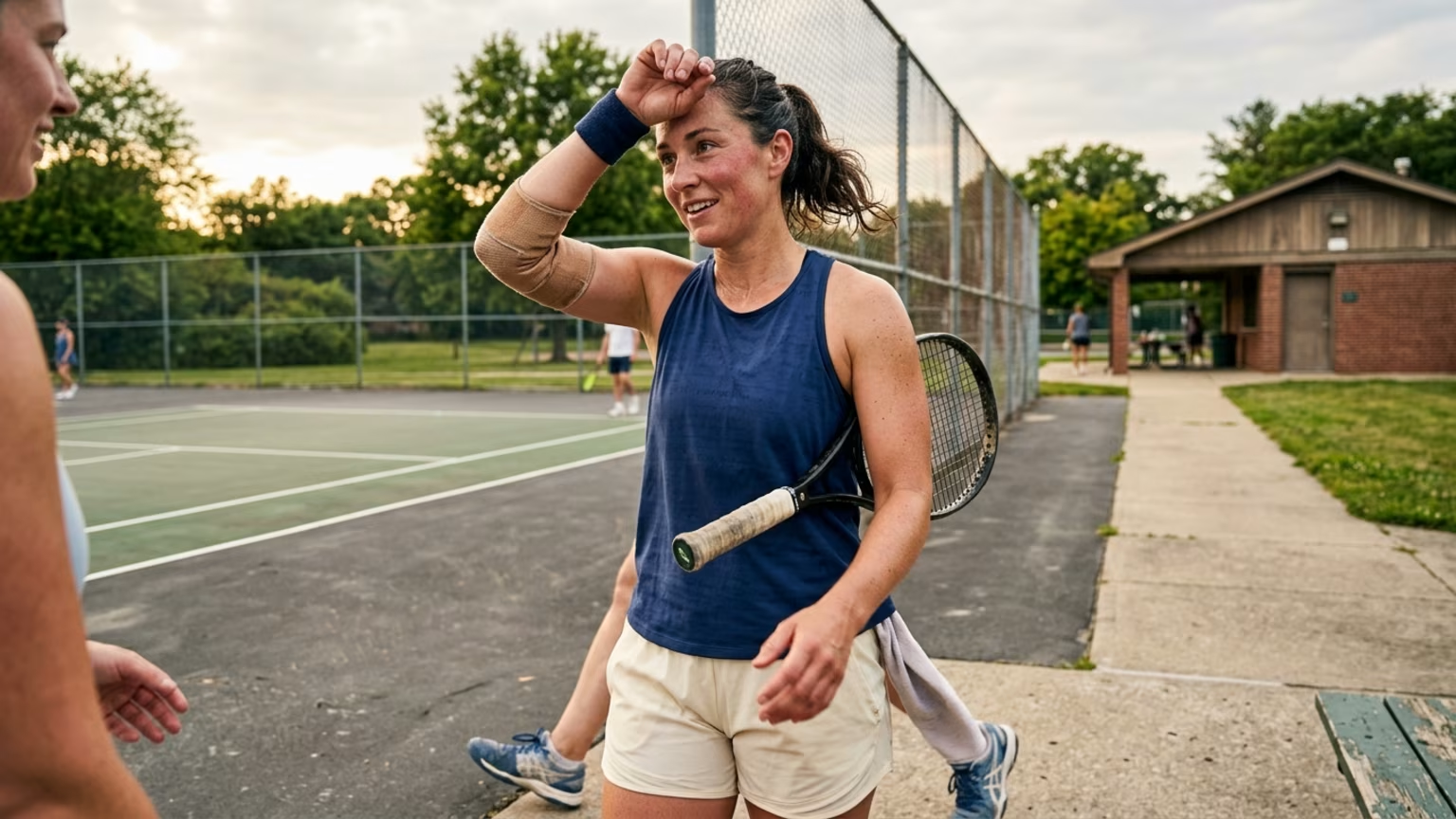

An updated evidence review of 13 trials reveals structured physiotherapy outperforms placebo and injections for tennis elbow recovery at midterm follow-up.




A player grips a racquet on a cold morning, feels a sharp ache on the outer elbow, and immediately books a cortisone appointment. This reaction is common, but a randomized trial of 185 patients shows that 52-week treatment success is 69% with injection. In the same trial, success rates reached 91% with physiotherapy and 83% with wait-and-see. Fast relief often masks the reality of lateral elbow tendinopathy, and players need sustainable strategies for athletic longevity.
Lateral elbow tendinopathy occurs when the tendons of the forearm struggle to manage repeated stress. Every time a player strikes a ball, the impact sends shockwaves down the racquet shaft into the hand and wrist. The muscles must contract aggressively to stabilize the joint, and they also lengthen under tension to absorb force. This combination of gripping and eccentric loading taxes the extensor carpi radialis brevis muscle heavily over long matches.
When players increase their training volume too quickly, the local tissues cannot recover fast enough. The primary Sensai article identifies sudden increases in racquet sport volume as classic aggravating patterns. This is why returning to full gripping and hitting loads immediately after an injection can cause persistent problems. The athlete feels no pain, but the physical capacity of the tendon has not actually been rebuilt.
Players often look for a single intervention to fix the pain quickly. However, tendon rehabilitation requires a gradual accumulation of load over an extended period. The goal is to modify the most provocative grips or strokes while maintaining pain-free conditioning. Understanding this physical reality helps adults maintain their court time without relying on repeated medical procedures.
Making the right call on deciding whether to play or rest is critical for tendon health. Active rehabilitation involves continuing non-aggravating exercises rather than stopping all physical activity entirely. Players should avoid direct grip work and movements that reproduce symptoms until their baseline strength improves. True recovery is measured by the ability to handle on-court loads, not just the absence of resting pain.
A 2024 systematic review and network meta-analysis examined treatments across 13 trials and 12 comparators. The researchers measured outcomes using pain scores from the Patient-Rated Tennis Elbow Evaluation. In the short term, no treatment performed better than placebo. At midterm follow-up, physiotherapy and exercise were the only intervention category to outperform placebo.
The exact mean difference for physiotherapy was -4.32 points on the pain measure. The confidence interval was broad at -7.58 to -1.07, meaning the size of the advantage is modest. This conclusion aligns with a 2021 systematic review and meta-analysis of 30 randomized trials involving 2,123 participants. That review found that exercise interventions generally produced better outcomes than passive interventions, but the effects were small.
Corticosteroid injections can provide faster short-term relief, but several randomized trials reported poorer longer-term outcomes. A second randomized trial involving 198 participants reported that corticosteroid treatment initially performed well. However, 47 of 65 participants who were initially successful later regressed. The trial authors described the reversal as paradoxical and advised caution with corticosteroid injections.
A 2013 placebo-controlled trial included 165 patients and provided a clear look at recurrence rates. Complete recovery or substantial improvement at one year occurred in 83% of corticosteroid recipients versus 96% of placebo-injection recipients. Recurrence was 54% after corticosteroid injection versus 12% after placebo injection. Physiotherapy did not simply rescue corticosteroid treatment in that trial either.
At four weeks, physiotherapy combined with placebo injection produced recovery in 39% of participants compared with 10% among those without physiotherapy. Adding physiotherapy to corticosteroid injection produced recovery in 68% versus 71%. Other passive treatments show similar limitations compared to exercise. A meta-analysis of 17 randomized trials involving 1,145 participants found no meaningful overall short-term pain difference between counterforce bracing and physiotherapy.
PRP and autologous blood injections also require cautious framing for players seeking alternative treatments. A Cochrane review of 32 studies involving 2,337 participants found moderate-certainty evidence of no clinically significant benefit. When comparing PRP or autologous blood to a placebo injection at three months, the reported pain difference was just 0.16 points on a 0 to 10 scale. Treatment success in that review was 67% versus 65%, further emphasizing the limited efficacy of these passive options.
While the medical diagnosis remains the same, the mechanical stressors vary significantly across different courts. For anyone building a comprehensive prevention guide for their routine, recognizing these equipment differences is essential. When players are switching between racquet sports, they expose their elbows to distinct forms of force. Recognizing these physical demands helps players modify their exposure intelligently.
Tennis demands managing heavy racquets and absorbing high ball velocities from the baseline. Hitting off-center creates severe rotational forces that the forearm muscles must stabilize instantly. The primary article recommends temporarily reducing heavy pronated pulling and using a neutral or supinated grip. Tennis players might rely on different stroke mechanics during rehabilitation to distribute the load safely.
Pickleball features a very different biomechanical challenge for the upper body. The rigid paddle and plastic wiffle ball create a sharp, jarring impact upon connection. Quick reflex volleys at the kitchen line require constant wrist stability and rapid directional changes. A player must monitor their weekly schedule to avoid sudden increases in pickleball hours, which are a classic aggravating pattern.
Padel introduces a solid, perforated racket and a heavy ball that requires firm, punchy strokes. Players frequently dig low balls off the glass walls, forcing the wrist into awkward extension angles. The cumulative effect of these repeated impacts can overwhelm an underprepared tendon. Managing hitting duration and intensity gradually is critical for players building their forearm capacity.
The primary article outlines a staged approach starting with pain-tolerable isometric wrist-extension work. The suggested starting phase uses supported wrist-extension isometrics for five holds of 30 to 45 seconds, once or twice daily. An eight-week trial of unsupervised daily isometrics improved PRTEE scores but did not clearly improve global-rated recovery. Therefore, isometrics function as an early on-ramp rather than a complete rehabilitation program.
The next phase uses slow eccentric wrist-extension work for three sets of 15 repetitions daily. Progression should be based on symptoms and the next-day response. A useful monitoring rule allows loading discomfort of approximately 3 to 4 out of 10, provided symptoms return to baseline by the following morning. If the elbow is worse the next day, the recommended response is to reduce the dose rather than abandon rehabilitation.
Evidence for eccentric exercise is supportive but must be applied consistently. A six-study meta-analysis involving 429 participants found that adding eccentric exercise improved pain and strength compared with adjunctive therapy alone. The standardized mean differences were -0.63 for pain and 1.05 for strength in that review. The Sensai article then suggests adding controlled concentric lifting and an isometric hold for three sets of 12 repetitions three to four times weekly.
Players must remember that physical therapy takes time and consistent application. A wait-and-see approach reached 83% success at 52 weeks in one Dutch trial, highlighting the substantial natural-recovery component. By prioritizing a staged, exercise-based plan over repeated quick fixes, adult players can rebuild their capacity correctly. Evercourts encourages players to respect the tissue healing process and use progressive loading to keep enjoying the game.
Follow Evercourts for practical insights on tennis, pickleball and padel performance, movement, recovery and healthy ageing. Stay connected for new articles, research-led guidance and ideas to help you play well and keep playing for years.


Holger Rune withdrew from the European Open with a back problem. The facts behind his decision and a grounded perspective for recreational players.

The Dink’s October 17 guide emphasizes deep returns, ball-height decisions and positioning against faster pickleball opponents.

A new report outlines padel and tennis gear trends. Learn how to assess adjustable rackets, sensor feedback and smart-court claims.
Read practical guidance for better movement, smarter preparation and a game that keeps working for you.
explore the Blog
