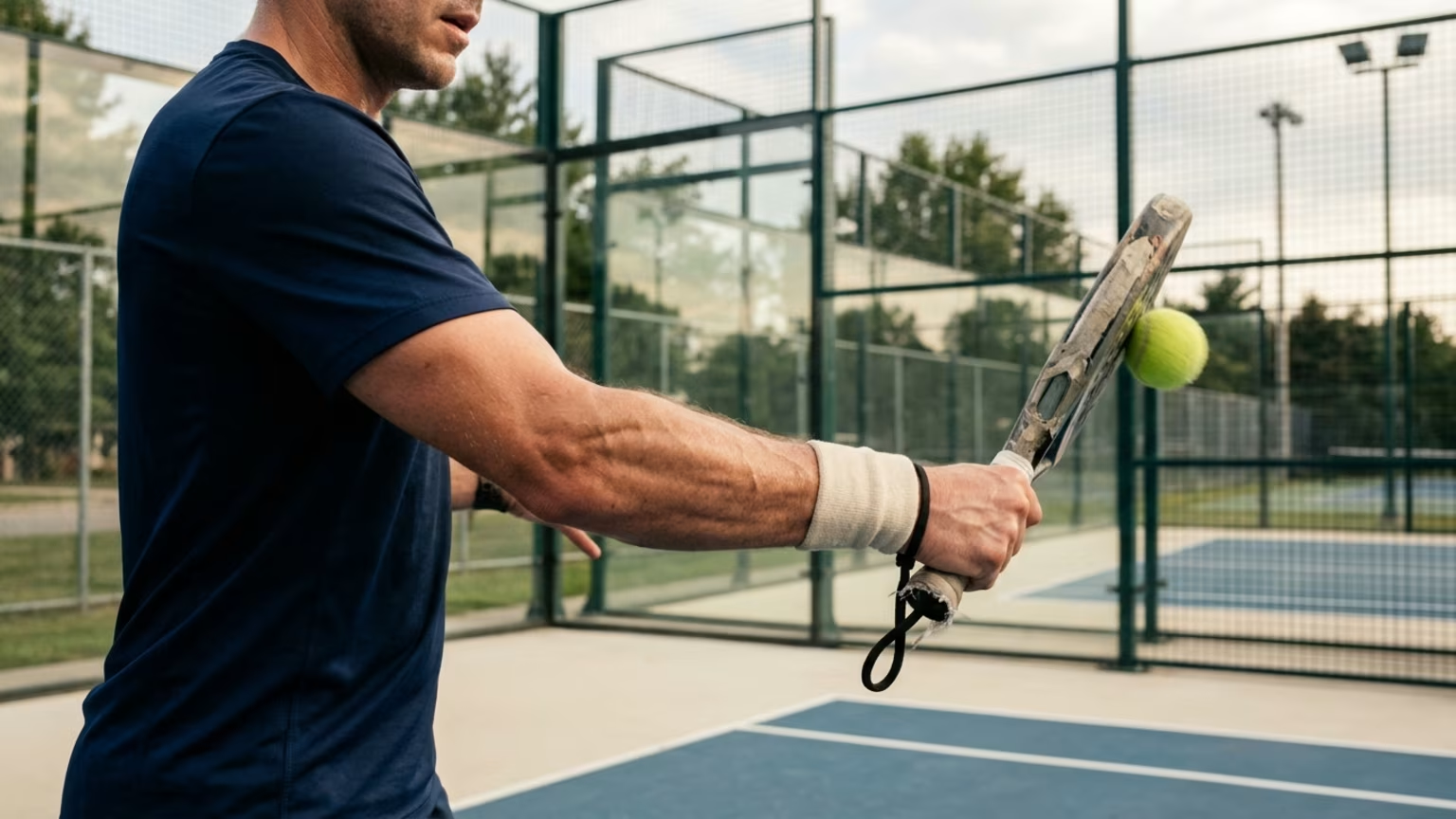

Learn the common causes of padel elbow, how repeated racquet strain impacts your joints, and the practical next steps for maintaining healthy aging on the court.




Padel elbow is a common term for lateral elbow tendinosis, an irritation of the forearm extensor tendons near the outside of the elbow. This condition frequently develops from repetitive gripping, twisting, and swinging motions that involve wrist extension. While players often use the term as a catch-all for any arm discomfort, clinical research shows that elbow pain in racquet sports can stem from several distinct issues. Understanding the actual mechanics behind this discomfort helps players manage their physical workload and stay on the court for the long term.
Many adults come to racquet sports seeking a fun, engaging way to maintain their fitness and competitive edge. Unfortunately, jumping directly into intense match play without considering the mechanical toll can lead to frustrating setbacks. By examining the specific demands of padel, players can make informed decisions about their court time. Recognizing the early signs of tissue stress is a key component of responsible athletic participation.
Padel requires repetitive, high-velocity movements that place significant demands on the forearm and elbow joints. Players constantly perform rapid grip changes and execute repeated ball striking during long rallies. These physical demands force the extensor tendons to work constantly to stabilize the wrist upon impact. When these forceful actions are repeated hundreds of times per session, the local tissues experience substantial mechanical load over a short period.
The inherent structure of the sport heavily challenges the upper extremities of the body. Non-contact injuries are the most prevalent mechanism overall in padel play. The rapid transitions between defensive lobs and aggressive overheads require sudden, forceful muscle contractions. Over a sustained period, this repetitive force accumulation tests the natural load capacity of the forearm tendons, which is why players often notice that symptoms flare up or actual injuries occur toward the end of matches.
Physical fatigue plays a critical role in how the body handles these sport-specific stresses. As a match progresses, players may naturally compromise their form to compensate for tired muscles. This muscular fatigue reduces the forearm's ability to absorb shock effectively from the racket frame. By understanding the physical demands of court sports, adult players can better prepare their bodies for the repetitive nature of the game. Building resilience against fatigue is a foundational part of preventing overuse issues.
The continuous need to grip the racket firmly during off-center hits further compounds the stress on the forearm. Every time the ball strikes the racket outside the sweet spot, rotational forces travel directly down the shaft into the hand. The extensor muscles must contract forcefully to prevent the racket from twisting in the player's grasp. This exact mechanism explains why frequent play without adequate recovery time creates a compounding cycle of tendon irritation.
A 2026 pictorial review reports an estimated three padel injuries per 1,000 training hours and eight per 1,000 matches. This review identifies the elbow as the most frequently injured body part in the sport. Common extensor tendinopathy, often referred to as tennis elbow, is the most commonly reported pathology. The review bases its findings on a two-year retrospective analysis of clinical and imaging records, supplemented by existing medical literature.
The review clearly connects lateral elbow tendinosis with repeated ball striking and rapid grip changes. However, padel elbow should not be treated as a definitive diagnosis based on the sport or location of discomfort alone. The medical review also lists medial epicondylitis and several other elbow conditions among padel-related findings. This highlights the importance of proper clinical assessment rather than assuming every ache is standard tendon irritation.
Research also notes specific differences in injury patterns between amateur and elite competitors. There is a greater proportion of tendon injuries among amateurs in the reviewed material. This discrepancy often points back to several modifiable risk factors that recreational players can address. The review names poor technique, inadequate warm-up, grip size, and string tension as variables that can influence injury rates.
Beyond equipment and physical preparation, personal intrinsic factors also play a part in tendon health. The clinical review lists older age, high BMI, and prior joint problems as intrinsic factors that influence injury risk. None of these elements assure an injury, nor does changing a single racket specification ensure a cure. The existing evidence simply supports reviewing your overall approach to the game to minimize unnecessary risk.
Understanding how padel taxes the elbow helps adult players maintain their physical capabilities and support healthy aging. Tendons adapt to physical stress gradually, meaning that sudden increases in playing volume can easily overwhelm them. Players can protect their joints by monitoring whether discomfort follows a recent rise in playing frequency, repeated long sessions, or altered stroke mechanics. Taking a proactive approach to workload helps you stay on the court for years to come.
Evaluating equipment variables is a sensible part of this long-term management strategy. The research identifies equipment factors like grip size and string tension as modifiable risk factors. Working with a qualified coach to review your grip habits and stroke mechanics can ensure your technique is not placing unnecessary stress on the elbow. However, these technical adjustments should be viewed as workload management strategies rather than direct medical treatments.
Rest and proper recovery scheduling are just as important as technique when managing tendon health. Since injuries often occur late in matches, pacing your weekly schedule can prevent the extreme fatigue that leads to poor mechanics. Implementing a smart approach to training load management directly reduces the risk of repetitive strain. Consistent routines and appropriate rest days allow tendons to recover and adapt to the sport.
Developing a broader view of physical preparation allows players to enjoy the game without constant interruptions. Routine check-ins on how your arm feels after a tough match can provide early warning signs of overload. Making small, proactive adjustments to your playing schedule is far more effective than forcing yourself through joint pain. Prioritizing tendon health ultimately allows you to play more matches over the course of a year.
While monitoring your workload is important, conservative management is not a substitute for professional medical care. Medical guidance states that repetitive gripping, twisting, and swinging motions can contribute to tennis elbow. However, these resources strongly recommend a professional medical review for chronic or severe pain. You should also seek prompt medical attention if you experience grip weakness that interferes with your daily activities.
Persistent or worsening symptoms require direct evaluation from a qualified physiotherapist or sports medicine physician. Because research shows padel players can experience various elbow conditions, self-diagnosis often leads to ineffective or delayed care. A clinician can provide an accurate diagnosis, rule out structural issues, and guide a proper rehabilitation process. Ignoring pain or attempting to mask it with equipment changes is not a sustainable solution.
Relying solely on advice from other players or internet forums can sometimes delay necessary medical intervention. Every player brings a unique injury history, fitness level, and biomechanical profile to the court. A licensed physical therapist can tailor a specific strengthening program that addresses your individual deficits. Seeking professional guidance ensures you address the root cause of the discomfort rather than just managing the symptoms.
Take a proactive step to assess your current routine today by reviewing your playing schedule for the past week, and block out at least one full rest day to help manage your tendon workload.
Follow Evercourts for practical insights on tennis, pickleball and padel performance, movement, recovery and healthy ageing. Stay connected for new articles, research-led guidance and ideas to help you play well and keep playing for years.


Holger Rune withdrew from the European Open with a back problem. The facts behind his decision and a grounded perspective for recreational players.

The Dink’s October 17 guide emphasizes deep returns, ball-height decisions and positioning against faster pickleball opponents.

A new report outlines padel and tennis gear trends. Learn how to assess adjustable rackets, sensor feedback and smart-court claims.
Read practical guidance for better movement, smarter preparation and a game that keeps working for you.
explore the Blog
