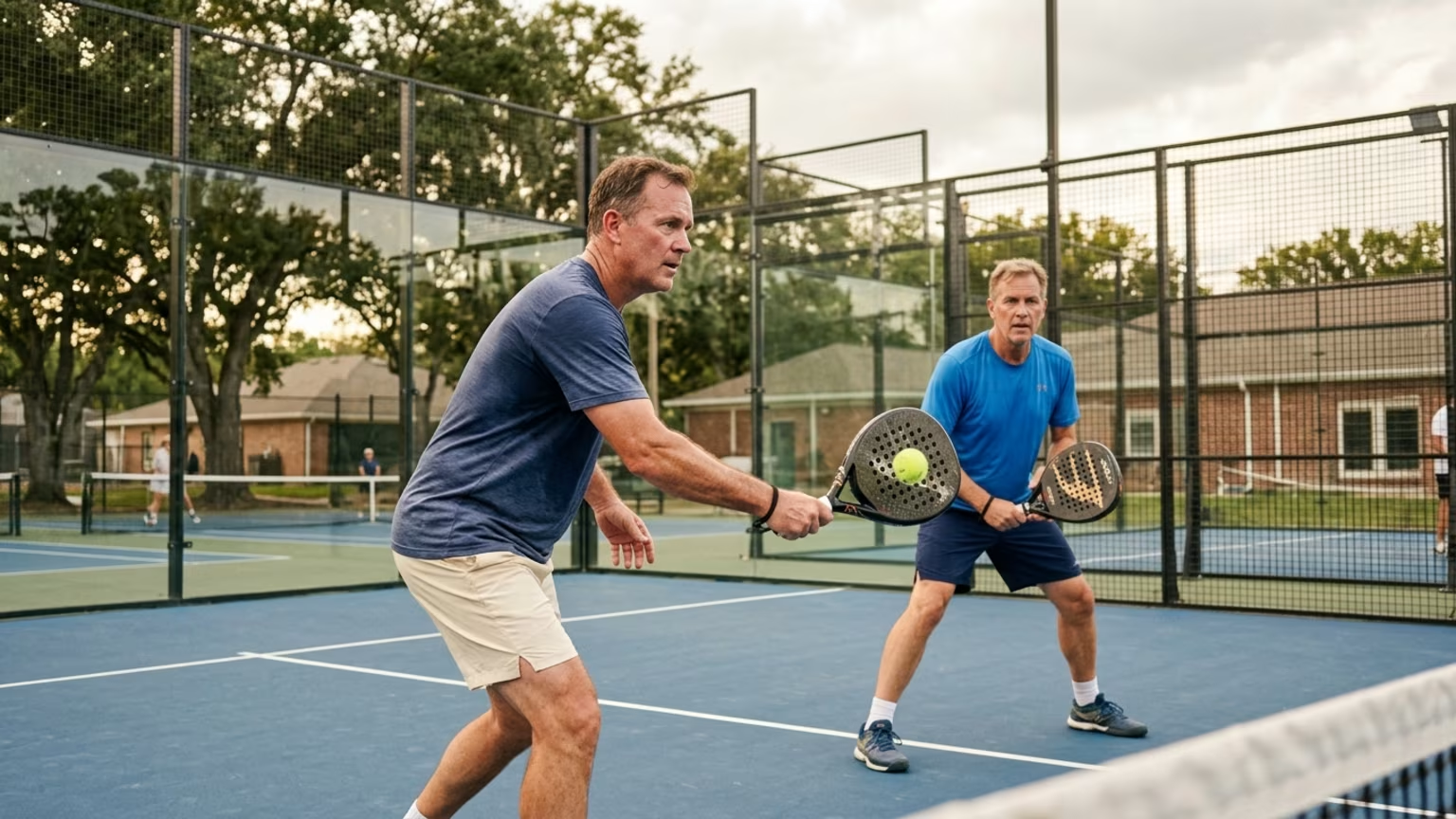

Learn how to win more padel points with less physical effort. Master repeatable shot selection rules to protect your joints and stay competitive for years.




Tactical efficiency is the deliberate refusal to swing at maximum effort when a simple shot will do. Hustle and raw power have long been celebrated as the ultimate indicators of athletic commitment. Yet chasing every lost cause and swinging aggressively from poor defensive positions only accelerates fatigue. Smarter shot selection preserves energy and keeps adult players in the match longer.
Many players transition into racquet sports assuming that cardiovascular fitness alone dictates success. This assumption leads to a style of play heavily reliant on sprinting and lunging. However, playing with constant high intensity wears down joints and drains mental focus. Learning to win points through positional awareness is a far more sustainable approach.
Racquet sports tax the body because they demand repeated explosive efforts and rapid lateral changes of direction. Padel is played on a regulation court measuring 20 metres by 10 metres. The playing area is completely enclosed by glass and mesh walls. A doubles tennis court provides more open playing area, while a pickleball court is substantially smaller.
The compact nature of padel reduces the time available for lateral reactions. The padel net is approximately 88 centimetres high at the centre and 92 centimetres at the posts. These specific dimensions make positional errors costly and frequently force players into awkward defensive lunges. Frequent bending and reaching challenge the lower body and heavily tax the central energy systems.
The presence of rebound walls introduces another layer of physical complexity to the match. Players must constantly rotate their hips and track the ball over their shoulders. These twisting motions place significant rotational stress on the spine and the lower back. Misjudging the rebound trajectory often results in a late swing and a compromised posture.
I used to think a tough conditioning block was the only way to improve my court endurance. Then I started tracking my sleep. I noticed that on days I slept less than six hours, my reaction time at the net was noticeably sluggish, and I felt gassed by the second set.
Prioritizing consistent rest did more for my late match stamina than any extra sprints ever did. Recovery is the true foundation of performance. Evercourts focuses on helping adult players manage these spatial demands without treating every point like a track event. Intelligent positioning is the natural companion to targeted physical recovery.
Current sports science highlights how the court environment actively shapes physical workload. A 2026 study of women’s padel training tasks reported that task orientation and available court space substantially influenced physical and physiological demands. The research noted that larger spaces generally produced higher demands across several task formats. This evidence supports adapting your tactical approach rather than relying on endless aerobic conditioning.
Playing on a smaller court does not automatically guarantee joint safety for recreational adults. In a Saudi study of amateur players, researchers reported persistent symptoms and recurrent instability among participants with ankle sprains. This finding strongly underscores the importance of intelligent court movement over reckless running. Relying on efficient routes and balanced steps protects vulnerable ankles and knees.
Specialist match analysis also points toward the value of structured tactical restraint. Match review guidance recommends tracking first-ball landing zones, back-glass lob outcomes, and the two shots preceding net errors. Reviewing these specific metrics helps players recognize their own rushed tactical decisions. Reducing unforced errors through better choices is a cornerstone of sustainable tournament play.
Additionally, the International Padel Federation's technical manuals clearly define the standard playing environment. Establishing these exact spatial boundaries highlights how heavily the game relies on geometric strategy. Players who try to overpower this standard space usually exhaust themselves prematurely. Success on the court depends entirely on adapting to these fixed structural boundaries.
Understanding these tactical mechanics helps adult players maintain their physical capabilities for years. The wall and court structure makes certain strategic decisions highly repeatable across every match. Padel is generally played in doubles, and the compact enclosed court makes partner spacing central to decision-making. Players can apply specific rules to manage their workload effectively and avoid exhaustion.
A lob should change court position rather than simply act as a desperate defensive bailout. If the opponents are close to the net, a deep lob pushes them back safely. The player must have enough time to get underneath the ball for a controlled trajectory. A controlled lob is preferable to forcing a low-percentage passing shot through a tiny gap.
Padel’s shorter 20-metre court and rebound walls mean that a ball can remain tactically relevant after reaching the glass. If the ball is heading safely toward the back glass, players should let the rebound develop. This decision creates space for balance and preparation instead of forcing an early contact. Using the wall properly replaces frantic sprinting with early reading and efficient positioning.
A measured volley helps maintain pressure without requiring an immediate winning shot. Players should volley firmly when the ball is above net height and safely in front. A controlled volley directed to the middle reduces the opponents’ available attacking angles. Hitting hard from a stretched or compromised position usually magnifies errors and wastes precious energy.
A defensive reset becomes necessary when the player is completely out of position. Power rarely solves the problem of an awkward stance or a dropped ball. When the contact is unstable, players should prioritise height, depth, and recovery over aggressive pace. This intentional decision buys time and restores essential balance for the defending partnership.
A controlled attack requires a highly stable base and a comfortable contact point. Players should attack only when they have good balance and the opponents are clearly displaced. Forcing a smash from a deep or low ball is an inefficient use of physical resources. Reserving aggressive swings for true offensive opportunities noticeably reduces the toll on aging shoulders.
Padel requires constant coordination between partners. If a shot forces one partner to chase while the other stays fixed, it exposes large gaps on the court. Controlled cross-court balls and high-margin lobs help the pair move as a unified defensive wall. Maintaining this structured shape prevents unnecessary scrambling and protects both players from fatigue.
Integrating these rules allows you to build an effective approach to athletic longevity. Tactical discipline ensures that you hit far fewer balls from a state of physical distress. Working intelligently with the geometry of the court helps adult players perfectly preserve their stamina. This structured restraint is the key to enjoying racquet sports without constant lingering soreness.
Pain and recurrent joint instability are clear signals to consult a qualified healthcare provider. Tactical adjustments cannot magically replace targeted clinical rehabilitation for a pre-existing joint problem. Players experiencing ongoing ankle weakness should seek a professional medical evaluation without unnecessary delay. Persistent joint symptoms require formal clinical attention rather than hoping for simple natural recovery.
Even the smartest shot selection cannot compensate for untreated tissue damage or chronic inflammation. A physiotherapist can properly assess range of motion and prescribe highly appropriate strengthening exercises. Treating injuries early ensures that adult players can stay active and competitive over time. The wisest players know when to stop adjusting their game and start addressing their health.
Follow Evercourts for practical insights on tennis, pickleball and padel performance, movement, recovery and healthy ageing. Stay connected for new articles, research-led guidance and ideas to help you play well and keep playing for years.


Holger Rune withdrew from the European Open with a back problem. The facts behind his decision and a grounded perspective for recreational players.

The Dink’s October 17 guide emphasizes deep returns, ball-height decisions and positioning against faster pickleball opponents.

A new report outlines padel and tennis gear trends. Learn how to assess adjustable rackets, sensor feedback and smart-court claims.
Read practical guidance for better movement, smarter preparation and a game that keeps working for you.
explore the Blog
