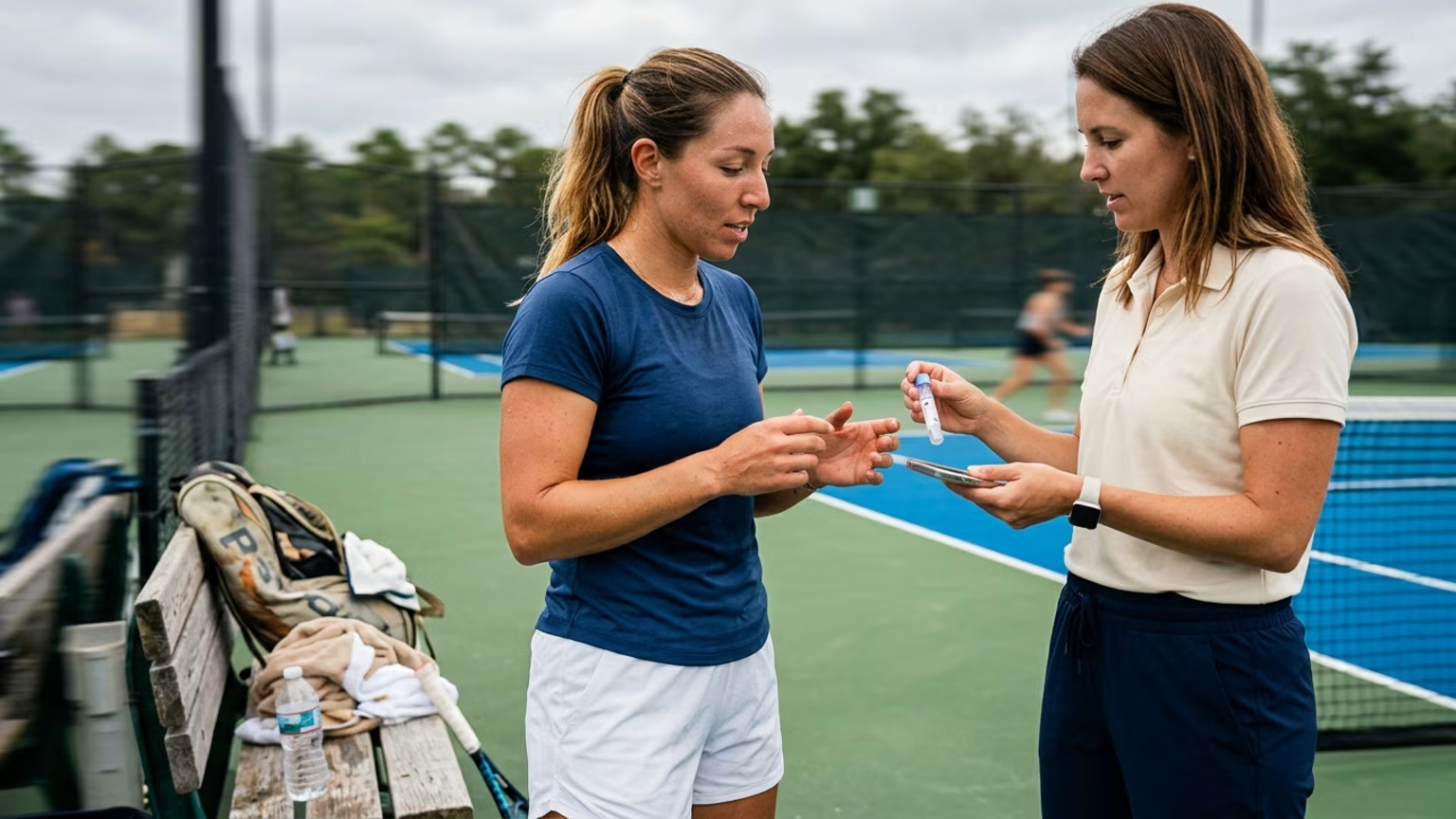

Jessica Pegula recently confirmed the WTA has begun genetic eligibility testing. Learn how this policy differs from actionable biological performance monitoring.




Biological athlete monitoring is the practice of measuring physiological data to guide training, but assuming every professional test is designed to build better athletes is a fundamental mistake. Professional tennis player Jessica Pegula recently confirmed that the Women's Tennis Association (also known as the WTA) began a new genetic testing policy. However, this specific initiative is a one-time genetic sex test designed solely to establish eligibility for its women’s competitions.
While professional tennis is making headlines for genetic eligibility screening, the true utility of biological data lies elsewhere. For athletes looking to improve performance, real biological tracking focuses on actionable workload metrics and recovery data. The new tour requirement serves a completely different administrative function. True performance monitoring relies on metrics that change over time and respond to specific training inputs.
A one-time genetic test provides a static data point that cannot guide daily athletic preparation. The distinction between eligibility criteria and performance tracking is critical for readers following racquet sports news. Genetic screening on the professional tour does not translate into a new training methodology for amateur competitors. Actionable biological data requires constant reassessment to be useful for adult players.
Players often seek out advanced biological testing because the physical demands of court sports are uniquely grueling. Tennis, pickleball, and padel specifically challenge the musculoskeletal and anaerobic energy systems due to repeated explosive efforts and changes of direction. A single competitive match requires hundreds of sudden accelerations, hard stops, and lateral lunges. This continuous cycle creates micro-tears in muscle fibers and heavily depletes localized energy stores.
The sheer volume of directional shifts places massive eccentric loads on the lower body. Every time you sprint for a drop shot and rapidly decelerate, your tendons and ligaments absorb tremendous kinetic force. Over the course of a long session, this mechanical stress accumulates significantly in the knees, ankles, and hips. Developing essential footwork skills can improve efficiency, but the underlying physical tax remains high.
These sports also push the body’s energy systems to their absolute limits. Short bursts of intense activity followed by brief periods of rest require the anaerobic system to function at peak capacity. Once those anaerobic stores are depleted, players experience heavy legs and a sharp drop in explosive power. Monitoring how quickly the body recovers from these metabolic spikes is a major priority for serious competitors.
Because these sports tax the body so intensely, adult players constantly look for new ways to track their physical systems. This intense physical toll explains the growing interest in personalized athlete monitoring. When players feel the cumulative fatigue of a long season, headlines about biological data easily catch their attention. This dynamic makes clarity around medical news especially important for evercourts readers.
The current reporting around the WTA clearly separates eligibility testing from performance enhancement. Reuters reported that the WTA’s new policy requires a one-time genetic test to establish eligibility for its women’s competitions. The test examines the SRY gene, a gene associated with the Y chromosome and involved in biological-sex development. Reuters reported that the test may be conducted using either a cheek swab or a blood sample.
The WTA changed its women’s eligibility policy in July 2026. Reuters reported that the previous policy allowed transgender women to compete if their testosterone levels had remained below a specified threshold for more than two years before participation. Reuters also said that no known transgender women were then active in professional tennis. The WTA described the issue as sensitive and complex and said it was committed to treating players with dignity while implementing the policy respectfully and thoughtfully.
Jessica Pegula, currently identified by Reuters as the world No. 3 player, confirmed the rollout schedule. She confirmed to Front Office Sports that implementation had begun at the Cincinnati Open, which was scheduled to begin on Thursday, August 13, 2026. This genetic marker provides no information about an individual player’s ideal training load or recovery timeline. Consumer DNA kits marketed as tools to perfect your game are largely unsupported by rigorous sports science.
The policy itself remains a sensitive governance issue that has sparked varied responses across the sport. Reuters reported that Martina Navratilova and Aryna Sabalenka have spoken against the inclusion of transgender athletes in women’s sport, while Billie Jean King has described exclusion of transgender athletes as discrimination. Coco Gauff offered a more qualified response. Reuters reported that Gauff supported fairness in women’s sport but objected to people using the issue as a vehicle to attack the transgender community.
Understanding the strict difference between a static genetic test and actionable biological monitoring helps adult players maintain their physical capabilities. True athletic longevity comes from tracking variables that you can actually change through disciplined habits. While your genetic code is fixed, your daily training load, sleep quality, and perceived exertion fluctuate constantly based on your lifestyle. Players who focus on these modifiable factors can make informed decisions to lower their risk of overuse injuries.
Actionable monitoring means paying attention to how your body responds to the specific demands of the court. If you track your sleep hours and notice a drop in match endurance after restless nights, you have identified a measurable performance variable. Similarly, documenting your weekly court hours helps prevent sudden spikes in workload that frequently lead to tendon issues. Choosing events without overplaying ensures you can continue enjoying racquet sports throughout your life.
Healthy aging in sports requires a commitment to progressive conditioning rather than searching for hidden genetic secrets. You should base your training decisions on observable and clinically relevant information. Tracking your recovery intervals and prioritizing proper nutrition yields far better results than looking for shortcuts in a DNA test. When you learn to adjust your schedule based on observable fatigue, you build a resilient routine that protects your joints over time.
Many adult players successfully use basic heart rate monitors or perceived exertion scales to guide their sessions. These tools provide immediate feedback about your cardiovascular effort during intense rallies. Using accessible technology to monitor your daily readiness is an excellent strategy for proactive player health management. However, it is the consistency of your habits, rather than the complexity of your tracking, that ultimately preserves your mobility.
Even with excellent personal tracking and workload management, certain physical signals require expert evaluation. You should consult a qualified physical therapist or healthcare provider if you experience localized pain that sharpens during sudden changes of direction. Ignoring mechanical pain in the hopes that rest alone will cure it often leads to chronic movement compensations. Professional guidance is especially important if you feel unexpected instability in your knees or ankles after a match.
Persistent joint stiffness that does not improve after a thorough warm-up is another clear indicator that professional help is necessary. A specialist can assess your movement mechanics and provide a structured conditioning plan based on clinical evidence. They can translate the complex demands of court sports into a targeted rehabilitation program. Working with a professional ensures that any underlying tissue damage is identified and addressed properly.
Relying on internet research or unproven biological testing to diagnose an injury only delays your return to the court. Certified healthcare providers use validated clinical assessments to understand your specific limitations and physical capacity. True athletic health relies on listening to your body in the present moment. The most valuable data you can gather is an honest awareness of how you move and feel today.
Follow Evercourts for practical insights on tennis, pickleball and padel performance, movement, recovery and healthy ageing. Stay connected for new articles, research-led guidance and ideas to help you play well and keep playing for years.


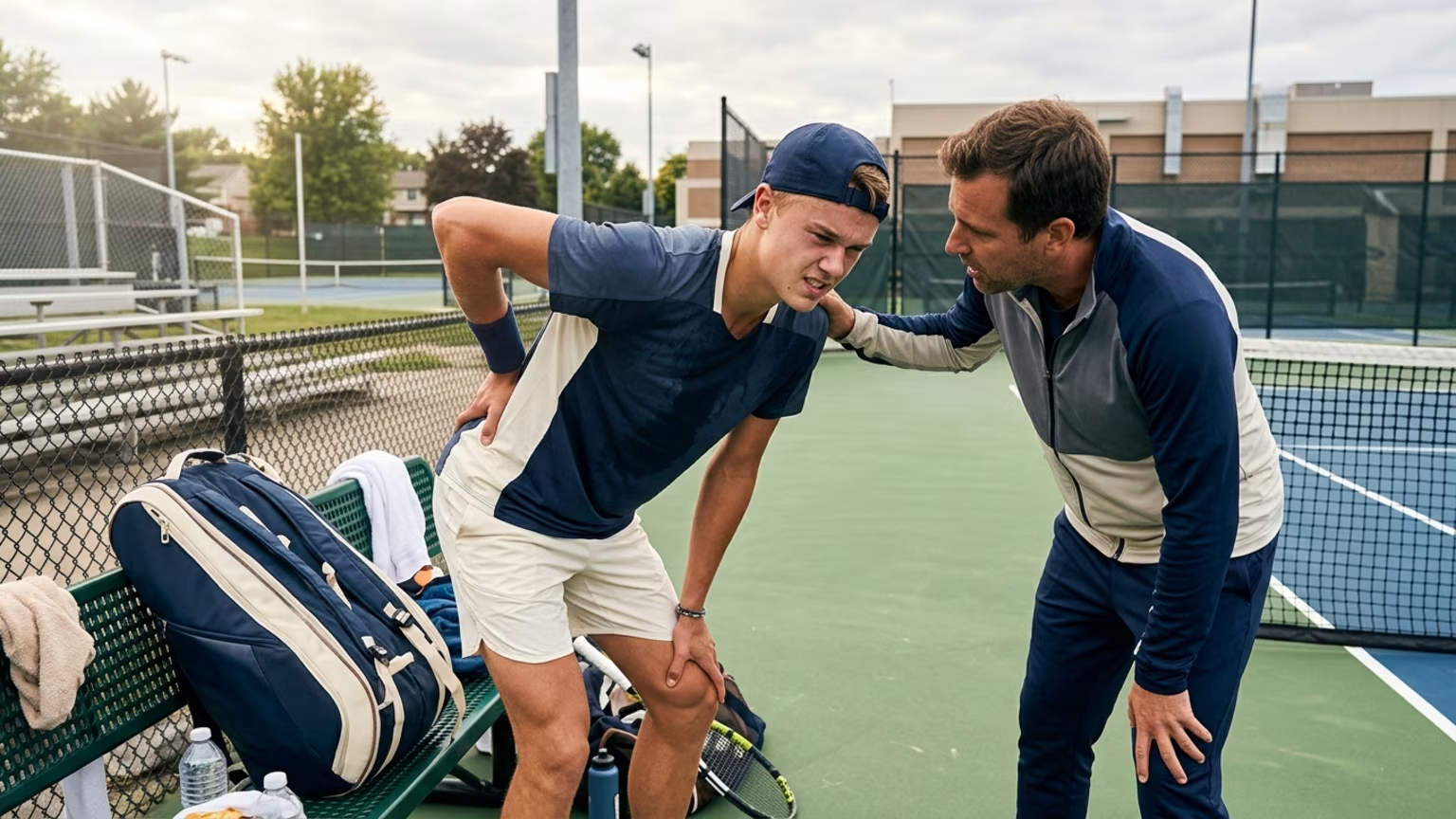
Holger Rune withdrew from the European Open with a back problem. The facts behind his decision and a grounded perspective for recreational players.

The Dink’s October 17 guide emphasizes deep returns, ball-height decisions and positioning against faster pickleball opponents.

A new report outlines padel and tennis gear trends. Learn how to assess adjustable rackets, sensor feedback and smart-court claims.
Read practical guidance for better movement, smarter preparation and a game that keeps working for you.
explore the Blog
