

Former Pescara captain Andrea Camplone collapsed during a padel match on September 13. Learn how this incident highlights the need for court preparedness.




Former Pescara football captain Andrea Camplone was admitted to intensive care on September 13 2026 after suffering a cardiac arrest during a recreational padel match. The 60-year-old collapsed and lost consciousness at a sports centre in Montesilvano, Italy. The incident immediately required bystander intervention and professional medical resuscitation to stabilize his condition.
The emergency response was rapid and multi-staged. According to local coverage, a doctor who happened to be at the Montesilvano facility provided initial assistance. Italy’s 118 emergency medical crews arrived shortly after and continued professional cardiopulmonary resuscitation.
The emergency crews reportedly utilized a LUCAS mechanical chest-compression device during cardiopulmonary resuscitation. They also intubated Camplone at the scene to secure his airway before initiating transport. Paramedics then moved the former athlete to Pescara’s Spirito Santo Civil Hospital under a red-code emergency classification. Camplone subsequently underwent an emergency haemodynamic procedure to treat his condition.
Following the procedure, his condition was reported as stable, though doctors maintained a guarded prognosis. The exact underlying medical cause of the cardiac arrest has not been publicly established in the available reports. Goal notes that Camplone is well known in the region, having captained Pescara during two Serie A promotion campaigns in 1987 and 1992.
When a high-profile former professional athlete experiences a sudden medical emergency on the court, it naturally raises questions for everyday players. However, a single incident does not prove that padel is inherently dangerous for older adults. Instead, it serves as a critical reminder about personal medical readiness and facility preparedness. Padel involves intermittent bursts of intense movement and repeated rallies, which place specific demands on the cardiovascular system.
For recreational players, athletic longevity means managing these physical demands intelligently rather than avoiding the sport. Adult players returning to vigorous racquet sports after a long break should consider discussing their activity plans with a healthcare professional. We must also listen to warning signs, such as unexplained breathlessness or chest discomfort, instead of pushing through them. Taking these proactive steps ensures that we can continue playing safely for years.
Many amateur athletes mistakenly believe that pushing through exhaustion builds mental toughness. In reality, ignoring physical distress signals on the court can lead to severe consequences. Proper pacing allows the body to adapt safely to the cardiovascular demands of the sport. We must recognize the clear distinction between standard match fatigue and abnormal medical symptoms.
I remember finishing a tough two hour padel match on a cold Tuesday night and waking up the next morning feeling like my lower back was locked in concrete. For a long time, I just accepted this as the price of playing hard in my forties. But once I started spending just ten minutes on targeted hip mobility before heading to the club, the stiffness almost completely vanished. It taught me that we do not have to accept pain as a default state of aging.
While mobility prevents joint stiffness, cardiovascular preparation ensures we can handle the heart rate spikes that padel demands. Proper workload management and progressive training are essential for maintaining our health on the court. Taking the time to prepare the body applies just as much to internal health as it does to muscle readiness. Building a sensible routine allows us to perform well while protecting our cardiovascular system.
Skipping the warm-up is a common habit that puts adult players at unnecessary risk. When I first started playing pickleball, I noticed how many people skipped warming up entirely. They would jump straight out of their cars and right up to the kitchen line. I tried doing that and immediately pulled a calf muscle. Pickleball requires just as much explosive lateral movement as tennis, just in a tighter space.
Since then, I always spend five minutes doing dynamic lunges and ankle rolls. It changes everything about how confident I feel pushing off the baseline. Taking the time to properly transition from resting to playing protects our muscles and joints. This principle applies equally to preparing our cardiovascular system for intense rallies.
Off the court, adequate rest is equally crucial for long-term health and athletic performance. I used to think a tough conditioning block was the only way to improve my court endurance. Then I started tracking my sleep. I noticed that on days I slept less than six hours, my reaction time at the net was noticeably sluggish, and I felt gassed by the second set. Prioritizing consistent rest did more for my late match stamina than any extra sprints ever did.
Recovery is the true foundation of performance. Managing our playing intensity and prioritizing rest are non-negotiable elements for safe participation. By treating recovery with the same respect as our time on the court, we support athletic longevity. Balancing match play with adequate rest forms the core of a smart padel training week.
Facility readiness is just as critical as individual physical preparation. The response in Montesilvano was effective because bystanders raised the alarm rapidly. Every player should know where their local facility keeps its first-aid equipment and whether an automated external defibrillator is accessible. We encourage players to ask their club managers about emergency action plans before a crisis occurs.
Clubs should ensure staff are trained to act quickly and guide emergency responders directly to the correct court. Clear signage with the exact facility address should be visible near every playing area. These simple administrative steps eliminate confusion during high-stress medical situations. A well-prepared facility supports the health and safety of every athlete on the court.
Players planning a padel getaway should verify that their chosen destination has clear emergency protocols in place. Familiarizing yourself with the local emergency number and the exact address of the venue can save vital minutes. Being proactive about safety allows us to enjoy the game with confidence and peace of mind. Preparation transforms an unpredictable environment into a secure playing space.
Moving into the next season, expect recreational clubs to place a heavier emphasis on visible emergency protocols and staff medical training. As participation in racquet sports continues to grow among older adults, facility operators will likely standardize their safety measures. The focus will shift from merely providing court access to ensuring a comprehensive, secure environment for long-term athletic participation. Players will increasingly favor venues that demonstrate a clear commitment to their overall well-being and emergency readiness.
Follow Evercourts for practical insights on tennis, pickleball and padel performance, movement, recovery and healthy ageing. Stay connected for new articles, research-led guidance and ideas to help you play well and keep playing for years.


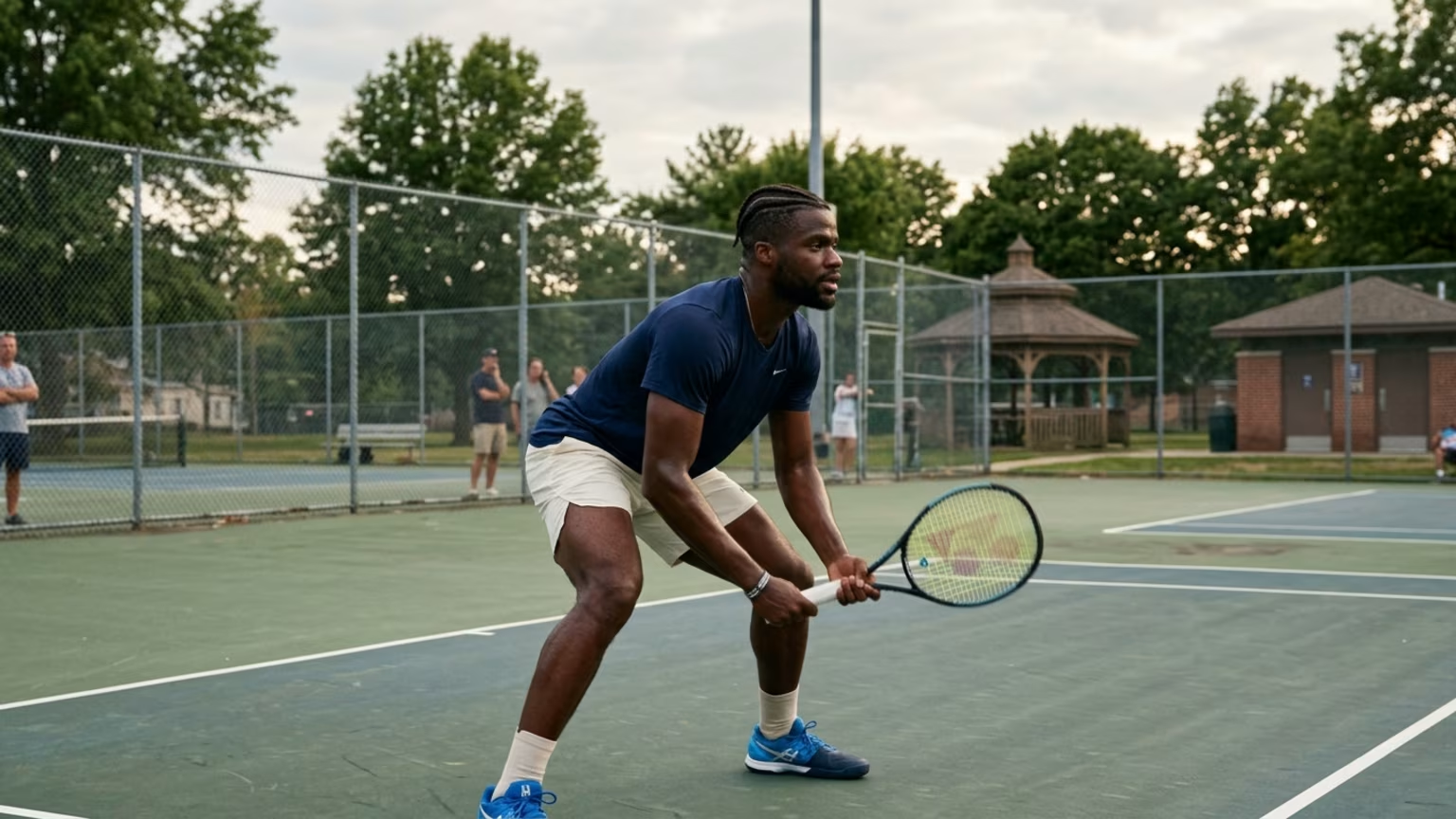
An analysis of the 2026 US Open semifinal explores how a compact return strategy can manage big serves, offering practical tactics for adult players.
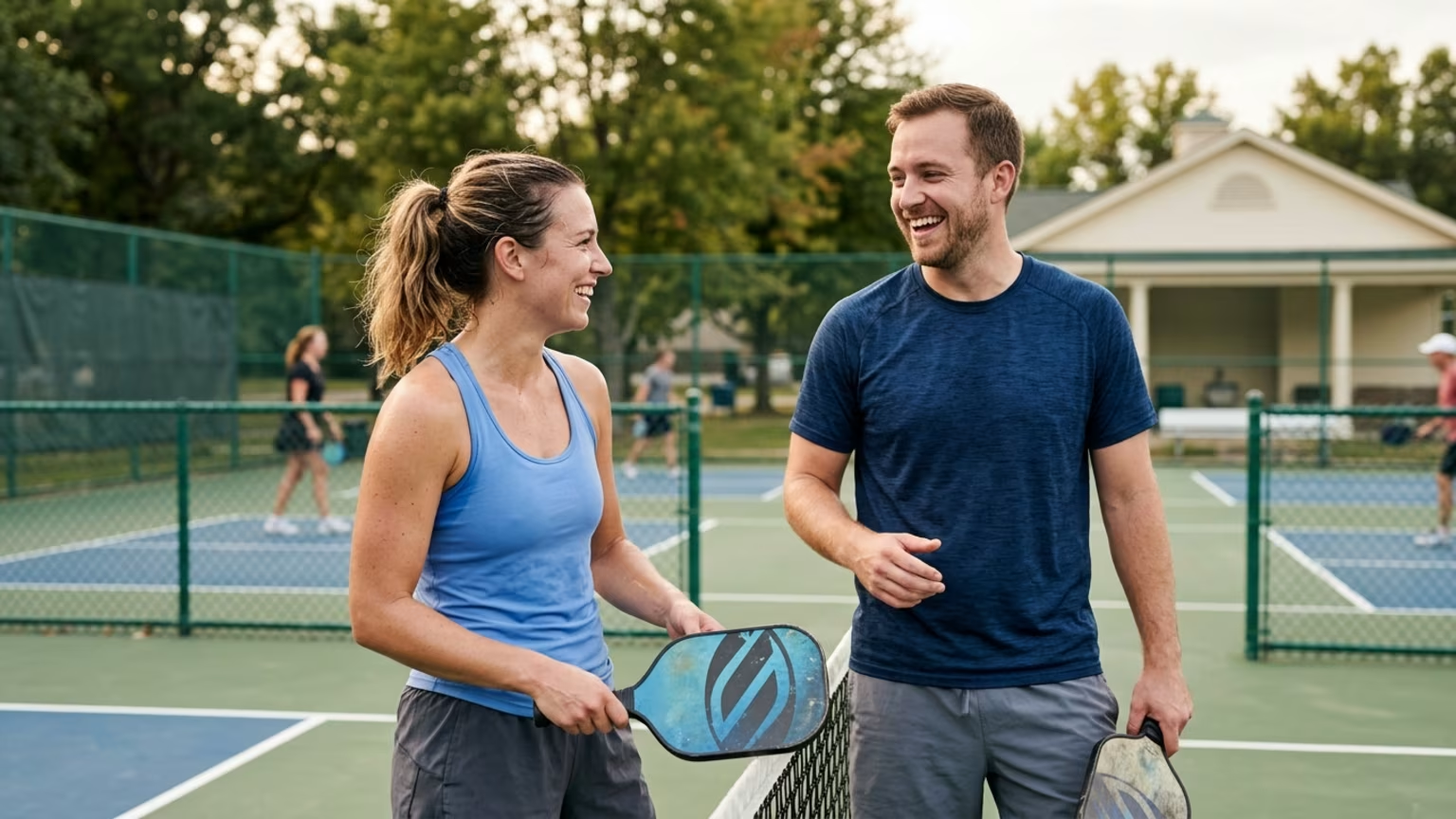
A new pickleball dating app highlights the growing demand for digital tools that help adult players match on-court compatibility, skill level, and scheduling.
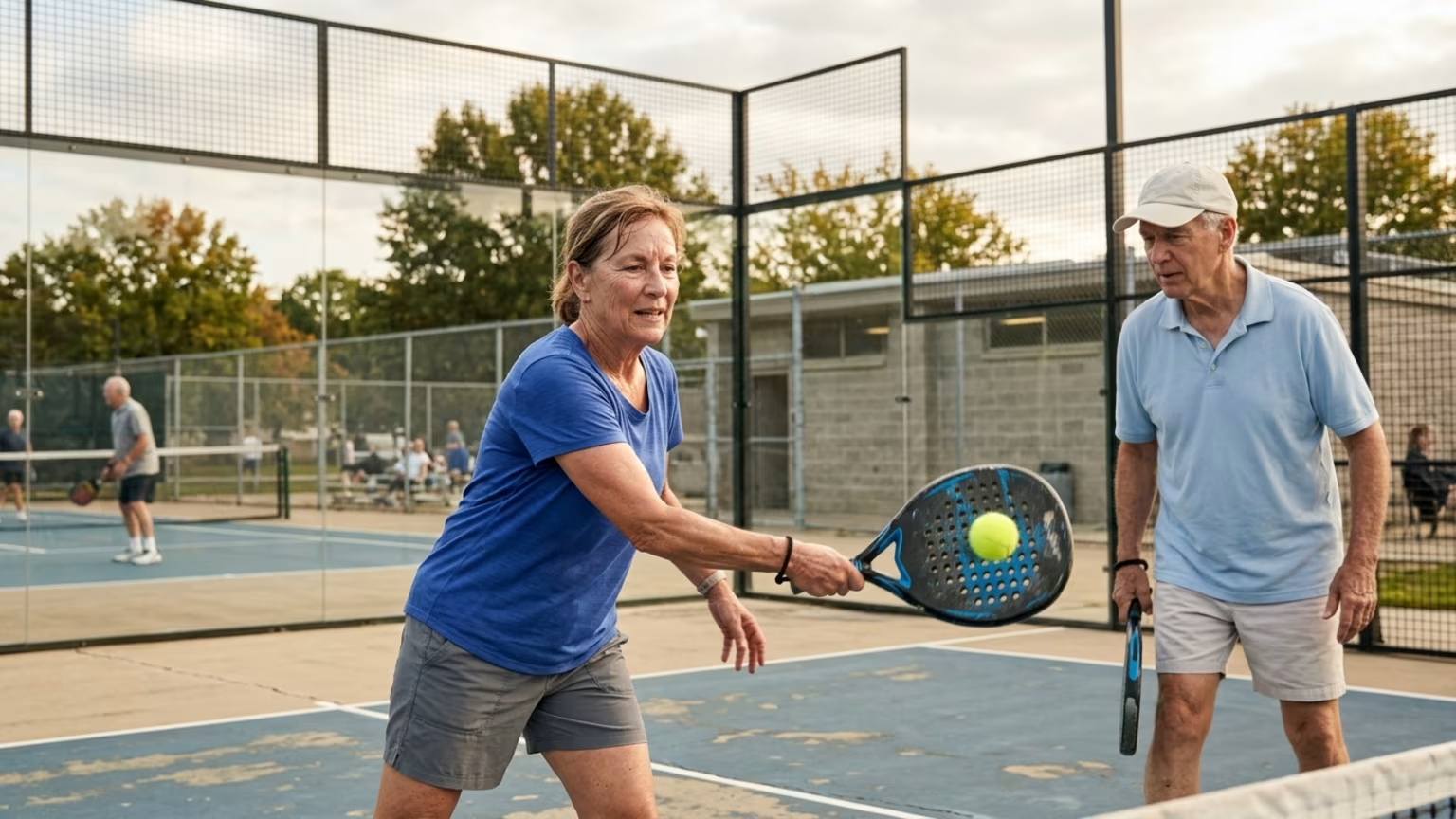
A recent KeepActive directory update highlights a Melbourne-area padel program offering introductory coaching and social play for adults aged 65 and over.
Read practical guidance for better movement, smarter preparation and a game that keeps working for you.
explore the Blog
