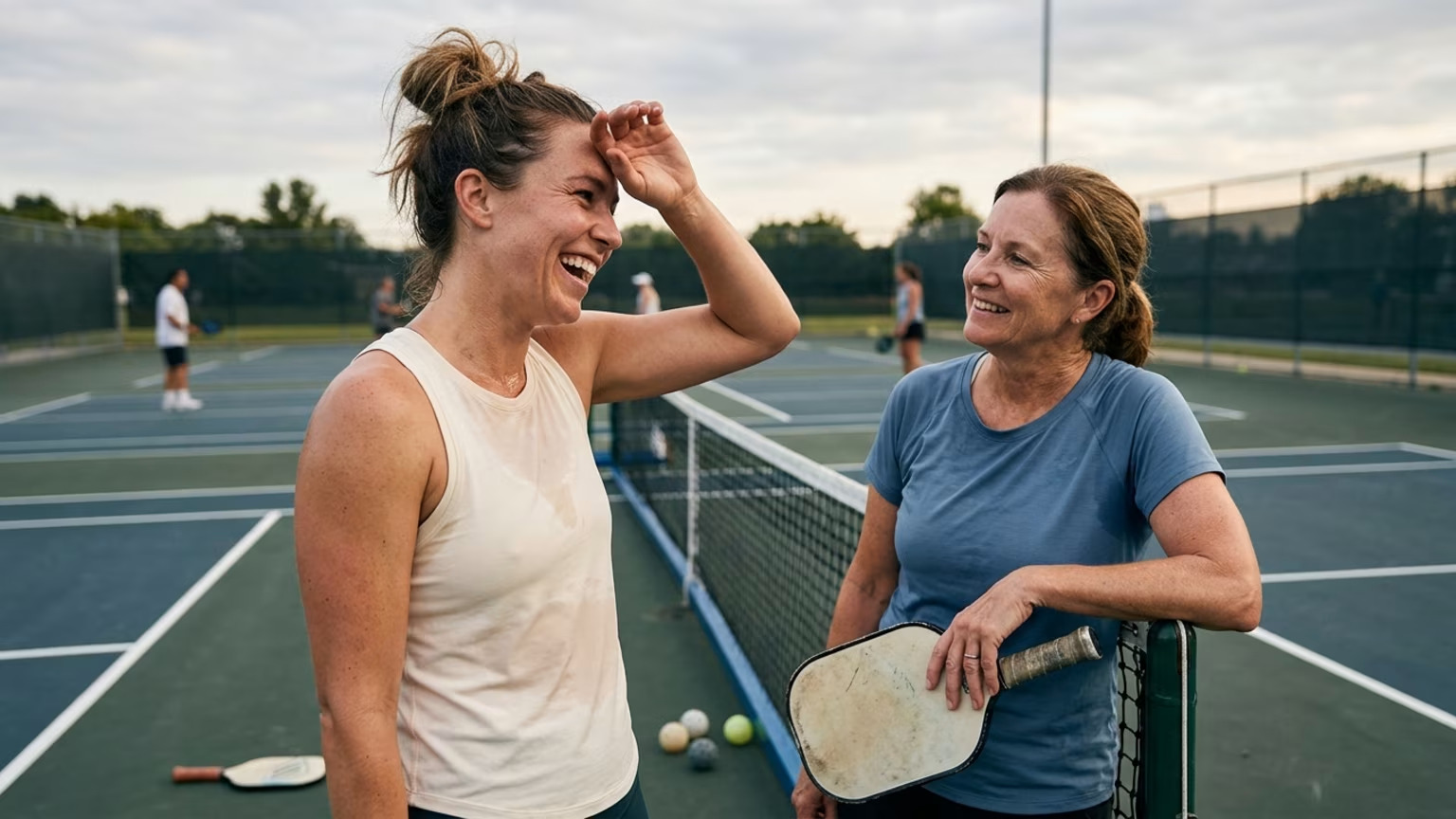

Learn how to plan a tennis, pickleball or padel trip that protects your joints. Practical tips for managing unfamiliar courts and finding suitable opponents.




A racquet sports getaway is the deliberate coordination of travel around court access, equipment requirements and physical recovery. You drop your luggage in an unfamiliar hotel room. The local tennis courts sit just a short walk down the street. The afternoon heat is already radiating off the hard surface.
Tennis, pickleball and padel specifically challenge the lower body and energy systems due to repeated explosive efforts and constant changes of direction. Compressing multiple matches into a short weekend trip amplifies this physical strain. Your muscles and joints must suddenly handle high-intensity braking and accelerating on unfamiliar court surfaces. Travel fatigue further compromises your typical reaction times and movement efficiency.
The surface variations in tennis demand specific physical adaptations. The ITF lists a tennis court as 78 feet long, 27 feet wide for singles and 36 feet wide for doubles. The ITF describes clay as the slowest major surface, grass as fast and hard courts as variable in speed. A player moving from familiar hard courts to a vacation clay court must physically adjust their sliding and braking mechanics. Someone transitioning to grass should expect lower and potentially less predictable bounces.
Pickleball introduces its own specific physical variables during outdoor travel. Standard pickleball court dimensions are 20 by 44 feet for both singles and doubles. The smaller court might seem less demanding than a traditional tennis facility. However, the rapid non-volley zone exchanges still require sharp lateral lunges and split-second muscle contractions.
Padel demands even more lower-body coordination and rotational readiness. FIP rules summaries describe the standard padel court as 20 by 10 metres and enclosed by walls and fencing. Those active boundaries force players to rotate quickly and track balls rebounding from multiple unpredictable angles.
The growth of destination play is supported by significant international participation shifts. The Sports & Fitness Industry Association reported 24.3 million U.S. pickleball participants in 2025, up from 4.2 million in 2020. A separate industry report described pickleball participation as up 22.8 percent from 2024 and called it America’s fastest-growing sport for a fifth consecutive year.
Padel infrastructure is experiencing a similar global expansion. Playtomic and PwC’s reported estimate put the global padel market at about 58,300 courts and 19.4 million players, with 91,000 courts projected by 2028. The same source says Great Britain had 860,000 adults and juniors playing padel at least once in 2025 and 1,553 courts across 559 venues at the end of that year.
The United States is also seeing a steady rise in padel travel opportunities. The United States Tennis Association began tracking padel participation in 2025, and reporting based on USTA figures placed U.S. padel participation at approximately one million players in 2025. As these sports grow, recreational athletes are booking more frequent competitive trips.
With more older adults traveling to play, injury context is important to understand without alarm. A study summarized by Orthopaedic Carolina Research Institute found that more than eight in ten pickleball-related Achilles ruptures in its sample occurred in patients over 50. The median age was 60.
However, the researchers cautioned that the sample was relatively small and that larger studies are needed. These statistics do not mean the sport is inherently dangerous for older adults. They simply highlight the need for proper conditioning and workload management when playing away from home.
Understanding how travel affects your body helps you maintain your physical capabilities and stay on the court for years. The central planning principle is to match the trip intensity to your current physical capacity. You should not plan your schedule based solely on the marketing promises of a resort. A practical plan protects your joints and ensures healthy aging.
Start by organizing your daily match schedule carefully. The safest default for a weekend trip is one main competitive session per day. You can add one optional low-intensity session if you feel adequately rested. Leave enough recovery time to manage unfamiliar heat, wind and court pace.
Finding the right opponents prevents both physical overexertion and competitive frustration. The USTA website allows users to search for a player by name or USTA number. UTR Sports advertises level-based tennis and pickleball play, leagues, camps and player groups. Platforms such as Main Court advertise tools for finding players, groups and clubs based on pickleball preferences.
Padel is highly social but requires careful group coordination. Playtomic says its platform lets users create public matches and join nearby games. Using these tools helps you secure an appropriate match without exhausting yourself against mismatched opponents. Booking in advance also ensures you have dedicated time for a proper physical warm-up.
Environmental factors also require equipment adjustments to keep your body healthy. The Dink notes that the USA Pickleball rulebook does not specify a universal wind cutoff. Players in sanctioned events should check USA Pickleball’s approved equipment list. For padel travelers, the FIP rules summary gives padel rackets a maximum length of 45.5 centimetres and width of 26 centimetres.
Always pack surface-appropriate shoes to ensure proper traction and reduce injury risks. Carrying your own recovery tools helps manage soreness in a hotel room. Prioritizing these details helps you build a solid foundation for seasonal recovery planning.
While careful preparation minimizes risks, some situations require expert medical advice. You should consult a qualified physical therapist or healthcare provider if you experience recurring pain during practice. Swelling in your knees or ankles after a light hitting session is another clear warning sign. Do not ignore dizziness or unusual fatigue when playing in new climates.
Players with a history of prior tendon injuries should seek professional guidance before booking a demanding trip. A medical professional can help individualize a safe return-to-play strategy. They can also recommend appropriate lower-body strength routines to prepare your joints for travel. Incorporating specific drills can vastly improve your mobility, stability and joint health on the road.
If you have arthritis or cardiovascular disease, ask a doctor to review your planned match volume. They can advise you on exactly how many days of rest to schedule between competitive events. Addressing these concerns early ensures you can complete your vacation safely. It also helps you build a sustainable competition season without compromising your physical well-being.
Keep moving, plan smartly and enjoy the courts wherever your travels take you.
Follow Evercourts for practical insights on tennis, pickleball and padel performance, movement, recovery and healthy ageing. Stay connected for new articles, research-led guidance and ideas to help you play well and keep playing for years.


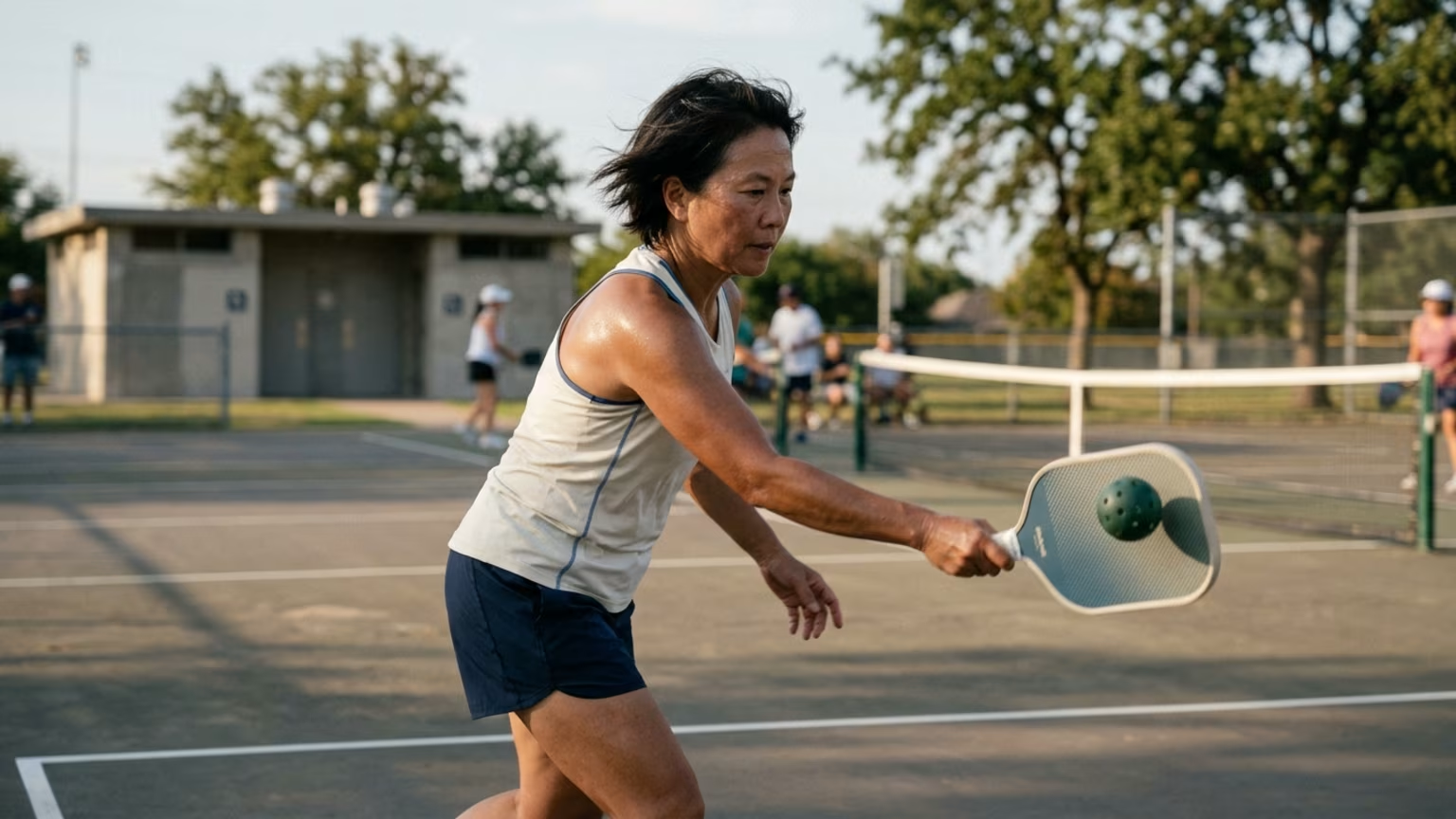
A recent live-play test of a silent pickleball highlights its value for practice, but standard balls still perform better for match play and power control.

An evidence check on sports supplements like tart cherry juice. Learn why racquet sports players should prioritize core nutrition over functional foods.
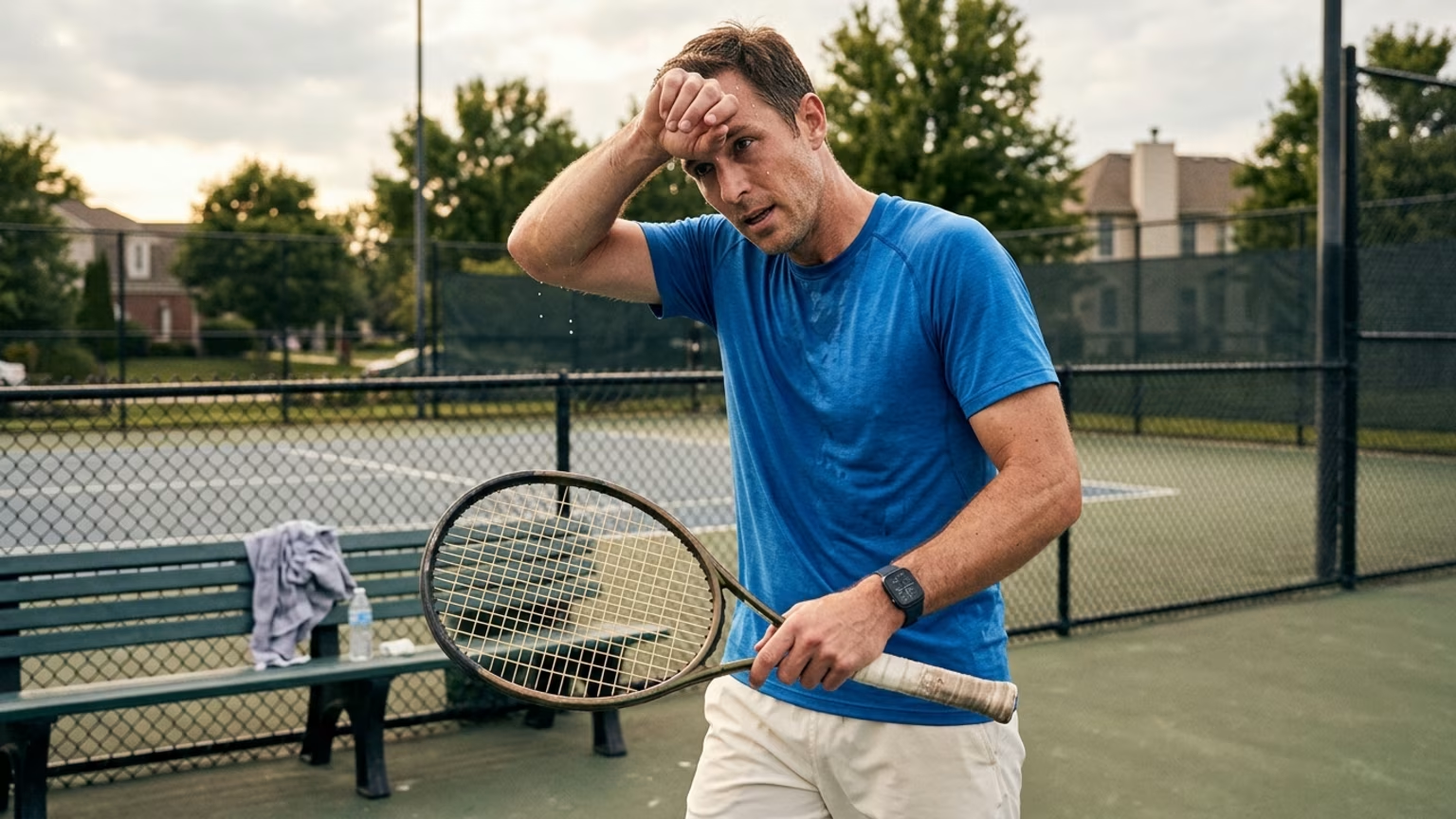
In late 2026, Oura analyzed wearable data to see how recreational tennis impacts heart health and recovery. Learn what this means for your athletic longevity.
Read practical guidance for better movement, smarter preparation and a game that keeps working for you.
explore the Blog
