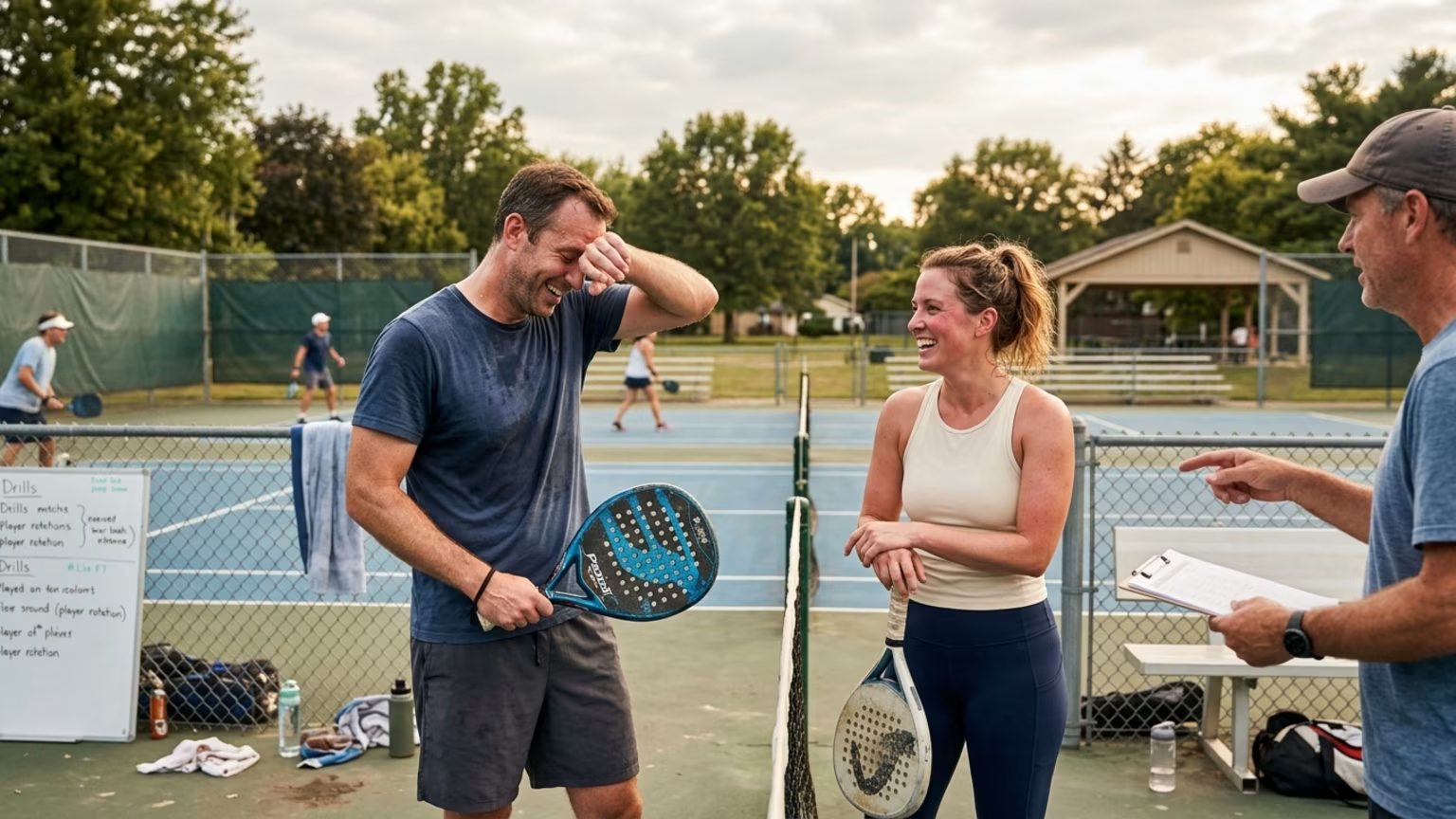

Germany's DTB recently held a performance padel course emphasizing workload management. Learn how adult players can apply these training control principles.




On September 11, 2026, Germany’s Deutscher Tennis Bund held a national performance padel course that formally placed workload management at the center of competitive coaching. The specialized event took place at SV Böblingen e.V. and specifically focused on training control for advanced players. This curriculum signals a clear shift in how national federations approach athletic longevity in padel. Coaches are now being actively trained to balance technical instruction with strict physical load management.
The DTB Padel C-Trainer module operates as an advanced specialization for coaches who already hold a recreational license. The course intentionally combines theoretical preparation with practical instruction on the court. It comprises 15 distinct learning units designed to help coaches systematically develop players in performance padel. The syllabus explicitly integrates workload control with athletic training, technical analysis, and tournament preparation.
This national event was listed under the official code 2026-T-DTB-C-LS. The single-day program ran from 10:00 to 17:00 with a standardized course fee of €195. Organizers capped the group to maintain high instructional quality, listing 14 available places with a minimum requirement of eight participants. At the time of publication, nine places were free.
This structured approach moves padel coaching firmly away from isolated stroke mechanics. Instructors are taught to view a player's physical capacity and court schedule as a single connected system. The comprehensive curriculum also covers anti-doping regulations, sporting ethics, talent identification, and higher-level tactics. Coaches must pass theoretical and practical examinations to prove their ability to design safe training processes.
Performance modules often sound like they only apply to elite touring professionals. However, the core principles of workload management are equally critical for adult recreational players who want to maintain their court capabilities. Competitive adults frequently make the mistake of measuring their readiness strictly by how many matches they play each week. The DTB curriculum makes it clear that practice formats must be carefully balanced with adequate recovery.
For the weekend league player, this means treating court time as a measurable physical stressor. You do not need a national coach to start recording your practice sessions, match intensity, and off-court strength work. A structured approach helps players avoid sudden spikes in volume that often precede joint issues. To help bridge the gap between match days, many players find success by balancing heavy padel matches with targeted strength training and vital rest days.
Adult players should prioritize individualized progression rather than copying a standardized weekly template. What feels like a light training week for one athlete might be an excessive workload for another. Adding structured strength and movement preparation is a vital component of this load management equation. Players who participate in multiple racquet sports must properly manage their physical conditioning to switch safely between tennis, pickleball and padel without accumulating hidden fatigue.
Players must listen to persistent symptoms like weakness or altered movement patterns and reduce their load accordingly. Unusually intense days require specific recovery adjustments before the next session. Proper workload management relies on adjusting your schedule based on physical feedback rather than forcing yourself through a rigid plan. This pragmatic strategy prevents the kind of fatigue that degrades technique and exposes the body to overuse issues.
Coaches working with adult competitors can use the DTB framework as a practical checklist. They must identify the physical demands of the player's level, plan training phases, monitor workload, and modify the program around tournament demands. Tennis and pickleball players can easily apply the same broad principles to their own routines. You should balance sport-specific practice with adequate recovery, even if padel injury statistics do not directly represent your specific sport.
Before stepping on the court for a high-intensity session, players need a proper protocol to prepare their joints and nervous system. Utilizing a structured warm up prepares the body for sudden decelerations and readies players for the first point. Warm-ups are a critical part of total load management because they condition the tissues for the specific demands of court coverage. Skipping this preparation phase sharply increases the physical stress placed on cold muscles.
The focus on structured training control comes at a time of significant growth for competitive padel in the region. According to industry outlet Padel4Players, the German Padel League had more than 500 teams and over 3,000 players in 2025. This expanding player base brings a corresponding need for evidence-based injury prevention. A 2026 scoping review covering 14 studies and 3,581 players identified the elbow and shoulder as recurring upper-body injury locations.
The same 2026 scoping review noted the knee and ankle as recurring lower-body problem areas. Recent recreational padel studies report estimates of approximately 2.81 to 5.4 injuries per 1,000 hours of play. Researchers consistently note that rapid changes in playing volume often contribute to these statistics. A 2026 meta-analysis published in PubMed reviewed 16 studies involving 797 team-sport athletes to examine training loads.
The researchers found that elevated acute to chronic workload ratios were associated with a small to moderate increase in injury risk. They calculated an effect size of g = 0.35 and a 95 percent confidence interval of 0.16 to 0.54. Despite this association, the meta-analysis reported a very high between-study heterogeneity of 95.8 percent. The authors concluded that workload ratios should not be treated as a stand-alone predictive model.
Similarly, a 2026 review of wearable technology found that wearable metrics have inconsistent associations with injuries. Current evidence does not support universal risk thresholds for athletes based on fitness tracker data. Wearables and calculated ratios are best used as monitoring tools rather than autonomous injury prevention systems. The practical value of the DTB course lies in structured decision-making rather than applying rigid formulas or relying entirely on smartwatch alerts.
The DTB's integration of load management into its official coaching pathway sets a new standard for racquet sports federations over the coming season. We expect to see more national associations require athletic training and workload monitoring for their baseline coaching certifications. This professional shift will likely filter down to the local club level quickly. Padel is clearly gaining increased visibility within the German tennis ecosystem, highlighted by a major DTB presentation at Hamburg’s Rothenbaum from September 4 to September 6, 2026.
As the sport continues to mature, the conversation around player development will focus heavily on athletic longevity. Coaches will spend as much time planning recovery and physical preparation as they do running technical drills. Adult players should anticipate a more holistic approach from certified instructors in the near future. The long-term health of the padel community depends on this exact transition from simple match play to structured athletic management.
Follow Evercourts for practical insights on tennis, pickleball and padel performance, movement, recovery and healthy ageing. Stay connected for new articles, research-led guidance and ideas to help you play well and keep playing for years.


A practical look at pickleball balance, leg strength and controlled stopping, with exercise examples and clear limits on injury-prevention evidence.

Understand braking and recovery on court, how planned routes differ from reactive practice, and when movement concerns call for professional guidance.

Understand tennis shoulder demands, the role of whole-body preparation, the limits of prevention claims and when persistent pain needs professional attention.
Read practical guidance for better movement, smarter preparation and a game that keeps working for you.
explore the Blog
