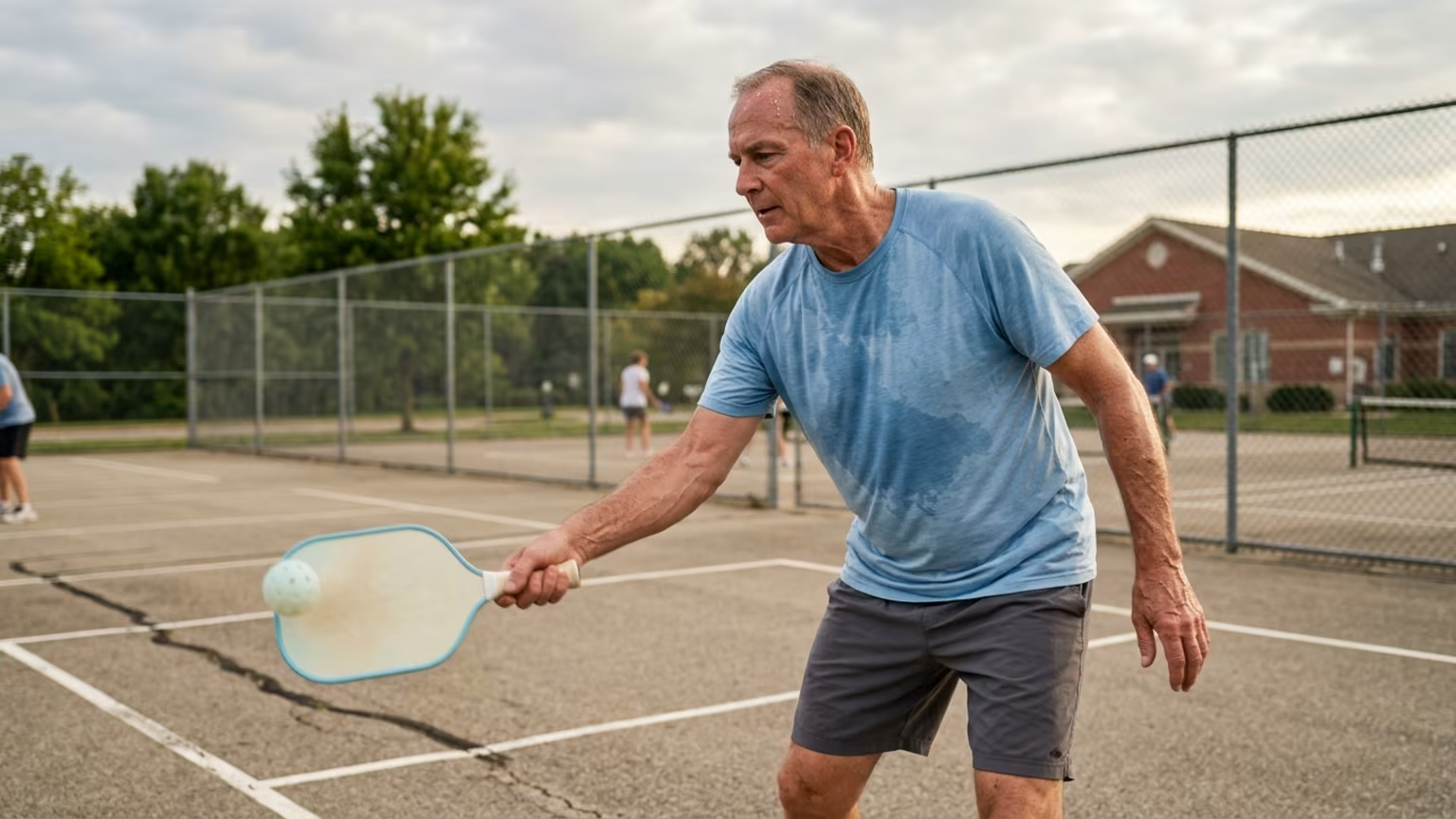

Learn how the lighter weight of pickleball equipment impacts arm strain and athletic longevity, plus practical equipment advice for adult recreational players.




On September 10, 2026, Thai PBS NOW published an explanatory report detailing how the lighter weight of pickleball equipment affects player fatigue. The publication stated that the lighter paddle and ball may reduce accumulated muscular tension compared to conventional tennis gear.
The Thai PBS NOW article presents the sport as a combination of tennis, badminton and table tennis. Players use a flat, stringless paddle made from materials like plywood, carbon fiber or Kevlar. The ball itself is a lightweight perforated plastic sphere. Indoor balls generally have 26 larger holes, while outdoor versions feature 40 smaller holes.
According to the report, this specific equipment profile requires less muscular effort from the arm, wrist and shoulder during repeated swings. One example of a compliant ball on USA Pickleball's approved list weighs just 23.1 grams. It measures exactly 73.8 millimeters in diameter. A standard pickleball court is 20 by 44 feet, or roughly 6.10 by 13.41 meters. This compact playing area is about one-third the size of a standard tennis court.
Because the paddle has no strings, the impact and swing mechanics are not directly equivalent to tennis or badminton. The lack of string tension means the paddle face does not absorb shock in the exact same way. The Thai PBS NOW article explains that the reduced mass of the paddle compensates for this structural difference. Lighter equipment simply requires less force to accelerate through the contact zone.
Professional players often focus heavily on maximizing power, but adult recreational players should prioritize comfort and technique. A lighter paddle is definitely easier to maneuver during quick volleys at the net. However, players can still develop overuse symptoms from poor mechanics or sudden increases in playing volume. The smaller court size involves frequent starts, rapid lateral shuffles and sudden stops.
When I first started playing pickleball, I noticed how many people skipped warming up entirely. They would jump straight out of their cars and right up to the kitchen line. I tried doing that and immediately pulled a calf muscle.
Pickleball requires just as much explosive lateral movement as tennis, just in a tighter space. Since then, I always spend five minutes doing dynamic lunges and ankle rolls. It changes everything about how confident I feel pushing off the baseline.
A lighter paddle does not automatically guarantee safety or prevent joint pain for everyday athletes. Players transitioning from other racquet sports need to consciously adapt their movement patterns to the new space. You can review our court movement playbook to respect the unique demands of each court. The frequent reaching and quick reactions in pickleball can challenge your lower-limb control just as much as your shoulder.
Thai PBS NOW specifically recommends using proper court shoes to support side-to-side movement. Ordinary running shoes lack lateral stability and can increase ankle risk during aggressive pivoting. If you are wondering when to upgrade your tennis racquet or pickleball paddle, look at how your current gear feels during defensive reactions. We recommend testing several paddles rather than choosing your equipment based on static weight alone.
Evaluate how each paddle feels during forehands, backhands and serves. Test the equipment during fast defensive reactions and overheads to ensure comfort. If arm fatigue appears early in a match, evaluate your swing weight and grip size. Sometimes, the issue is simply an excessive playing volume rather than the paddle itself.
Repeated practice sessions, busy tournament weekends and sudden increases in match intensity often cause more strain than a minor difference in paddle mass. Players with persistent shoulder, elbow, wrist or knee pain should reduce their aggravating activity immediately. Seek qualified physiotherapy advice rather than relying entirely on a lighter paddle to fix the problem. You should also increase your playing time gradually, especially after a long break from the court.
Research continues to evaluate the sport's exact impact on older adults and their physical health. A 2026 randomized controlled trial assigned 36 pre-frail older adults to play pickleball and 36 to a control group for eight weeks. The pickleball group saw 42 percent of participants move out of the pre-frailty classification entirely. Only 8 percent of the control group achieved the same functional result over the study period.
The trial report noted three minor issues including a shoulder strain, wrist pain and an episode of hypoglycemia. All affected participants continued playing after receiving appropriate management. Medical Channel Asia summarized a separate review of 27 studies showing indications of physical, psychological and social benefits for older players. Another 2025 randomized trial involving 36 women aged 60 to 75 showed improvements in balance, walking speed and social capital after eight weeks.
Despite these promising health findings, the sheer volume of new players highlights the need for sensible precautions. A 2026 report from KCUR cited an estimate of approximately 24 million U.S. pickleball players annually. The same KCUR report noted that adults aged 50 and older accounted for an estimated 125,000 pickleball-related emergency room visits between 2018 and 2025. More than half of those documented visits involved people aged 65 and older.
The 125,000 emergency room visits estimated by KCUR show that serious injuries still occur frequently on the court. Lighter equipment may reduce the force needed to accelerate the paddle, but repetitive swings still take a toll. These studies prove that pickleball is a highly useful form of physical activity, not that lightweight paddles completely eliminate injury incidence. True athletic longevity requires a holistic approach to fitness, proper technique and adequate recovery time.
As the player base expands and equipment engineering advances, governing bodies are taking a closer look at paddle modifications. USA Pickleball issued a 2026 referee notice concerning aftermarket paddle weights and grip aids. We expect to see stricter enforcement around added mass as players try to manipulate the balance of their lightweight equipment. This ongoing trend shows that equipment modification and added mass are highly active rule administration issues today.
The focus for the next season will likely shift away from simply finding the lightest paddle on the market. Instead, players and coaches will emphasize matching proper swing mechanics with a customized, predictable paddle setup. We expect amateur leagues to follow suit with tighter equipment checks as tournament play becomes more formalized. Ultimately, the conversation will evolve from simple weight reduction to finding the optimal, balanced setup for sustainable performance.
Follow Evercourts for practical insights on tennis, pickleball and padel performance, movement, recovery and healthy ageing. Stay connected for new articles, research-led guidance and ideas to help you play well and keep playing for years.


A practical look at pickleball balance, leg strength and controlled stopping, with exercise examples and clear limits on injury-prevention evidence.

Understand braking and recovery on court, how planned routes differ from reactive practice, and when movement concerns call for professional guidance.

Understand tennis shoulder demands, the role of whole-body preparation, the limits of prevention claims and when persistent pain needs professional attention.
Read practical guidance for better movement, smarter preparation and a game that keeps working for you.
explore the Blog
