

Plan a flexible week of racquet sports, strength work and recovery, with adjustments for hard matches, time away and lingering fatigue.




How do I balance court time and recovery as I get older? Put your hardest match on the calendar first, fit strength work and easier days around it, and adjust the plan if fatigue lingers or discomfort worsens.
Start with the session you expect to take the most out of you. That might be a competitive match rather than your longest booking. Once it has a spot on the calendar, decide which other sessions have room to move. An easier day is easier to keep when you leave space for it before the week fills up.
Say Saturday is your most demanding match. Here's one way to lay out the week. The days are examples, not a schedule you need to follow.
A day off court isn't automatically an easy day. If that's where you put your most demanding strength work, count it as a demanding day when you look at the week as a whole. The point of giving strength work its own place in the week is to make room for it without treating every gap in the calendar as another day to train hard.
Start below the workload you handled before the break. Your old schedule is a record of what you were doing then, not a target you have to hit in your first week back. A lighter return could mean less court time or keeping the early sessions focused on skills rather than competitive points. Healio's discussion of pickleball injuries highlights gradual increases in playing frequency alongside conditioning and adequate recovery.
A practical way to apply that advice is to decide what you want to add back first. If you want more court time, you don't have to make those sessions harder as well. If you miss competitive play, a match can take the place of an easier session instead of being added to the same calendar. Either way, you have a clearer sense of what changed when you check how you feel afterward.
When you're getting back on court after a break, look beyond whether you finished the session. How did you feel later? Did you move as you normally do the next time you played? If the return felt more demanding than planned, the next week can stay lighter rather than automatically moving closer to your old schedule.
Tennis: Give a competitive match and an easy hit different places in the plan, even if both take up the same amount of time. If a planned practice turns into a match with repeated changes of direction, treat it as the session you actually played. The following day's plan doesn't have to stay the same just because the booking did.
Padel: Pay attention to how demanding the points were rather than letting the label “social” or “competitive” decide for you. A cross-sectional survey of padel players measured self-reported injuries and found associations, but it did not establish that playing hours caused injury. Its authors called for research that follows players over time.
Pickleball: Apply the same distinction between easy practice and demanding match play rather than picking a recovery schedule based on age alone. A descriptive study summarized by Healio identified 14,916 pickleball-related upper-extremity injuries in U.S. surveillance data from 2014 to 2023. In its weighted estimates, 83.1% of those injuries involved people over 60 and 59% involved women. Those shares describe the recorded injuries, not an individual player's odds of getting injured.
A separate U.S. emergency-department analysis of pickleball and tennis captures injuries that reached emergency care, not every ache or injury players experienced. Taken together, the studies give injury context rather than a tested number of court days, rest days or strength sessions. For planning across all three sports, recording how hard you played and how you felt afterward gives you more to work with than the booking time alone.
Pay more attention to a pattern than to whether a rest day is already marked on the calendar. Is fatigue still there when you'd normally feel ready to play? Is discomfort getting worse or changing the way you move on court? Healio's injury discussion highlights the value of noticing overuse symptoms early.
Those are reasons to reconsider the next hard session rather than keeping it simply because it was booked. An easier day or time away from court may make more sense. If symptoms persist or worsen, or if a chronic condition or movement limitation affects what you can do, a qualified healthcare professional can help you make an individual plan.
The hardest match may be the first thing you put on the calendar, but it doesn't have to dictate every day around it. A good week leaves room for the play you look forward to and enough flexibility to make the next week feel inviting, too.
Follow Evercourts for practical insights on tennis, pickleball and padel performance, movement, recovery and healthy ageing. Stay connected for new articles, research-led guidance and ideas to help you play well and keep playing for years.


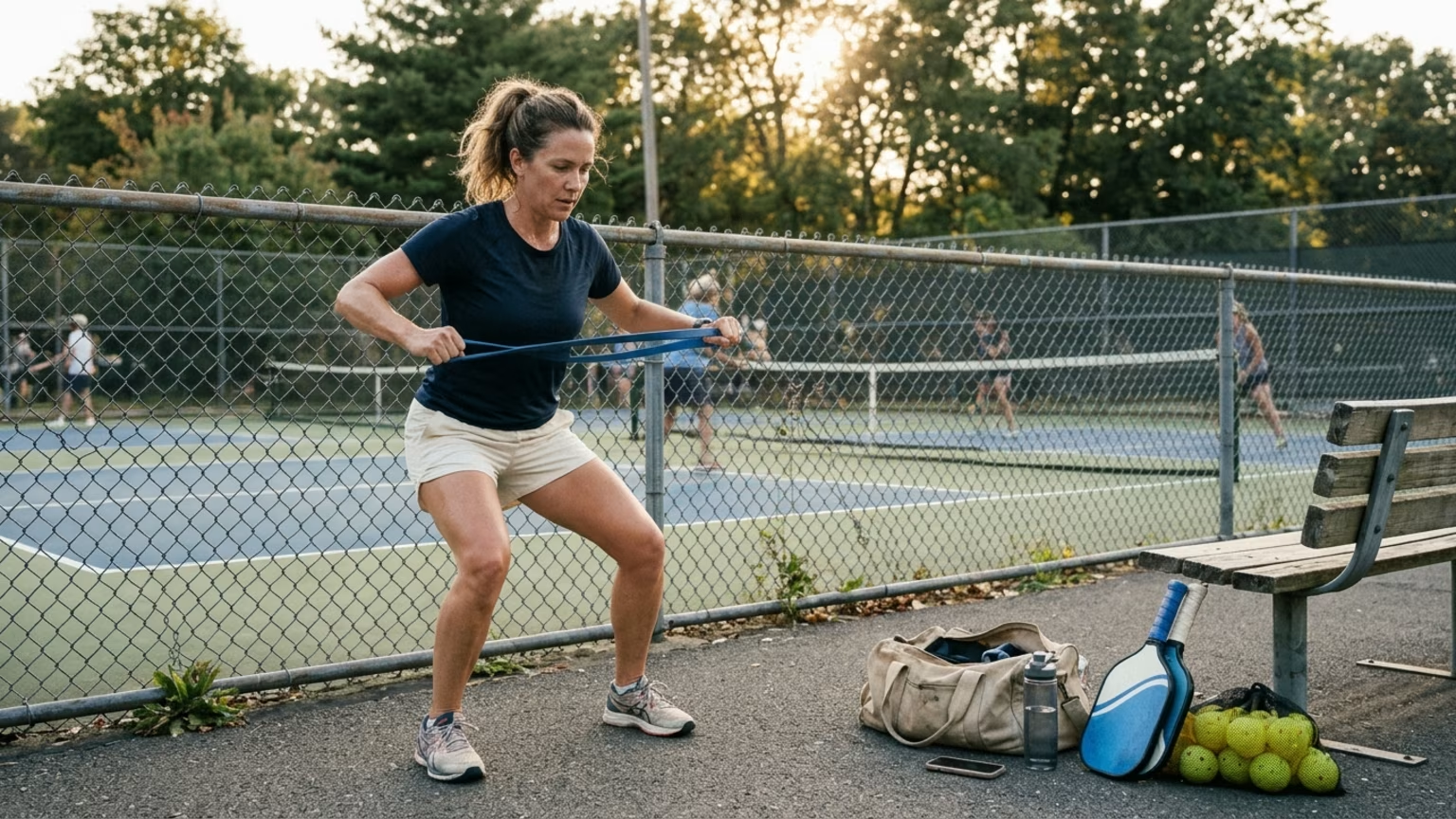
Build a manageable pickleball strength routine for starts, stops and side steps, with exercise options and gradual ways to progress.

Compare tennis racquets and pickleball paddles on court with practical tips on grip fit, swing weight and deciding what's worth buying.

Match strength and balance work to the court moves you want to keep doing well, from a controlled reach to the step that gets you ready again.
Read practical guidance for better movement, smarter preparation and a game that keeps working for you.
explore the Blog
