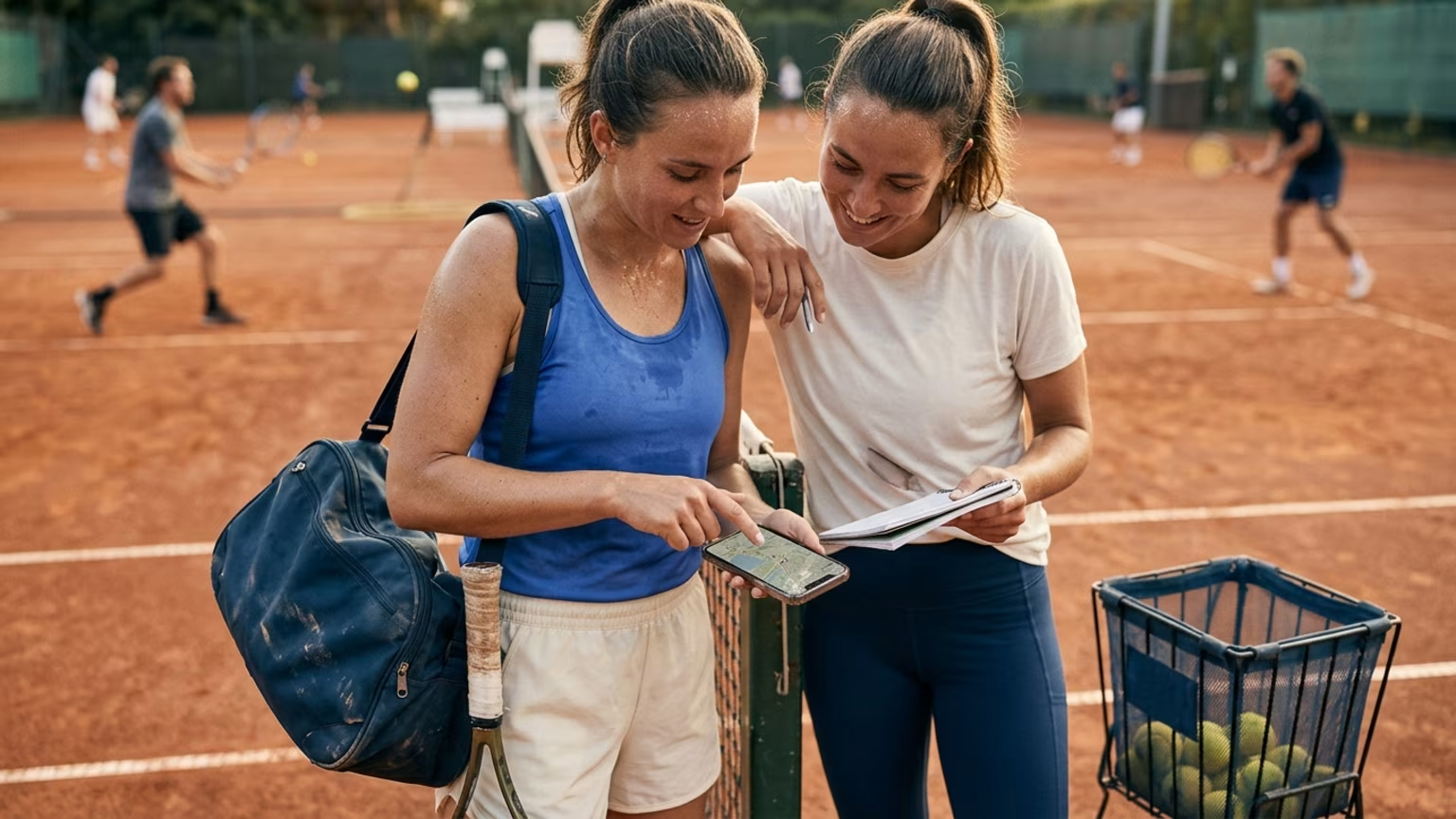

Navigate the booming racquet-sports landscape by mastering booking platforms, managing your travel workload, and prioritizing athletic longevity on the road.




An eight-week supervised pickleball intervention moved 42% of older adults from pre-frailty to non-frailty. Only 8% of the control group achieved that same health transition during the study period. That striking physical turnaround underscores why so many players now refuse to pause their routines while traveling. Earning those longevity benefits requires careful logistical planning before you ever pack your bags.
The physical reality of racquet sports is that our joints and muscles absorb significant stress. Traveling often throws off our regular workload management and creates unpredictable physical demands. Unfamiliar surfaces and high-intensity vacation matches can easily overwhelm a body that lacks proper recovery windows. The result is usually profound soreness that ruins the rest of a trip.
I remember finishing a tough two hour padel match on a cold Tuesday night and waking up the next morning feeling like my lower back was locked in concrete. For a long time, I just accepted this as the price of playing hard in my forties. But once I started spending just ten minutes on targeted hip mobility before heading to the club, the stiffness almost completely vanished. It taught me that we do not have to accept pain as a default state of aging.
We can apply this exact same lesson to racquet-sports travel. The body absorbs heavy braking forces and rapid direction changes that require deliberate cold, heat, and contrast recovery after each session. The promising pre-frailty research happened in a controlled environment over eight structured weeks. It was not the result of chaotic walk-up matches played on zero sleep.
Treating your travel schedule with the same respect you give your home routine is crucial for athletic longevity. You must plan for appropriate physical strain and secure access to the right facilities. Assuming you can just find a game anywhere often leads to poorly timed exertion. Players who research their destinations protect their bodies and their peace of mind.
Building an intelligent routine means recognizing that travel itself is a physical stressor. Sitting in an airplane seat or driving for hours tightens the hip flexors and limits your mobility. Stepping straight onto a pickleball court without addressing this stiffness dramatically increases your risk of a sudden strain. Taking the time to properly warm up ensures your body is actually prepared for explosive lateral movements.
Learning how to travel properly means recognizing that court conditions affect physical output. A slow outdoor tennis court in high humidity will drain your energy faster than a climate-controlled indoor venue. Adjusting your expected playing time based on these environmental factors is a critical part of healthy aging. You can maintain your athletic capabilities much longer when you respect the realities of travel fatigue.
The specific physical load of a travel match depends heavily on your chosen format. AARP reports that one study found older adults averaged 3,322 steps per hour in singles pickleball. That same study showed players averaged 2,791 steps per hour in doubles. Those figures demonstrate that a simple shift from singles to doubles meaningfully alters your physical output.
Players hoping to maintain these active step counts on the road face a rapidly expanding facility landscape. Sports Business Journal reported that the United States had around 1,000 public padel courts in 2026. That total represents a massive jump of about 400% above the 2023 level. This rapid growth creates exciting new opportunities for players visiting unfamiliar cities.
The global infrastructure is expanding just as quickly as the domestic market. A Playtomic and PwC Strategy& report cited by Marketing Brew estimated that roughly 8,000 padel courts were built globally in 2025. This construction boom included more than 300 new courts in the United States alone. Finding ways to maintain competitive racquet sports as you age is easier than ever if you know where to look.
However, this booming market does not guarantee uniform access or universal rules. The same destination might feature traditional tennis clubs and modern hybrid racquet venues right next to each other. Players must therefore navigate different booking windows and cancellation policies across various regional systems. Doing this research in advance prevents frustrating delays during your vacation.
Understanding these participation and construction figures helps players set realistic expectations for their trips. Even with thousands of new courts opening worldwide, prime booking hours remain highly competitive in dense urban areas. You cannot simply assume that a newly built padel center will have empty courts on a Saturday morning. Arriving prepared with confirmed reservations ensures you get the exact playing time your body needs.
The physical toll of these three sports varies significantly based on court dimensions and playing styles. A singles tennis match demands long sprints that consistently spike your heart rate over sustained intervals. Pickleball creates high step counts in a much more confined space. Padel requires absorbing heavy impact off the glass walls and executing deep lunges during long rallies.
Managing these distinct workloads on the road means mastering the digital reservation ecosystem. A third-party platform comparison describes Playtomic as a marketplace for discovery and match organization. The same comparison positions CourtReserve as club-management software. Understanding the difference between a marketplace app and a specific management portal helps you navigate local club requirements.
Each facility sets its own rules regarding weather policies and access. A third-party explanation of Playtomic procedures says that rain does not automatically cancel a booking. The club generally determines whether conditions are playable or whether a rescheduling solution is offered. This means you must check with the exact venue before assuming a wet court means a refunded fee.
Booking windows also fluctuate drastically from one club to the next. The Playtomic listing for Legacy Padel & Pickleball Austin shows a 10-day advance booking window and a 12-hour cancellation deadline. This single example proves why you should never rely on universal assumptions when organizing your travel training playbook. Always verify the specific cancellation policy before you confirm a nonrefundable vacation block.
Knowing the demands of each sport allows you to pack the correct gear for your destination. Traveling with the right footwear prevents unnecessary slipping on unfamiliar public courts. Taking a moment to research the specific surface type online can save your knees and ankles from sudden injuries. Proper preparation empowers you to enjoy the unique characteristics of tennis, pickleball, and padel facilities around the world.
The most compelling numbers in the research are the 42% transition from pre-frailty to non-frailty. That success occurred during a supervised intervention rather than an unstructured travel schedule. To capture those benefits on the road, build your itinerary around intentional workload management and adequate rest. Guaranteeing one quality session is much smarter than relying on uncertain walk-up availability.
Translate this data into a concrete travel habit by checking local venue rules three weeks before departure. Verify if the facility accepts bookings through marketplace apps or their own distinct portals. Confirm the exact cancellation deadlines and weather policies so you are not caught off guard. Taking these logistical steps allows you to schedule a lower-intensity session right after a long flight.
Your travel strategy should also account for the difference in environmental conditions between cities. Playing an afternoon match in high humidity forces your cardiovascular system to work much harder than usual. Recognizing this change allows you to shorten your sessions and prioritize hydration over simply grinding through fatigue. Smart players adjust their effort levels to match their surroundings instead of forcing a specific performance standard.
Protect your joints by selecting the right format for your current energy levels. If you feel fatigued after traveling, lean into the lower step counts of doubles play. Keep a racquet sports injury-prevention guide in mind as you adapt to new court surfaces. By treating court access as a logistical priority, you can confidently return home without waking up locked in concrete.
Follow Evercourts for practical insights on tennis, pickleball and padel performance, movement, recovery and healthy ageing. Stay connected for new articles, research-led guidance and ideas to help you play well and keep playing for years.


Holger Rune withdrew from the European Open with a back problem. The facts behind his decision and a grounded perspective for recreational players.

The Dink’s October 17 guide emphasizes deep returns, ball-height decisions and positioning against faster pickleball opponents.

A new report outlines padel and tennis gear trends. Learn how to assess adjustable rackets, sensor feedback and smart-court claims.
Read practical guidance for better movement, smarter preparation and a game that keeps working for you.
explore the Blog
