

Sheffield Pickleball Club launches free Friday sessions to counter rising local court costs. Learn how subsidized access impacts adult racket sports players.




On October 9, 2026, Sheffield Pickleball Club begins a four-month block of free Friday sessions at Concord Leisure Centre. The program starts at 11 a.m. and is officially supported by the Olympic Legacy Fund. This initiative gives local adults a practical route to try a growing sport without an immediate financial commitment. It represents a targeted community effort to increase weekly physical activity among residents who might otherwise avoid paid court bookings.
According to the Yorkshire Post, the club operates as an entirely volunteer-run organization. Its reach extends beyond a single venue, organizing social doubles sessions across Sheffield, Dronfield, and Rotherham. The primary goal of the new funded program is removing the initial financial barriers that often keep adults off the court entirely. This community-minded approach creates a welcoming environment for players of varying athletic backgrounds.
Participants do not need to purchase specialized paddles or balls before attending their first session. The Friday sessions provide all necessary equipment, asking only that players arrive wearing suitable non-slip footwear. Players can reserve their spots directly through the Spond app. This creates a straightforward digital booking process for newcomers entering the local racket sports community.
For professional athletes, regular court time is an assumed operational expense subsidized by sponsors and national associations. For the adult recreational player, consistent court access comes down to carefully managing a personal weekly budget. Club co-chair Helen Blomfield told the Yorkshire Post that she previously found tennis too expensive for regular play. She noted that an hour of singles play cost her about £20.
By transitioning to lower-cost pickleball sessions, Blomfield reported being able to play four or five times a week. This personal account highlights a persistent operational tension for adult racket sports enthusiasts. Weekly court fees dictate how often a player can realistically train, compete, and recover. Players attempting to build a sustainable weekly routine must balance their physical readiness with their available funds.
Finding a venue that supports frequent play is a critical step in choosing a racket sports club. When players are priced out of regular sessions, their athletic longevity can suffer from highly inconsistent movement patterns. Introductory programs like the one at Concord Leisure Centre offer a highly practical testing ground. They provide an opportunity for regular movement without the pressure of an expensive monthly contract.
Players transitioning from tennis can use these free sessions to actively assess their comfort on a smaller court. They can evaluate the specific movement demands and joint impact before deciding if the sport fits their ongoing fitness goals. This low-risk entry is incredibly helpful for veterans exploring options like padel or pickleball as a transition for aging tennis players. It allows them to gauge their physical response before investing in expensive equipment.
The financial data from the Sheffield area provides clear context for this grassroots shift toward affordability. The Yorkshire Post reports that peak-time court hire for tennis, badminton, and padel can reach £44 an hour locally. For a doubles foursome, that premium rate splits to £11 per person for a single hour of play. This pricing tier can severely limit how often recreational players get on the court each month.
By contrast, the local report lists a standard outdoor pickleball session at just £3.50, which notably includes equipment. That massive difference in price significantly alters the monthly budget for an active adult. A player spending £11 for one hour of peak padel could fund three outdoor pickleball sessions for roughly the same amount. This pricing dynamic perfectly illustrates how court availability and space shape modern racket sports.
While these reported figures represent one specific local market, they reflect broader realities in recreational sports infrastructure. The high cost of maintaining large indoor facilities often translates directly into higher hourly rates for end users. Volunteer-run clubs that utilize shared leisure centers can successfully bypass some of these heavy overhead costs. The end result is a much more affordable path to consistent weekly play for the local community.
As this four-month block of free programming gets underway, local players will test the true viability of subsidized access. The 11 a.m. Friday time slot is excellent for adults with flexible schedules or retirees, but it will naturally exclude many working professionals. Observers should watch how Sheffield Pickleball Club handles capacity limits and waitlists through the Spond app. Tracking player retention after the funding window officially closes will be the ultimate measure of success.
If this specific model proves effective in South Yorkshire, other regional clubs might seek similar Olympic Legacy Fund support. The real test is whether participants transition smoothly from free daytime sessions into regular, paid weekly play at that £3.50 rate. Volunteer resources are finite, and sustained community access eventually requires a consistent base of paying participants. For now, the program offers a clear opportunity for adults to stay active on the court.
Future access to low-cost racket sports will heavily depend on creative partnerships between volunteer clubs and local leisure centers. Maintaining accessible court time remains the absolute foundation for sustaining a lifelong racket sports habit. Programs that successfully lower the initial barrier to entry are essential for the healthy aging of recreational athletes. Local players should take full advantage of these funded sessions while carefully managing their own physical transition into the sport.
Follow Evercourts for practical insights on tennis, pickleball and padel performance, movement, recovery and healthy ageing. Stay connected for new articles, research-led guidance and ideas to help you play well and keep playing for years.


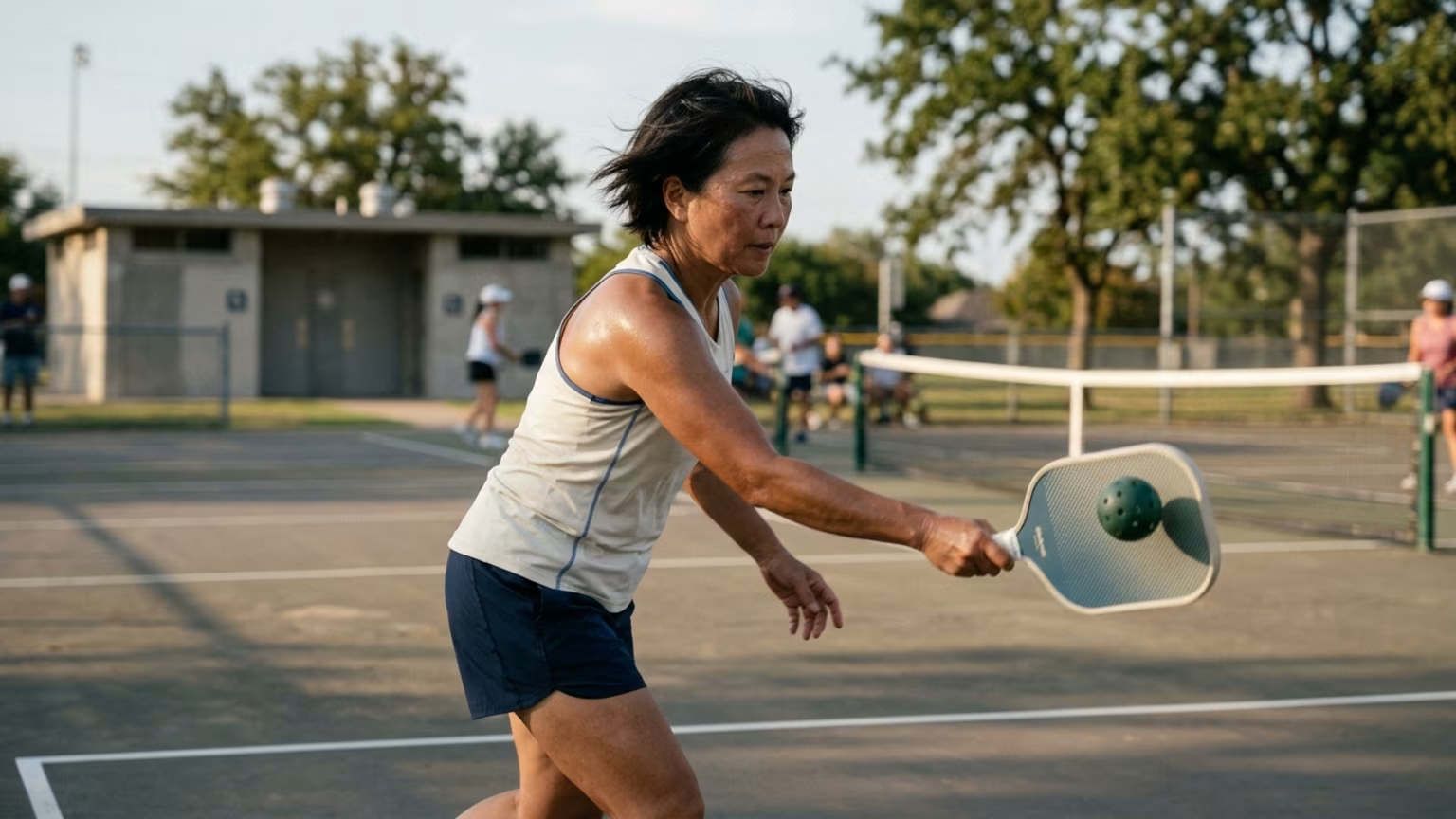
A recent live-play test of a silent pickleball highlights its value for practice, but standard balls still perform better for match play and power control.

An evidence check on sports supplements like tart cherry juice. Learn why racquet sports players should prioritize core nutrition over functional foods.
In late 2026, Oura analyzed wearable data to see how recreational tennis impacts heart health and recovery. Learn what this means for your athletic longevity.
Read practical guidance for better movement, smarter preparation and a game that keeps working for you.
explore the Blog
