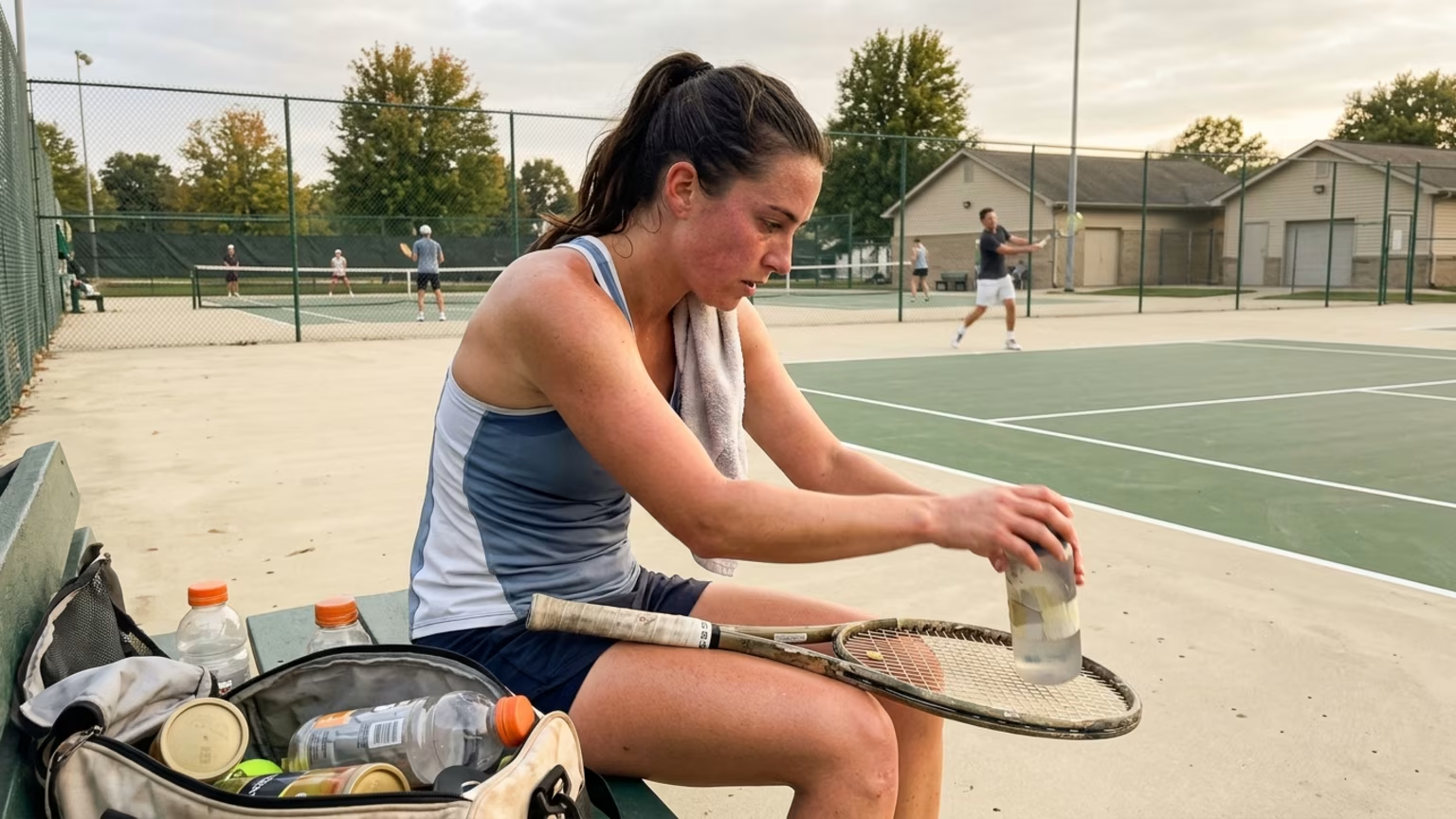

A Times analysis highlights how an expanded pro tennis calendar and late matches affect player health. See how adult amateurs should manage their court workload.




A Times analysis published on September 9 2026 argues that professional tennis is exposing its leading players to a congested calendar and injury-producing workloads. The report criticises the sport for its late-night finishes and its treatment of players in relation to prize money. The central warning is that tennis risks damaging the athletes who drive its commercial appeal unless the calendar changes. This debate gained urgency after Ben Shelton and Carlos Alcaraz played a match at the US Open that finished at 3:33 a.m. on September 9. That marked the latest finish in US Open history according to Reuters.
The current workload dispute is closely linked to the ATP expanding its Masters 1000 format. Seven of the nine tournaments have been staged over 12 days since 2025. Only Monte Carlo and Paris have retained one-week formats. The Professional Tennis Players Association (PTPA) argues that these longer tournament windows reduce the practical time available for rest.
The PTPA has called for fewer mandatory commitments, a stronger player role in calendar decisions and reconsideration of the 12-day Masters format. Players' concerns have expanded beyond injuries to include recovery time, media obligations, pensions and the share of event revenue returned to athletes.
Players are already adjusting their participation to cope. Reuters reported that Jannik Sinner withdrew from the Canadian Open to prioritise his health after retaining his Wimbledon title. Novak Djokovic also skipped a US Open tune-up to manage his workload. Carlos Alcaraz recently said he planned to take more breaks and warned that the packed schedule was contributing to injuries.
Alexander Zverev suggested that returning Masters tournaments to one week would be an easy fix. He said this could help players maintain fitness rather than constantly manage their workload and choose which events to enter. The ATP’s counter-position is that players control their own schedules. The tour states it is working to create incentives for an appropriate number of matches during the season.
Not every injury or withdrawal can automatically be attributed to the calendar. Elite players differ substantially in playing style, age, medical history and travel load. However, the ATP and WTA did introduce joint scheduling guidelines in January 2024 that discourage match starts after 11 p.m. without approval. Those guidelines do not control the Grand Slam tournaments. Wimbledon enforces an 11 p.m. local curfew, while the French Open limits night sessions to one match.
Late finishes are also partly a scheduling and format problem rather than evidence that every late match produces injury. Match length is unpredictable. Reducing the number of night-session matches or imposing a curfew could create knock-on effects for broadcasters, spectators and tournament staff. Proposals such as reducing early-round men's matches to best-of-three sets remain controversial because five-set matches are central to the identity of Grand Slam tennis.
The defensible lesson for amateur players is to recognise that insufficient recovery becomes a problem when high-intensity play is repeatedly stacked together. Adult recreational racquet sports players should avoid copying the professional tour. Elite players have highly specialised preparation. They are still withdrawing to manage workload.
Recreational players should treat a tournament weekend as cumulative training load. A weekend with several singles matches and practice sessions creates a substantial workload even when no individual session feels extreme. You must build recovery into the calendar before entering events. Leaving genuine rest days after demanding competition supports athletic longevity.
Our team sees the impact of compressed schedules constantly in local leagues. I used to think a tough conditioning block was the only way to improve my court endurance. Then I started tracking my sleep. I noticed that my reaction time at the net was noticeably sluggish on days I slept less than six hours. I felt gassed by the second set.
Prioritizing consistent rest did more for my late match stamina than any extra sprints ever did. Recovery is the true foundation of performance. A late finish can affect the next day even if the player is not injured. You should avoid scheduling an early high-intensity session immediately after a night match.
Players must monitor warning signs instead of waiting for a major injury. Recurrent arm, shoulder, elbow or back symptoms should prompt a reduction in load. Declining movement quality and unusual fatigue are clear indicators that your current calendar is too demanding. Do not assume recovery gadgets solve an overloaded schedule.
Adult players who combine a hard singles match with a long doubles session and demanding training compress the time needed for tissue recovery. You should consider whether your total load leaves enough time for sleep between events. The most defensible intervention is better planning of workload and rest.
The PTPA backed its workload warnings in August with a large injury data project. The organisation said it had collected and analysed injury data from more than 30,000 professional matches across eight years. The PTPA concluded that the season is too long and recovery time is shrinking.
The organisation said upper-body injuries were 42 percent higher in the first quarter of 2026 than in the same period of 2025. It also reported that arm injuries were 112 percent higher in 2026 than the 2025 average. Those figures are PTPA findings rather than an independently verified epidemiological estimate of injury prevalence across the entire sport. This data highlights growing concern over rising upper-body injuries in professional tennis.
These statistics use different comparison bases and should not be combined into a single measure of overall injury growth. The available reporting does not provide enough methodological detail to establish how exposure was adjusted for the number of matches played. The PTPA’s statistics should not be treated as conclusive proof that the expanded Masters format directly caused the reported injury increases.
The practical problem is not simply the duration of an individual match. A longer tournament does not necessarily mean that every player competes on more consecutive days. However, the longer event can occupy more calendar time. This compresses the time available for travel and recovery between tournaments. Nominal rest days inside an extended tournament are not necessarily equivalent to genuine time away from competition.
The broader trend driving this debate is not simply an increase in total matches. It is the interaction of longer tournament windows with travel demands and the physical intensity of modern tennis. As the next season approaches, expect players to increasingly use selective withdrawals as a primary tool for workload management.
The choices made by leading professionals show that managing fitness requires skipping or shortening participation in some events. The ATP will likely continue emphasizing player choice while defending its expanded commercial formats. For competitive amateurs, the takeaway is to embrace a flexible plan rather than forcing every local event.
You should choose one priority competition instead of several overlapping tournaments to protect your body. Balancing match play with adequate rest will keep you on the court for years to come. Tracking your total exposure remains the most effective strategy for healthy tournament scheduling.
Follow Evercourts for practical insights on tennis, pickleball and padel performance, movement, recovery and healthy ageing. Stay connected for new articles, research-led guidance and ideas to help you play well and keep playing for years.


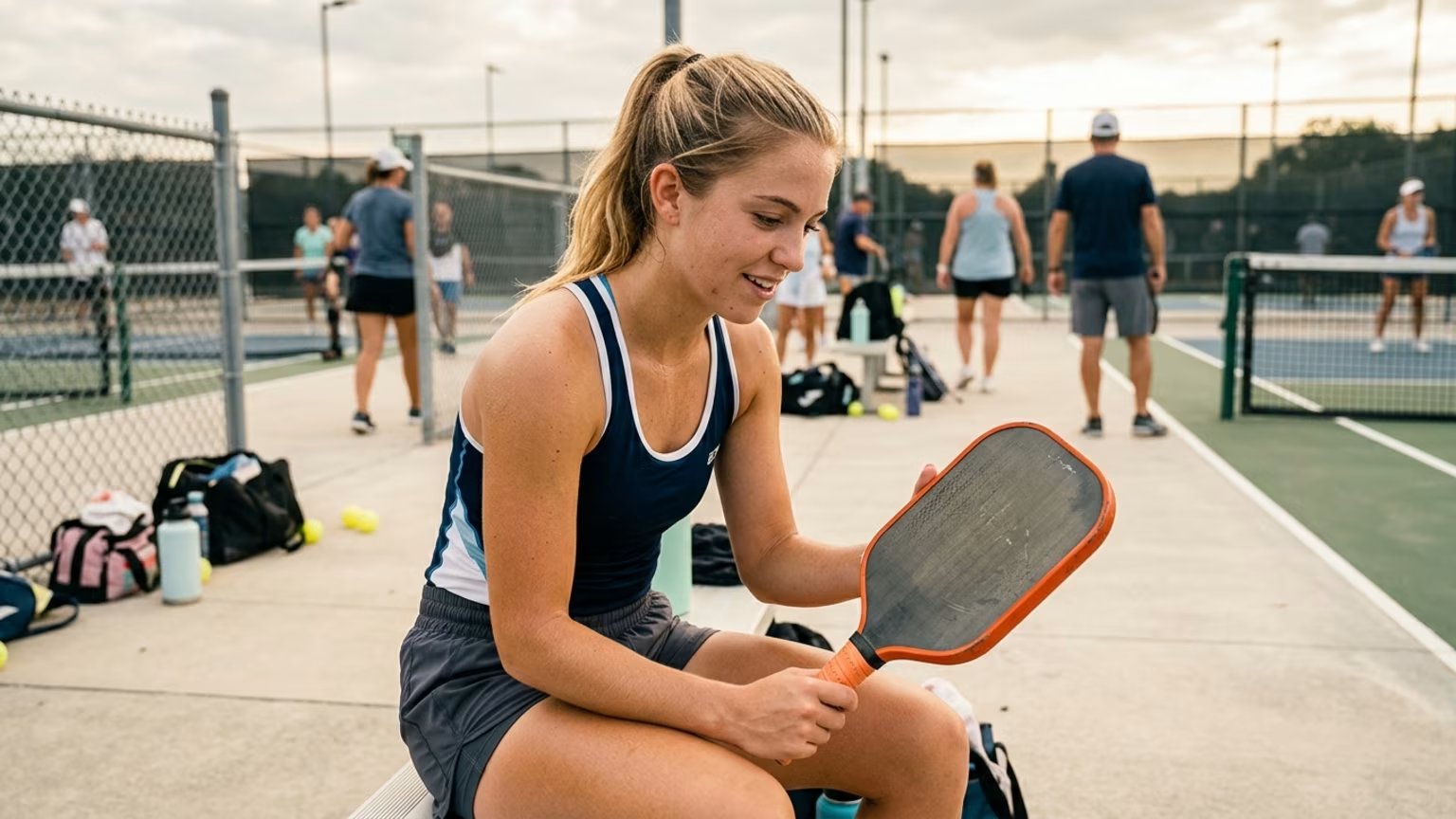
Pickleball.com reports Anna Leigh Waters teased an unreleased Franklin paddle. Here is what this mystery equipment means for adult recreational players.

Former Pescara captain Andrea Camplone collapsed during a padel match on September 13. Learn how this incident highlights the need for court preparedness.
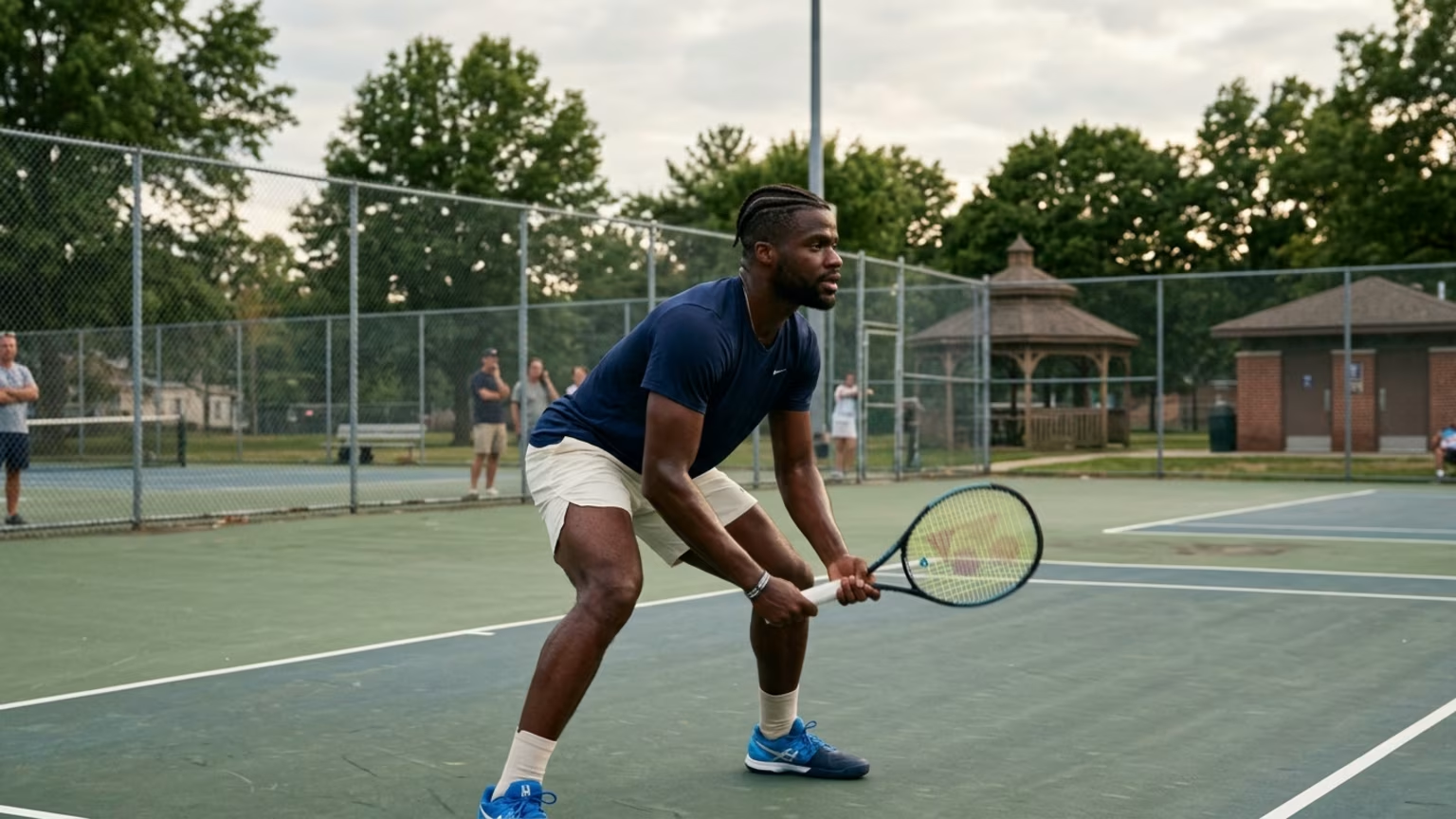
An analysis of the 2026 US Open semifinal explores how a compact return strategy can manage big serves, offering practical tactics for adult players.
Read practical guidance for better movement, smarter preparation and a game that keeps working for you.
explore the Blog
